





Germany’s Zeitenwende Faces Cultural Limits

Germany’s Zeitenwende Faces Cultural Limits
On February 27, 2022, three days after Russia invaded Ukraine, Olaf Scholz, Chancellor of Germany, delivered a speech declaring a commitment to remilitarizing Germany, stating, “what is needed to secure peace in Europe will be done…To make it possible, the Bundeswehr needs new, strong capabilities.” Chancellor Scholz’s speech is regarded as Germany’s zeitenwende, which means “turning point” in German.
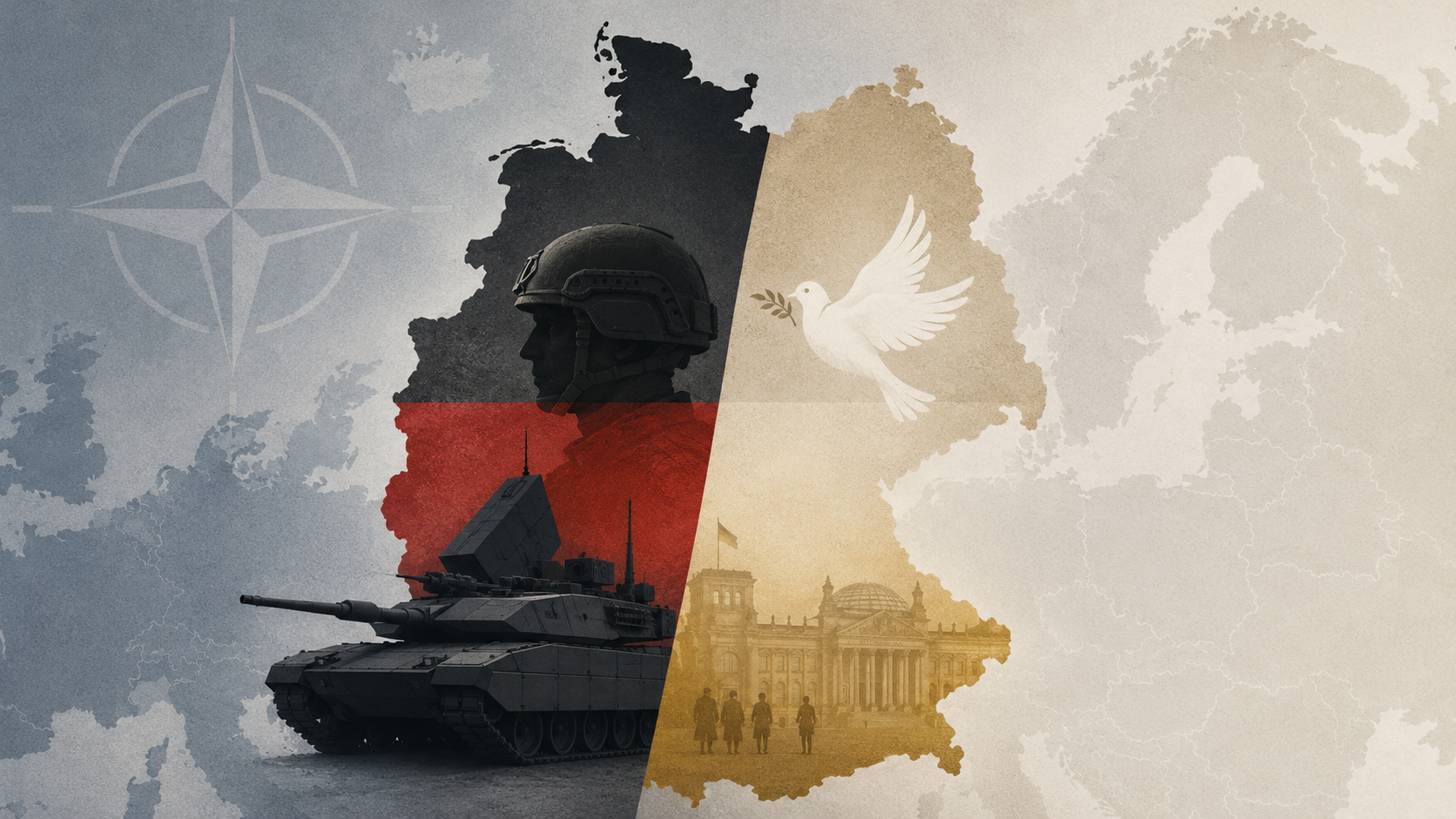
The turning point refers to Germany’s effort to move beyond post-World War II antimilitarist constraints toward a more capable military posture, one intended to enable Germany to better defend itself, Europe, and the collective West. However, Germany’s zeitenwende may be hindered by its own strategic culture, which is why the U.S. should qualify expectations for German strategic transformation. In this context, rearmament and remilitarization refer primarily to the procurement of weapons and the enhancement of military capabilities, while strategic transformation refers to a broader national reorientation toward the use of force. Strategic cultures are not immutable, but they are resistant. German rearmament should not be mistaken for strategic transformation; rather, it should be understood as only one step toward it. Thus, the risk for NATO is misinterpreting rearmament as a transformation.
The Strategic Culture Holding Back the Bundeswehr
Up to the end of World War II, Germany maintained a militarist and nationalistic culture. After World War II, the country set out to recover economically and culturally under the security umbrella of the United States. Lacking full sovereignty during the Cold War and struggling with its history of nationalism, militarism, and Nazism, Germany developed a strategic culture that was “passive, timid, morally uncompromising, and dominated by feelings of guilt.” Germany rejected traditional power politics and the pursuit of national interests through military power.
Politically, it is risky for German leaders to publicly suggest that Germany ought to participate in international affairs, particularly when the legality or ethics of military intervention is unclear. Dogmatic antimilitarism from the public often thwarts debates on and preempts decisions on foreign policy issues. Germany’s postwar identity continues to form the boundaries of military policy, limiting Berlin’s ability to translate new security realities into strategic transformation. Germany remains wary of altering its strategic culture in ways that could appear to resemble elements of its militarist past. Thus, Germany’s reserved and defensive military posture reflects its postwar strategic culture and the maturation of the Bundeswehr.
Pre- and Post-Russian Invasion of Ukraine: How Germany Perceives the World and Itself
Germany had a low threat perception before Russia invaded Ukraine, which was evident in its defense spending. About 90% of the German population felt Germany was secure. Compared to other European countries, that was extraordinarily high. In Germany’s world, the country “moved beyond power politics, national interest, and militarism.” Germany perceived that conflict could potentially be solved through dialogue and multilateralism, with military force deemed unnecessary and ineffective, even immoral. While Germany has participated in NATO operations, they are often framed, such as the International Security Assistance Force in Afghanistan, as a “stabilization mission with humanitarian motives.”
Germany’s security environment seemingly vindicates its “historically informed sense of security.” Allied and neutral countries surrounding Germany acted as a near-impenetrable buffer zone. This buffer zone allowed Germany to frame pacifism as a morally superior strategic posture. Germany perceived itself as a country with much to prove after World War II, and its strong commitment to antimilitarism and multilateralism became a way of demonstrating both regret for its past and a determination to learn from it.
Following the Russian invasion of Ukraine, Germany’s threat perception barely changed: 52% of Germans favored international restraint in 2022 vs 50% in 2021, and 41% preferred stronger involvement in international security affairs in 2022 vs 45% in 2021; of the 41%, 65% preferred diplomatic over military involvement. Furthermore, 68% of Germans reject Germany being in a military leadership role.
Still, 60% of Germans want higher defense spending, a sentiment shared by German elites. In 2026, Germany allocated 108 billion euros to the Bundeswehr, a figure projected to reach 152 billion euros by 2029. So yes, Germany is rearming in response to its security environment, though this process continues to unfold within a largely antimilitaristic society that remains reluctant to embrace drastic changes in the use of military force. Germany is developing new military capabilities, but the German people remain hesitant about using force beyond narrowly defined defensive scenarios.
Germany’s Nuclear Paradox: Evidence of Cultural Tension
Germany’s stance on nuclear weapons offers a useful example of how strategic culture can constrain military development, particularly when public attitudes toward the use of force clash with the perceived demands of national and alliance security. On one hand, Germany strongly supports the goal of a nuclear-free world; on the other, it opposes the Treaty on the Prohibition of Nuclear Weapons. German diplomats have worked to ensure that proposals for a nuclear-free world are taken seriously, while Berlin has avoided fully acknowledging that NATO nuclear weapons are stationed on German territory. Germany voted against a UN resolution promoted by Austria that “demanded a closing of the legal gap on nuclear disarmament.”
Germany’s ambivalence stems from a desire to maintain security afforded by NATO’s nuclear umbrella while mitigating the consequences that its “alliance’s nuclear arsenal might have on German political and security interests.” The U.S.-German nuclear security arrangement evinces Germany’s reliance on U.S. extended deterrence and avoidance of independent nuclear responsibility. Germany’s humanitarian ideals have deemed WMD acquisition and use as unethical, but its pragmatic realism holds it back from fully committing to a nuclear-free world. Strategic culture significantly shapes Germany’s stance on nuclear weapons, just as it constrains the remilitarization of the Bundeswehr.
Future of the Bundeswehr
The Bundeswehr exists within an antimilitaristic culture, making full-spectrum remilitarization difficult and likely gradual. Rearmament alone does not entail strategic transformation. Equally important is sustained sociopolitical support for the employment of military force. Germany is rearming, but whether this effort can be sustained remains uncertain, especially given the German public’s continued resistance to employing military power beyond narrowly defined defensive scenarios. Trends in German WMD ethics and practices may be a clue as to the future of the Bundeswehr.
Despite public opposition to U.S.-German nuclear sharing, the program continues, along with the modernization of U.S.-hosted nuclear weapons in Germany. German elites appear to be moving toward remilitarization despite public resistance, but nuclear policy demonstrates that clear cultural limits remain. Roughly eighty years of institutionalized antimilitarism likely won’t vanish overnight, but if Germany is to strategically transform, political leaders must reshape public attitudes on the use of force. How Germany manages these internal cultural tensions will influence NATO’s deterrence posture in Europe. Rearmament without the support of the German people risks an incoherent security strategy as Germany is pulled in different directions. By contrast, a sustained German commitment to full-spectrum remilitarization could make Germany a central pillar of European defense.
Implications for U.S. Policy
Regarding U.S. policy, the trajectory of German rearmament is an opportunity to strengthen NATO and the EU, albeit under German strategic cultural constraints. Germany’s strategic transformation will likely be gradual, requiring calibrated expectations for U.S. defense planners. In practice, the U.S. should expect Germany to contribute to NATO/EU security primarily through defense spending and improving military capabilities rather than expeditionary leadership. If Germany’s antimilitarist culture endures alongside increased defense spending and military capabilities, Germany may field stronger forces while remaining force-cautious. This gap between military modernization and strategic-cultural change carries important implications for the U.S. and NATO.
First, Washington should welcome and encourage Berlin’s commitment to rearm while tailoring expectations for strategic assertiveness around Germany’s cultural constraints. German strategic culture retains postwar antimilitarist sentiments. Rearmament is only one component of a broader strategic transformation.
Second, NATO should assume Germany will prioritize national defense over leadership roles when planning for military interventions. The German populace is resistant to military interventionism, which constrains support for expeditionary or interventionist policies.
Lastly, U.S. extended deterrence is vital to German security policy, indicating that alliance reassurance through NATO and EU burden-sharing should persist. Discontinuation or reduction of U.S. extended deterrence commitments could weaken deterrence credibility in Europe and incentivize greater European strategic autonomy in ways that may not align with U.S. policy.


