





“If Ukraine burns, then your Moscow will burn as well”
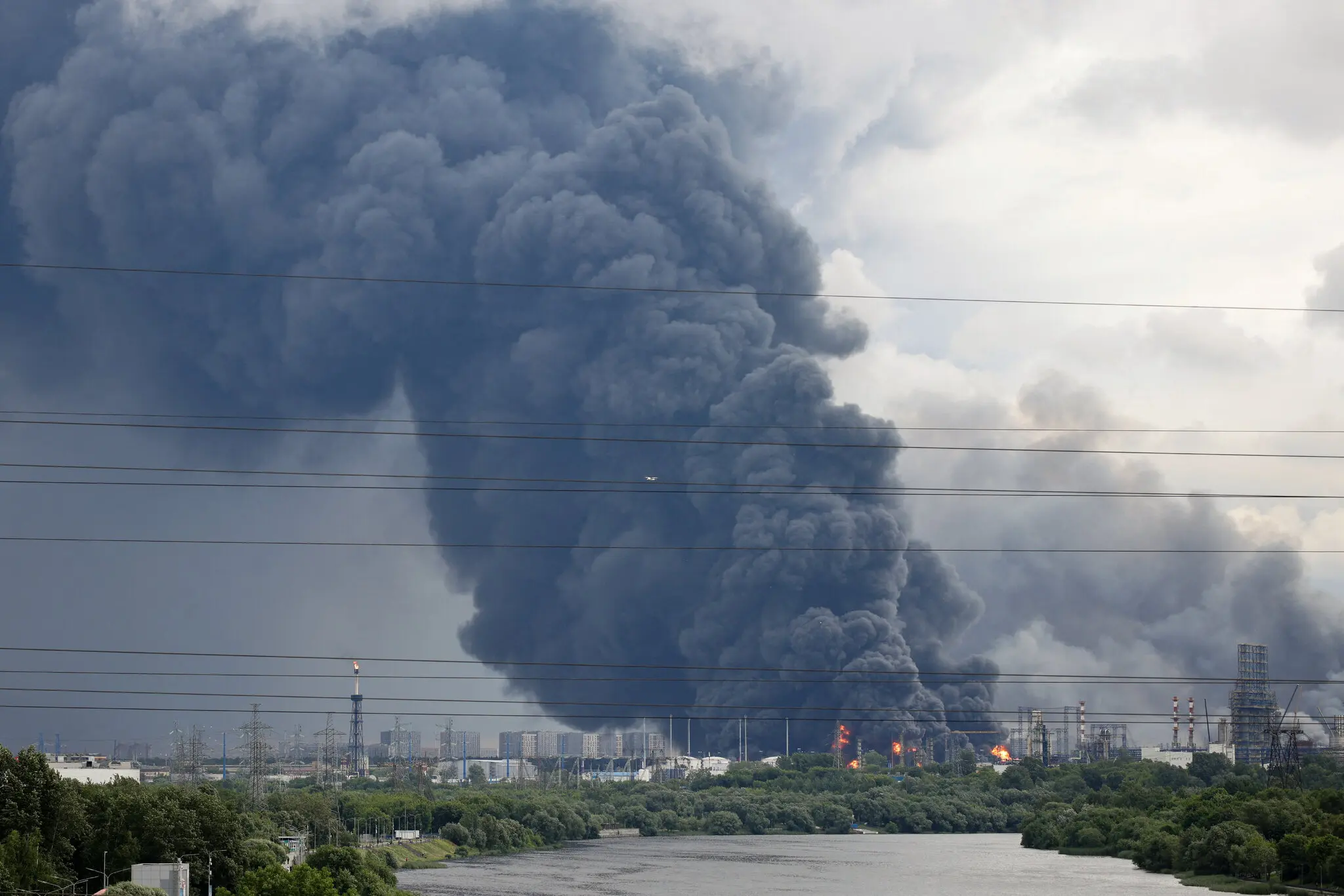

Ukrainian drones hit Moscow earlier today, closing the capital’s airports, ring road, and damaging an oil refinery in the city’s outskirts. Paul Sonne and Nataliya Vasilyeva of the New York Times report that the attack appears to be the largest since the war began over four years ago.
The War Comes to Russia
There are increasing signs that Ukrainian drone attacks in Russian territory are taking their toll. Fuel rationing has been mandated in certain regions as strikes on refineries have threatened fuel shortages. Reuters claims cites that Russia’s crude oil production fell roughly 5% year-on-year in May as a result of these attacks.
Zelensky Emboldened By Tech
Ukraine’s continuously improving drone arsenal has emboldened the Zelensky government to send larger and larger swarms of drones into Russian territory. The Russian Defense Ministry said that it downed 992 drones during today’s attack, a testament to Ukraine’s scale of production.
To journalists on Thursday, Zelensky warned:
“If Ukraine burns, then your Moscow will burn as well.”
Kremlin Keeps On
There is no sign that Putin has any interest in ending the war, even if pressure is quietly mounting within his government. As a result, fears are mounting of a new form of stalemate in the sky above the frontline: tit-for-tat aerial bombardments, like those which continue to hit Ukrainian cities, and Ukraine’s steadily improving attacks of its own.
What Breaks First?
When will Russians connect the air raid sirens and drone attacks on their cities with the war their government is continuing to wage, to the waste of their compatriots and treasure? That’s the question, and no one yet knows the answer.
Find the original New York Times report here: “A Drone Barrage on Moscow Escalates Ukraine’s Push to Take the War to Russia.”


Long-range drones are no longer just tactical tools—they are becoming strategic instruments that can disrupt infrastructure, strain logistics, and shape public perception far beyond the front lines. At the same time, I’m not convinced that increasing attacks on major cities alone will necessarily translate into political change, since governments and societies often respond to external attacks in complex and sometimes unexpected ways.