





The VA and Artificial Intelligence
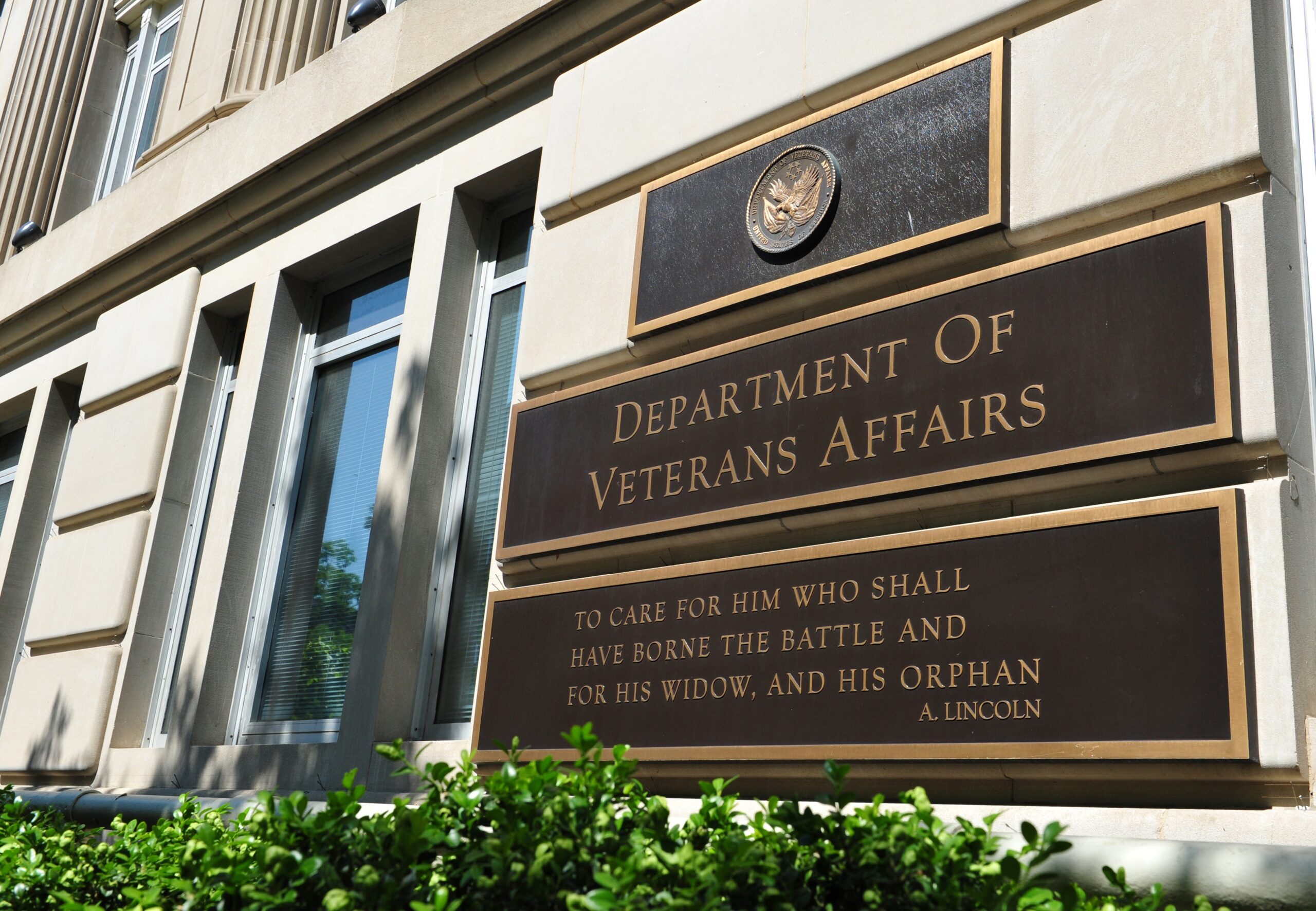

President Lincoln’s promise—“to care for him who shall have borne the battle”—is the foundational ethos of the Department of Veterans Affairs. It is a promise that frontline, ground-level staff try their hardest to keep every single day. However, as policies move up the chain of command, the bureaucratic drive for administrative efficiency can sometimes overshadow the human element of veteran care.
I say that with standing. I served in the Marine Corps after September 11. After the military, I spent seventeen years as a Supplemental Security Income (SSI) claims representative for the Social Security Administration. I dealt daily with our nation’s disabled, measuring brokenness and navigating federal bureaucracy for a living. I know exactly how complex the government claims process can be.
This complexity was recently shown when the VA proposed an amendment to 38 CFR 4.10, which would have required examiners to rate the semi-corrective effects of medication—in effect, rating the band-aid rather than the disease. It took over 20,000 public comments to highlight how this would hurt veterans. To the VA’s credit, they listened to the backlash and rescinded the rule on February 27. But this situation highlights a recurring issue: The push to streamline the system often leads to policies that miss the reality of a veteran’s lived experience.
Now, we are seeing this play out again—this time, with Artificial Intelligence.
The VA is currently deploying AI to screen Disability Benefits Questionnaires (DBQs) and flag veteran claims. The stated goal is to target predatory claims sharks and prevent fraud, which is an objective we all share. But in their rush to modernize, the VA is deploying a tool that inadvertently treats veterans with the suspicion of criminal behavior.
As a third-year student currently studying AI and computer programming, I see the glaring limitations of these systems daily. Without constant, rigorous human monitoring, these technologies are highly prone to “hallucinations,” data bias, and pattern-matching errors that produce confidently wrong results. These models do not see a veteran who bled for this country; they see a dataset. They scan for the bureaucratic signals they were programmed to recognize, and when they don’t find them, they flag the claim. The veteran pays the price for an algorithm’s mistake.
Consider just one of the tool’s own design criteria: It will flag any DBQ where the examining doctor’s address is more than 100 miles from the veteran’s home. Yet, veterans in rural areas routinely travel far beyond that for specialized care. I know veterans whom the VA itself has sent from an urban area to a rural clinic in an adjoining state just to get an exam. Under this algorithm, doing the right thing and finding a qualified provider becomes an automated red flag.
The VA’s concern regarding predatory representatives is valid. But these “DBQ mills” only thrive because the VA bureaucracy remains a labyrinth designed to exhaust the applicant. Veterans wouldn’t feel forced to turn to paid services if the system actually worked for them. Deploying AI to police the symptom while leaving the root disease—the complexity of the claims process—untreated is not a solution. It simply puts a black-box barrier between veterans and their care.
This is why legislation like the FRAUD in VA Disability Exams Act is so critical. It ensures that a veteran’s benefits cannot be reduced on fraud grounds without an actual criminal conviction. While VA officials have argued that waiting for a conviction takes too long, we cannot sacrifice a veteran’s due process for the sake of administrative speed. An algorithm’s flag should never be enough to pull a benefit.
AI cannot be the end-all, be-all for veteran care. If the VA truly wants to protect veterans from bad actors, the solution is to simplify the agonizingly complex rating process—not rely on technology that lacks human nuance.
If an automated system flags an anomaly, human eyes and medical expertise must verify it before any claim is affected. Congress must mandate transparency, independent auditing, and clear appeals pathways for these AI tools. Lincoln’s promise was to the veteran, not the dataset. We must ensure human verification remains at the heart of every claim.
Editor’s Note: On June 16, 2026, the Department of Veterans Affairs (VA) contacted Small Wars Journal to rebut the claims made in this opinion/perspective article. The VA stated that they are not deploying an AI tool to screen VA claims. The VA’s full statement to Small Wars Journal follows:
VA is developing a new safeguard to protect Veterans from predatory companies that submit fraudulent disability benefits questionnaires (DBQs) for Veterans seeking benefits. This data collection tool, which has not been deployed yet and is still in development, will help Veterans Benefits Administration field staff identify suspected fraud. It relies on manual data entry and analysis to help identify patterns that may help VA identify when organized fraud rings are posing as legitimate medical providers and preying on Veterans (for example, by excessively charging them).This is not an AI tool – it relies on manual data entry and analysis.This tool is forward-looking only. VA will not use the tool to revisit previously finalized and processed DBQs.Additionally, this initiative will not change how VA evaluates or decides claims. No Veteran’s claim or benefit will be reduced or denied because of this effort.


