





Operational-Level Maneuver: Why Tactical Success Alone Is Not Enough

Introduction
The character of war is changing rapidly, but its nature is not. As the US Army and its allies adapt to increasingly capable peer adversaries, initiatives such as Transformation in Contact emphasize new technologies, organizational reform, and accelerated adaptation cycles. These efforts are necessary—but they are not sufficient. Recent conflicts, particularly the Russian war against Ukraine, demonstrate that technological innovation alone does not guarantee success. Tactical effectiveness, even when sustained, does not automatically translate into operational or strategic advantage.
Many commentators have concluded that the offense has been decisively blunted and that maneuver has, at best, become a marginal proposition. This conclusion is premature. In practice, current trends favor defensive systems that often overmatch offensive action. As a result, maneuver must be restored—not only as a tactical method, but especially as operational maneuver: the ability to connect tactical actions across time and space to produce decisive operational outcomes.
In many respects, the contemporary battlefield is our 1914 moment: defensive systems—mines, sensors, electronic warfare, integrated air defenses, precision fires, AI, cost efficient autonomous systems, robotics, UAV and all possible combinations—negate traditional offensive advantages and drive campaigns toward attrition. The task is therefore not to accept positional grinding as inevitable, but to recreate conditions for decision by correcting the offense–defense imbalance and restoring operational freedom of action.
Despite the proliferation of advanced technologies, modern land warfare still unfolds over terrain and across distance. Corps and divisions remain decisive formations, and campaigns still hinge on the ability to sustain momentum, penetrate depth, and consolidate gains. Professional military education (PME) must prepare officers to plan or execute operations beyond limited depth. If not, this disconnect risks producing tactically proficient leaders who lack experience in operational-level maneuver.
This article argues that operational-level maneuver remains indispensable, yet new technological capabilities are no panacea. Executing maneuver today demands that we apply both old and new methods in novel ways, forcing us to fundamentally reconceptualize protection and depth against ubiquitous surveillance. It demands renewed emphasis on how tactical actions are linked, sustained, and exploited over time and space. Drawing on doctrine, historical experience, and the war in Ukraine, the article explains why maneuver has not become obsolete—and what is required to make it viable under contemporary battlefield conditions.
The Operational Level: The Missing Link
Joint doctrine defines the operational level as the domain in which commanders arrange objectives, forces, and operations to achieve strategic aims through campaigns and major operations. The operational level connects the strategic with the tactical level. In theory, this definition is well understood. In practice, however, the operational level is often treated as a “Stand-Alone” construct rather than as a concrete problem of time, space, force, and sustainment.
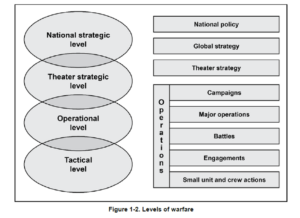
Figure 1: The levels of War. FM 3-0, March 2025, 12
Operational-level maneuver is what gives tactical actions meaning beyond immediate success. Tactical victories that are not operationally consolidated remain isolated events. They may impose costs on the adversary, but they rarely change the course of a campaign. Conversely, modest tactical gains, when deliberately sequenced and sustained, can generate outsized operational effects.
Doctrine further describes the levels of war as a framework that organizes activities in time, space, and purpose, often referred to as battlefield geometry. It describes how forces are arrayed, how depth is structured, and how actions at one level enable — or constrain — actions at another. Tactical actions conducted without regard to operational depth, sequencing, and sustainment rarely produce decisive outcomes.
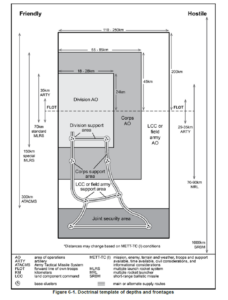
Figure 2: The levels of war, translated into battlefield depth and frontages. FM 3-0, 129. In this doctrinal description of battlefield geometry, the operational level of war translates into the LCC (Land Component Command) or field army and joint security areas
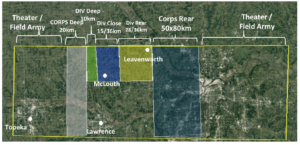
Figure 3: Examples of levels of war translated into battlefield geometry. (Map by CGSC authors used in CGSC and SAMS lectures)
The challenge is therefore not doctrinal clarity, but practical execution. Translating abstract frameworks into physical maneuver over extended distances is difficult, particularly under conditions of persistent surveillance and long-range fires. Yet it is precisely this translation that separates tactical competence from operational effectiveness.
Training only for the short Distances is not enough
Current training environments reveal a significant mismatch between expected future operational demands and what officers routinely practice. US Army divisions at the National Training Center can operate to depths between 20 and 60 kilometers (estimated, based on discussion with former NTC personnel). Europe’s most advanced training facility—the German Army Combat Training Center—offers even less operational depth. These limitations are understandable, but they shape how officers conceptualize maneuver.
By contrast, contemporary and future conflicts demand far greater reach. As of late September 2025, the frontline near Pokrovsk lay approximately 200 kilometers from Ukraine’s internationally recognized border with Russia—roughly matching Russian doctrinal defensive depth. Operations at this scale cannot be improvised. They require deliberate planning for sustainment, sequencing, protection, convergence, and consolidation across multiple echelons.
When officers are not trained to think in terms of operational depth, they default to tactical solutions for operational problems. This tendency is evident in contemporary debates that focus heavily on individual capability integration like Unmanned Arial Vehicles (UAVs, or Unmanned Arial Systems UAS) or Artificial Intelligence (AI), while neglecting the broader problem of sustaining.
Why Depth Still Decides
The 1940 German campaign in Western Europe remains a useful illustration—not because it offers a template, but because it highlights enduring principles. This example highlights the essence of operational maneuver: targeting an entire system, not just single objectives. Tactical victories were deliberately exploited to drive momentum and operational depth, cumulating into systemic failure across the allied defense rather than merely defeating its individual components. German success stemmed from the integration of armored forces, air support, communications, and mission command into a coherent operational design. Tactical victories were rapidly exploited to achieve deep penetration, disrupting the Allied defense as a system rather than defeating it piece by piece (Nonetheless, there was no Blitzkrieg doctrine, nor was the operations plan undisputed. For a detailed analysis see Frieser, Blitzkrieglegende. For a discussion of the underlying principles see also: Neitzel: Deutsche Krieger.
The German objective was not simply the destruction of Allied forces in Belgium. It was the collapse of the Allied operational posture. Once German forces crossed the Meuse at Sedan, speed and depth proved decisive. The Wehrmacht advanced roughly 300 kilometers into the Allied rear, severing lines of communication and rendering the Allied defense irrelevant (Frieser: Blitzkrieglegende. Other concepts of combined arms employment saw a similar approach. For example, the Russian concept of Deep Battle, developed in the 1920s and 1930s.)
What mattered most was not any single tactical innovation, but the ability to sustain momentum. Tactical success mattered only because it was exploited, reinforced, and operationally consolidated. The lesson is not that future wars will resemble 1940. Rather, it is that depth creates decision. Operational-level maneuver unhinges adversary systems by attacking coherence, not merely combat power.
Ukraine and the Problem of Distance
The war in Ukraine demonstrates how difficult operational maneuver has become—and why it remains necessary. Russian defensive doctrine envisions layered defenses extending up to 200 kilometers. These defenses are designed not only to stop advances, but to absorb, attrit, and exhaust attacking forces over time.
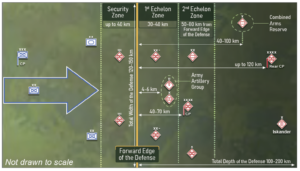
Figure 4: Depiction of the Russian defensive framework. TRADOC G2, How Russia Fights in Large Scale Combat Operations, 23. August 2025
Breaching the first defensive belt is therefore insufficient if forces cannot penetrate into second-echelon areas and disrupt operational cohesion. Without such penetration, tactical successes remain localized and reversible. This reality has shaped much of the fighting in Ukraine, where both sides have struggled to convert localized gains into operational breakthroughs (This depiction is by no means meant as a critique on Ukrainian operations but utilizes the ongoing conflict to describe what is required from operational maneuver in the next war).
The Ukrainian conflict demonstrates that “war never really disposes of any old ideas or capabilities. It just combines them in different and sometimes new ways… The ideas and technologies from earlier eras intermingle with those from the present”. Contemporary battlefield conditions strongly favor defense. Layered minefields, trench systems, electronic warfare, and persistent UAV surveillance constrain maneuver and punish mass. Russian defensive works constructed in 2023 exceeded doctrinal depth and density, making single-echelon breaches ineffective. These defensive systems are difficult to bypass and even harder to penetrate decisively.
The pervasive use of UAVs further compresses maneuver space. Drones enable reconnaissance, targeting, fires adjustment, and direct attack at scale. As both sides adapt, counter-UAS measures evolve in parallel. The result has been a battlefield dominated by attrition, where maneuver is often limited to battalion-sized actions or smaller.
The core problem is not a lack of tactical skill or bravery. It is the inability to enable tactical maneuver at a scale that allows to translate tactical success into sustained operational momentum.
Why Maneuver Is Not “Dead”
Claims that maneuver warfare is obsolete conflate difficulty with irrelevance. Critics of maneuver correctly observe that contemporary conditions currently privilege attrition. This is largely due to the dominance of ubiquitous reconnaissance-strike complexes—augmented by UAVs and AI—that have forged lethal 15- to 20-kilometer kill zones along the front lines. However, war remains dynamic. The argument overlooks the rapid pace of adaptation and dismisses our institutional capacity to drive the organizational and structural changes necessary to overcome defensive advantages. Maneuver has become harder, slower, and more contested—but it has not disappeared. What has changed is the cost of error and the penalty for exposure.
Attrition is further institutionalized when new capabilities are relegated to prosecuting individual targets. In the Russo-Ukrainian War, this is often born of stark necessity; Ukrainian forces frequently leverage UAVs to compensate for personnel shortages along dangerously thin defensive lines. Yet, because these daily engagements occur outside a cohesive scheme of maneuver, their impact dissipates rather than cumulating to achieve decisive operational results. Attrition-heavy approaches can produce incremental gains, but they rarely generate decisions. Even when successful, they impose enormous costs and extend timelines. Operational maneuver, by contrast, seeks to collapse adversary coherence rather than exhaust adversary strength. This logic remains valid even on a sensor and drone-saturated battlefield.
The question is therefore not whether maneuver is possible, but how it must be conducted differently under contemporary and future conditions.
Restoring Operational Maneuver
Restoring operational-level maneuver requires more than improved breaching techniques. It demands the ability to sustain protection, momentum, and combat power over distance and time. Two complementary ideas offer a way forward.
The first is rethinking how forces are arrayed on an AI- and sensor-rich battlefield. Amos Fox’s concept of battlefield “arrays” emphasizes employing autonomous and human-machine systems more independently and deeper into enemy rear areas, where their utility increases over time. Rather than concentrating all capabilities at the point of contact, this approach distributes effects across depth.
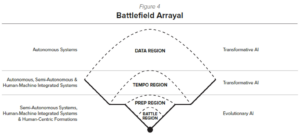
Figure 5: Battlefield Arrayal. Amos C. Fox: Information Advantage, 9.
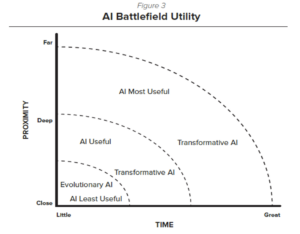
Figure 6: AI Battlefield Utility, Amos C Fox: Information Advantage, 9.
This concept aligns with Multi-Domain Operations (MDO) and its emphasis on convergence across domains. By integrating effects from land, air, Maritime, cyber, space, and information as an effector, forces can generate operational leverage without relying solely on physical penetration. While this approach allows for a more holistic and comprehensive approach to integrate expanding capabilities it does not solve the problem of the tactical deadlock along the frontline.
Protection as an Enabler of Maneuver
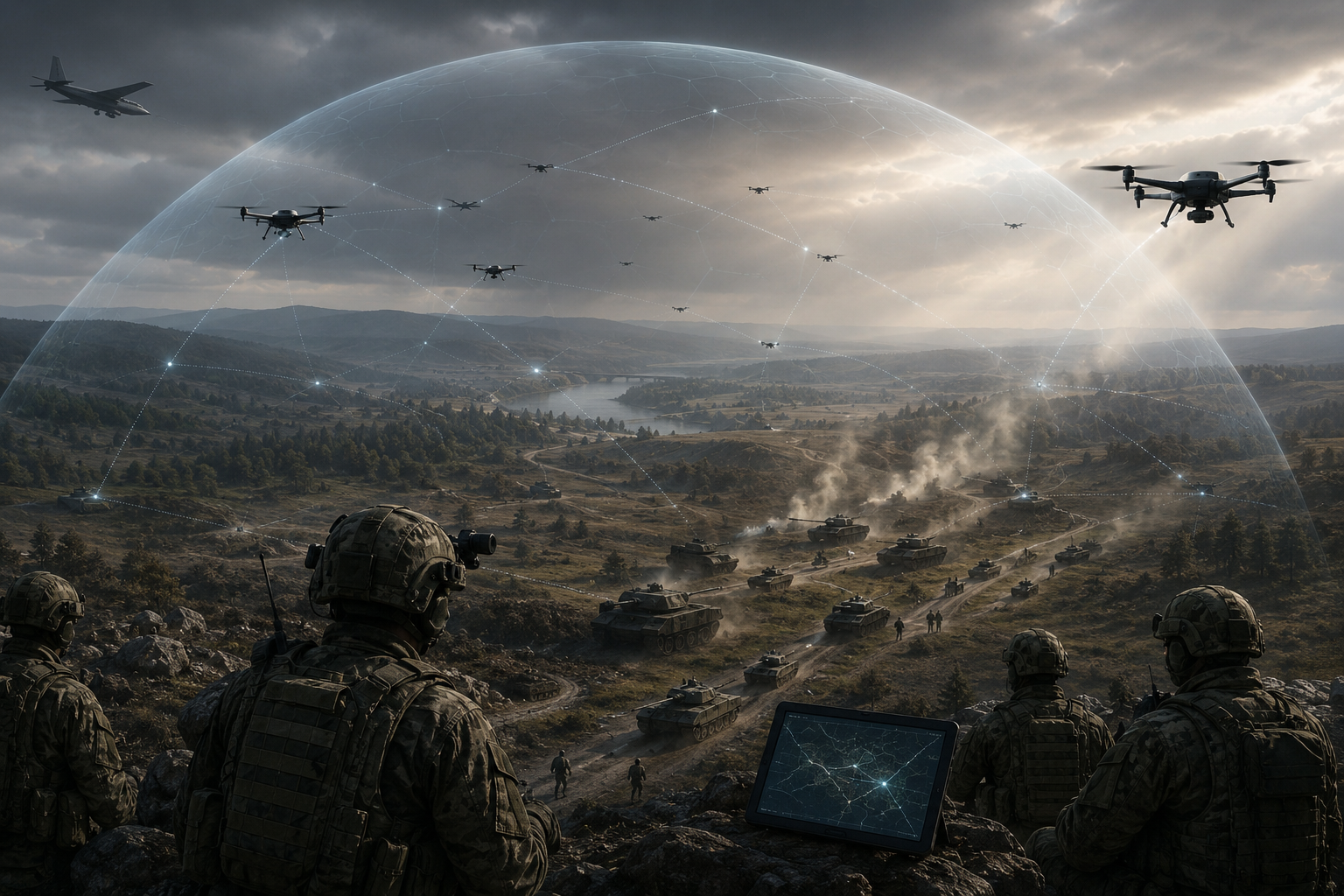
The second idea is reconceptualizing protection as an offensive maneuver function, rather than a purely defensive one. Analysis by the Institute for the Study of War suggests that integrating UAVs, counter-UAS, fires, and electronic warfare at lower echelons can create a mobile “protective dome” that enables maneuver.
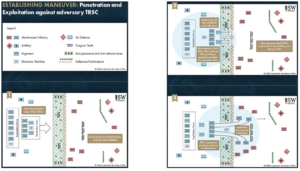
Figure 7: Breaching, and exploitation under protection. Institute for the Study of War. Ukraine and the Problem of Restoring Maneuver in Contemporary War
Protection must once again be viewed as an offensive maneuver function. Just as traditional SHORAD actively screened advancing columns before the recent era of static point defenses, modern formations require dynamic shielding. Today, this means fielding a mobile, layered protective mesh. By embedding AI, autonomous systems, and interceptor swarms directly into maneuver echelons, we can use the speed and precision of these technologies to deny adversary sensors and defeat their strike capabilities in stride. It is a moving, expanding set of effects that protects forces as they breach, penetrate, and exploit. It must be understood in terms of time, space, and capability.
Critically, penetration is not a single-division task. A breach becomes operationally meaningful only when it extends into higher-echelon depth. Breach and penetration in relation to each other can be understood as penetration is a breach into the next higher echelon’s area of responsibility. This requires nested and mutually supporting domes across echelons—division, corps, and above. These domes integrate fires, electronic warfare, autonomous systems, cyber, and space effects to deny adversary responses while preserving friendly freedom of action.
This approach reframes protection as an enabling condition for maneuver rather than as a constraint on it.
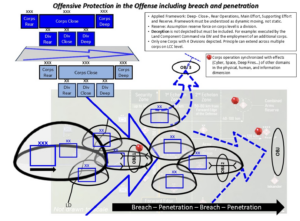
Figure 8: Depiction of how protection, maneuver, breach, and penetration align on Division and Corps level (with graphic by the author)
Mass and Protection
The requirement to mass combat power has not disappeared—it has become more complex. Traditional massing creates lucrative targets in a sensor-rich environment. Protected mass, enabled by layered effects and maneuver-oriented protection, offers a way to restore decision.
Future mass may be generated not solely by physical concentration, but through simultaneous effects in the close and deep fight. Autonomous systems, swarming, and synchronized deep strikes can disrupt adversary decision cycles and create opportunities for penetration. These ideas do not replace maneuver; they enable it.
Implications for Professional Military Education
Operational-level maneuver must be trained. If training installations do not allow that due to their space, maneuvers must take place beyond them. But Operational-level maneuver cannot be relearned in combat or alone. PME must deliberately train officers to think and plan across depth, time, and echelons. Exercises should nest planning and execution from joint and component command down to brigade level, forcing students to link tactical actions to operational purpose. Such an approach would teach officers how to:
- Integrate levels of war
- Synchronize cross-domain effects
- Sustain maneuver under contested conditions
Without this foundation, even the most technologically advanced force risks winning tactically while failing operationally. The Command and General Staff Officer Course at the CGSC already follows the hierarchy of joint to tactical level, although the exercises do not follow this hierarchy uninterrupted. Academic instruction between exercise blocks that analyze capability development and contemporary adaptations can complement the exercises, compelling student officers to analyze, integrate, and employ new capabilities while anticipating the future battlefield.
Conclusion
The war in Ukraine reinforces an enduring truth: technology alters how wars are fought, but it does not eliminate the need for operational-level maneuver. Tactical excellence remains necessary—but it is not sufficient. Wars are decided not by isolated successes, but by the ability to link actions over time and space to impose systemic collapse on an adversary.
Operational-level maneuver remains the mechanism by which tactical action becomes strategic consequence. Relearning how to execute it—under contemporary conditions—is essential if future forces are to win, not merely endure.
The views expressed in this article are those of the author and do not reflect the official policy or position of the Department of the Army, the Department of War, the U.S. Government, the Heer, the Bundeswehr, or the German Government.


