Brazil’s Criminal Landscape Is Fragmenting and Expanding | Diálogo Américas
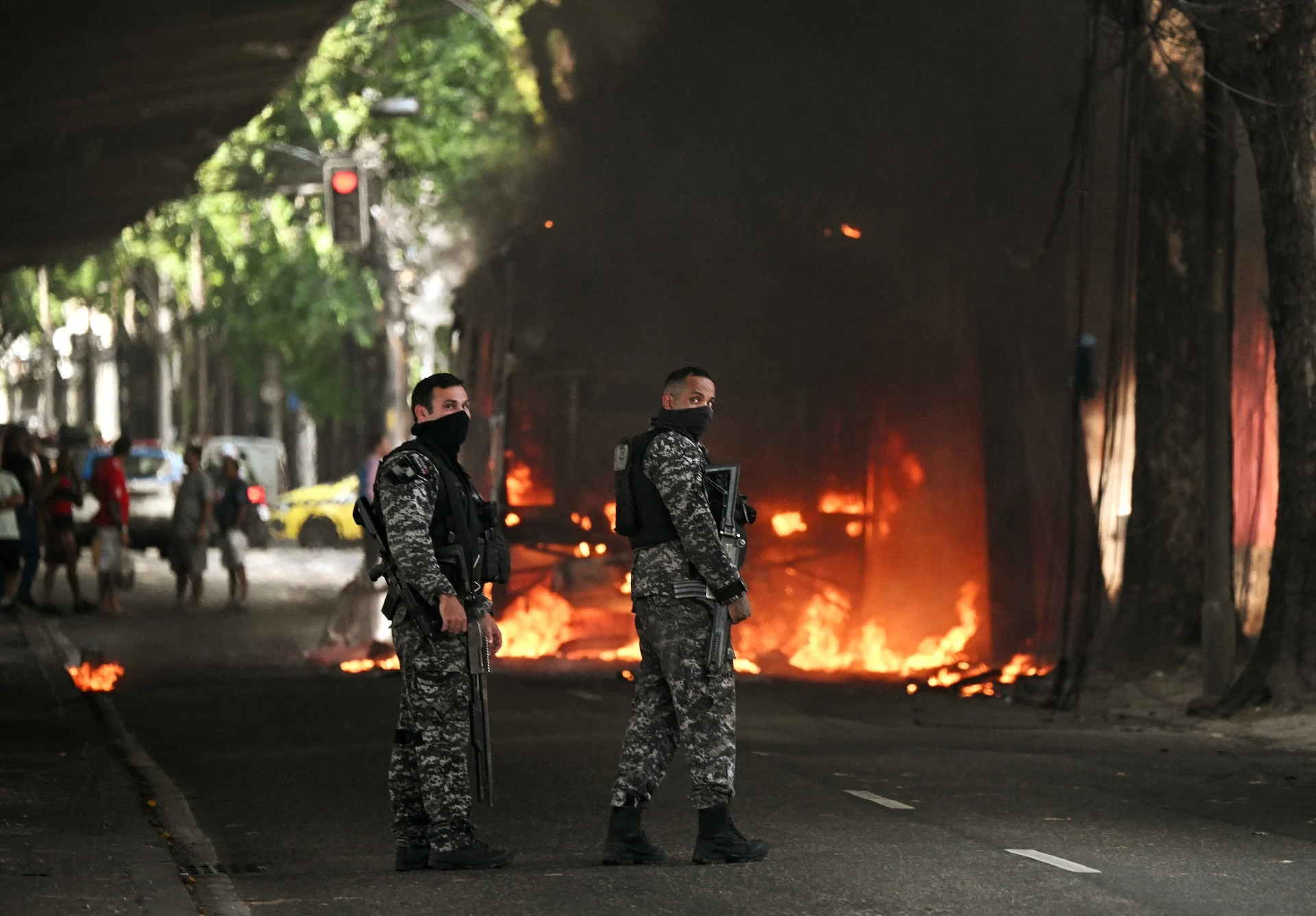

Brazil’s organized crime landscape is entering a new phase, reports Maria Zuppello of Diálogo Américas in “New Map of Organized Crime in Brazil.”
The report tracks the evolution of the First Capital Command (PCC) and Red Command (CV) alongside the rise of nearly 90 regional competing factions. What has emerged is criminal ecosystem that is both decentralized (at the local level) and globally connected (through alliances and illicit networks).
Territory still matters, though the contest increasingly centers on economic control and access.
The PCC’s expansion model relies on market regulation and international partnerships stretching into Europe and Asia. The CV has consolidated influence across criminal Amazonian corridors, including narcotics trafficking and illegal extraction. Fighting in Ceará and Bahia shows that Brazilian criminal groups are expanding and adapting in more strategic and networked ways.
Supply routes and financial networks now sit at the core of Brazil’s security problem.
The report also highlights a changing environment for law enforcement. As criminal networks move across jurisdictions faster than traditional policing structures can adapt, intelligence sharing, customs coordination, financial tracking, and regional task forces are getting more of an emphasis.
The question we’re left with is: Can state institutions evolve quickly enough to confront criminal organizations that already operate as adaptive transnational systems?
~~~
For an in-depth look at some of these threads occurring in Mexico– and the Sheinbaum administration’s counter strategy– check out an ongoing series by Guadalupe Correa-Cabrera: “Transnational Organized Crime in Mexico: Continuity, Change, and Uncertainty under the Sheinbaum Administration (Part I).”