Cognitive Warfare and the Changing Character of Engagement: A Neurostrategic Perspective
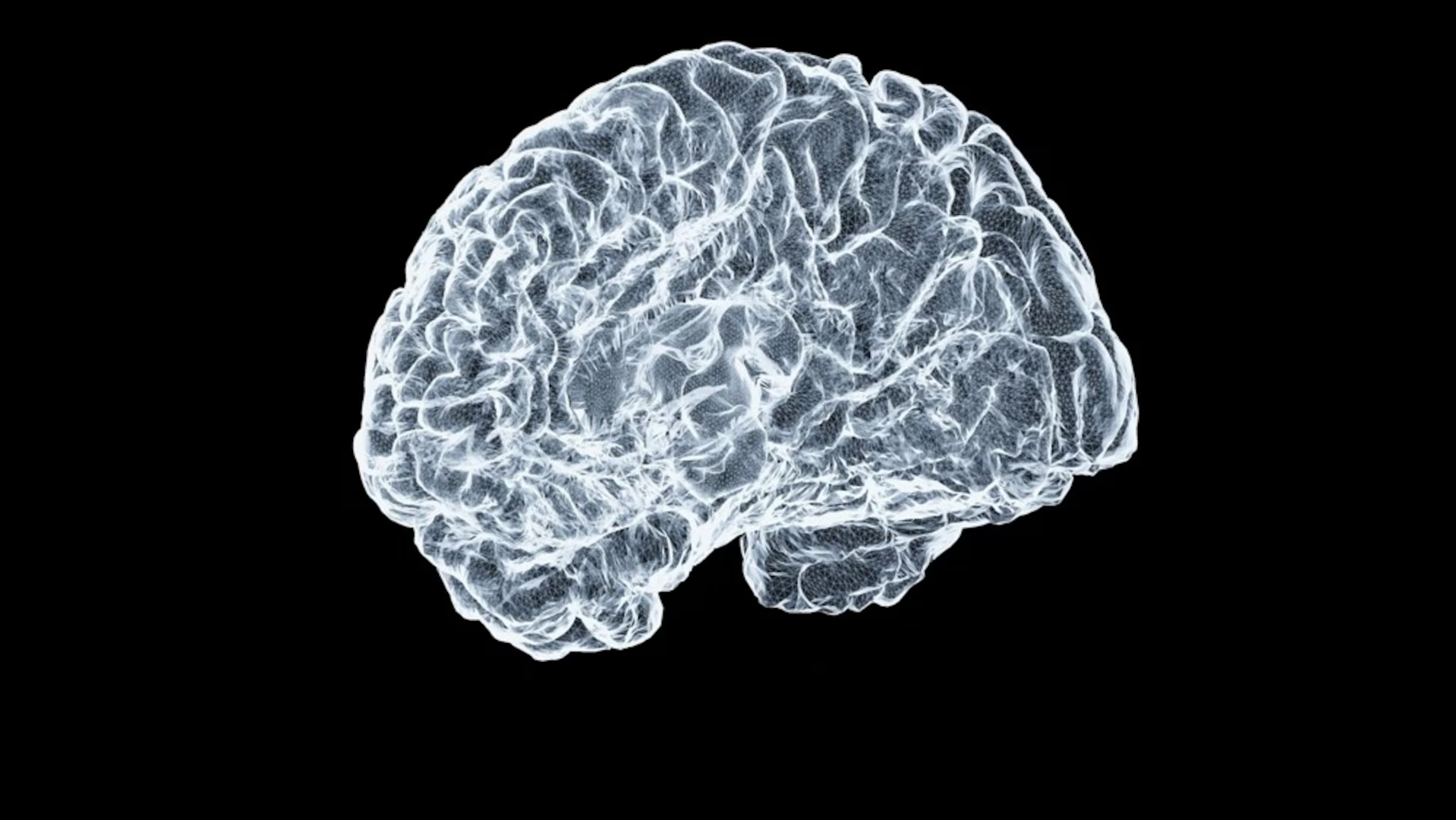

In this Strategic Insights piece, Dr. James Giordano provides a neurostrategic perspective on the evolving character of engagement regarding the rise of cognitive warfare.
Cognitive warfare is the operationalization of neuroscience to influence the underlying neural processes of human thought, emotion, and behavior. This approach treats the human brain as a strategic target and vector, leveraging information and narrative to affect the neurobiological substrates of the mind. By focusing on the way individuals process information rather than simply the content of their beliefs, these operations target perception, judgment, and emotional valence. The objective is to degrade an adversary’s ability to reason effectively and act coherently, thereby eroding the foundational elements of organized force and resistance.
Tactical execution in this domain utilizes advances in data analytics and artificial intelligence to exploit specific cognitive vulnerabilities such as bias, stress responses, and social identity. Operations employ techniques like cognitive overload and behavioral priming to induce neural effects that manifest as compromised situational awareness and reduced morale at the individual level. On a collective scale, these methods can fracture social cohesion and undermine trust in institutional authority. In extreme cases, this leads to cognitive disintegration, a state where a group becomes unable to generate the consensus required for effective collaboration or governance.
Dr. Giordano notes:
Cognitive warfare does not change the nature of war, but I posit that it profoundly alters its character. Historically, shifts in the character of war have been driven by technological innovation (e.g., the longbow, gunpowder, mechanization, aircraft; nuclear weapons, and most recently, cyber capabilities). Each introduced new ways of projecting power, operationalizing tactics, and achieving strategic objectives. Cognitive warfare represents the next inflection point.
Read Assessing Cognitive Warfare by Frank Hoffman and browse the cognitive warfare archives.