Cognitive Warfare 2026: NATO’s Chief Scientist Report as Sentinel Call for Operational Readiness


In the January 6, 2026, commentary from the Institute for National Strategic Studies, Dr. James Giordano examines the NATO Chief Scientist’s 2025 Report on Cognitive Warfare. The report frames contemporary conflict as behavior-centric, with decisive effects occurring in how individuals and groups perceive, interpret, decide, and act. He structures the piece around three core shifts in military missions:
- expanded target sets that now include human cognitive and social systems such as trust networks and institutional legitimacy;
- a continuous battlespace that operates in non-kinetic domains and blends competition with conflict;
- revised measures of effectiveness focused on durable changes in cognition and behavior, including risk perception and civic cohesion.
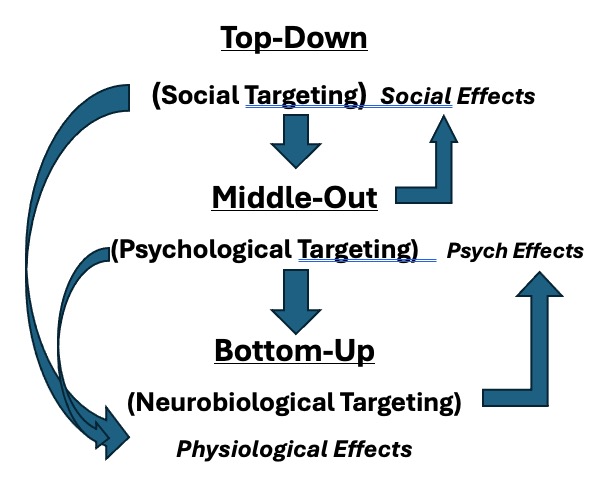
The analysis details effects at biological, psychological, and social levels through complementary approaches. Neuroscientific techniques and artificial intelligence applications support bottom-up, middle-out, and top-down methods to shape cognition, emotion, and group dynamics. Artificial intelligence acts as a central accelerant by enabling micro-segmentation of populations, real-time narrative optimization, social amplification via automated networks, synthetic credibility tools such as deepfakes, and exploitation of cognitive biases. Dr. Giordano addresses both offensive applications, which aim to disrupt adversary sensemaking, and defensive applications, which protect operational readiness and societal cohesion against narrative exploitation and demoralization. His piece underscores the global scope of these capabilities and NATO’s need to integrate them across missions.
Dr. Giordano concludes by outlining practical steps for operational adaptation. These include:
- establishing cognitive indicators and warnings as a standing intelligence function that fuses neurocognitive science, data analytics, and operational expertise;
- building neuro-artificial intelligence programs for readiness and resilience through targeted training and protective measures;
- developing doctrine that embeds cognitive engagement within planning alongside cyber, electronic warfare, and information activities;
- expanding ethical-legal frameworks to govern dual-use technologies.
The central lessons learned emphasize the requirement for cognitive superiority through measurable detection, trained resilience, integrated doctrine, and accountable governance to maintain strategic advantage in hybrid environments. The full article provides detailed guidance for translating these concepts into field-ready capabilities.