





Sabotage from Afar: How Undeclared Drone Armies Prolong War and Derail Peace
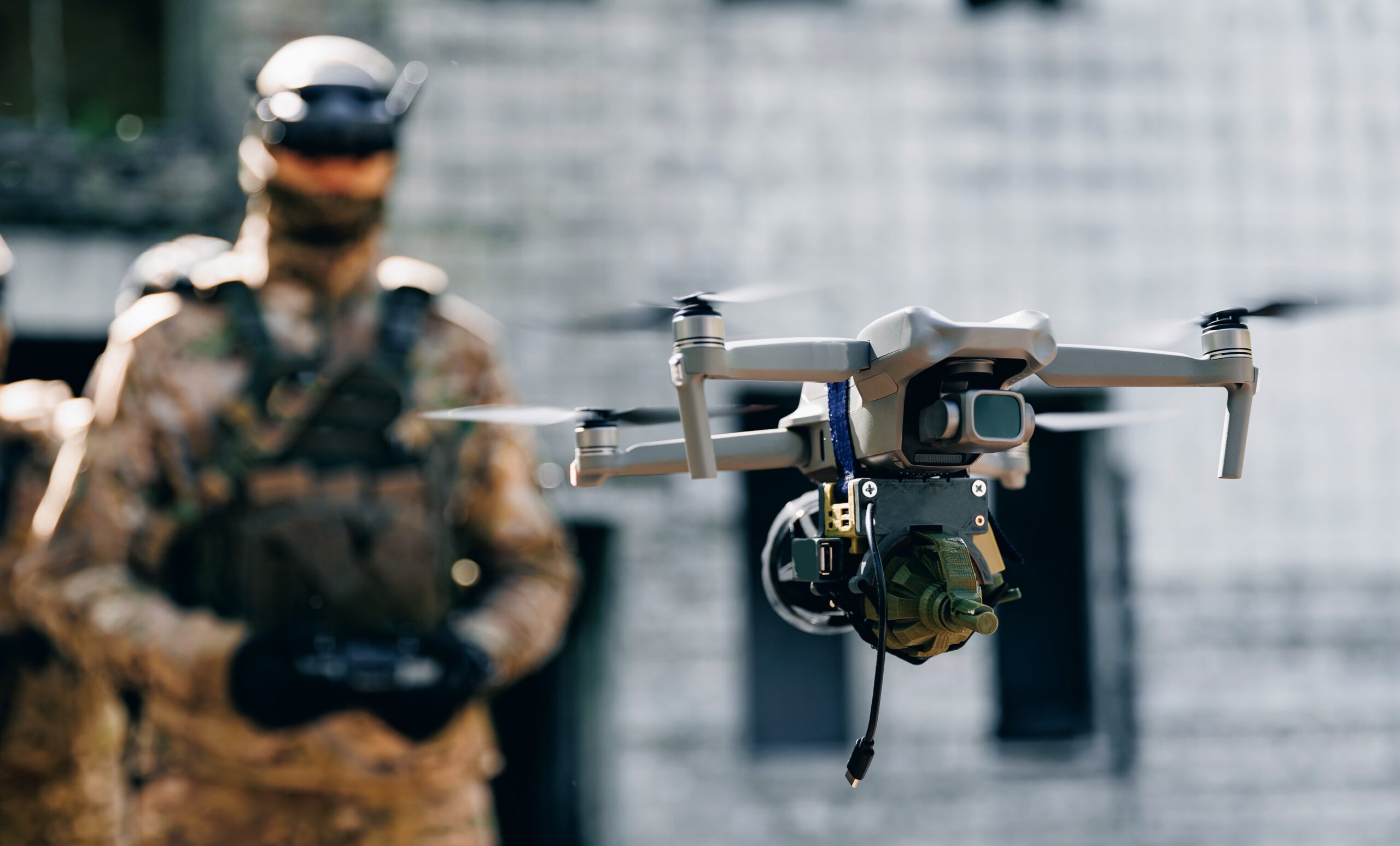

Abstract: The covert deployment of advanced drones to countries in conflict by third-party states is intensifying modern warfare and undermining international peace-making in ways that are not yet fully understood. It is now well established that they can be mass-produced by middle powers such as Türkiye and Iran and deployed in swarms. What is less appreciated is how third-party states can now deploy drone armies to engage in warfare in other countries without publicly disclosing their involvement, and in ways that can delay peace negotiations for years at a time.
Historically, third‑party states have often supported warring factions abroad—whether by deploying full ground armies, conducting traditional air force bombing campaigns, or carrying out covert air and ground operations. Drones represent a distinct class of weaponry that is giving third‑party states, including middle powers such as Türkiye, Iran, Israel, and the United Arab Emirates, the ability to sustain direct involvement in multiple distant conflicts at the same time. Their lethality is the result of several factors. Many models are powered by artificial intelligence, which means that they can operate fully autonomously and in coordinated swarming tactics. But it is their low cost, the ease with which they can be transferred to local allies, and their ability to be deployed from afar that is making this particular technology so impactful.
Nations that have heavily invested in such systems recognize that they hold a temporary, asymmetric advantage over their adversaries. Consequently, they are highly incentivized to aggressively capitalize on their technological superiority and achieve strategic gains before rivals can close the capability gap. This window of opportunity actively encourages pre-emptive or accelerated offensive action rather than deterrence, which was notably evident in the recent conflict in Azerbaijan, which sought Turkish assistance to reignite and win its conflict against Armenia.
Drones also effectively neutralize many of the historical advantages once held by asymmetric forces against traditional armies. This shift was vividly demonstrated in Ethiopia in late 2021, when the Tigray Defense Forces pushed deep toward the capital, bringing the Ethiopian National Defense Force to the brink of collapse. To stave off defeat, the federal government rapidly procured advanced combat drones from foreign allies like the UAE, Türkiye, and Iran, fundamentally altering the battlefield. The same dynamics impacted Türkiye’s campaign against the Kurdistan Workers’ Party, where the devastating efficacy of remote warfare is reflected in a staggering surge of air and drone strikes, escalating from roughly four hundred incidents in 2018 to over four thousand four hundred by 2024.
Crucially, however, is the fact that drones can be operated remotely, which introduces significant operational ambiguity that enables unprecedented levels of covert third-party intervention. Determining the origin and operator of these systems is notoriously difficult. In the current conflict with Iran, analysts are uncertain where the drones that have attacked Oman and Saudi Arabia were operated from. It remains unclear whether Iran was responsible, or if Ansar Allah launched them from Yemen to covertly assist Iran, or if another actor orchestrated a false flag operation from Houthi-controlled territory. Furthermore, there is strong evidence that drones are frequently operated not by the combatants themselves, but directly by the supplying state—such as Türkiye in Pakistan—or by private contractors acting on their behalf, as seen with the UAE in Sudan.
Historically, the closest equivalent was the deployment of covert special forces to conduct direct operations in foreign conflicts. While these physical interventions offered a high degree of tactical control and significant operational impact, they were utilized sparingly due to the risks to personnel and the political fallout that accompanied capture or death. During the Republic of South Africa’s 1985 Operation Argon, a special forces commander was captured in Angola, which triggered immediate international condemnation and forced a total reassessment of South Africa’s covert support networks. Even when operatives successfully evade capture, the mere revelation of their clandestine presence can inflict lasting diplomatic damage, a reality clearly reflected in the enduring hostility that many political forces feel towards both Israel and the Kurdistan Regional Government following the exposure of prior Mossad assistance to Kurdish forces. For drones, the cloak of deceit is vastly greater than in traditional interventions. Capturing a downed system reveals very little and apprehending the operator is close to impossible, given that they can be a country away. Even if confronted with some evidence of involvement, third-party states have the benefit of deniability, which can last for years.
This unprecedented dynamic has given rise to a new category of warfare, which we refer to here as ‘Covert Remote Engagement.’ In this paradigm, third-party states transcend the traditional roles such as financing proxies or supplying weapons. Instead, they engage directly in combat through mechanized, remote means without the physical risk to personnel or ever needing to formally acknowledge their participation. Because of the exceptionally low financial barrier, middle powers are now able to sustain involvement in far more conflicts than would have been possible in the past. A middle power such as Türkiye can now simultaneously sustain direct involvement in Libya, Syria, Sudan, Azerbaijan, Somalia, Ethiopia, Pakistan/India, while also engaging in its own wars in Northern Iraq and southeastern Türkiye.
Stalemate with No Hurt
These new conflict dynamics are also challenging traditional understandings of how peace agreements can be negotiated. Mediators and peace experts frequently argue that a fundamental precondition for ending a conflict is reaching a “mutual hurting stalemate”. This concept describes a critical stage where all involved parties realize they can no longer achieve a unilateral military victory and that the physical, financial, or reputational costs of continuing the fight have become unbearable. That notion has now been disrupted by the rise of Covert Remote Engagement.
Because drones can be supplied rapidly and in vast quantities, conflict parties require fewer soldiers and suffer far fewer casualties, diminishing the acute pain necessary to incentivize compromise. Furthermore, the sudden influx of advanced drones can drastically alter the balance of power, enabling smaller or lesser-equipped factions to redress massive imbalances of force and sustain operations indefinitely. Conflicts that might have otherwise concluded swiftly through decisive military victories are instead prolonged. This dynamic can empower smaller nations to successfully resist predatory incursions by larger powers (as demonstrated by Ukraine’s defense against Russia) or middle powers to resist assaults by much more powerful military forces (Iran’s reliance on remote capabilities to counter the US and Israel).
However, it equally means that morally ambiguous conflicts can drag on for decades, fueled by an incessant flow of cheap weaponry. This is starkly evident in Sudan, where the Sudanese Armed Forces (SAF) initially possessed superior manpower and conventional equipment. At first, the Rapid Support Forces (RSF) neutralized this advantage by embedding in the dense urban infrastructure of Khartoum. After it was expelled from Khartoum, the RSF would have remained a vulnerable light-infantry force exposed to SAF airstrikes in much more open terrain. Drone technology allowed the RSF to survive, aggressively strike conventional airbases, and relentlessly prolong the war. In return, the SAF is now being supported by an undeclared Turkish drone army that is operating out of an airbase in Egypt.
Drones also foster a persistent illusion among leaders that a decisive military victory is always just one technological upgrade away. While any initial asymmetric advantage is inherently temporary and requires swift exploitation, if given enough time, adversaries inevitably adapt by deploying countermeasures such as jamming technology, thermal blankets, or their own remote systems. At the very least, the ongoing cycle of technological injection and adaptation will prolong hostilities by several years. Much more worrying is the possibility that, once these transient advantages are neutralized, the warring factions are left in a “stalemate without the hurt,” entirely lacking the agonizing pressure required to force meaningful peace negotiations.
Satisfying Third Parties
In civil wars, deeply distrustful local factions lack the leverage and resources to guarantee demilitarization themselves, requiring a powerful external guarantor to enforce any agreement. Furthermore, localized peace deals often fail because a domestic faction’s goals rarely align with their patron’s broader geopolitical ambitions, such as establishing regional hegemony or securing maritime routes. The result is that peace negotiations have always involved third parties to one extent or another.
Today, peace negotiations operate under entirely different realities. In places like Libya, Sudan, and Yemen, third parties that are playing active conflict roles now often refuse to participate in negotiations. Even when they do participate, they do so without any sense of urgency and never formally acknowledge their actual set of grievances (as seen with Türkiye in Libya or the UAE in Sudan). Since their involvement entails minimal financial and political risk, external states feel no urgency to press their demands or engage seriously with mediators. Instead, they are content to leave conflicts in a frozen state for years at a time.
Even before the advent of Covert Remote Engagement, mediators had been struggling to make meaningful progress across a range of conflicts due to a highly fractured international environment. Mediators suffer from many limitations, including limited capacity. However, their task is now complicated further by external actors who refuse to engage seriously. Mediators are then forced for years to deploy resources to engage with low-level ministry staff or local think tanks in an attempt to glean small insights into what interests third-party nations might be seeking to pursue through their covert engagement. This dynamic was clearly evident during Germany’s mediation efforts in Libya, where heavily involved foreign powers directly subverted the diplomatic process. In the future, this form of deliberate stalling threatens to become even more destabilizing as warring factions build direct relationships with private military companies to operate their drone fleets. Independent corporate actors may soon be given the financial motive to actively sabotage peace talks and the capacity to do so without bearing a significant political risk.
The consequence of this geopolitical gridlock is that local populations are abandoned to suffer in an indefinite state of violent limbo while conflict parties sit back and allow machines to wage war on the cheap for years at a time, never feeling the need to take peace negotiations seriously. If this emerging dynamic is to be reversed, it will require a concerted international effort to impose political costs on third‑party states that needlessly prolong conflicts abroad. Yet, while such an approach is conceivable in theory, it remains less than likely given the current global environment.


