Chemical and Biological Warfare during the Rhodesian Bush War

Abstract
The Rhodesian use of chemical and biological weapons (CBW) during the Rhodesian Bush War remains a little-studied aspect of counterinsurgency (COIN) operations. While the program provided initial tactical advantages and caused thousands of guerrilla casualties, it ultimately failed to be militarily decisive.
Introduction
Chemical weapons have been employed as part of counterinsurgency (COIN) operations multiple times over the history of warfare. Examples include the Italian use of blister agents in the 1935-1936 invasion of Ethiopia, the use of German chemical weapons stocks by the Spanish and French during the Rif War in Morocco, and the rumored deployment of chemical weapons by the Soviets during the invasion of Afghanistan. However, the use of chemical and biological weapons (CBW) by the embattled Rhodesian government during the 15-year Rhodesian Bush War remains little known.
On 11 November 1965, the apartheid colony of Rhodesia declared independence from the United Kingdom. What followed is now known as the Rhodesian Bush War, a prolonged and bloody guerrilla conflict. The struggle between the Rhodesian regime and the multiple guerrilla factions was complex and ever-shifting. A full description of this complex war is outside the scope of this article. However, the Rhodesian use of chemical and biological weapons (CBW) in counterinsurgency (COIN) operations remains unparalleled in both its effectiveness and brutality.
Rhodesian COIN Strategy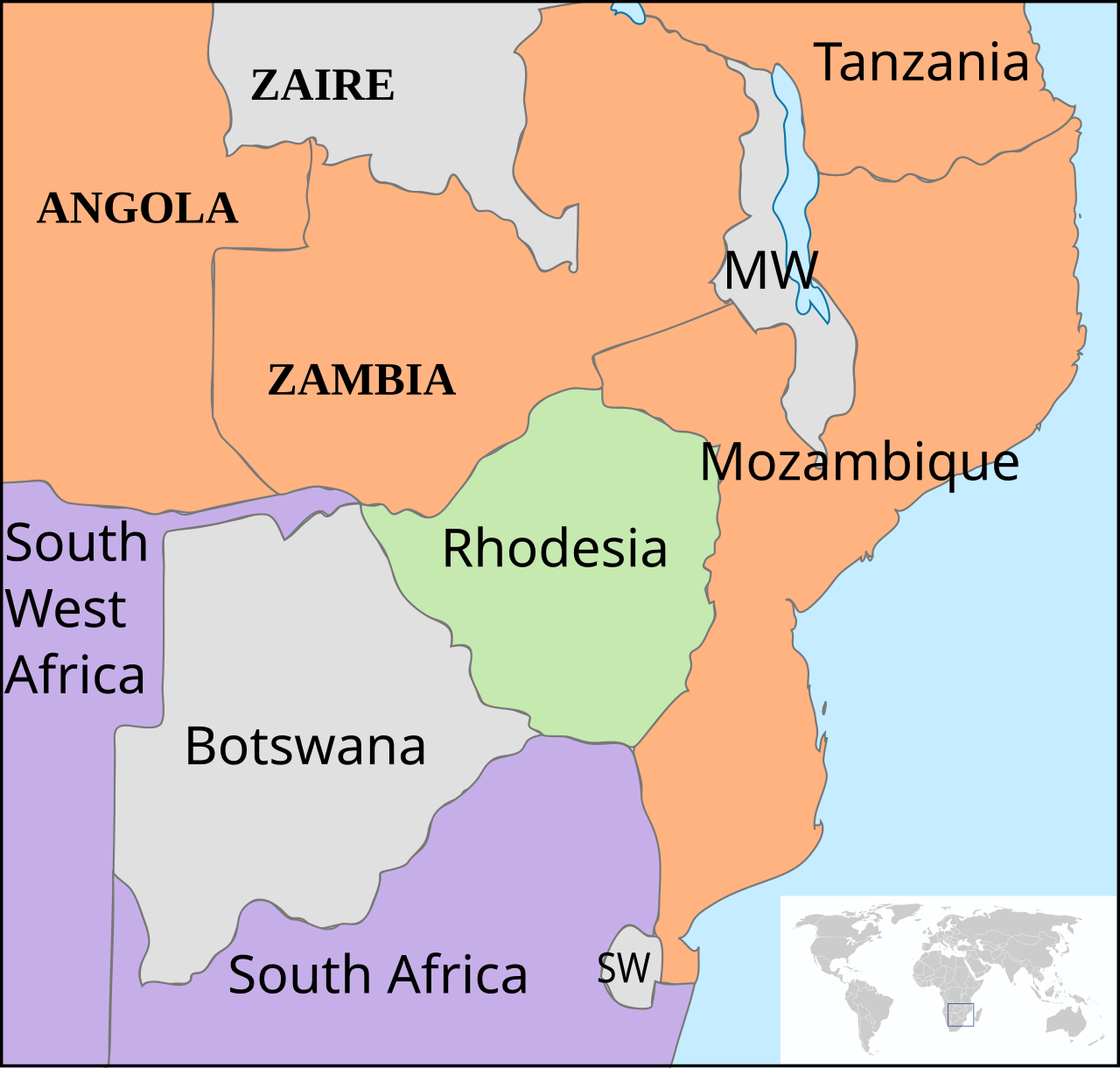
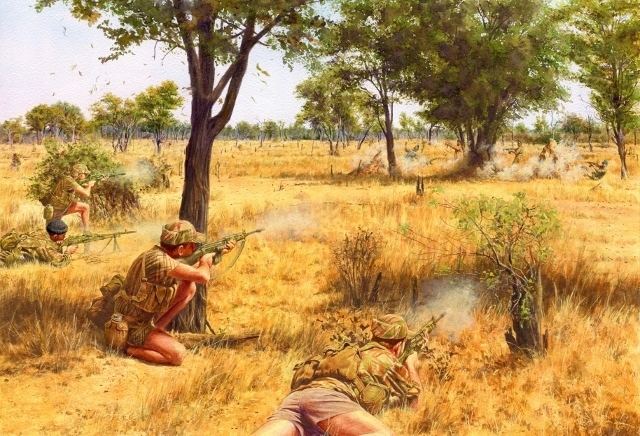
The Rhodesian COIN strategy is a textbook example of tactical success paired with strategic failure. By the end of the conflict, Rhodesian special forces – focused on rapid mobility, raids, and small-unit tactics – were considered some of the best COIN units in the world. Despite the overwhelming tactical advantage Rhodesian forces held on the battlefield, their COIN strategy culminated in a complete loss, as the regime refused to consider the possibility of compromise or winning the support of the majority African population until it was far too late.
By 1975, the Rhodesian regime’s initial successes in the war were rapidly eroding. As local support for the guerrillas grew, a new government sympathetic to the guerrilla cause arose in Mozambique, opening a second 1200-kilometer front. Forced to adapt due to an extreme lack of resources and manpower, Rhodesian forces adopted unconventional COIN tactics during the war’s final stage from 1976 to 1979. Chief among them was the deployment of CBW.
Dirty Tricks
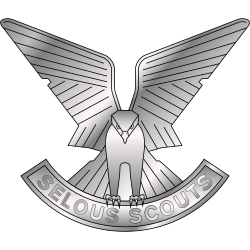
The Rhodesian CBW project was proposed by Professor Robert Symington, a professor at the University of Rhodesia’s medical school. The Central Intelligence Organization (CIO) of the Rhodesian intelligence apparatus took over the project, which was implemented by a specialized branch of the Selous Scouts.
From its very beginning, between mid-1975 and mid-1976, the Rhodesian CBW program was “amateurish”, hindered by a significant lack of time, resources, and scientific competence. Most of the day-to-day processing typically only required two workers, typically medical or veterinary students.
The majority of Rhodesia’s CBW program was developed from cheap, readily available sources. Agricultural products, including pesticides and organophosphates, were purchased from commercial sources, as were products that were later found to be poisoned, such as clothing and food. The apartheid South African regime secretly provided funding and resources, but the full extent of South African involvement remains unclear.
The facilities for the program consisted of a laboratory built into Symington’s residence, as well as primitive facilities at 2 Selous Scouts forts, located in Bindura and Mount Darwin, respectively.
Production of CBW agents was as rudimentary as the available resources, facilities, and expertise would suggest. None of the chemicals used by the Rhodesians were produced on-site; instead, commercial pesticides and industrial supplies were adapted into rudimentary chemical weapons. Production was typically conducted on an as-needed basis, usually with specific guerrilla groups in mind.
Tactics – Area Denial
The overextended Rhodesian forces had previously attempted area denial tactics, the most notable being an extensive cordon sanitaire along the border with Mozambique. These efforts were ultimately inefficient and a waste of critically low resources.
The arid regions of Mozambique offered an opportunity for the CBW program. The Rhodesians employed a number of CBW agents to fill the gaps in the defenses, predominantly in the dry Gaza Province. Selous Scouts were reported to have dumped cholera in the Ruya River along the Mozambique border, and within Mozambique itself. Large areas of the border became “frozen zones” forbidden to all Rhodesian forces not part of the Selous Scouts, and the RSF were warned to stay a minimum of 4000 meters away from the Ruya River. Wells, slow-moving streams, stagnant water, and other potential water sources were contaminated by cholera and other poisons.
This strategy of area denial was initially effective; there were reports of hundreds of guerrilla deaths, and several guerrilla bases had to be evacuated due to cholera outbreaks. The logistical strain that this placed on guerrillas – now forced to carry their own water– also became a significant drain on guerrilla mobility and resources. Civilian casualties were also high; in one instance, 200 civilians near the Mozambique border died after the region’s sole water supply was poisoned.
Tactics – Local Poisonings
Guerrilla forces operating within Rhodesia were often highly dependent on support from the local African population, particularly in foodstuffs. Rhodesian intelligence targeted this logistical support, often providing villagers with supplies to secretly poison visiting guerrillas. Anecdotal reports of villagers with relatives in the Rhodesian army or police deliberately poisoning food spread through the ranks of the guerrillas. In one notable incident, 11 out of 32 guerrillas died from poisoned food after visiting a single village.
Villages suspected of poisoning guerrillas often faced violent reprisals. These violent reprisals often led to mistrust and suspicion between guerrillas and the local population, alienating the insurgency from a vital group of potential supporters.
Tactics – Poisoned Food
 Beyond local poisonings within the villages, the Rhodesian CBW efforts also focused on the industrial poisonings of large amounts of canned beverages and canned meats. Thallium was used to poison foodstuffs such as canned meat, beans, and mealie meal.
Medicines were also often targeted – in one notable incident, a Special Branch officer recalled a group of 30 guerrillas that took several “vitamin pills” after a long night of drinking. Within several days, many of the guerrillas had gone blind, experienced gangrenous sores, and had even died – all symptoms of thallium poisoning. A number of outbreaks of thallium poisoning occurred in the civilian sphere, as well – in December 1977, nearly a dozen civilians died after purchasing thallium-poisoned canned meat at a local store. The local African population correctly assumed that the poisoning of the canned meat had been done intentionally.
Warfarin, a common chemical used as a rat poison, was also often used. In one April 1978 incident, over 200 guerrillas at a training camp had to be treated for severe warfarin poisoning, likely the result of warfarin mixed in with foodstuffs.
Tactics – Poisoned Clothes
The Rhodesian use of poisoned clothes was widely judged by the guerrillas as one of the most effective COIN strategies the regime employed.
Parathion was the primary chemical employed by the Rhodesian CBW program. A yellowish-brown organophosphate employed in pesticides, it may cause cholinergic poisoning within minutes to hours. At facilities such as the Bindura Fort, drums of parathion were poured out onto “large sheets of tin and dried in the sun. When the liquid had dried, the resulting flakes were scooped up and pounded into a mortar with a pestle. The powder was then brushed onto clothes…” The production process was crude, and protective equipment so rudimentary that Symington was hospitalized due to an accidental poisoning in 1979.
By drying the parathion into a powder, the Rhodesians eliminated any telltale chemical odor. It was then applied, sometimes with a mix of dimethyl sulfoxide (DMSO) to accelerate dermal absorption, to a number of clothes, including underwear, t-shirts, socks, and jackets. The blue denim trousers and khaki felt hats that guerrillas favored were also often deliberately impregnated with parathion in this manner. However, the Rhodesians preferred underwear and t-shirts, as they had the fastest rate of parathion absorption into the body. By the end of the war, over 2500 articles of clothing were poisoned in this manner. Reports of organophosphate poisonings across Rhodesia skyrocketed during this time.
Dissemination
The true effectiveness of the CBW program was in its dissemination. “Contact men” were especially effective at injecting poisoned food and clothing into the guerrillas’ supply system. Oftentimes, these contact men would be contacted by guerrilla groups with lists of requested supplies; these lists would then be forwarded to the CBW team. The CBW team would produce the poisoned supplies, which were then sent along to the contact men and from there to the guerrilla group in question. Contact men would receive Rh $1,000 for each confirmed guerrilla death. One November 1977 report claims that 79 guerrillas had been killed from contaminated supplies in a single month.
One of the most infamous collaborators with the Rhodesian CBW effort was Reverend Arthur Kanodareka. Kanodareka specialized in targeting guerrilla recruits, often supplying them “…with poisoned uniforms. The men would be sent on their way to the guerrilla training camps, but before reaching their destination, would die a slow death in the African bush. Many hundreds of recruits became victims of this operation.”
Further dissemination was conducted through local stores. Rhodesian operatives would supply local storeowners with contaminated food, medicine, and poisoned clothing. The storeowners were sometimes willing collaborators; sometimes, stores in areas with a high concentration of guerrillas were unknowingly seeded with contaminated supplies. Civilian casualties did not appear to be a concern. In his autobiography, Major John Cronin of the Selous Scouts recalls questioning a Special Branch officer, “‘But how can you be sure that the [guerrillas] and not some other African civilians will get these things?’ He smiled indulgently. ‘You’re new here, aren’t you?’
As a final means of disseminating poisoned supplies within the guerrilla logistical network, identified guerrilla caches would often be cunningly poisoned with contaminated material.
Military Effectiveness
Despite the hundreds of civilian deaths, the Rhodesians deemed the CBW program a success, estimating a guerrilla death toll in the thousands. Some estimates claim that up to 15% of guerrilla casualties during the war were due to the CBW program, a significantly higher percentage than even the First World War. Along with this, former guerrillas admitted that the CBW program caused a “significant… disruption in civilian/guerrilla relations in the affected areas, causing increased accusations of collaboration and witchcraft.”
Just as alarmingly, the Rhodesian CBW program, despite multiple warning signs in the medical literature and public accusations from guerrilla groups, remained completely unknown to Western intelligence agencies until years later.
Insurgency Adaptation
However, despite initial military successes, the CBW program was not enough for Rhodesian forces to achieve a COIN victory. The Rhodesian regime remained unable to achieve its political objectives, and guerrilla forces successfully won over more and more of the rural population’s support as the war dragged on. Any disruption the poisonings may have had between guerrilla and civilian relations may have been significant, but more ultimately “not decisive.”
On a tactical level, guerilla forces quickly adapted to the CBW threat. Teenager auxiliaries were used to test suspicious sources of food, and a culture of suspicion against unknown substances took root – when Depo-Provera was introduced to Rhodesia in the 1970s, it was widely believed to be a form of chemical sterilization against the African populace, so much that it would be banned by Zimbabwe in 1981. Guerillas carefully policed any new sources of clothing as well. New recruits arriving at training camps had to strip and then hop for half a kilometer to boost their metabolism and ensure they had not been inadvertently wearing any poisoned clothing.
The Rhodesian CBW program also offered a propaganda opportunity to the guerrillas. Using sources such as the Zambian Daily News, the ZANU-controlled Zimbabwe News, and other books and newsletters, guerrilla forces were also quick to publicize reported accounts of the Rhodesian government’s deliberate poisoning of water sources and foodstuffs. The Rhodesian regime, already suffering from its utter disinterest in winning local support, only bled further legitimacy because of this.
Conclusion
Despite its crude and rudimentary nature, the Rhodesian CBW program initially provided the regime with a number of novel COIN tactics. However, hamstrung by the Rhodesian government’s political inflexibility and by guerrilla adaptation, the CBW program ultimately failed to become a decisive factor in the Rhodesian Bush War.
The Rhodesian case offers critical lessons for contemporary counterinsurgency operations and international security frameworks. The program’s tactical achievements masked its strategic bankruptcy—a pattern that remains relevant as modern conflicts increasingly blur the lines between conventional and unconventional warfare. While tactically innovative, the Rhodesian CBW program was ultimately defeated through a number of factors, including rapid guerrilla adaptation, further loss of regime legitimacy, and its failure to compensate for a fundamental political failure in winning popular support.
Check out all the great things Small Wars Journal has to offer.