Resistance is Futile… Until it’s Not: Assessing a Nation’s Willingness to Build Resistance Capability Prior to Invasion

How willing is a country to build resistance capability if it is not being invaded or under imminent threat of invasion? Many scholars and practitioners have promoted the development of resistance capability “left of the bang” in places like Taiwan, Europe, the Philippines, and other countries in “the first island chain.” But there is a problem with these proposals. The flaw is not whether or not a resistance capability should be developed in these places – many believe it should. And the issue is not whether developing resistance capability could have potentially negative consequences – it certainly could. Rather, the problem is that developing true, comprehensive, whole-of-society resistance capability, prior to invasion, is likely impossible…or close to impossible.
For the purposes of this paper, let us put aside the argument that resistance is a naturally occurring, human dynamic that realizes success when it emerges organically and locally in response to existential threats. As noted by Colonel (Retired) Bob Jones at USSOCOM: “All the best resistance movements were not built by allies; they were provoked by adversaries.” Jones continues, saying that resistance is less about premeditated planning by external actors and more about a visceral, collective response to oppression or invasion. But as stated at the beginning of this paragraph, let’s put aside the opinion that resistance must be homegrown to be successful and assume, for the purposes of this paper, that the development of resistance capabilities could be successful whether initiated domestically or at the urging of international security partners. With that aside, let’s stop and back up even further, before any resistance capability-building initiative even starts. We are at the very initial point where one should ask, “How do we know if building a resistance capability in Country X prior to invasion is even possible?” The United States is as good a place as any to start the inquiry.
The Promise and Peril of Total Defense in the United States
It is important to note that resistance in this paper refers to countering an external invader, such as a foreign military occupation force. Ukrainians resisting the Russian invasion and occupation is an example of this. Resistance in this context is not intended to include what some would call revolution – the idea of taking action to eject or overthrow one’s own government apparatus.
In 2025, Sal Artiaga wrote an article, “The Promise and Peril of Total Defense,” which explores the feasibility of establishing a “total defense” model in the United States and other countries, akin to the whole-of-society resistance and resilience networks seen in modern Europe. These networks aim to prepare societies for external aggression through unified, community-driven efforts. Artiaga warns that in the United States, a resistance network would likely face significant challenges due to deep political polarization. “Volunteer organizations intended to prepare for a foreign attack might fracture along partisan lines. Information-sharing systems could be accused of favoring one party’s narrative over another. A resistance network designed to protect communities from external aggression could be twisted into policing political opponents,” he writes.
It is worthwhile to contemplate—as Artiaga has done—problems that might arise should a resistance capability be developed in America. It is also necessary to analyze whether it would be possible to build a resistance capability in the first place. The latter issue is the focus of this paper. Could whole-of-society America come together and collectively decide that the country needs to build a resistance capability now to deter or push back against foreign invaders in the future?
Interestingly, a 2022 poll by YouGov revealed that only one-third of Americans believed that the United States could be invaded by a foreign power sometime in the next decade. That number is not insignificant, but it is not overwhelming. A 2024 poll, also by YouGov, highlighted that only one in five adults under 40 thought that United States territory being directly attacked or being under threat of attack was not a reason to go to war. Young Americans, according to these surveys, are less likely to say a threat to the United States is a reason to go to war. Unlike European nations united by proximity to clear threats, the United States lacks a shared recognition of the need to prepare for external aggression, and perhaps rightly so. This data is not shared as a political stance but rather as an indicator of the state of American society regarding the potential for invasion and what the country should do to prepare for it. Without national unity and a clear and present threat, creating societal resilience—let alone organized resistance capability— seems unfeasible for the foreseeable future. With this information in mind, the author has created a model of the whole-of-society’s theoretical level of acceptance for building resistance capability prior to a foreign invasion. See Figure 1.
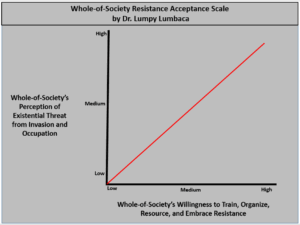
Figure 1. Resistance Acceptance Scale. Source: Author
Metrics for Assessing Position on the Whole-of-Society Resistance Acceptance Scale
To operationalize the Whole-of-Society Resistance Acceptance Scale found in Figure 1, metrics help objectively evaluate a nation’s potential to embrace resistance. The metrics assess two key axes found in the model: (x) Whole-of-Society (WOS) perception of existential threat from invasion and occupation, and (y) WOS willingness to train, organize, resource, and embrace resistance. By combining indicators across political, social, economic, and cultural domains, nations can theoretically be placed on the scale with greater accuracy. Higher aggregate scores across these metrics indicate stronger societal consensus and preparedness (e.g., closer to Ukraine’s position), while lower scores reflect fragmentation or ambivalence (e.g., akin to the United States). No numbering or weighting has been assigned here, but metrics could be added if helpful.
WOS Perception of Existential Threat. This axis evaluates the extent to which a society perceives a credible, imminent threat of invasion or occupation. Metrics may include:
- National Polls and Surveys: Surveys and analysis of existing polling data measure the percentage of the population that views external aggression (e.g., invasion by a specific adversary like Russia or China) as a “high” or “imminent” risk within a 5- to 10-year timeframe.
- Media and Political Discourse Analysis: Quantifies the volume, frequency, and tone of media coverage, political speeches, and social media discussions (e.g., posts on X) about foreign aggression and national defense using sentiment analysis tools. A high frequency of unified, positive discourse (e.g., calls for preparation without significant backlash) signals heightened threat perception.
- Government Budget Allocation: Measures the percentage of GDP allocated to defense, civil defense programs, and resilience initiatives beyond traditional military spending. Significant funding for civilian preparedness, such as in Finland, Norway, and Sweden, reflects governmental recognition of a threat, which often shapes or mirrors public perception. In contrast, other countries’ partial commitment to such funding is tempered by domestic political debates.
WOS Willingness to Train, Organize, Resource, and Embrace Resistance. This axis assesses a society’s willingness to build a resistance framework, encompassing actions, policies, and community engagement. Metrics include:
- Volunteerism and Participation Rates: Track enrollment rates and active participation in civil defense training, emergency preparedness drills, military reserve programs, or territorial defense units. Metrics could include participants per capita or growth rates of such groups. Ukraine exemplifies high participation, with thousands volunteering to join territorial defense forces, militias, and underground resistance cells organically since 2022.
- Legislative and Policy Initiatives: Evaluate the existence and enforcement of laws or policies promoting “total defense” concepts, particularly those integrating civilian and military efforts. Metrics include the number of legislative acts passed or the scope of policies enabling resistance preparation.
- Community and Organizational Resilience: Measure the number and activity level of local and national volunteer groups, non-profits, or community-based organizations focused on disaster relief, cybersecurity, or societal resilience. A robust network, as seen in Ukraine’s grassroots movements or Europe’s community programs, indicates a strong societal embrace of collective preparedness.
- Availability of Resources and Infrastructure: Assess the presence of public resources, such as government websites, training materials, workshops, or communication systems designed for use during an occupation.
- Historical and Simulated Response Metrics: Analyze past responses to crises (e.g., natural disasters or minor aggressions) as proxies for resistance potential, measuring factors like volunteer turnout or inter-agency coordination efficiency. Additionally, reference wargaming exercises or simulations of invasion scenarios to gauge societal buy-in, not just from the military, with scoring based on participation levels and post-exercise surveys.
A Snapshot of the Global Spectrum of Resistance Acceptance
The indicators described above should be applied holistically, weighted according to national context, and updated periodically to reflect evolving threats and societal dynamics. Quantitative data (e.g., polling percentages, budget allocations) can be combined with qualitative assessments (e.g., discourse analysis) to generate a composite score for each nation. The results of the author’s non-scientific scoring for Ukraine, Europe, Taiwan, and the United States are as follows:
- Ukraine: At one extreme, Ukraine exemplifies a nation where an existential threat—Russian invasion—has sparked a powerful, organic resistance movement. This movement continues to evolve, driven by immediate necessity and a unified national will.
- Europe: Slightly further along the spectrum, many European countries have implemented or are developing “total defense” policies. These involve national and community programs to organize, train, and prepare for potential Russian aggression, motivated by a clear and proximate threat.
- Taiwan: Positioned near the middle, Taiwan faces a credible threat of invasion from China. While some advocate for more robust preparation or a willingness to fight, others resist due to domestic politics, fears of escalation, Chinese influence, or a preference for addressing immediate societal needs over speculative future conflicts.
- United States: At the opposite end, limited groups in the United States discuss the necessity of developing domestic resistance capacity to fight foreign invasion. Generally speaking, however, America lacks the societal cohesion required to even discuss, let alone build, such a framework.
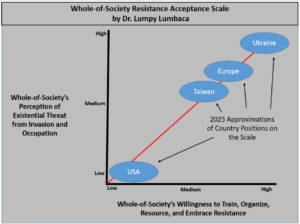
Figure 2. 2025 Approximations of Country Positions on the Scale. Source: Author
Historical Perspective on Building Resistance Capabilities
While rare, historical examples exist of nations proactively developing capabilities that could be leveraged for resistance, even in the absence of an immediate invasion threat. However, these efforts often focus on military deterrence or broader defense strategies, rather than specifically cultivating whole-of-society resistance to counter an occupying force.
Switzerland’s policy of armed neutrality, established in 1815, exemplifies a nation preparing for defense without an immediate invasion threat. By maintaining a robust military and compulsory conscription, Switzerland ensured that a potential invader would face significant costs, deterring aggression from powerful neighbors. While this approach strengthened national sovereignty, it was less about fostering a civilian resistance network and more about conventional military readiness. Similarly, Japan’s 19th-century modernization embraced Western military technology and industrial development to resist colonization. This transformation, coupled with its island geography, enabled Japan to avoid European domination and prevail in conflicts like the Russo-Japanese War. However, like Switzerland, Japan’s focus was on military strength as a deterrent, not on preparing civilians for resistance against occupation. Nevertheless, these two examples are provided as what could be considered attempts to build some type of deterrent capability without an imminent, existential threat to either country.
In Cold War Europe, the Soviet Union’s looming threat spurred more explicit resistance planning. The United States Central Intelligence Agency (CIA) initiated clandestine “stay-behind” networks in Western Europe to prepare for potential Soviet occupation. These efforts involved pre-positioning supply caches, training small guerrilla cells, and establishing communication networks to enable rapid resistance activation. These programs, often unknown to the broader public, were designed to raise the cost of invasion but were limited to small, specialized groups rather than whole-of-society efforts. Similarly, the U.S. Army Special Forces’ Detachment A, a covert unit based in Berlin during the Cold War, trained to organize stay-behind resistance networks to disrupt Soviet advances. These efforts, while proactive, were driven by the clear strategic threat of Soviet expansion, not a hypothetical scenario.
These historical cases demonstrate that proactive resistance capability-building is possible but typically occurs within broader defense strategies or under the shadow of a credible threat. Switzerland and Japan focused on military deterrence, while Cold War-era CIA and Special Forces initiatives targeted clandestine stay-behind networks. Scandinavian and Baltic efforts today come closer to whole-of-society resistance but are spurred by the Russian threat. True resistance capability, aimed at ejecting an occupying force and encompassing all societal elements, remains rare without an imminent threat. While Taiwan persists as what seems like the obvious location to build a whole-of-society resistance capability today, doing so even there remains difficult for reasons discussed earlier.
Challenges for Resistance Advocates
Accepting the model presented in this paper can pose a dilemma for those whose job it is to develop resistance capabilities, such as the U.S. Army Special Forces (Green Berets), America’s military force trained to organize and support resistance movements. In Taiwan, for instance, Green Berets promote resistance capabilities where and when possible, but their efforts are constrained by societal divisions and competing priorities, including domestic politics and resource allocation debates. Furthermore, resistance is inherently a “whole-of-society” endeavor, extending far beyond military strategy to encompass cultural, political, diplomatic, and social dimensions. As a result, even the best-intended American military efforts in places like Taiwan address only a small part of a resistance framework that must include all parts of society. If the model holds true, building a national resistance capability on the island will remain difficult, if not impossible, pending a major geopolitical or security shift in the minds of the majority. This does not mean that current resistance-building initiatives in Taiwan, or anywhere else for that matter, are for naught. Instead, such efforts provide important tools but must be recognized as incomplete.
Conclusion
This paper seeks to propose a model that serves as a practical framework for assessing the feasibility of developing comprehensive, whole-of-society resistance capabilities, whether for domestic preparedness or in support of a partner nation. Fostering resistance capabilities is extremely complex, given domestic and global contexts. As Colonel (Retired) Brian Petit, an expert on resistance movements, has written, resistance is highly nuanced and what works in one country or region may not work elsewhere. While organic resistance often survives, thrives, and may even provide substantial support to larger national security objectives in response to immediate threats (e.g., Ukraine), proactive preparation requires societal unity and a shared perception of danger (e.g., Europe). In polarized or ambivalent societies, however, building such capability remains a challenge. Effective resistance demands not just military expertise but a cohesive societal foundation—an elusive goal, especially in places not directly involved in ongoing conflict against an invading or occupation force.
(Disclaimer: The views expressed here do not reflect the official policy or position of the U.S. Government or the Department of War.)