




John Kirbow’s “Hamas’ Playbook”: What Analysts Need to Know About the Unconscious in the Minds of the Captors

Abstract
This essay focuses on the unconscious, which John Kirbow does not discuss in his analysis of “Hamas’ Playbook.” Jihadis act out in “pantomime” the quest to extricate themselves from the taboo of not separating from their mothers. Sun Tzu and Clausewitz urge us to know the enemy. Nonverbal communication and psychoanalytic child development now let us study the enemy’s mind directly, not only his words and weapons. The essay gives four reasons why this matters for understanding political violence.
Introduction
John Kirbow’s “Lessons from Hamas’ Playbook” in Small Wars Journal, November 2nd, 2026, caught my eye as I am a graduate of the Human Terrain Program (2009) and now an Israeli American who experienced October 7th, participating in the enormous societal effort of bringing our hostages home — both the dead and the living. His focus on Hamas looked at classic military tactics and strategy of hostage taking. What was left out was an unconscious understanding of the mind of the captor and how they bond violently to their victims. Psychoanalysis in conjunction with developmental psychology augments an understanding of the violent behavior of the Hamas captor.
In this essay, I explore the mind and the body language of Hamas in relation to early childhood development. In the mid-1990s, one day while watching the news about a terrorist attack, I put the TV remote on mute and asked myself what the terrorists were telling me about their early childhoods. In child play therapy, children who have not separated from their mothers have problems putting words to feelings. They can’t see the forest for the trees and have much anger about the lack of control over themselves. All behavior is potentially meaningful.
The jihadis seemed to be struggling to express unhappy childhoods. What early psychological need did they express by taking hostages? What does it mean from a developmental perspective? While Kirbow does gesture in passing to traumatic infantilism for the captives, he misses the boat on the psychological projection of Hamas acting out their traumatic infantilism on the captives. Key to understanding their infantilism is how they bond violently to their victims, revealing a grotesque physical intimacy through murder, rape, gang rape, mutilation of the human body, and beheadings. To read the violent brutality of Hamas’ canvas of destruction is to read the story of the extreme result of growing up in their shame-honor culture predicated on the destruction of the mother and her maternal bond — its banality. They remain psychologically neotenized, meaning that they are developmentally arrested. I argue that it is terrifying to see such brutality committed by adults who express themselves by infantile behavior. This psychoanalytic developmental analysis is meant as an adjunct to strategy and tactics.
A Soldier’s Guide To Hamas’s Genocidal Psychosis (Kobrin 2026): How It Came About
While watching a documentary on the Allied campaign in World War II, I saw a soldier reading a pocket guide to France. I then realized that through such a guide I could communicate the infantilism of Hamas’s behavior visually. I thought that this would help those suffering from PTSD who had a particular need to understand in detail what they had seen. Not all would necessarily need such a guide, but some. Moreover, Sun Tzu and Clausewitz emphasized that one must know the enemy. In today’s world, psychoanalysis and developmental psychology allow us to understand the enemy’s mind as well.
In May 2025, I lectured in Hebrew to Mossad, Shin Bet, and the IDF’s Aman through the auspices of MALAM, the Merkaz L’Moreshet HaModi’in (The Center for the Legacy of the Security Services), concerning early childhood development and the mind and body language of the jihadis.
The Guide concentrates on the visual aspect of the violence: a rage that exceeds murder itself in the butchering of the body, something also found in serial killing. The footage of the hostages, and the GoPro recordings that Hamas disseminated on social media, recorded not only their gruesome behavior but their psyches. They are psychologically naked. They lack introspection, insight, and empathy. This lack is largely due to having grown up in an environment of a shame- honor culture where one shames and blames. Mosab Hassan Yousef, the Green Prince and author of Son of Hamas, helps the reader understand the exquisite sensitivity to what shame does to a family in his memoir.
Statistics for the October 7, 2023 Slaughter and Its Aftermath
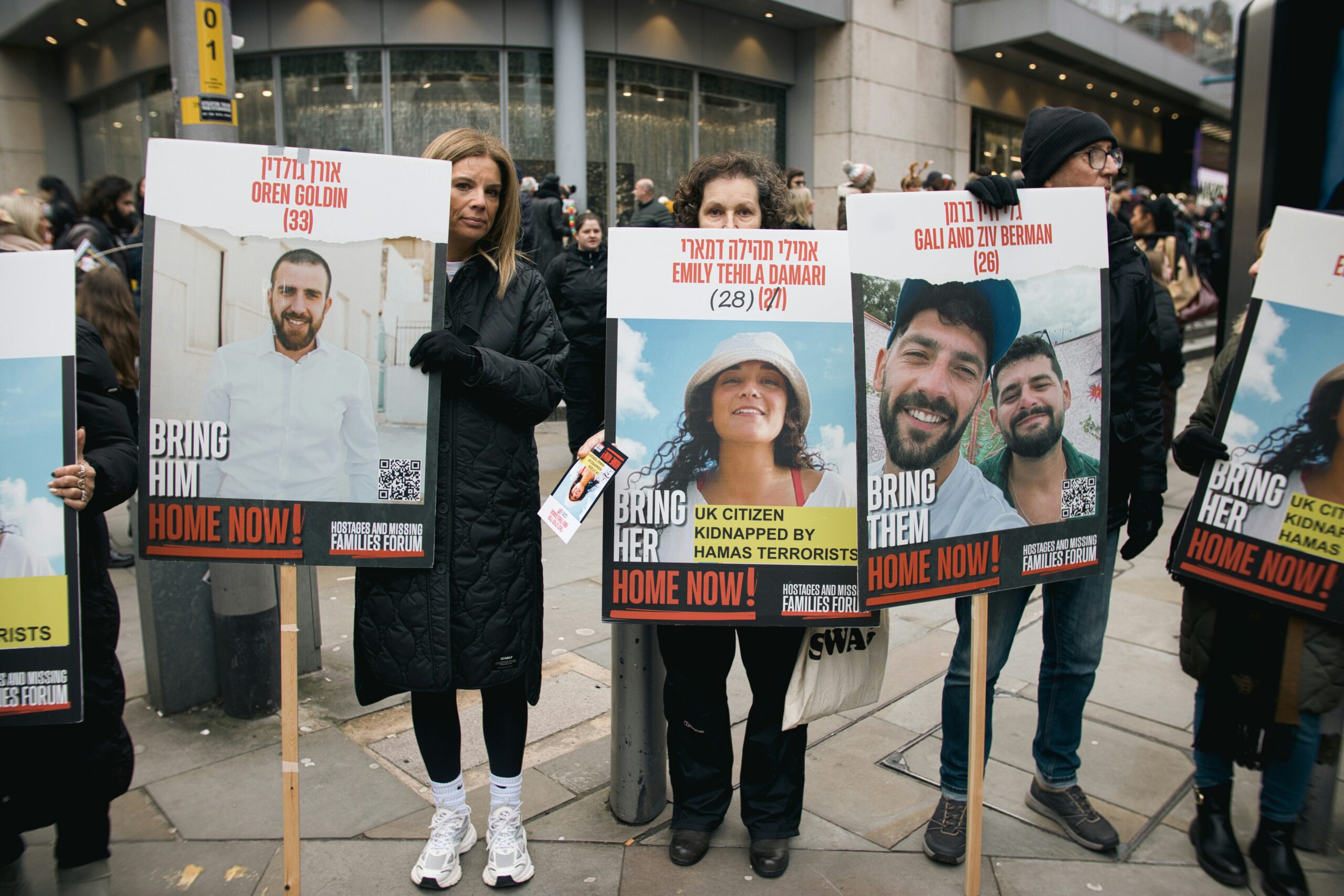
1,200 people in Israel were murdered. 251 were taken hostage into Gaza. 166 returned alive. There were 85 who died. Here is the breakdown: 44 were murdered on October 7 and taken to Gaza as dead hostages, and 41 died in captivity. According to the Israeli Ministry of Health, which conducted in-depth interviews and tests on a group of 12 returned hostages, the findings showed that all 12 had been maltreated in Gaza.
One young family: Ariel, four years old, and his brother Kfir, nine months old along, with their mother Shiri were murdered while in captivity. The IDF reported that the boys were killed by their captors’ bare hands. This is intimate murder.
In August 2024, six hostages including, Hersh Goldberg-Polin, 23, were murdered after being shot multiple times in the Rafah tunnel.
Kinocide and the Case Before the UN Human Rights Council
In the spring of 2025, Dr. Cochav Elkayam-Levy and Gil Avriel, Esq., came to my home to discuss the sexual crimes and murder targeting women and families. Dr. Elkayam-Levy coined the term kinocide from kin meaning family and -cide meaning killing, pointing to the eradication of the family as Hamas’s goal accompanying the hostage taking.
In a Jerusalem Post opinion, I argued that the attackers lingered, filmed their crimes, and used their victims’ phones to send trophy images and live-stream killings to relatives. I read this as an unconscious fantasy rooted in splitting, projection, and an inability to separate from the mother. In shame-honor cultures the bond between mother and child is “unseverable” meaning an unconscious taboo against a separation-individuation developmental stage. My colleague Fazal ur Rehman Afridi, the leading human rights lawyer for the Pashtun, in turn submitted the essay as the statement, “Holding Hamas Collectively Responsible for Kinocide and the Weaponization of Sexual Violence,” to the UN Human Rights Council at its 60th session. For analysts, the lesson is that the targeting of families and women was a psychological signature of Hamas and that it held the possibility of being used as legal evidence.
The Effect of Captivity on the Captive
Leading up to World War II, Ferenczi and Anna Freud showed that the dependent regression was an identification with the aggressor. Bettelheim, who was Jewish, described having witnessed in the concentration camps how prisoners grew dependent on their prison guards. The helpless captive in fantasy hooks into the captor for the sake of savoring a sense of power over their powerlessness as a means of survival. Herman wrote extensively concerning the perpetrator and how it is imperative to name the predatory behavior so that victims can face the reality of what they experienced.
While Kirbow used the term traumatic infantilism, there are three object relations predecessors to this story of power and control. It must be noted that they were all military men: Winnicott was a WWI Navy doctor, Bion a WWI Tank Commander, and W.R.D. Fairbairn a WWI Royal Garrison Artillery – all three came back from war, wanting to understand its impact on the mind. Each one wrote on early childhood, dependency needs, and trauma. They all described primitive emotional development. Primitive is the word. The captor becomes the parent to the captive. Any gesture on the part of the captive seeks to ingratiate him/herself to the captor for the sake of survival. Thus, an analyst must be circumspect about the nonverbal communication in such a dependent state.
When I began to write this section, I associated to the Stockholm Syndrome made famous by the 1973 Stockholm robbery in which the hostages formed an identification with the bank robbers. Six months later, Patty Hearst, a newspaper heiress, was abducted and held hostage by the Symbionese Liberation Army. She formed an identification with her captors to the point that she took on their identity by participating in a bank robbery.
However, the Stockholm Syndrome does not apply to the Oct. 7th hostages. Two hostages, Keith Siegal and Braslavski said the experience strengthened their tie to Judaism.
Shedding Unconscious Light on the Captor’s Mind
How can we understand what goes through the captor’s mind at the unconscious level? In psychoanalysis, we turn to fantasy and visual demeanor. Rarely does analysis of political violence, such as Kirbow’s essay, give much thought to the unconscious. I have been mapping out the unconscious language of jihadi terrorism for years through its visual imagery and underlying templates concerning how they bond violently to their targeted victims.
The captor seeks a union with its captive in order to stabilize a fragile violent personality that has grown up in a shame-honor culture. Hostage-taking is a psychological act for the jihadi as well as a tactical one. I have argued that the perpetrator’s violence is bound up with early experiences of shame precisely because it is humiliating not to be able to separate from the mother.
I draw the comparison to the mother being like Nvidia, as if she were “making the computer chips” for the baby’s brain during the maternal attachment from in utero to age three, when the brain reaches more than 80 percent of its adult size. She is the primary cultural interpreter for the baby. The conditions for the Nvidia mother need to be free of shame. These are the “unseen” years, the fundamental building blocks for human development as my classmate at the Chicago Institute for Psychoanalysis has written. The captor repeats his own trauma with his targeted victim. The hostage is forced into a fusion with the captor who now becomes the omnipotent parent. The “capturing” is a form of coercive intimacy.
This bonding lies underneath the chaos at the suicide attack site. The suicide bomber targets his victims in order to bond with them in death, in what is known as a death fusion. It is a rebirth fantasy, a return to the mother. I was stunned to find this rebirth fantasy also spelled out in the Japanese kamikaze manuals, where they were told not to fear death because they would see their mothers close to impact. The hostage-taker and the suicide bomber are driven by the same need for a violent union with another person who is an unconscious stand-in for the maternal bond.
The captor is like a volcanic iceberg, cool as a cucumber on the outside with a raging inner life because he never went through the process of symbolization, i.e. putting, feelings to words, a misstep due to not separating from the mother during the unseen years. When Hamas staged the handovers of the hostages to the Red Cross, they appeared calm and collected, but boiling underneath was rage at having to give up their maternal “assets”. Using psychoanalytic visual intelligence, the analyst can factor in a complementary understanding of the hostage taker’s nonverbal communication.
The Captor’s Mentality Holds the Keys to Disarming Them
Four points can be made. Each demonstrates a hidden psychological need from early childhood:
- Hostage taking is an enactment of their early traumatic maternal bond.
- The hostage smile is a pretend smile and Hamas’s need within their own group to always conform and “be smiling.” It too is a projection.
- The staging of the handover of the hostages to the Red Cross was a grotesque spectacle revealing Hamas’ infantile omnipotence and grandiosity. Israel objected to it and Qatar, and Egypt obtained a commitment from Hamas not to hold a ceremony for the last four bodies.
- Committing kinocide in the targeting of families exposes the bankruptcy of their own dysfunctional family units as well as envy of the Israeli family.
Coercion was a pervasive tactic and strategy in “Hamas’ Playbook” as raised by Kirbow. Years ago biology books used to have transparencies overlapping the different organ systems. That layered image can be applied to Hamas by turning the top pages of strategy and tactics to the unconscious. This is the first step to disarming the jihadis, knowing the root developmental causes of their violence.
The nonverbal behavior can be mapped out as a language. In 2017, I joined a linguistics project at the Universidad de Granada to help develop a tool for the police to identify those who were radicalizing online. Prof. Encarnación Hidalgo Tenorio wanted to use The Jihadi Dictionary.
As much as Hamas would like to think that they can control the reception of their behavior, they cannot because it is unconscious. Analysts who have training about unconscious nonverbal behavior can see right through their behavior. It reminds me of what Freud (1905) wrote long ago about a patient who was on the couch whose body expressed the hidden feelings without her speaking them out loud. More contemporary thinking stresses how nonverbal communication is outside of awareness.
Conclusion
The unconscious is the driver of Hamas’ behavior. While Kirbow’s “Lessons from Hamas’ Playbook” focuses on coercion, it is crucial to understand the unconscious nuts and bolts of that coercive and lethal behavior. Hamas and all other jihadis bond violently to us, as made manifest by the concrete behavior in Islamic suicide bombing, which is a lethal form of hostage taking. In 1988, Hamas wrote in its charter that it seeks the destruction of Israel and quoted the hadith about killing Jews. Some may argue that Hamas changed its tune with “A Document of General Principles and Policies” in 2017, but a leopard cannot change its spots. On October 7th, they painted a canvas of genocide so grotesque that viewers turn away in horror, too terrified to recognize Hamas’s genocidal psychosis. This is not just propaganda; it is unconscious projection. It reveals their violent fantasies concretized through the bloodshed, which stems from their unmet psychological needs of early childhood having grown up in a shame-honor culture predicated on the destruction of the mother and the maternal bond.


Commenting is available to active SWJ members and staff.