




After UNIFIL: Hezbollah, State Porosity, and the Limits of Security Assistance in Lebanon

Introduction
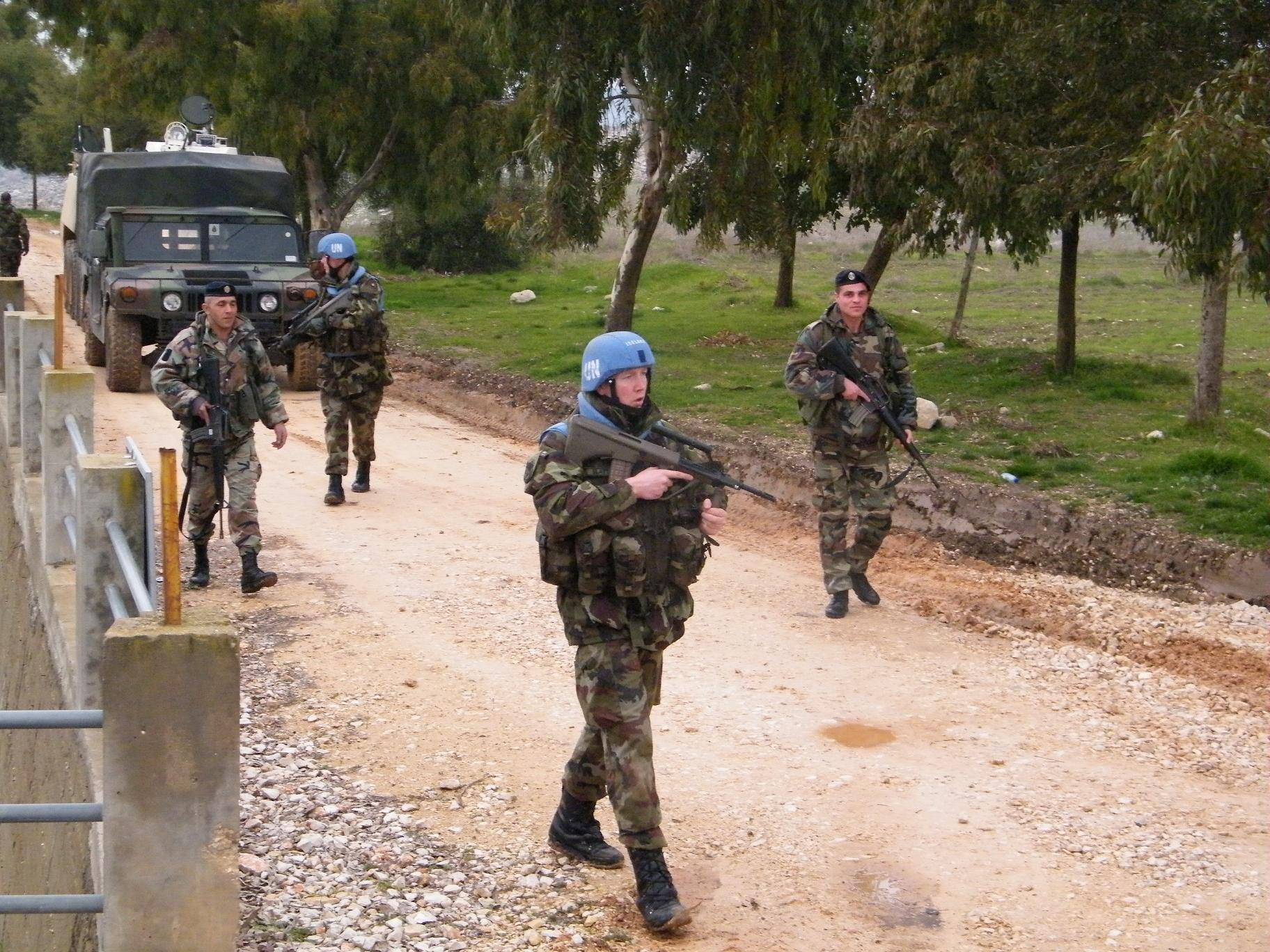
The Lebanese state has long struggled to assert effective authority over its territory amid multiple parastatal and paramilitary actors. This article focuses on the most powerful of these actors: Hezbollah, a Janus-faced hybrid actor combining a democratically elected political party that holds seats in the Lebanese Parliament and a militant wing whose activities have led the United States, Israel, the United Kingdom, Germany, and the Gulf Cooperation Council to designate it as a terrorist organization. The United Nations Interim Force in Lebanon (UNIFIL), launched in March 1978, sought to contain violence amid the civil war and the conflict with Israel in southern Lebanon. As an emergency measure, it was never designed to supplant Lebanese sovereignty.
UNIFIL’s mandate, renewed for a “final time” in August 2025, expires December 31, 2026, with troops due to withdraw within the following year. On paper, this restores Beirut’s sovereignty; in practice, it reactivates the challenges the mission was meant to contain. Behind this decision lies a broader US shift toward lighter-footprint, partner-led security arrangements in the Levant. Yet as the deadline nears, Beirut itself has called for one more extension, with President Aoun warning of a vacuum and of placing the Lebanese Armed Forces (LAF) in direct contact with Israeli forces, a request backed by the UN and France but opposed by Washington and Israel. That the Lebanese state still looks abroad to secure its own south is itself a symptom of the porosity examined here. Whether or not the mandate is extended, a post-UNIFIL order is already taking shape, and it must be anticipated rather than improvised.
The trilateral framework agreement signed by Israel, Lebanon, and the United States in Washington on June 26, 2026, tying Israeli withdrawal from southern Lebanon to the verified disarmament of Hezbollah, fits squarely within this logic – and Hezbollah’s immediate rejection of its terms illustrates the structural obstacles that have long undermined such arrangements. Implementation has nonetheless begun: the LAF declared the area south of the Litani cleared in January 2026, and Lebanese troops deployed in pilot zones vacated by Israeli forces in July, while “third-party verification” remains under discussion. Two questions follow. How can the United States and its partners contain the risks of a post-UNIFIL south, from Hezbollah’s rearmament to renewed escalation with Israel and the illicit financial networks that sustain the group? And how can they do so while addressing the vulnerabilities that allowed these threats to take root, so as to foster effective and resilient Lebanese sovereignty in a conflict-prone region?
I argue that Lebanon’s fragility stems less from declining international presence than from the structural porosity of the Lebanese state and the nature of external engagement, from foreign patronage that ties each community to its own sponsor to Western assistance that has favored security over governance. Without meaningful structural change, intersectarian tensions will likely continue to obstruct the economic, financial, and security reforms expected by international partners. I therefore advocate for a recalibration of US technical and economic assistance, aimed not only at averting short-term destabilization, but at building the conditions for autonomous and effective democratic state authority.
A Fragmented State and the Rise of a Parallel One
Post-imperial state-building by France and Britain in the Levant, including arbitrary border decisions and the attempt to transplant a Westphalian model of statehood and a Weberian form of centralized sovereignty onto deeply plural societies, generated persistent tensions between formal institutions and local sources of allegiance – from family ties and sectarian affiliation to clan, tribal, and regional networks.
The fifteen-year Lebanese Civil War initially pitted Maronite-led Christian militias against Palestinian factions and the Lebanese National Movement, a front of leftist and Arab nationalist groups with a largely Muslim and Druze base, before fragmenting into intra-sectarian fighting and drawing in Syrian and Israeli intervention. The 1989 Ta’if Agreement paved the way for ending it by institutionalizing a revised power-sharing framework through constitutional and electoral reforms. Within this fragmented landscape of overlapping allegiances and limited state penetration, foreign elites came to view confessionalism and consociationalism – its political corollary, i.e., a power-sharing arrangement among sectarian communities – as a pragmatic lesser evil for governing plural societies like Lebanon. Yet such newly modernized and westernized states often struggle to consolidate what Ibn Khaldūn identified as the three pillars of authority in Arab-Islamic societies: social cohesion, symbolic-religious legitimacy, and physical coercion – leaving space for non-state sectarian actors able to combine spiritual allegiance with temporal authority through mobilizing projects that provide meaning and collective direction.
In such contexts, political, religious, and public spaces are often competitively shared among sectarian actors within unstable balances of power. In a 2013 study, anthropologist Robert Hayden and historian Timothy Walker conceptualized this configuration – religious authority distributed spatially, symbolically, and institutionally across a territory, rather than confined to sacred sites alone – as a “religioscape,” in which sectarian groups coexist in a condition of “antagonistic tolerance” that remains viable only so long as the balance of dominance is preserved. Once disrupted, through “trade, warfare, migration, or indigenous development,” competition over authority and space tends to become increasingly violent.
Recent demographic evidence suggests that Lebanon has undergone such sectarian rebalancing, further straining an already fragile system that relies on representational equilibrium. While the last official census in 1932 reported a near-even Christian-Muslim split, current estimates put Muslims at 69.3 percent of the citizen population, with Shi’ites (32.2 percent) narrowly overtaking Sunnis (31.2 percent) as the largest single sectarian group. According to the Pew Research Center, Lebanon also saw the region’s second-sharpest religious shift between 2010 and 2020 after Oman, with the Muslim share of its resident population rising by five points. Migration has been especially consequential here, with large-scale Palestinian and, later, Syrian refugee inflows – over 1.5 million people, mostly Sunni – further disrupting this balance of dominance.
Over time, sectarian communities organized through non-state structures became capable of converting social legitimacy and informal agency into de facto authority, with Hezbollah foremost among them. Through performative politics, it deliberately occupied and invested in public spaces to leverage public presence as a constitutive rather than merely expressive form of power, gradually displacing state authorities and other rivals, especially in southern Lebanon, the southern suburbs of Beirut, and the Beqaa Valley.
During periods of state retreat in the 1980s and 1990s, externally funded NGOs proliferated and expanded service provision, ultimately entrenching informal systems of self-help and dispute resolution outside the state’s authority.
Founded in 1982, Hezbollah developed within this environment, thriving as a hybrid structure that functioned simultaneously as a transnational Shi’ite armed resistance movement and a local political party. As Cihan Tuğal observed, such parastatal and paramilitary actors learned to frame society as a reservoir of potential “citizen-soldiers,” and to mobilize it through community-based networks and performative discourse: public rituals such as rallies, commemorations, and martyr imagery that enact, rather than merely describe, their authority. These networks could shift fluidly between armed and political registers. Their violence, he argued, was therefore not territorially bounded but rhizomic: fluid, adaptive, and “perpetuated by a multiplicity of heterogeneous, de-territorialized cells, which are contingently connected to each other.”
As of 2025, Hezbollah controlled an extensive network of parallel institutions, including religious education centers, health facilities, social welfare organizations, and informal systems of dispute resolution and detention. Like other confessional elite cartels in Lebanon, its members leveraged official positions within the consociational system to channel public resources through clientelist networks toward their core constituencies, especially working-class Shi’ite communities marginalized by post-war reconstruction, in an overall population where more than eighty percent live in multidimensional poverty. The organization also drew on private funding through foreign links and real estate rents, producing a de facto “state within the state.”
External Patronage as a Risk Multiplier
Power-sharing systems like Lebanon’s consociational democracy work under two conditions: social cleavages must be cross-cutting rather than mutually reinforcing, and the system must be shielded from outside interference. External patronage undermines both at once. By tying each community to its own foreign sponsor, it hardens sectarian divisions into rival camps, and it imports regional conflicts into domestic politics. Patronage thus does not merely add risk; it multiplies it: every regional shock reverberates through Lebanon’s sectarian fault lines, making the country less a player in regional rivalries than the stage on which proxy battles are fought.
Shi’ite actors – most notably Hezbollah – have benefited from a far more coherent and durable patronage relationship with Iran as part of their “Axis of Resistance,” compared with the diminishing diplomatic support available to Christian actors and the fragmented, volatile political and financial backing received by Sunni groups.
Iran’s ideological and theological support serves as a key resource for Hezbollah in justifying its armed actions in the name of transnational resistance. Hezbollah’s networks extend further through diasporic infrastructures shaped by major waves of Lebanese emigration, notably in West Africa, where it has used kinship ties – especially with the Fawaz clan – to finance operations through family-controlled businesses.
Military Pressure and Illicit Finance
Israel’s “Northern Arrows” operation, launched in September 2024 after nearly a year of cross-border fire opened by Hezbollah in support of Hamas following the October 7, 2023 attacks, inflicted substantial damage, degrading Hezbollah’s operational capabilities and infrastructure and killing several of its top leaders, including its longtime secretary-general, Hassan Nasrallah, while displacing over a million Lebanese. Some have argued that the operation also exposed the group’s “ideological hubris and lack of strategic autonomy from Iran,” a cost borne by the Lebanese population itself.
After nearly fourteen months of fighting, the Lebanese cabinet took limited but concrete steps to reassert state authority over the use of force, making the disarmament efforts of the LAF “more important than ever.” This progress proved fragile: in March 2026, amid the US-Israeli war on Iran, Hezbollah’s renewed attacks on Israel triggered Israeli retaliation, and only an April ceasefire, followed by a June agreement to scale back the fighting, paved the way for the trilateral framework agreement. Yet Hezbollah continues to resist disarmament north of the Litani, perpetuating risks to US and allied interests.
Chronic mismanagement of public finances has also undermined the effectiveness of international assistance. The 2019 protests, triggered by endemic corruption and economic collapse, reflected widespread disillusionment with Lebanon’s failed governance, hence the slogan killun ya’ni killun (“all of them means all of them”). Since the civil war, a debt-financed reconstruction model, long tolerated by international lenders, entrenched a rentier economy built on banking, real estate, and imports at the expense of local productive sectors, leaving the country dependent on remittances and capital inflows, and its youth with few prospects but emigration. Sustained by the central bank’s Ponzi-like public borrowing and financial engineering under a fixed dollar peg, and captured by the same sectarian elites, it ended in a textbook Minsky moment in 2019. Compounded by the pandemic, the collapse of the Lebanese pound, and the 2020 Beirut port explosion, the crisis pushed gross public debt to 357.5 percent of GDP by 2021.
That explosion, which killed 218 people on August 4, laid this porosity bare. Some 2,750 tonnes of ammonium nitrate, unloaded from an abandoned and opaquely owned ship in 2014, sat for six years in a hangar despite repeated warnings from customs officials. The port had been run by a provisional committee reflecting the main sectarian parties, with authority split between port management, customs, the judiciary, the army, and General Security: each had some authority to remove, sell, or re-export the cargo, though none was clearly responsible for it. This fragmentation benefited those who controlled the port: as the head of Lebanon’s Institut des Finances Basil Fuleihan put it, “this chaos suits everybody.” Posts were allocated through muhasasa, the confessional distribution of positions in place of distribution strictly according to merit: the port chief was widely seen as close to Sunni Prime Minister Saad al-Hariri, while the customs director had been backed by President Michel Aoun’s party. Access ran through wasta, the use of personal and family connections to obtain jobs, services, or favors, while cronyism shaped the sector itself: 17 of the 21 large shipping firms operating in Lebanon were politically connected. After the blast, when Judge Tarek Bitar charged senior officials, Hezbollah led the campaign against him. Bitar concluded his probe in March 2026, implicating some 70 defendants, yet no one has been tried. The two dynamics described above reinforce each other here: consociational rent-sharing produced the vacuum, and Hezbollah’s veto power protected it.
This environment also allowed illicit fundraising and sanctions-evasion schemes to thrive. As documented by terrorism-financing expert Matthew Levitt, Hezbollah cells have long relied on front charities and criminal activity such as cigarette and drug smuggling, illicit trade, and fraud, and have more recently adapted to digital payment platforms like Whish and OMT, soliciting donations under humanitarian pretexts before redirecting funds to sanctioned networks.
A recent report from the Financial Action Task Force (FATF) identified persistent deficiencies in Lebanon’s enforcement of counterterrorism financing measures, including weak judicial implementation and limited political willingness to investigate or share information on cases involving major paramilitary actors, even though many present “a well-documented track record of committing terrorist acts.”
To exit the FATF’s grey list and meet US Treasury counter-terrorist financing requirements, the Lebanese government launched a new legal and procedural compliance process in November 2025, with measures explicitly targeting Hezbollah’s funding networks, including money transfer companies and exchange houses, amid rising digital and crypto transfers.
US Assistance After UNIFIL
Between 2006 and 2025, the US spent over $3 billion on military assistance and institutional capacity-building programs to help support and stabilize the LAF.
In October 2025, the Trump administration authorized approximately $230 million in last-minute assistance to Lebanon: $190 million allocated to the LAF and $40 million to the Internal Security Forces (ISF). This reflected the broader US shift toward partner-led, burden-sharing approaches noted above, one not confined to Washington: in June 2026, France and Italy proposed launching a multinational coalition to succeed UNIFIL, framed around Lebanese sovereignty rather than cost-sharing, while the EU agreed in October 2026 on a security mission to train Lebanese forces, though one explicitly not meant to replace UNIFIL or to operate in the south.
Rather than broad or unconditional assistance, I argue for targeted, preconditioned, and regularly assessed support aimed at reinforcing core state capacities while constraining Hezbollah’s ability to reconstitute influence, specifically in two domains long under-prioritized relative to US security assistance: (1) informational and technical capabilities, and (2) public service delivery and financial governance.
Policy Recommendations
Recommendation 1: Build Lebanon’s Information Sovereignty
During the 2019 protests, polarization increasingly unfolded through social media-driven narrative manipulation. Both external actors and internal ones – especially Hezbollah – engaged in coordinated influence efforts to reframe the protests along sectarian, ideological, and geopolitical lines.
Hezbollah possesses extensive information and media capabilities, combining traditional broadcasting with digital and cyber infrastructures that enable sustained narrative control. This includes its influential television channel Al-Manar and a broader media ecosystem, including youth-oriented video games, financed partly through expatriate networks and Iranian investments in cyber capabilities that often circumvent US sanctions. Through this ecosystem, the organization has sought to portray the Lebanese Shi’ite community as monolithic and fully aligned with its political project while minimizing internal dissent.
As Israeli strikes and sustained psychological and cyber campaigns have degraded Hezbollah’s digital capabilities and disrupted its propaganda networks, the Lebanese state must reform its communication and information architecture to counter renewed efforts by parastatal armed groups to modernize their influence operations. That modernization is only accelerating, fueled by low-cost, AI-enabled disinformation tools and weak platform oversight.
Accordingly, international engagement should prioritize Lebanon’s information sovereignty through targeted assistance in three areas: strengthening state communication capacities; supporting regulatory oversight to counter disinformation and coordinated influence operations; and investing in secure and resilient digital infrastructure through public-private partnerships. Initiatives launched in the second half of 2025 – including the government’s partnerships with Starlink for satellite connectivity and Oracle to train 50,000 Lebanese employees in cloud computing and AI over five years – should be expanded, but conditioned on transparency and governance reform to prevent capture by parastatal actors, while remaining temporary enough to let the government assume full responsibility after the transition.
Information sovereignty must also extend offline. Just as Hezbollah turned public space into a constitutive form of power, the state should pursue a deliberate policy of reclaiming it, including its monopoly over symbolic power. Its counter-narrative to anarchy must therefore be visible: national symbols, public institutions, and the army should replace party banners and martyr portraits, so that order does not only exist, but is seen. That presence must rest on shared national symbols rather than sectarian ones, lest it read as one community’s claim over others.
Recommendation 2: Outcompete Hezbollah’s Parallel State
Economically, externally designed frameworks that left this rentier model intact have deepened popular disillusionment with both the Lebanese state and international assistance. International engagement should therefore shift toward targeted, preconditioned investments in core public services: healthcare, education, municipal services (e.g., water, electricity, waste management), and auditable social safety nets. In parallel, the US should expand technical and governance cooperation with Lebanese institutions to displace Hezbollah’s parallel service provision and restore state legitimacy.
By taking service delivery out of an administration staffed through muhasasa, public-private partnerships (PPPs) could help circumvent confessional capture and disputes, provided the state retains its role as regulator rather than simply handing services over, and only if the institutions around them change too. Since 2022, French group CMA CGM has operated the port’s container terminal under a ten-year concession and launched a $100 million expansion in September 2026, capital a bankrupt state could not raise. It is now even equipping customs with X-ray scanners, a frontline tool against the smuggling networks described above. Yet privatizing operations does not by itself reform the institutions that failed: the concession could create an island of good governance in an otherwise porous system, since the port is still run by the “temporary” committee set up in 1993, with no independent port authority to replace it. Tripoli’s water PPP, Lebanon’s first, already showed this: it improved service, but ended in 2007 amid resistance from the patronage networks it disrupted and the absence of a legal framework, as Lebanon’s PPP law was only passed in 2017 (a delay partly due to political deadlock, but also, as Mounir Mahmalat argues, to how outsourcing services reduces the demand for legislation). Washington’s own proposals, such as renewed support for the electricity sector, would face the very same test.
In healthcare, support should shift from purely humanitarian modalities toward strengthening the national primary healthcare network, with the state contracting private and NGO providers against auditable results, and investing in workforce training and decentralized, needs-based care, so that citizens everywhere see the state, not a militia, as the guarantor of care.
These efforts should be paired with sustained political and regulatory pressure on Lebanese authorities to accelerate governance reforms, particularly those identified in recent FATF assessments. Leveraging healthcare and social-sector investments as conditional incentives would help advance regulatory modernization, enforcement capacity, and financial transparency. Conditionality alone will not suffice, however: past pledges, from the Paris-hosted 2018 CEDRE conference to the 2021 US-backed energy plan, stalled precisely because the reforms they required depended on the elites they would constrain.
Conclusion
A weak or contested Lebanon is not merely a failed state; it becomes a strategic risk multiplier for the wider region. Left unaddressed, its parastatal fragmentation, financial opacity, and porous borders create exploitable openings for regional escalation and transnational financial risk, precisely the outcomes that targeted, conditioned international engagement is best positioned to prevent. With UNIFIL’s mandate ending on December 31, 2026, the coming months will determine whether international partners help the Lebanese state close these gaps or leave Hezbollah to fill them once again.


Commenting is available to active SWJ members and staff.