





Inadvertent Supply Chains: U.S. Deportations and Russia’s Foreign Recruitment

Introduction
In June 2026, Ukrainian forces captured Colombian citizens who were notably recruited as mercenaries fighting for the Russian army. Reports indicate that the Federation sustains its warfighting capabilities by actively seeking recruitment opportunities in African nations. This is due to Moscow’s persistent hemorrhage of citizens evading military mobilization, alongside notable battlefield casualties reaching an estimated 1.4 million since the inception of the Russo-Ukrainian war in 2022. Known African conscripts, including individuals from Ghana and Cameroon, overlap with countries to which the Trump Administration’s recent third-country deportation pipelines have relocated more than 100 deportees.
Russia’s targeted demographic for military conscription coincides with vulnerable foreign nationals seeking employment and educational opportunities. While deportees from the United States are given the option by third-country nations to seek asylum legally or self-deport, the general status of accommodations, including food, healthcare, and legal-processing expenses remains unclear. Vulnerable deportees seeking fundamental needs post-removal may be susceptible to Russia’s deceptive recruitment pipelines. The potential convergence of U.S. deportation practices with Russia’s foreign recruitment efforts warrants examination of whether populations removed from the United States could inadvertently contribute to Moscow’s long-term warfighting capabilities.
U.S. Third-Country Deportations and Russia’s Foreign Recruitment
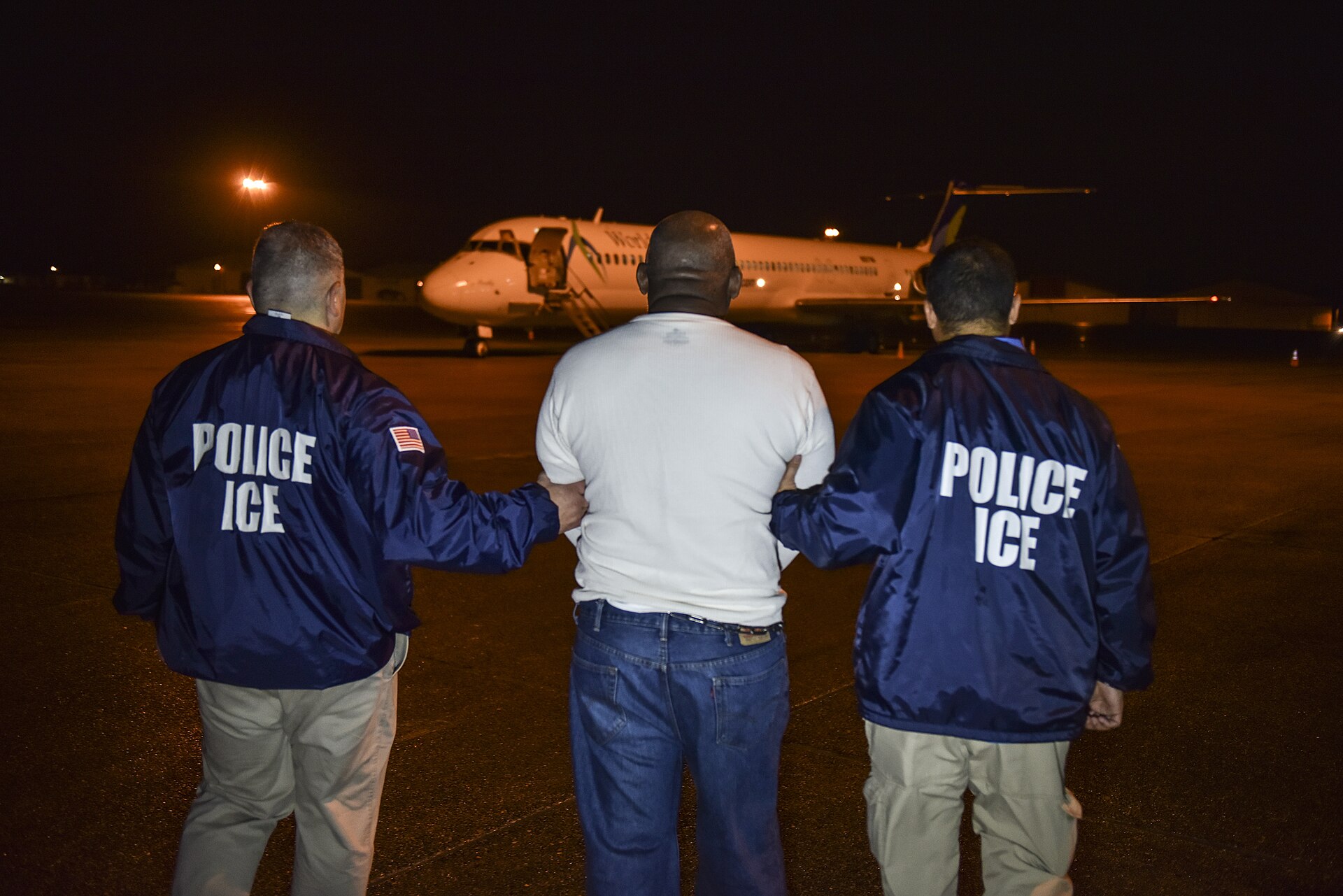
As part of the Trump Administration’s immigration enforcement strategy, the state is relocating expelled individuals in lieu of sending them to their country of citizenship. Reports have noted that the administration has established bilateral agreements with at least 12 African nations, including Uganda, Ghana, Cameroon, and the Central African Republic (CAR), which accept these non-citizens from the U.S. in exchange for financial compensation. The national origins of deportees vary among host states; nations such as Ghana and Sierra Leone only agree to accept individuals from other African nations, whereas countries such as Eswatini and Liberia receive detainees from Latin America, Europe, and Asia. The total volume of these operations remains unclear, though third-country deportations began as early as July 2025, and countries like Liberia are projected to receive approximately 1,200 migrants. Currently, deportees are housed in hotels; however, long-term conditions remain unclear.
Substantial losses for the Russian Federation, in concert with ongoing emigration, have forced Moscow to supplement its warfighting capabilities with recruitment possibilities abroad. These recruitment pipelines notably extend from Latin American states, with Colombian and Peruvian authorities prosecuting alleged recruiters, to African nations, in which Russian officials agreed to halt recruitment pipelines specifically targeting Kenyan nationals following diplomatic pressure from Nairobi. Accordingly, the Federation’s enlistment channels leverage coercive tactics to exploit foreign nationals from least developed countries (LDCs) as well as migrants and refugees residing within Russia. Ukrainian officials estimate that approximately 30,000 foreign nationals are actively fighting on behalf of the Federation, with more than 1,700 African nationals originating from 36 unique countries actively deployed on the battlefield.
Coercive and entrapment tactics by Russia’s Federal Security Services include providing false promises to vulnerable foreign nationals in LDCs traveling to Russia seeking economic and educational opportunities abroad, who are then subsequently pressured into Russian military contracts, with countries including Mali, Nigeria, Cameroon, Uganda, and Ghana featuring recruits. Foreign fighter recruitment pipelines operate through more clandestine channels such as private military units like Africa Corps (formerly Wagner) in the CAR. Various prisoners of war, including Colombian nationals in Ukrainian custody, anecdotally disclosed their own experiences fighting with the Africa Corps in Africa before subsequently becoming involved in recruitment into the Russian military.
Strategic Considerations and Risk
In general, refugees, displaced persons, asylum seekers, and migrants in irregular camps and holding centers across Africa face a high likelihood of human trafficking and severe exploitation. Authorities indicate that the coercion and exploitation of individuals into fighting for the Russian armed forces under the false pretext of advantageous prospects constitute human trafficking violations. Deportees from the United States, while actively supported by the United Nations International Organization for Migration with accommodations and temporary post-arrival humanitarian assistance, cannot rely on this as a sustainable approach indefinitely. Similarly, many of the countries in which third-country deportees are being relocated to maintain limited capacity and oversight may not have the efficacy to deter predatory actors from exploiting vulnerable populations. In countries like CAR, Cameroon, Ghana, Uganda, and Sierra Leone, known environments for foreign syndicates and criminal trafficking networks leverage economic instability and systemic corruption to traffic individuals through porous borders.
According to reports, Russia requires an immediate influx of foot soldiers to offset severe battlefield losses, seeking approximately 30,000 to 35,000 new recruits each month to replenish frontline forces. To account for the growing need for human capital to sustain warfighting efforts, without requiring national mobilization, amid an ongoing emigration problem, the Federation is relying on foreign fighters. Thus, it will likely continue to target vulnerable populations, such as third-country deportees in LDCs. In the event of a kinetic conflict with NATO allies, this urgency will subsequently increase. In September 2026, due to escalating tensions with the Federation, several NATO members, including the United Kingdom, Poland, Germany, and France are among the few actively warning their populations in the event of a wider conventional conflict with Russia.
Policy Recommendations
While there are no reports confirming that third-country deportees have been party to Russian trafficking networks, the potential convergence poses a significant security concerns. To address this, the U.S. should leverage existing congressional and interagency oversight mechanisms involving the Department of State and Homeland Security to monitor whether third-country deportees become targets of Russian recruitment or trafficking networks. Similarly, deportees in host nations are given the option to seek legal asylum status or to self-deport; however, without fundamental economic support, these options remain unattainable, allowing deportees to be susceptible to trafficking networks seeking economic opportunities. To mitigate this, the United States should assist deportees in obtaining legal asylum status within host nations or facilitate their return to their country of origin when feasible, reducing their prolonged exposure to environments susceptible to exploitation.


Commenting is available to active SWJ members and staff.