





Wildfires, High Temps, and European Security
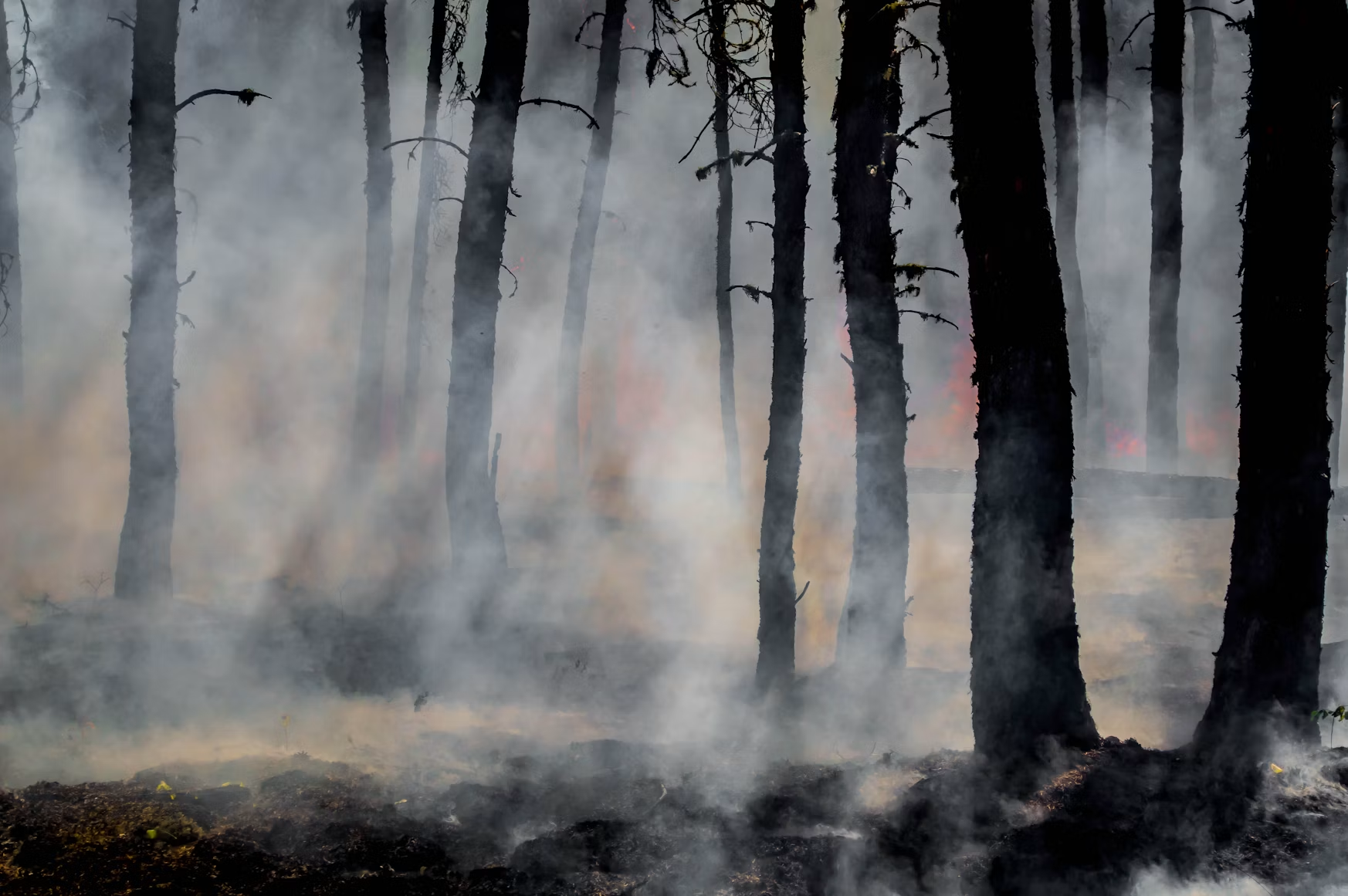

The wildfires that have raged across Spain, southwestern France and Greece are viscerally reminding European leaders of the security predicament that hotter temperatures are posing to their countries. In The National’s Europe section yesterday, Paul Carey’s “Wildfires pose security threats to Europe as blazes spread to Greece and UK” outlines the systemic risks that rising temperatures, and the wildfires they create, are having (and will have) on states across Europe. Here’s an overview.
More Death
First to mention is the risk to human health that high temperatures and wildfires pose. Already, firefighters in Greece, Spain and France have died on the line of duty. Then you have a stat that gets lost, the increased deaths caused by high temperatures across society. UN data points to 10,0000 excess deaths across Europe during the peak week of the late June heatwave. This number will have risen over the previous month.
Infrastructure (some of which should never burn)
Then you have infrastructure. On the one hand, there’s infrastructure that needs water to function and support society. Think hydroelectric power; in Hungary, dams have had to shut down this year, cutting off a significant share of that country’s generation. From a more direct security-oriented perspective, Europe’s nuclear reactors are put at risk by cooling water that is too hot to use for cooling. France’s Golfech-2 nuclear reactor was forced to shut down this week for this reason. Or worse, they could be threatened by direct flame. France’s Sizewell B reactor is currently safe from the path of wildfire thanks only to the direction of the wind.
All of this, at the least, strains the European grid. For a continent looking to build energy security, that’s not good. At the worst, it leads to blackouts and nuclear reactors on fire.
Food Production
In the UK, dampened European agricultural production threatens food security. Supermarket chiefs are calling on the newly elected PM Andy Burnham to make food security a national priority, equivalent to defense and energy. We have yet to see the full downstream impacts of the Hormuz closure on global production of foodstuffs, though we can see clearly here the growing intermingling of climate-induced impacts with conflict-driven commodity disruptions.
Bottom Line
The problem with climate-driven weather and temperature changes is that they form a feedback loop: a partially shuttered power grid increases reliance on fossil fuels (and geopolitical bottlenecks); damaged crops kill food production, driving up water use in other draught-prone regions; fighting wildfires costs money that could go into environmental management or defense, to name a few. That’s particularly true this year, which brings us the El-Nino climatic cycle. It’s likely to get worse before (if) it gets better.

