Assessing Special Operations Forces (SOF) 2040 (Part 4): Measuring What Matters – Adaptive Performance and the Next Frontier in SOF Qualification

The Adaptive Performance Core
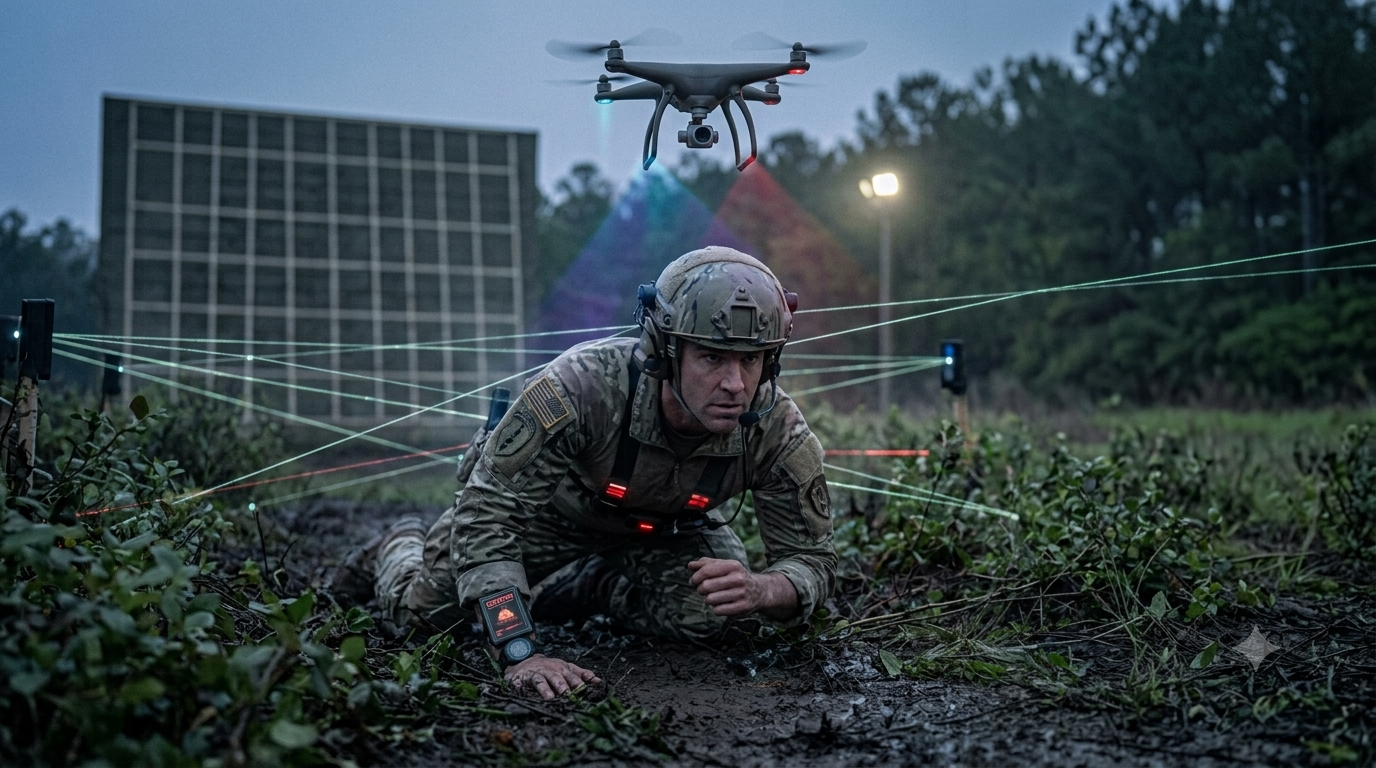
Central to our arguments throughout this four-part series, we propose “adaptive performance” as a central organizing SOF performance construct, encompassing cognitive, behavioral, and interpersonal adjustments under changing demands. To thrive in the turbulence highlighted in Parts 2 (The Two Trinities and the Human-Domain Advantage) and 3 (The Technology Layer – Cyber, Space, and Human-Machine Teaming in 2040), SOF assessment, selection, and qualification (ASQ) systems must screen for at least three pillars of adaptive performance: mental adaptability, the ability to shift thinking frameworks quickly when mission parameters change; stress adaptability, maintaining metabolic and cognitive composure as information volatility increases; and interpersonal adaptability, fluidly integrating on the fly with diverse teams, including foreign partners, inter-agency civilians, and autonomous systems. A wealth of prior research has solidified the need for such adaptive requirements in SOF missions, and we believe these requirements will only increase due to the factors discussed above. Importantly, not all performance-relevant attributes are equally trainable. This distinction carries direct implications for selection design.
Implications for ASQ 2040
Given the above, future ASQ may require more direct evaluation of:
- Adaptability and cognitive flexibility;
- Decision-making under ambiguity;
- Complex problem solving;
- Learning agility;
- Ethical reasoning under uncertainty;
- Human–machine interaction;
- Political judgment and assessment of local legitimacy;
- Narrative and influence acumen, including ethical persuasion;
- Cross-cultural communication and trust-building under stress;
- Indigenous partner assessment and resistance-potential evaluation;
- Governance literacy: the ability to help partners organize, deliver, adjudicate, communicate, and endure;
- Cognitive warfare competence: the ability to shape perception and decision-making in contested information environments; and
- Disposition to live and work among indigenous populations for extended duration with minimal external support.
Physical robustness remains foundational, but cognitive and adaptive constructs become central differentiators.
How Should These Talents Be Measured?
To capture these talents, ASQ might evolve from a “snapshot” to a “film” by implementing the following methodological shifts.
(1) From Static Testing to Dynamic Assessment
Traditional measures of candidate capabilities provide a useful snapshot of potential but lack temporal depth. Future models should evaluate:
- Scenario-Based Evaluation: Immersing candidates in evolving, multi-day problems where the “right” answer shifts mid-stream.
- These could include specifically Political Warfare Scenarios, which go beyond technical and tactical ambiguity, immersing candidates in conditions characteristic of unconventional warfare (UW) and support to political warfare. Examples include interpreting fractured local legitimacy and identifying viable partners within it; managing contested narratives across multiple audiences with conflicting interests; advising a surrogate actor whose preferences diverge from U.S. strategic intent; balancing short-term tactical gain against long-term political effect; and assessing whether a resistance or partner force has the political viability to be supported. These scenarios exercise exactly the judgment, influence, and governance-literacy needed among future SOF elements.
- Adaptive Simulations: Utilizing virtual reality/augmented reality (VR/AR) environments that scale in complexity based on a candidate’s real-time performance; and
- Behavioral Analytics: Leveraging wearable sensors to track Heart Rate Variability (HRV) and neural load to identify candidates who remain “cognitively cool” under high-pressure data processing.
(2) From Single Predictors to Multidimensional Models
SOF performance is too nuanced for single-outcome validation. Accordingly, selection systems must transition toward composite metrics that simultaneously weigh technical proficiency, psychological resilience, and social-emotional intelligence.
(3) From Attrition as Filtering to Attrition as Differentiation
Rather than using attrition as a blunt instrument to reduce candidate volume, future ASQ must distinguish between:
- Readily trainable deficits: Gaps in technical knowledge or procedural skill that respond to qualification-course instruction within typical pipeline timelines.
- Differentially trainable deficits: Underlying attributes such as tolerance for ambiguity, empathy, or cognitive fluidity that develop over longer windows, respond unevenly to training, and in some cases are best treated as screen-in or screen-out criteria at the assessment stage. Trainability varies by construct and developmental window; the appropriate selection question is therefore not “trainable or not?” but “how much development is feasible within the pipeline, and at what cost?”
To implement the “SOF Renaissance” vision for 2040, United States Special Operations Command (USSOCOM) is transitioning toward dynamic assessment models that evaluate how operators interact with autonomous systems and cyber-physical domains. The following example rubric provides an operational framework for assessing the Hyper-Enabled Operator in high-complexity environments. Note that the rubric in Table 2 is illustrative rather than operationally validated. Several dimensions, particularly Cognitive Warfare Competence, Influence & Cross-Cultural Persuasion, and Political & Governance Judgment, are likely to be empirically correlated and may not represent fully distinct factors in a measurement model. The level descriptors should be read as behaviorally anchored exemplars to support construct discussion, not as scoring anchors with established reliability. Operational use would require construct validation, calibration of rater agreement, and explicit treatment of the trait-versus-state distinction across dimensions.
Table 2. Example 2040 SOF ASQ Evaluation Rubric
Primary Objective: Assess sustained performance adaptability and human-machine synchronization.
| Performance Dimension | Emerging (Level 1) | Proficient (Level 2) | Advanced/Operationally Decisive (Level 3) |
| Cognitive Agility | Struggles to pivot when mission data conflicts with physical reality. | Fluidly transitions between kinetic and technical tasks; manages cognitive load effectively. | Anticipates shifts in digital terrain; instinctively adjusts mental models before critical failure. |
| Human-Machine Teaming | Over-relies on or distrusts AI; lacks trust calibration in autonomous teammates. | Synchronizes with UxS systems; manages automated feeds while maintaining situational awareness. | Treats AI as a true “synthetic partner;” identifies and overrides algorithmic uncertainty under fire. |
| Signature Management | Unaware of digital footprint; relies solely on physical camouflage. | Actively minimizes electronic signatures; uses masking in contested info space. | Achieves “security through obscurity;” weaponizes digital presence to spoof adversary sensors. |
| Space/Cyber Denial Resilience | Effectiveness drops significantly during GPS/Comms blackouts. | Maintains mission tempo using analog backups and local mesh networks. | Thrives in “dark” environments; improvises systems-level solutions to bridge degraded space layers. |
| Ethical Complexity | Requires clear-cut ROE; hesitates in “Gray Zone” moral dilemmas. | Applies human judgment to automated targeting data while adhering to intent. | Navigates high-stakes moral ambiguity with strategic clarity; prevents ethical “circuit breaks.” |
| Influence & Cross-Cultural Persuasion | Relies on rank, role, or coercion to gain compliance; limited cultural awareness. | Builds trust across cultural boundaries; persuades ethically under stress; reads local power structures. | Shapes perceptions, legitimacy, and behavior through sustained relationships; recognizes and ethically addresses narrative vulnerabilities. |
| Political & Governance Judgment | Treats local politics as background noise; focuses on tactical tasks. | Assesses local legitimacy and partner political viability; aligns tactical action with political effect. | Helps indigenous authorities organize, deliver, adjudicate, and endure; judges when a partner or resistance force is strategically supportable. |
| Indigenous Partner Orientation | Prefers unilateral action; discomfort with ambiguity of surrogate work. | Operates effectively with indigenous partners for extended periods; tolerates resource scarcity and external isolation. | Demonstrates innate disposition to live and work among indigenous populations for long durations with minimal external support; earns durable trust. |
| Cognitive Warfare Competence | Treats information environment as background; vulnerable to adversary narratives. | Recognizes narrative contestation; designs influence activities aligned with commander’s intent. | Shapes perception, legitimacy, and decision-making across relevant audiences; integrates narrative effects with kinetic and non-kinetic action. |
Operational Perspective: Why This Matters
Failure to modernize the ASQ process could create a strategic talent gap. We specifically risk possibly under selecting adaptors, polymaths, digital natives, and others, losing high potential SOF candidates who may not meet 1980s-era “rucking” benchmarks but are essential for dominance. This is not an argument for lowering physical standards, but for recognizing that physical robustness increasingly functions as a threshold variable rather than a primary differentiator (i.e., you still need to be physically elite to get in. However, once everyone is physically elite, physical ability stops explaining who becomes exceptional). Moreover, an overemphasis on endurance could lead to producing “strong” operators who are easily outmaneuvered in a data-driven information war. In addition, deploying operators whose standard solutions are obsolete by the time they reach the objective is suboptimal on every front.
A second and equally consequential risk runs in the opposite direction. An over-rotation toward digital, cyber, and human-machine teaming constructs could under-select the Special Warfare talent on which SOF enduring comparative advantage depends: candidates disposed to live and work among indigenous populations, to influence without coercion, to assess legitimacy in fractured political terrain, and to advise partner forces in denied areas. If we chase the shiny new capabilities at the expense of these foundational human-domain attributes, we risk producing operators who are technically current but strategically misaligned with the missions.
Research Perspective: The Next Frontier
To systematically address the issues and challenges raised here, we believe that advancing SOF ASQ requires a reinvestment in human performance science. Some specific places to start include:
- Modernized Job Analysis: Apply the rigor of job analysis to document the actual task, cognitive, and coordination demands of operators functioning within a terrestrial, space, and cyber-integrated operational triad;
- Multidimensional Criterion Modeling: SOF selection research faces severe range restriction (selected populations resemble each other on the very predictors of interest), criterion deficiency (mission outcomes are operationally constrained, classified, or sparsely measured), and contamination (extraneous factors confound performance ratings). These are not reasons to defer the work; they are reasons to design around them. Three approaches deserve investment: (a) synthetic validation and meta-analytic generalization that combine evidence across related populations; (b) consortium designs with allied SOF that have already adjusted their pipelines (e.g., Norwegian, Danish, Australian) to expand effective sample size and variance; and (c) administrative records-based criterion measurement using mission archival data to construct outcome measures less subject to rater contamination than traditional performance ratings. Selection validity is inseparable from criterion quality; investing in criterion measurement is the single highest-leverage move the SOF research community can make.
- Longitudinal Validation: Data systems should be researched and put into place allowing the tracking of 2040 operators over decades to refine selection algorithms based on real-world mission success and valid data. This is an area where applying modern data management (MDM) principles can advance science and practice.
- Mission-Anchored Criterion Research for the Special Warfare Enterprise: Conduct targeted research and development (R&D) on performance indicators specific to UW, irregular warfare (IW), and support to political warfare, including influence, governance literacy, legitimacy assessment, indigenous-partner development, and cognitive warfare competence. These constructs are underrepresented in existing SOF validation literature, which leans toward physical and cognitive markers more easily measured in selection courses. Closing that gap is foundational to any credible 2040 ASQ redesign.
Knowing When the Criterion Has Shifted: A Diagnostic Framework
We argued at the outset that the more important of our two questions is not what the future criterion looks like but how the enterprise would know when the criterion model has shifted enough to warrant changes to ASQ. Predictions about 2040 will inevitably be partially wrong; a diagnostic apparatus that detects criterion drift in time to act is more durable than any single forecast. Accordingly, we propose that USSOCOM, the components, and the supporting research community develop a standing criterion-monitoring function with four classes of indicators:
- Predictive validity decay. Periodic re-validation of existing selection batteries against current operational performance data. A sustained decline in the predictive power of long-stable predictors, particularly when the decline is concentrated in specific mission profiles (e.g., UW advisory, cognitive warfare, contested-comms operations), is a primary signal;
- Within-operator variance across tech-mediated tasks. Increased variance in performance on the same operator across degraded-comms, contested-ISR, and human-machine teaming tasks suggests the criterion has expanded faster than selection has tracked;
- Brittleness in pipeline outputs. After-action evidence that newly qualified operators perform well in conventional task profiles but fail predictably in influence, governance, indigenous-partner, or algorithmic-judgment tasks is a leading indicator that selection is screening on yesterday’s criterion; and
- AAR-derived failure-mode analysis. Mission after-action data showing recurring cognitive, adaptive, or human-domain failure modes, particularly in UW, support to political warfare, and cognitive warfare contexts, should be aggregated, coded, and analyzed for criterion implications. This requires investment in administrative records-based criterion measurement that the SOF enterprise may not yet possess at scale.
No single indicator should drive ASQ change. We recommend a triangulation rule: criterion model revision is warranted when at least two of the four indicators show sustained signal across two or more reporting cycles, and when the signal is corroborated by allied-SOF comparative data or independent job-analysis evidence. This rule errs on the side of stability, appropriate given the cost of churn in selection systems, while preventing the institution from anchoring indefinitely on an outdated criterion.
Building this diagnostic capability requires three lines of work: (a) modernized, mission-anchored job analyses repeated on a regular cadence rather than once a generation; (b) longitudinal validation infrastructure linking selection scores to operational outcomes over decades; and (c) consortium arrangements with allied SOF to address the range-restriction and criterion-deficiency problems that no single force can solve alone.
Conclusion
In 2040, SOF superiority might not be defined by who has the best drone or the fastest rifle, but by who can interpret complexity and decide under ambiguity faster than the adversary. The next decisive advantage may not be a weapon system alone, but innovation of the SOF operator ASQ process. Forecasts about 2040 will prove partly wrong. The emerging imperative for SOF 2040 is clear: select SOF operators for sustained performance adaptability under advanced technological and networked conditions. SOF has a long history of innovation in every area: tactics, doctrine, technology, etc. Now is the time to turn that innovative mindset toward innovation in human performance science and practice. Here again, mission sets evolve; SOF operator performance – by, with, and through people – remains decisive.
Author affiliations
David Dorsey, PhD, HumRRO; Col. David Maxwell, U.S. Army, Ret., Center for Asia Pacific Strategy; Mike Ingerick, HumRRO; Mick Crnkovich, former Director for Irregular Warfare in OSD, and CEO Stratagem Consulting.