Iran’s Post-Khamenei Security State: The Emerging Challenge for U.S. Strategy

More than one hundred days after the death of Iran’s Supreme Leader, Ayatollah Ali Khamenei, Washington remains focused on familiar debates about sanctions, nuclear negotiations, and diplomacy with Tehran. Policymakers continue to discuss enrichment levels, economic pressure, and the prospects for another agreement, as though the central challenge posed by Iran remains unchanged from a decade ago. Yet the most important development in the Middle East today has little to do with centrifuges or diplomatic formulas. It is unfolding inside the political structure of the Islamic Republic itself.
For decades, American policy toward Iran has been primarily by the nuclear issue. Administrations disagreed over tactics, but most accepted the assumption that the Islamic Republic remained a relatively stable political entity whose behavior could be managed through a combination of diplomacy, sanctions, and deterrence. In the process, Washington devoted enormous attention to what Iran was doing, while paying far less attention to what Iran was becoming. The death of Khamenei has exposed the consequences of that oversight.
The central question facing Iran is no longer who will succeed their dictator. The more consequential issue is whether the political system he dominated for more than three decades can preserve cohesion without the individual who served as its final arbiter of power. Khamenei competing factions, managed rival institutions, and maintained the appearance of unity within a system increasingly defined by internal contradictions. His absence has revealed vulnerabilities that were previously obscured and accelerated trends that were already underway long before his death.
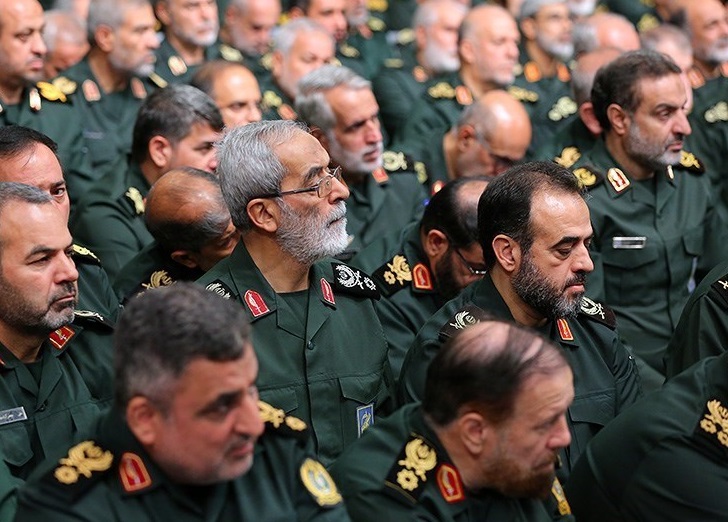
The most important of those trends is the gradual shift of power from clerical institutions to the security establishment. The Iran emerging after Khamenei is likely to be shaped less by radical theology than by military, intelligence, and coercive organizations whose influence has expanded steadily over the past two decades. This evolution did not begin with the current succession crisis. Long before Khamenei’s death, the Islamic Republic was already from a revolutionary theocracy into a security-dominated state in which military, intelligence, and coercive institutions exercised growing influence over nearly every aspect of governance.
At the center of this transformation stands the Iranian Revolutionary Guard Corps, which has gradually expanded far beyond its original military mandate to become a political actor, intelligence apparatus, economic conglomerate, and ultimately one of the principal pillars of regime survival.
Repeated waves of domestic unrest, economic decline, international isolation, and regional conflict reinforced the regime’s dependence on institutions capable of preserving internal control and projecting external power. As revolutionary ideology lost much of its mobilizing force, the state increasingly relied on coercive and security institutions to maintain stability. Strategic decision-making became more heavily influenced by military and intelligence priorities, while economic resources and foreign policy increasingly fell under the influence of the security establishment.
By the final years of Khamenei’s rule, clerical institutions continued to provide symbolic legitimacy, but the practical mechanics of power had already shifted. The state’s ability to govern depended less on religious authority than on the capacity of security institutions to manage dissent, control resources, and confront perceived threats at home and abroad. As the authority once concentrated in the Office of the Supreme Leader of Iran becomes more difficult to replicate, these institutions are positioned to play an even greater role in shaping Iran’s future. The result is the emergence of a post-Khamenei political order governed increasingly by the logic of security, survival, and coercive power rather than the revolutionary ideals upon which the Islamic Republic was founded.
This internal transformation is occurring just as one of Iran’s most important strategic instruments is coming under increasing pressure. For decades, Tehran compensated for its conventional military limitations by building an extensive of proxy forces stretching from Lebanon and Syria to Iraq, Yemen, and the Palestinian territories. Hezbollah, Hamas, Palestinian Islamic Jihad, Iraqi militias, and the Houthis formed the backbone of a strategy that allowed Iran to project influence, challenge regional adversaries, and threaten American interests while avoiding the costs of direct military confrontation.
That model, however, is showing signs of strain. Several of Tehran’s regional partners have significant military and political setbacks, while regional governments increasingly view Iranian influence as something that can be rather than accommodated. Israeli military operations, intelligence activities, and expanding regional security cooperation have further increased the pressure on organizations that once operated with relative freedom. As a result, the strategic distance that proxy warfare once provided is steadily eroding.
This development carries important implications for the post-Khamenei order. For years, proxy forces allowed Tehran to maintain deterrence while preserving strategic ambiguity. Increasingly, however, indirect confrontation appears less capable of achieving the same political and military objectives. The between Iran and Israel illustrate how rapidly old assumptions are breaking down. What was once managed primarily through proxies is moving closer to direct state-to-state confrontation.
History suggests that such periods of transition can be particularly dangerous. Weakening regimes do not necessarily become more cautious. They often become more willing to embrace risk. Political systems facing declining legitimacy, economic distress, leadership uncertainty, and strategic setbacks frequently turn to external confrontation as a means of demonstrating strength and reinforcing internal cohesion. The post-Khamenei Islamic Republic exhibits many of these characteristics. It faces succession questions, persistent pressures, public confidence, and mounting challenges to its regional influence. Under such conditions, actions that may appear irrational from the outside can be viewed internally as necessary measures for preserving deterrence, credibility, and political survival.
For American policymakers, these developments require a fundamental reassessment of long-standing assumptions about Iran. For much of the past two decades, U.S. strategy has been dominated by the nuclear issue, treating sanctions, diplomacy, and deterrence as the primary tools for managing the Iranian challenge. While the nuclear program remains an important concern, it no longer represents the only—or even the most consequential—strategic question. The more significant issue is the emergence of a post-Khamenei security state whose behavior may be shaped less by clerical politics than by the priorities of military and intelligence institutions increasingly focused on regime survival.
This reality suggests that Washington must look beyond negotiations and enrichment levels to better understand the internal evolution of the Islamic Republic. Iran’s future behavior will be determined not only by its capabilities but also by the character of the political system that controls them. A more militarized and insecure leadership may prove less predictable, less constrained by traditional political considerations, and more willing to accept risks that previous generations of Iranian decision-makers sought to avoid. At the same time, the weakening of the Islamic Republic’s regional proxy architecture should not automatically be interpreted as a reduction in the threat posed by the regime. In some circumstances, declining influence and growing insecurity can create incentives for greater confrontation rather than restraint.
The central strategic question facing the United States is no longer whether Iran can be managed through another round of negotiations, therefore. The more important question is whether Washington understands the nature of the state now emerging after Khamenei. The Islamic Republic is undergoing a profound transformation from a revolutionary theocracy into a security-dominated political order whose legitimacy, stability, and regional position are increasingly uncertain. Such systems are often more volatile, more risk-acceptant, and more difficult to deter. As the Middle East enters the post-Khamenei era, American policymakers must confront a broader reality: the challenge posed by Iran is no longer simply what the regime does, but what the regime is becoming.