





Hong Kong’s New Security Procedures and the Question of Retroactivity
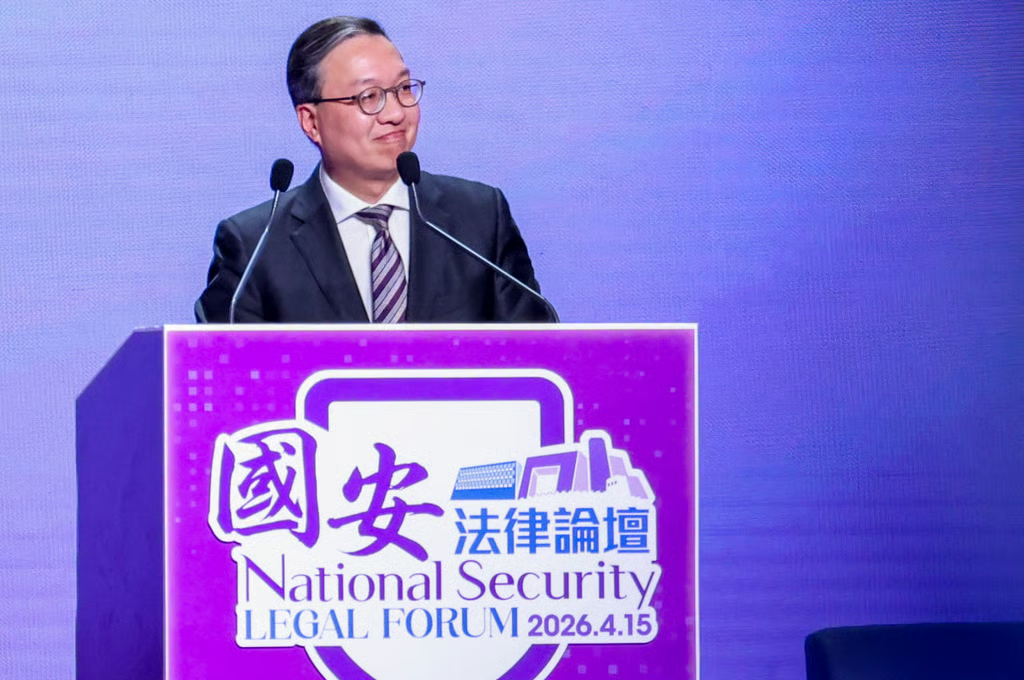

Matthew Cheng of the South China Morning Post, in “New Hong Kong law allows national security procedures to extend to older cases,” highlights a familiar tension in statecraft. That is, the boundary between procedural adaptation and retrospective application.
Background on the law: The new legislation allows the chief executive to classify certain criminal cases as involving national security, subjecting them to national security procedures even when the alleged conduct occurred before the 2020 national security law took effect.
Commentary
While officials argue the law creates no new offenses and merely applies updated procedures to cases deemed relevant to national security, the practical consequences are significant. Defendants in older cases could face stricter detention rules, more restrictive bail standards, designated judges, and reduced opportunities for sentence remission.
Supporters frame the measure as a necessary refinement that closes legal gaps and aligns judicial processes with contemporary security requirements.
Critics, on the other hand, focus on uncertainty surrounding the chief executive’s certification power and the potential impact on public confidence in legal predictability.
Bottom Line
When governments confront evolving security threats, how far can procedural authorities extend into past conduct while preserving confidence in the rule of law? Hong Kong’s answer places considerable weight on executive discretion, making the transparent use of that authority central to the law’s legitimacy.

