





Cognitive Warfare: A New Strategic Frontier?

Abstract
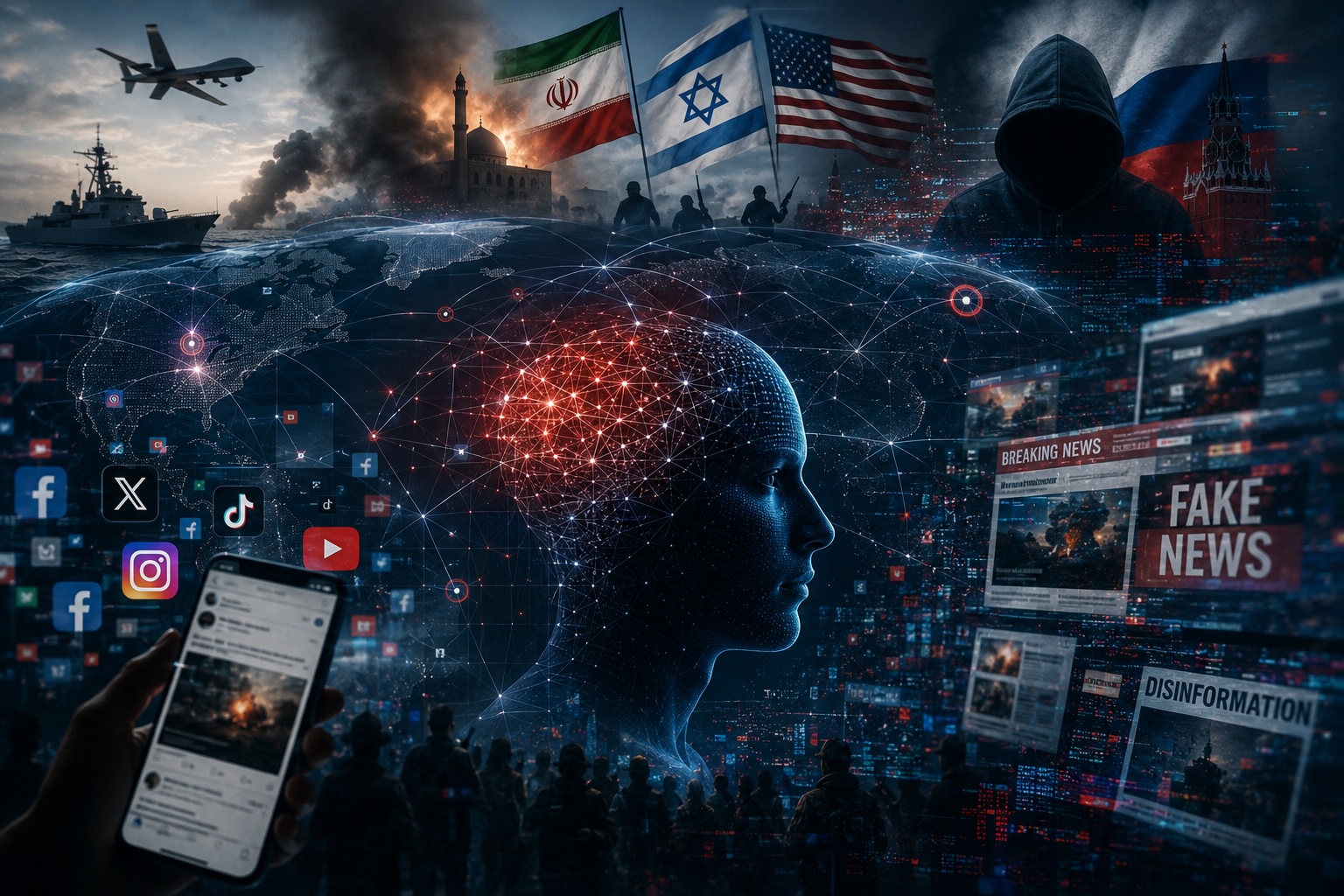
The rise of cognitive warfare is deeply linked to the proliferation of conflicts since 2022. In this context, it appears that the Red Sea war has literally been a matrix for new ways of cognitive and kinetic warfare ecology. In the same dynamic, the weaponization of narratives is now being used as a major tool of political and strategic influence, as shown by Russia’s offensive against France. This general overheating of cognitive warfare leads to the rise of cognitive warriors, such as President Donald Trump, who project and manage cognitive warfare in the domestic and international political domains.
Since 2022, contemporary conflicts—Ukraine, Gaza, the Red Sea, the Sahel, Indo-Pakistani tensions, and wars with Iran—have demonstrated that war is no longer fought solely on conventional battlefields. The integration of artificial intelligence, digital platforms, drones, cyber capabilities, and distributed and automated systems is accelerating the emergence of hyperwarfare, where speed, data, and information are profoundly transforming the balance of power.
In this context, cognitive warfare appears as a new strategic frontier. It does not replace propaganda, psychological warfare, or information warfare; rather, it extends them by targeting a deeper level: perceptions, emotions, beliefs, and political judgment, as well as the very level of brain function. Furthermore, cognitive warfare aims to shape the interpretation of how confrontations, battles, and the ultimate goal of war unfold, imbuing them with political significance.
Thus, a central question emerges: how does cognitive warfare, amplified by artificial intelligence, social networks, and digital platforms, transform contemporary conflicts into battles of interpretation that influence public opinion, political legitimacy, and democratic balances?
Social networks and generative AI are changing the scale of this battle. Images, videos, fabricated testimonies, coordinated commentary, emotional content, and neuronal addiction to social networks can now be produced and disseminated on a massive scale. These tools go beyond simply informing or disinforming. They create cognitive environments in which certain narratives become more visible, more credible, and even more mobilizing.
Cognitive warfare is thus becoming a central dimension of societies’ political life. It transforms public opinion into battlegrounds, collective emotions into strategic resources, and narratives into weapons of power.
To understand this shift, we must first analyze the transition from hyperwar to cognitive warfare, then show how contemporary conflicts become wars of narratives and political interpretations, and finally examine how these dynamics can be reintroduced into national democratic spaces.
From Wars to Cognitive War
A Chain of Cognitive Wars
The rise of cognitive warfare is inextricably linked to the proliferation of conflicts underway since 2022 and the start of the war in Ukraine. However, it appears that, since to the July, 10, 2023 Hamas slaughter in Israel, the various /wars the Middle East, i.e. the Gaza War, the Lebanon war, the fall of Bashar’s regime in Syria, the Iran war, and particularly the protracted war in the Red Sea between the Houthi militias in Yemen and the American and British naval forces, are refining its grammar and strategies.
These strategies are now reflected in the cognitive warfare that accompanies the confrontation between Israel, the United States, and Iran since February 28, 2026. The methods and degree of sophistication of Iran’s cognitive warfare strategy reveal the Revolutionary Guards’ interest in the tactics used in the war that pitted their Houthi allies against the American and British navies during the long Red Sea War from 2023 to 2025.
Kinetic Warfare and Narrative Warfare in the Red Sea
Thus, on November 23, 2023, a commando unit of the Houthi militia in Yemen, supported by Iran, seized the cargo ship Galaxy Leader as it attempted to cross the Red Sea. This boarding took place while the naval war in the Red Sea pitted the Houthis against the American and British naval forces assembled as part of Operation Prosperity Guardian.
Immediately after the boarding, the militiamen transformed the ship into a “Houthi maritime theme park.” The Galaxy Leadership became a tourist attraction for the Yemeni militiamen, who brought in influencers. These individuals create videos and stories of life on board, featuring dances and victory songs of the fighters who visit the ship.
The social media influencers interview crew members, eliciting their desire to reunite with their families. These videos and stories are disseminated on social media platforms, including TikTok and YouTube, and are viewed by millions of internet users worldwide, particularly in the Middle East and Asia. In 2025, the crew’s release provides the Houthis with an opportunity to revive this influence strategy, with their stories once again generating millions of views.
Addiction and Proliferation
But beyond their “exotic” nature, these sequences are part of the Houthis’ multi-domain strategy and establish an interpretive filter for the war. This cognitive offensive involves the militarization of social networks, the digital editing of stories, the production of deepfakes by generative AI, and the industrial production of “bots” by AI, which take up and multiply content on the networks, and give them a proliferating character.
Furthermore, this strategy relies on a collective addiction to social media, manifested by the dopamine rush—the pleasure hormone—that accompanies each “like” and share. Cognitive warfare thus reveals itself as a technological, psychological, and neural architecture that potentially encompasses, permeates, and influences hundreds of millions of people in a matter of hours.
Thanks to their cognitive warfare strategy, the Houthis manage to disseminate the meaning they ascribe to their actions: that it is possible to thwart American techno-military capabilities, which are vastly superior to their own, while simultaneously embodying the “resistance” camp, and this across the Middle East and Asia.
Cognitive Warfare as a War of Meaning: Narratives, Naming, and Political Legitimacy
Narrative Is the Continuation of War by Other Means
Cognitive warfare operates through interpretive frameworks that enable a population to name a conflict, identify those responsible, rank victims, and ultimately judge the legitimacy of a political decision. Beyond its informational aspect, the issue is hermeneutic in that it involves imposing collective interpretive frameworks that organize our understanding of reality.
This logic aligns with Paul Charon’s approach to disinformation, which views it as a serial narrative. Effective manipulation does not necessarily rely on a single lie. It can articulate accurate facts, omissions, repetitions, emotions, and available references. The narrative then becomes more resilient than the fact itself, which, even when refuted, continues to exert its influence as long as the narrative structure that supports it remains intact. Cognitive warfare is therefore not only a war of lies; it is also a war of meaning.
Contemporary conflicts illustrate this shift. In Ukraine, Russia attempted to frame its offensive within the narrative of denazification of the Kyiv regime, accusing its leaders of ideological heirs of the World War II Ukrainian Nazi collaboration. Russia also used narratives of the NATO encirclement and of the defense of a multipolar world. The aim was not simply to justify a military operation, but to offer a new perspective on the conflict by shifting the narrative from an act of aggression against a sovereign state to a defensive, civilizational, and anti-Western war.
From Venezuela to the Sahel
The American operation “Absolute Resolve” of January 3, 2026, during which US forces apprehended and then exfiltrated President Nicolás Maduro to the United States, illustrates this war of terminology even more clearly.
This event has been described in various ways: judicial arrest, military capture, kidnapping, act of war, regime change operation… Depending on the framing adopted, the United States can appear either as a state applying the law against a wanted leader or as a foreign power violating another state’s sovereignty. The entire semantic game then consists of shaping the perception of the event so that some recognize it as a legitimate act, while others reclassify it as interference and a violation of international law.
In Africa, this dynamic is also visible. In Mali and, more broadly, in the Sahel, pro-Russian information ecosystems have amplified and reshaped existing criticisms of the French presence. The counterterrorism operation, initially justified by the fight against jihadist groups, has gradually been reframed within a narrative of interference, strategic failure, and neocolonial domination. Simultaneously, Russia, Wagner, and then the Africa Corps have been presented in these narratives as actors of protection, sovereignty, and a break with the Western order.
Finally, digital platforms intensify this war of interpretations. Through algorithmic manipulation, they organize visibility, amplify outrage, and give minority narratives the appearance of collective truth. With generative artificial intelligence, coordinated texts, images, videos, fabricated testimonies, and commentary can create an informational atmosphere and simulate an opinion, even casting suspicion on any pronouncement from an institution. The Romanian case, where the first round of the 2024 presidential election was canceled after suspicions of coordinated campaigning and digital manipulation via TikTok, serves as a reminder that algorithmic manipulation for electoral purposes now constitutes a global threat.
International Polarization and Tense Political Landscapes
War is Declared: New Caledonia, Madagascar
Cognitive warfare extends to national political spheres, where actors – state or non-state – exploit external crises to polarize public opinion and fragment democratic cohesion. New Caledonia and Madagascar are examples of this. These two crises, while distinct, fuel a broader discourse on the decline of French influence internationally.
In New Caledonia, the 2024 unrest was quickly incorporated into anti-French narratives, which revived the rhetoric of colonial domination to denounce electoral reform and the state’s response. VIGINUM, a French government agency, had identified information campaigns involving Azerbaijani actors, particularly on X and Facebook. These campaigns included misleading content portraying France as a repressive colonial power. Paris had accused Azerbaijan of fueling the crisis with false publications that called into question the role of French forces.
In this context, a contested local crisis became a tool for geopolitical projection, as it was no longer simply a matter of discussing a disputed electoral reform, but rather of framing the event within a broader narrative of warfare against France.
Madagascar follows a similar pattern in the Indian Ocean. The expulsion of a French embassy official, amid accusations of destabilization, is part of a reorganization of influence, with the strengthening of Russia’s presence in the country. Indeed, Russia’s strategy in Madagascar is described as a blend of cultural, media, military, and political influence. Here again, the diplomatic event is as important as its interpretation, because for some, it is an act of sovereignty; for others, a sign of a break with Paris; and for rival powers, a symptom of strategic realignment.
These crises can then be reintroduced into the French political debate, fueling narratives about state impotence, the failure of African policy, the crisis in France’s overseas territories, or strategic decline. As the 2027 French presidential election approaches, they thus become cognitive tools capable of polarizing public opinion, undermining the sincerity of democratic debate, and eroding trust in the integrity of the vote.
Overheating: Welcome to Cognitive Escalation
This new “ecology of war” is based on the capacity of augmented AI narratives to militarize the attention-grabbing capabilities of social networks. It becomes a singular dimension of warfare, intersecting the domains of political, military affairs, and geo-economic confrontations. Thus, the use of generative AI as a cognitive weapon system becomes an emotional force multiplier on a transnational scale. This is how the use of these technologies literally gives rise to a divisive landscape of online “communities”. In the case of the Gaza, Lebanon, Iran wars, the latter define themselves as “pro” or “anti” Israel, Trump, Iran, Palestine, and so on. Their very existence is deeply divisive within national public opinion.
But, as Carl von Clausewitz established, the conduct of war requires alignment among the nation, the army, and the government. Cognitive warfare enables belligerents to attempt to disorient nations by fragmenting them, delegitimizing governments, and even demoralizing armies. Conversely, cognitive defense operations aim to maintain, or even strengthen, this alignment.
Thus, since the beginning of the Iran War, the Islamic Revolutionary Guard Corps’ (IRGC) cyberwarfare unit has been working to create an international mental horizon dominated by images such as a massive nuclear mushroom cloud rising above a burning American city. Other proliferating images and videos show broken, defeated American soldiers surrendering to Iranian troops. Others are fake photographs of missile salvos bombarding American cities. All these deep fakes are produced by the IRGC’s cyberwarfare unit, which oversees cognitive warfare strategies. These operations complement and extend the conventional warfare waged against the United States and Israel since February 28, 2025.
The goal of this cognitive strategy is to create a collective mental horizon in which the Iran War is destined to end in a catastrophic defeat for the Americans, despite their technological superiority. In other words, the Islamic Revolutionary Guard Corps’ cyberwarfare unit establishes a framework for collective interpretation within and through social media to target and influence the individual and collective cognitive processes of entire populations.
Faced with this Iranian offensive, President Trump has emerged as one of the leading strategists of cognitive warfare. His qualities as a cognitive warrior are particularly evident in his use of AI-generated self-representations as a war leader or messianic savior to impose his own interpretation of the Iran-Iraq War. In doing so, President Trump’s army of virtual avatars works to maintain his popularity with his MAGA base while mitigating the unpopularity of the Iran War in the United States as much as possible, all the while sowing heated debate and division in public opinions throughout Europe, the Middle East, and Asia.
His narratives and representations are disseminated on his Truth Social network before being picked up by all social networks, platforms, and news media. They thus occupy the attention of hundreds of millions of people worldwide daily and become intertwined with the national political debates of countries affected by the Iran War across five continents. President Trump’s virtual avatars thus manage to dominate the global political landscape and are the subject of constant analysis through the lens of the interpretation of the Iran War that the President of the United States disseminates. In other words, this virtual incarnation of the President projects the US Executive power into the international and transnational cognitive war. Thus, it appears that cognitive warfare becomes a major way to project war into politics.
Conclusion
This creation of “interpretive bubbles,” which can encompass very large segments of the population, is inextricably linked to the integration of artificial intelligence (AI) into all contemporary conflicts, regardless of their form or scale. In the same vein, generative AI allows actors in a conflict to prolong it by the large-scale projection of narratives that generate transnational interpretive tribes.
Cognitive warfare is now emerging as the new domain of war, characterized by escalation to extremes and the projection of the logic of war into the realm of psyches and ideas. This war of narratives and interpretations is now being used as a means of militarizing public opinion, turning it into the new shock troops of the “weaponization of everything.” In this respect, cognitive warfare is inseparable from this new technological and mental ecosystem, comprising the intersection of platforms, smartphones, attention technologies, artificial intelligence, and the collective addiction to them. But within this virtual ecosystem, the war is very real.



A compelling reminder that cognitive warfare ultimately targets people, their emotions, identities, and interpretive frameworks. The article shows how AI‑driven narratives shape meaning itself, turning public opinion into contested terrain and exposing the psychological vulnerabilities I’ve seen play out in real communities.