





Part 3: The U.S. Munitions Problem
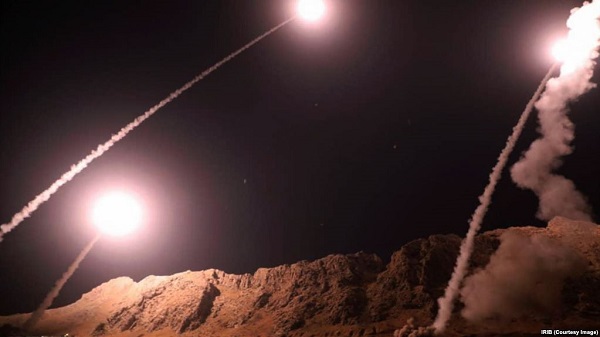

The Center for Strategic and International Studies (CSIS) published a report in late April analyzing the status of U.S. munitions inventories following the 39-day air campaign against Iran. “Last Rounds? Status of Key Munitions at the Iran War Ceasefire” concludes that U.S. missile expenditure won’t constrain current operations, but significantly weakens preparedness for future wars. The New York Times and Wall Street Journal reported similar findings when the ceasefire began. In this discourse series, we comb through these reports for key numbers, themes and takeaways.
Standard Missile 3 (SM-3)
- Unit Cost (millions): $28.7
- Pre-war Inventory: 410
- Used in Iran War: 130-250
- Delivery time (years): ~5.5
Nearly half of the SM-3 inventory was expended in the first 39 days of the campaign. That follows the use of 80 in support of Israel in last year’s 12-Day war.
That translates to a daily expenditure of 5 in Operation Epic Fury; in the 12-Day war, this number approached 7. Even if we assume a return to the pre-war inventory before the next war, that leaves strategists with only 2.5 months of SM-3 launches, if expended at the same rate as against Iran.
Standard Missile 6 (SM-6):
- Unit Cost (millions): $5.3
- Pre-war Inventory: 1,160
- Used in Iran War: 190-370
- Delivery time (years): ~4.5
That’s nearly one third of the SM-6 stock. The SM-6 is important because of its longer range and larger target set than the SM-2 and SM-3 missiles. In short, it can go further and hit more advanced missiles.
Terminal High Altitude Area Defense (THAAD):
- Unit Cost (millions): $15.5
- Pre-war Inventory: 360
- Used in Iran War: 190-290
- Delivery time (years): ~4.5
The U.S. has just eight THAAD batteries (the full system that detects incoming missiles and launches the interceptors), two of which were in Guam and South Korea before this war. Several have since moved to the Middle East. Earlier reports indicated that the U.S. took South Korea’s battery, though it is more likely that only parts were taken to restore broken and destroyed batteries in theater.
The FY2027 budget request includes 850 THAAD interceptors, reflecting extremely high demand and low inventory, even before the Iran conflict. There’s also the system itself to consider: damage or loss of THAAD radars– only 13 of which have ever been delivered to the U.S.– poses its own replacement issue. For these reasons, CSIS labels THAADs the most critical of the seven critical munitions.
Patriot Advanced Capability-3 (PAC-3) Missile Segment Enhancement (MSE), aka PAC-3 MSE:
- Unit Cost (millions): $3.9
- Pre-war Inventory: 2,330
- Used in Iran War: 1,060-1,430
- Delivery time (years): ~3.5
Half of the U.S. pre-war inventory was expended in the first 39-days. Lockheed Martin has plans to increase annual production from 600 to 2,000 by 2030. Until then, hard choices have to be made about allocation.
That calculation gets harder when you consider the number of allies that rely on it. 18 other countries use the Patriot. Ukraine is a major receiver of Patriots: the U.S. has sent more than 600 over the course of that war.
One strain of thought suggests withholding Patriots for use only in the Western Pacific. The problem is that Ukraine would need other interceptors– and allies might be driven to acquire elsewhere. The Swiss have already threatened as much.
Takeaways and themes
- Compared to attack missiles, the shortfalls for defensive weapons seem to be more pronounced. That is the result of fending off 1,700 ballistic missiles and one-way attack drones since the Iran war began, as the Wall Street Journal estimates, a likely conservative number.
- The intensity of defensive missile launches was highest in the first week of the Iran War, when the regime retaliated most aggressively. But the relative drop-off in the weeks following belies the fact that launches of SM-3s, SM-6s, THAADs, and Patriots did continue at a high rate. The average daily launch rate of Patriots over the 39 days, for example, was over 31. Based on the pre-war inventory, that’s only 75 days of sustained launches in a future war of the same intensity.
- The missiles themselves aren’t always the weak point. THAAD radars are a case in point. A future scenario involving a targeted attack on THAAD batteries could turn the 13 existing radar systems into 10 or fewer with just a few stray missiles. You can have plenty of THAAD interceptors, but with no radar, they’re useless. And radar replacement lead times are likely even longer than missile production timelines.
~~~
Looking ahead:
In the next and final discourse in this series, we’ll look into overall takeaways: our spin on what to make of these deficiencies, and where to go from here.
Find the complete CSIS report by Mark F. Cancian and Chris H. Park here: “Last Rounds? Status of Key Munitions at the Iran War Ceasefire.”
Find the New York Times report by Eric Schmitt and Jonathan Swan here: “Iran War Has Drained U.S. Supplies of Critical, Costly Weapons.”
Find the Wall Street Journal report by Alexander Ward, Shelby Holliday, and Yoko Kubota here: “Iran War Complicates Contingency Plans to Defend Taiwan, Some U.S. Officials Say.”
This is the third of a four-part series on U.S. munitions inventories following the 39-day air campaign against Iran. The fourth will be published tomorrow.

