





The MQ-9 Gets Cheaper Teeth
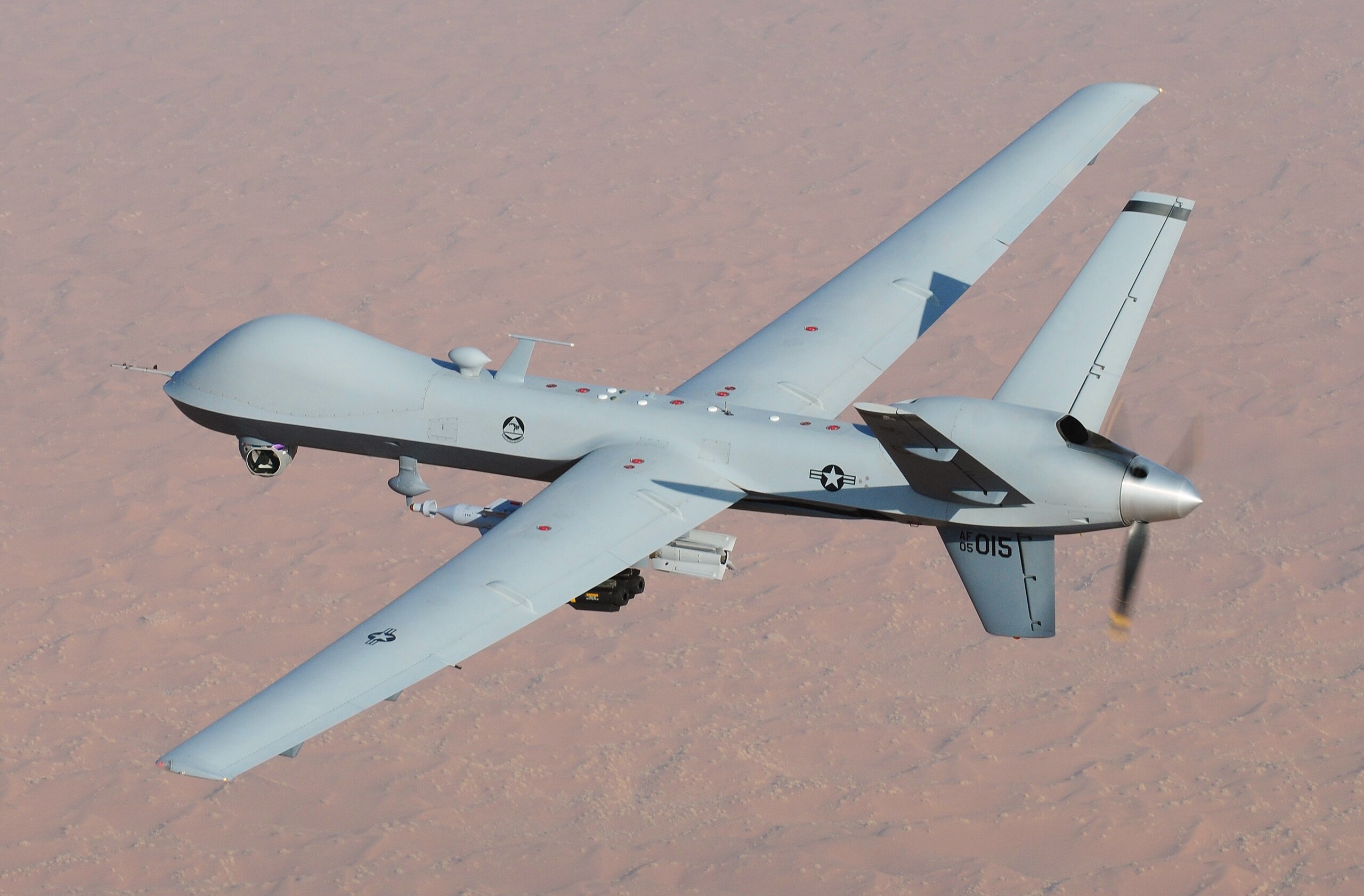

The cost-exchange problem in drone warfare just got some attention. General Atomics announced this week that an Air Force MQ-9 Reaper successfully downed aerial targets using the APKWS—a laser-guided rocket that runs $25,000 to $40,000 per shot. The target it’s designed to kill: Iran’s Shahed one-way attack drone, priced at roughly $30,000.
The math driving this demo is brutal, writes Defense One’s Thomas Novelly in “Air Force MQ-9 downs aerial targets with cheap air-to-air missiles.” Since Operation Epic Fury began in February, the U.S. has been swatting Shaheds with fighter jets carrying million-dollar missiles. That exchange rate is unsustainable. Nearly 40 U.S. aircraft—including an estimated two dozen MQ-9s—have already been lost in the conflict.
Arming the Reaper with APKWS increases magazine depth, letting a single aircraft carry more rounds against saturation attacks. That’s a meaningful operational gain when the threat is mass more than precision capability.
What we make of it:
The demonstration won’t solve the broader C-UAS problem, and the MQ-9 itself remains a $30 million asset operating in contested airspace. But the test signals where the Air Force is heading: toward cheaper interceptors, more distributed platforms, and a deliberate effort to stop letting adversaries dictate favorable exchange ratios with commodity weapons.
The Collaborative Combat Aircraft competition (where General Atomics is competing against Anduril and Northrop Grumman) sits in the background here. A more capable, cheaper-to-arm MQ-9 strengthens General Atomics’ hand as that decision approaches in the next five months.
While you’re here:
Check out our four-part Discourse series on the state of U.S. munitions stockpiles following Operation Epic Fury.
And read George Headley’s report “Magazine depth: Rapid depletion of missile stockpiles in Iran raises concerns about US readiness” for good context on why this depletion– and developments like the one outlined above– matter.

