





When Killing a Kingpin Becomes Policy Theater
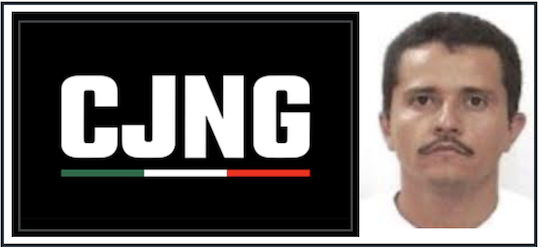

Just days before the joint US-Israeli military strikes on Iran dominated global headlines, another event briefly captured international attention: the killing of Nemesio Oseguera Cervantes, known as El Mencho. On 22 February 2026, Mexican armed forces killed him during a military operation in Tapalpa, Jalisco. He was widely described as the leader of Mexico’s most violent criminal organization, the Cártel de Jalisco Nueva Generación (CJNG), and his death was framed as a decisive victory in the war on drugs.
From a Washington policy perspective, that narrative warrants closer scrutiny.
Within hours of Oseguera Cervantes’s death, a wave of highly visible violence spread across parts of Mexico: burning vehicles, road blockades and armed attacks attributed to the CJNG. For many US observers, these images seemed to validate a long-standing assumption in American counternarcotics strategy—that criminal organizations are hierarchical and that removing top leadership produces destabilization the state can exploit.
Decades of research and operational experience suggest otherwise.
The CJNG does not operate as a centralized hierarchy dependent on a single individual. It functions as a fragmented, adaptive criminal network, composed of semi-autonomous cells embedded in local political, economic and territorial arrangements. In practice, it resembles a criminal franchise: diverse actors, sometimes loosely connected, adopting a shared brand and reputation for violence while pursuing different illicit markets shaped by local conditions.
This organizational reality has direct implications for US policy. If the CJNG is decentralized, the violence following El Mencho’s death should not be read as evidence of organizational collapse. Instead, it raises a more uncomfortable question: why would multiple cells of a networked criminal system deliberately draw attention from Mexican armed forces — and, crucially, from the United States—at a moment when Washington has openly signaled a willingness to escalate under the label of “narcoterrorism”?
The question becomes even sharper when one considers Oseguera Cervantes himself. By most accounts, he was no longer young and had been in poor health for years. From a rational-actor perspective, a dramatic escalation of violence following his death makes little sense. It increases operational risk, invites international scrutiny and undermines the decentralization that allows such networks to absorb leadership losses.
What does make sense is the policy logic of spectacle.
Highly visible violence plays a powerful role in contemporary security politics. It reinforces narratives of imminent threat, state vulnerability and the need for exceptional measures. In Washington, such imagery moves quickly—shaping political messaging, legitimizing expanded authorities and reinforcing budgetary priorities across the security apparatus.
The timing of El Mencho’s killing is therefore not incidental. It occurred during a US election cycle, when law-and-order rhetoric carries particular weight. The operation was quickly framed as enabled by US intelligence cooperation, and President Donald Trump publicly credited his administration with eliminating “one of the most sinister cartel kingpins of all.”
For policymakers, the message is familiar and reassuring: decapitation works. But the empirical record tells a different story. Leadership targeting has repeatedly failed to dismantle criminal economies or meaningfully reduce drug supply in the United States. The fentanyl crisis—driven by global supply chains, chemical precursors, logistics networks and domestic demand—remains largely unaffected by symbolic victories against individual figures.
At the same time, these narratives generate momentum within the policy ecosystem. The military-industrial and security-technology sectors benefit from renewed justification for expanded surveillance, intelligence sharing and border enforcement. These incentives are reinforced as Mexico prepares to host the FIFA World Cup, an event that intensifies international demands for security cooperation, often framed in terms of technological monitoring and control.
The broader lesson for Washington is not about El Mencho himself. It is about the limits of a strategy that prioritizes visibility over effectiveness.
Decapitation operations produce compelling headlines and short-term political gains, but they rarely address the structural drivers of transnational criminal violence. Worse, they risk reinforcing a cycle in which spectacle substitutes for strategy, and symbolic success delays the harder work of rethinking drug policy, financial enforcement, corruption and institutional reform.
If US policymakers are serious about reducing cartel power and drug-related harm, the lesson from El Mencho’s death is clear: killing kingpins may satisfy political narratives, but it is not a strategy.
In Washington, the challenge is not how to kill the next cartel leader, but how to stop mistaking dramatic force for durable policy.


