





Engaging Rwanda: A Pragmatic Approach To The Great Lakes Conflict

The 2012 rise of the Mouvement de Mars 23 (M23) as a Rwandan proxy force triggered swift international condemnation, successfully impeding Rwanda’s momentum through bilateral sanctions and a United Nations-backed offensive operation. However, over the past decade, Rwanda has strategically endeared itself to Western donors, particularly the United States, France, and the United Kingdom, by demonstrating itself as a capable and willing partner. Through this endearment strategy, Rwanda reshaped its international image, which in turn muted the international response to M23’s 2019 resurgence. Through this international delay, Rwanda received the requisite freedom to remobilize its proxy force and seize large swaths of the Eastern Democratic Republic of the Congo (DRC). While the M23 threat is not new, the strategic hesitancy of the international community made clear that regional power dynamics shifted from an environment that constrained Rwanda, making it ripe for exploitation. The opportunity to replicate the international pressures of 2012 has passed. After decades of support to the DRC, the international community must now adopt a new playbook that recognizes the evolving power dynamics and prioritizes regional stability through pragmatic engagement with Rwanda.
Historical Overview of M23
M23’s origins are directly rooted in the perpetual Great Lakes conflict, where they serve as a reincarnation of Rwanda’s previous proxy groups, including the Congrès National pour la Défense du Peuple (CNDP); the Alliance des Forces Democratiques pour la Liberation du Congo-Zaïre (AFDL); and the Rassemblement Congolais pour la Démocratie (RCD). Throughout this conflict, beginning with the 1996 First Congo War through the present day, Rwanda’s various proxies have claimed to support marginalized Congolese Tutsis and national reconciliation. While the protection of these communities has remained a constant narrative, their motivations have shifted over time from revenge for the Rwandan Genocide, to desires for DRC regime change—and, more recently—to economic ambitions with the emergence of conflict minerals, which continues to shape the conflict today.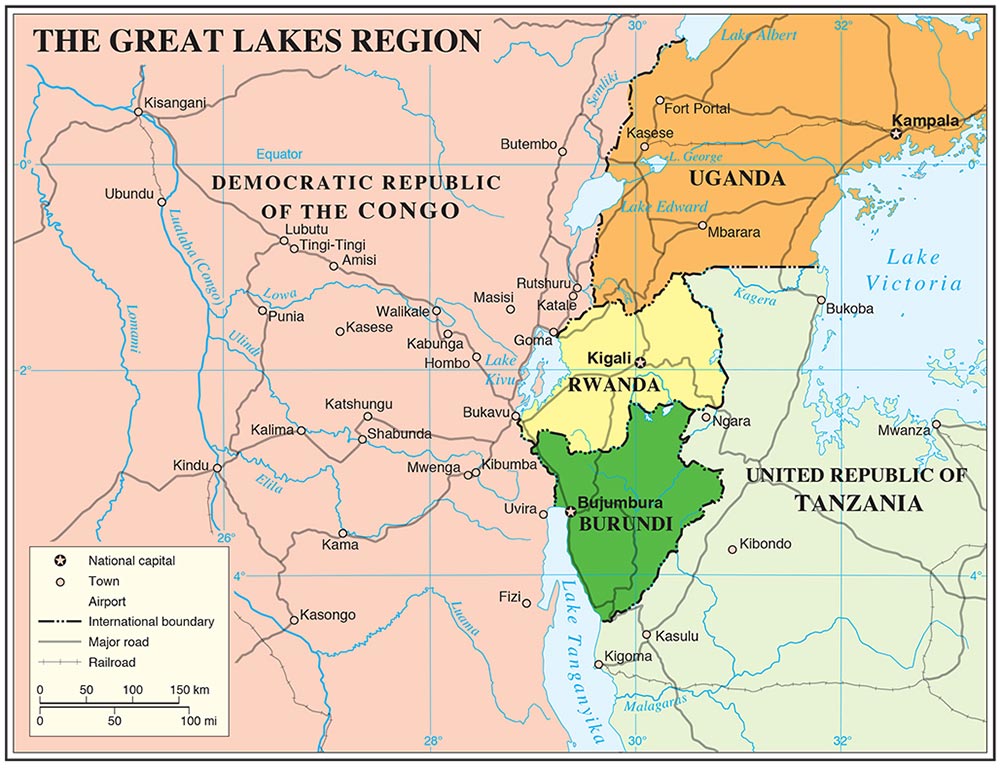
More specifically, M23 emerged from the failed March 23, 2009, peace agreement, giving the group its namesake, “Movement of March 23.” This agreement required the CNDP to integrate into the Congolese Army (Forces Armées de la République Démocratique de Congo, or FARDC) in exchange for governmental support to national reconciliation and a guarantee that former CNDP members within the FARDC would remain in the Kivu region. However, after years of government inaction and attempts to remove CNDP leadership from the Kivus, former CNDP leaders defected and established M23 on May 6, 2012. Following the defection, M23, like the CNDP before them, attempted to seize the DRC’s eastern logistical hub of Goma. This offensive was met with immediate international condemnation that included the United Nations Organization Stabilization Mission in the DRC (MONUSCO), which led to a military response that successfully recaptured Goma within ten days and militarily defeated M23.
Following their 2013 defeat, M23 entered into the Addis Ababa Agreement, where the DRC agreed to conduct security reform, promote national reconciliation, and prevent armed groups from destabilizing the region. However, once M23 no longer posed a threat, Kinshasa saw little need to fulfill the agreement, showing its lack of interest and capacity to address the conflict’s underlying drivers. This defeat of M23 should have been a turning point for regional relations, given the cohesion demonstrated by the FARDC and MONUSCO. To the contrary, Kinshasa continues to lack the ability or the will to address drivers of conflict, such as poverty, land disputes, and ethnic ideology.
2012 International Response
The 2012 international response to M23’s emergence and eventual seizure of Goma was immediate and decisive, including actions by the International Criminal Court (ICC), the UN, and Western powers. Within hours of M23’s advance on Goma on November 20, 2012, the UN Security Council (UNSC) strongly condemned M23 by unanimously adopting UN Resolution 2076. While this resolution did not explicitly name Rwanda as an accomplice, the UNSC meeting held on the same day required the presence of both DRC and Rwandan representatives, in which the DRC accused Rwanda of supporting M23. Moreover, although MONUSCO lacked a mandate to conduct offensive operations in November 2012, it did directly support the FARDC in their retaking of Goma. This served as the catalyst for expanding MONUSCO’s mandate to include “targeted offensive operations” conducted by its Force Intervention Brigade. Although previous UN missions have been authorized to use force under Chapter VII of the UN mandate, this decision made MONUSCO the first UN mission authorized to conduct offensive operations. This critical decision by the UNSC is credited with playing a substantial role in the eventual, although short-term, defeat of M23.
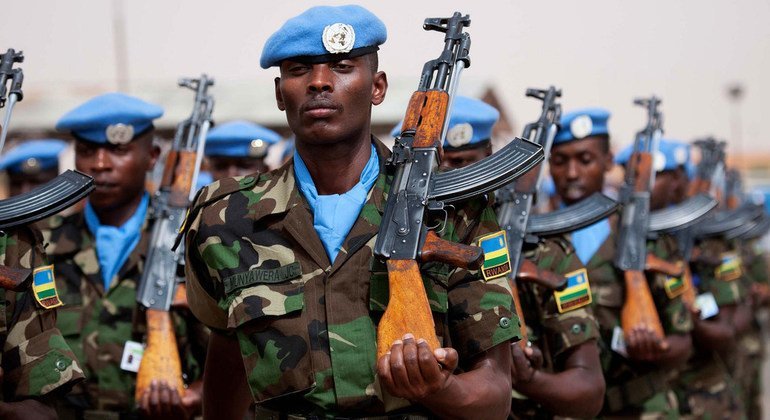
Since 2004, Rwanda has consistently supported UN peacekeeping missions, routinely ranking in the top five of all troop-contributing countries and providing the largest contribution by an African nation.
In addition to the strong UN response in 2012, the ICC increased pressure on regional governments to execute the arrest warrant of M23’s leader, Bosco Ntaganda. While the ICC had an outstanding arrest warrant for Ntaganda dating back to 2008, the announcement of M23’s emergence in May 2012 resulted in a renewed warrant for Ntaganda’s arrest on May 14, 2012. Although there is debate over whether the ICC’s efforts are an effective deterrent during a conflict, the ICC’s actions still demonstrate a concerted, unified international effort to pressure regional governments. Furthermore, Ntaganda’s eventual surrender to the ICC on March 18, 2013, is credited with increasing defections from M23 due to fears of reprisals among M23 fighters, ultimately weakening the group and enabling its downfall.
In parallel with UN and ICC efforts, Western countries cut aid to Rwanda to curtail its support for M23. The US announced a $200,000 cut to military support months before M23 seized Goma and reduced overall funding for Rwandan military training by 37% between 2011 and 2013. In 2013, the US also listed Rwanda under the Child Soldiers Prevention Act (CSPA), limiting Rwanda’s eligibility for military aid under US law. Additionally, within ten days of M23 capturing Goma, the UK announced the suspension of £21 million in aid ($33.18 million). Overall, Western donors cut $240 million in aid to Rwanda between 2012 and 2013, effectively pressuring Rwanda to abandon its support of M23, forcing the group’s temporary defeat.
Under this pressure, Rwanda buckled and abandoned its support for M23. Although this victory was short-lived, the 2012 response revealed a shared global perception of Rwanda as the antagonist and spotlighted its susceptibility to international pressures. However, through its deliberate endearment strategy, Rwanda avoided long-term international condemnation, and Rwanda’s renewed support during M23’s 2019 re-emergence was met by a significantly muted international response.
Rwanda’s “Endearment Strategy”
Rwanda’s endearment strategy is a multifaceted approach that includes reshaping its international image and gaining favor with Western influencers. Part of this effort started before 2012 with economic investments to boost its tourism industry. However, other programs are much more recent, such as its Meetings, Incentives, Conferences, and Events strategy. While this strategy predates 2012, there was a renewed emphasis in 2012 to attract various international organizations to hold conferences in Kigali, which helped reshape Rwanda’s international image. In 2017, Rwanda revamped government processes to streamline business registrations, making it easier to open businesses in Rwanda. In 2021, Rwanda announced a partnership with the National Basketball Association (NBA), opening opportunities for Rwanda to market itself. Together, these efforts increased foreign investment, improved regional and global trade, and crafted a perception of an incredible post-conflict success story.
Beyond perceptions, Rwanda has established itself as a willing and capable partner in supporting Western interests in Africa. Since 2004, Rwanda has consistently supported UN peacekeeping missions, routinely ranking in the top five of all troop-contributing countries and providing the largest contribution by an African nation. Although this has been a trend since 2004, Rwanda saw a nearly 74% increase in troop contributions between 2011 and 2020. In 2020, Rwanda deployed bilaterally to the Central African Republic (CAR) to support the government against armed groups. While in the CAR, Rwanda conducted operations with Wagner Group. However, after reports of human rights abuses, Rwanda ceased operations with Wagner, indicating the capacity of the Rwandan Defense Forces as an effective and professional fighting force in Africa when incentivized and held accountable. Additionally, in 2021, Rwanda deployed soldiers to Cabo Delgado, Mozambique, to combat terrorism along its northern frontier. Coincidentally, Cabo Delgado is also home to several Western-funded liquefied natural gas projects, notably French-owned TotalEnergies and American-owned ExxonMobil, giving the impression that Rwanda is serving as a Western proxy to protect economic interests. Despite that perception, Rwanda has proven itself to be a formidable security partner in a region where Western nations are increasingly reluctant to engage militarily.
Diplomatically, Rwanda proved to be a willing partner in the UK’s “Asylum Partnership Agreement”. First announced in 2022, this partnership, had it come to fruition, would have seen UK asylum seekers sent to Rwanda in exchange for at least £370 million ($462.5 million) in development aid. However, the deal was repealed by the UK in 2024, after having already paid Rwanda £290 million ($288.5 million).
Although Rwanda has been carefully constructing its international image since the turn of the century, Kigali has made concerted efforts since 2012 to position itself as a pragmatic and reliable Western ally in an unstable part of the world. Through post-conflict economic growth, a whitewash of its national image, and serving as a reliable exporter of security, Rwanda has engineered a situation in which the international community must think twice before condemning its actions.
2019-2025 International Response
Beginning in 2019, after international pressure tapered off, M23 re-emerged, first seizing territory in North Kivu and, by January 27, 2025, capturing Goma. Shortly thereafter, with little response from the international community, M23 extended control across North and South Kivu. The key difference between M23’s 2012 and 2025 seizures of Goma was Rwanda’s growing influence, which is a direct result of Rwanda’s endearment strategy. Over the last decade, Rwanda strategically increased its negotiating power and, for the first time, holds considerable diplomatic leverage. This shift is clearly reflected in the reduced international pressure and the growing hesitancy among Western countries to condemn Rwanda for supporting M23.
While international pressure on Rwanda began almost immediately after M23’s 2012 seizure of Goma, the response from 2019 through 2025 has been diluted and delayed. Since the renewed violence, the ICC has not issued any additional arrest warrants for M23 leaders. Furthermore, between 2019 and 2023, UN Resolutions only briefly mention “concern” about M23’s advances and foreign support, despite a published 2022 UN report that provided irrefutable evidence that Rwanda was directly supporting M23. In 2024, the UN again condemned M23 and its “support by any external party,” while also noting its use of advanced technology and weaponry. However, the first time the UN directly condemns Rwanda is February 21, 2025, nearly a month after M23 recaptured Goma and nearly three years after initial reports of Rwandan involvement.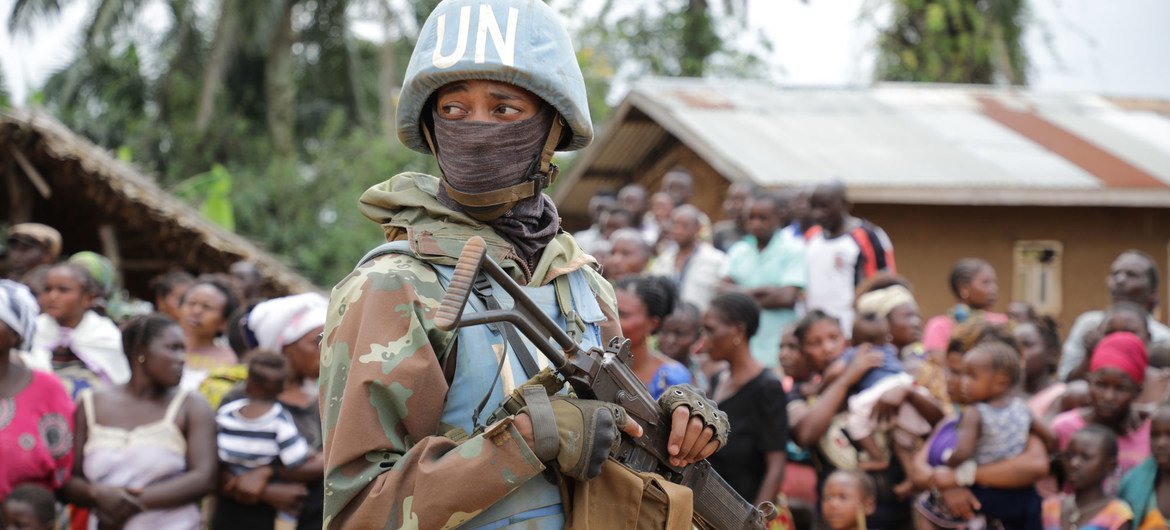
Additionally, while the U.S. maintained CSPA restrictions, the only additional sanctions were imposed against two individuals within the Rwandan government, which did not take effect until a month after the initial recapture of Goma. Similarly, a month after M23’s advance, the UK announced a cut to defense support and aid to Rwanda. However, the government did not specify exactly how much aid that amounted to. Eventually, nearly six weeks after the fall of multiple strategic cities in the Kivu region, the UK announced the suspension of future payments linked to the “Asylum Partnership Agreement”.
Although these responses are relatively weak, they appear forceful when compared to France’s inaction. Unlike the US and UK, France has not imposed sanctions or withheld aid from Rwanda. Their only response has been through general UN condemnations. Additionally, despite evidence that Rwanda had renewed its support to M23, France provided over €500 million ($539.2 million) in development aid to Rwanda between 2021 and 2023. This continued aid, along with their muted diplomatic response, underscores the importance of the Franco-Rwanda relationship, particularly considering Rwanda’s military presence around French energy assets in Mozambique.
This collectively delayed and cautious international response, despite its knowledge of Rwanda’s involvement with M23, suggests a shift in regional power dynamics and a relative acceptance of Rwanda’s aggressive maneuvers. While Rwanda eventually capitulated under international pressure in 2012, Kigali now holds a dominant negotiating position that the US should leverage to reduce human suffering while also seizing an opportunity to address national economic needs.
Policy Recommendation
The response to this shifting power dynamic and growing humanitarian crisis should be pragmatic. Rwanda has routinely demonstrated a superior capability in addressing conflict drivers and enforcing sovereignty, compared to the DRC. Through their post-conflict development, Rwanda diversified its economy, exercised effective governance, attracted substantial foreign investment, and developed a professional military capable of protecting civilians, whether at home or in combat zones, which, despite extensive international support, the DRC has failed to do. Therefore, instead of prioritizing engagement with the DRC and developing a mineral-for-security deal, the US should negotiate a mineral deal with Rwanda that includes mining incentives for US companies and favorable trade agreements for the importation of natural resources. In exchange, the US will support a peace agreement where Rwanda maintains control of current territorial gains within Eastern DRC while requiring the dismantling of M23 and arrest of its leaders and Rwandan military commanders accused of war crimes and crimes against humanity.
To ensure accountability, this deal would require a jointly funded, but US-controlled, development fund to be used for rebuilding and developing the Kivus within Rwanda’s seized territory. This fund would be used to develop programs that directly target the drivers of conflict by investing in economic opportunities within the region and increasing access to essential services. Release of the funds would be contingent on Rwanda addressing the needs of marginalized communities by integrating local government structures, increasing equitable representation in government, and enforcing anti-corruption measures to rebuild trust in government institutions. The intent of this agreement is to provide Rwanda with the necessary incentives and international support to reduce conflict while ensuring accountability.
Instead of prioritizing engagement with the DRC and developing a mineral-for-security deal, the US should negotiate a mineral deal with Rwanda that includes mining incentives for US companies and favorable trade agreements for the importation of natural resources.
This deal would not absolve the DRC of responsibility nor neglect its needs as a sovereign nation, but it would reduce the burden by shrinking the size of the territory the government is unable to control, such as the Kivu region, and allow the government to focus its efforts on areas it can control. As part of this deal, the US would agree to continue providing security assistance and support to the much-needed security reforms. However, the amount would be determined by the reform efforts implemented within the FARDC. As Jason Stearns, a prolific researcher on the Great Lakes Conflict, suggests, these reforms must include the removal of Commanders accused of war crimes, the implementation of a merit-based promotion system, the complete cessation of support to armed groups, and an effective, enforced anti-corruption initiative. Additionally, the US should pledge to restart humanitarian and development projects halted by USAID’s dissolution, with the requirement that DRC government institutions are active participants in the process. Furthermore, as Gracelin Baskaran recommends, the US should revise Section 1502 of the Dodd-Frank Act, putting an end to the unintended ban on Congolese minerals and easing import regulations for US companies. However, this revision should be contingent on the DRC revising its business practices to increase access for foreign businesses and on using these increased funds to support community reconciliation efforts, build infrastructure in marginalized communities, and increase access to essential services, thereby reducing barriers for US corporations looking to enter the market. Collectively, these efforts would ensure that the DRC has the requisite support to pursue essential reforms to address drivers of conflict while maintaining mechanisms of accountability and creating an environment for sustainable foreign investment.
US support to Rwanda in this conflict may appear controversial. However, as Stearns argues, if the Congolese government wanted to avoid conflict, it would have already implemented security and economic reforms to address poverty, land conflicts, and military elitism. Meanwhile, Rwanda has demonstrated its capability to attract and efficiently manage foreign investment, reduce corruption, and improve the quality of life in its post-conflict era, whereas the DRC has failed to do. Despite receiving presidential waivers for its human rights abuses and nearly $72.5 million in US military assistance between 2010 and 2024, the DRC has failed to create an effective and professional military capable of responding to crises within its borders. Until the DRC demonstrates interest in addressing conflict, the US should exercise caution with its investments and prioritize accountability over optimism. Therefore, instead of continuing with high-risk investments in the DRC and condemning Kigali, a demonstrably capable government, the US should hold Kinshasa more accountable for the lack of improvement in human suffering within its borders.
Conclusion
The Great Lakes Region has experienced a power shift that US policymakers cannot ignore. Although both Rwanda and DRC share culpability for this conflict, Rwanda has demonstrated significant growth through its post-conflict recovery and evolution into a central powerbroker, while the DRC has grown less capable. This is not an argument in defense of authoritarianism, nor an excuse for the unlawful seizure of territory. Instead, it argues for a pragmatic approach that accounts for the new regional dynamics. Despite years of international support, the Congolese government has failed to reform and establish control. The continued treatment of Kinshasa as the primary stakeholder has not worked; therefore, the US must explore a new strategy that prioritizes pragmatism.
By engaging Rwanda directly, the US can address the root causes of instability in the Kivus while also securing its own economic needs. Simultaneously, this does not abandon the DRC or the Congolese people; rather, it reduces the burden on the DRC so it can focus on areas where the government has the capacity to govern. This strategy intends to offer a path to stability in Eastern Congo. However, stability is only possible if the US prioritizes support to those with a proven track record in delivering results.


