




Field Report: Zacatecas: Why Reducing Homicide Rates Is Not Enough
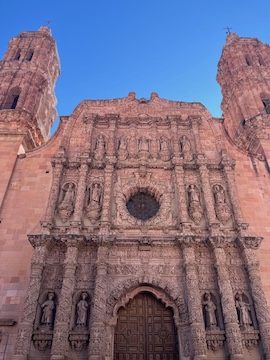

Zacatecas, Zacatecas, is one of the most beautiful cities in Mexico. Its steep, narrow cobblestone streets, pink-stone colonial churches, and historic government buildings—surrounded by jagged mountains, spiky cacti, and sapphire skies—create a stunning sight. Although it is a major tourist attraction, the city retains an air of provincial tranquility, old-fashioned customs, fine local cuisine, and friendly people (see Figure 1). Far from overpopulated Mexico City and industrial Monterrey, the air is clean and life moves at a slower pace.
Yet not all is well in Zacatecas. As one of Mexico’s poorer states, characterized by a semi-arid landscape hit hard by extended droughts, agricultural struggles and economic stagnation have historically driven roughly half of its population—including US-born descendants—to live in the United States. Zacatecanos in the US send vital remittances to their families back home and donate money to refurbish local churches and plazas.[1] However, these contributions are not enough to meet the state’s broader economic needs. With limited industrial development and a struggling countryside, many local youths remain vulnerable to being lured or coerced into joining organized criminal groups.
Despite its relative isolation and small population, Zacatecas became a fierce battleground for the vicious Zetas cartel roughly twenty years ago. The state’s strategic value lies in its central location along major drug-smuggling corridors that move marijuana, heroin, cocaine, methamphetamine, and fentanyl from Pacific Coast states—such as Michoacán, Jalisco, Nayarit, and Sinaloa—northward to key border trafficking ports like Ciudad Juárez, Nuevo Laredo, Reynosa, and Matamoros.
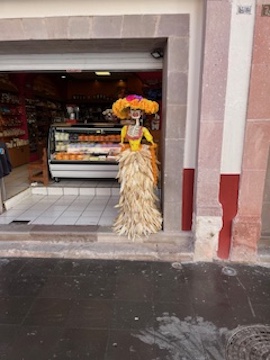
Figure 1. Day of the Dead decoration in downtown Zacatecas. November 2026. Source: Photo taken by author.
Zacatecas and Its Discontents
On my first visit to Zacatecas in 2005, prior to the arrival of the Zetas and mass violence, the future of the state seemed complicated but promising. I was part of a US delegation of academics, businesspeople, and Latino activists who met with leftist Governor Amalia García. The state remained a silver-mining powerhouse and a growing tourist destination because of its lovely colonial architecture. At the same time, the agricultural sector was declining drastically due to lack of rain, and vast numbers of residents had left to work in the United States. Yet through clever initiatives, such as the 3×1 Program for Migrants, the state government matched remittances sent by migrant workers to fund community development.[2] The hope inspired by such transnational movements, however, was quickly dashed with the invasion of the hyper-violent Zetas in 2007.
In that year, a faction of the Zetas directed by Iván Velázquez Caballero, known as “El Talibán,” entered the state. The paramilitary Zetas, a new and non-traditional type of cartel, gained immediate power through brutal, sensational violence rather than the political patronage and corruption tactics favored by old-school crime groups like the Sinaloa Cartel.[3] For the first time, Zacatecas became the scene of mass murders, decapitations, public hangings, and widespread extortion of local businesses. The lucrative silver-mining industry, the state’s pride and joy, suffered terribly. By July 2011, violence had escalated to the point that approximately 250 Zetas fighters fought a large-scale battle against the Mexican Navy and other government forces near Fresnillo, the state’s second-largest city and a major mining center, leaving six Mexican Marines and 15 cartel members dead.[4]
As the Zetas’ power grew, they hung huge banners in the Zacatecas capital and other strategic towns announcing their dominance. The invading cartel intimidated law enforcement and threatened rival groups in the region. However, from 2012 onward, the Zetas’ power declined just as rapidly as it began because of a split with the Gulf Cartel, the deaths and arrests of key leaders, and the Mexican government’s campaign against them. By the end of the decade, the Zetas’ control over Zacatecas had disappeared, only to be replaced by Mexico’s two most powerful cartels: the Cártel de Jalisco Nueva Generación (CJNG) and the Sinaloa Cartel—specifically, the Mayo Zambada faction.[5]
Second Visit to Zacatecas
When I arrived in Zacatecas in November 2026 to reassess local conditions, I was first struck by the state’s relative insignificance on the national stage. Although it historically stood out as a mining capital and the site of a major revolutionary battle (La Toma de Zacatecas), the small Aeroméxico plane I took did not even have a regular terminal gate at the Mexico City airport. Instead, passengers were bused out to the edge of the tarmac to an obscure loading zone. I was later told that the no-frills flight carried the current Zacatecas governor, David Monreal. Not knowing he was a high-ranking politician, I noticed him only because he was so inconspicuous—dressed in plain clothes and traveling with no apparent entourage or bodyguards. The tiny Zacatecas airport was equally modest, with only a small group of relatives and taxi drivers waiting to receive arrivals.
Indeed, the relatively small population of Zacatecas and its slow-moving, courteous residents hearkened back to a more laid-back, mythical Mexico, much like the classic nostalgic film Brigadoon. Yet as I entered the outskirts of the city in a shuttle bus, I was stunned by the bright lights of a gleaming new shopping mall, dozens of recently opened US chain hotels, and glitzy American fast-food restaurants.
In the days that followed, however, I was inundated with stories from long-time residents about the ongoing wave of violence and insecurity. One former policeman told me how his shoulder was shattered by a bullet from narcos in a shootout on the outskirts of the capital. A taxi driver recalled his horror at being caught in a firefight between cartel members on the highway to Jerez. Although the Mexican left has held the state governorship twice in the last 20 years, Morena and its precursor parties have been unable to stop the surge of kidnappings, extortion, and homicides perpetrated by the cartels. Even though the capital city does not display the rampant street drug use, prostitution, and open vice visible in border cities like Tijuana and Ciudad Juárez—or in parts of Mexico City—both the city and state of Zacatecas remain thoroughly infiltrated by organized crime. Consequently, in 2021 Zacatecas held the highest murder rate of any state in Mexico.[6] That same year, 96 percent of Fresnillo residents surveyed said they felt unsafe—the worst percentage of any Mexican city. As one Fresnillo resident told a New York Times reporter, “We’re living in hell.”[7]
One night in January 2022, soon after David Monreal assumed office as governor, the Sinaloa Cartel left an SUV packed with ten dead bodies (eight men and two women) by a large Christmas tree in the Plaza de Armas, directly in front of the Governor’s Palace in Zacatecas.[8] The cartel claimed the governor had not upheld his side of an agreement. Throughout that year, high-impact incidents of violence and mayhem occurred across the state as the Sinaloa Cartel fought the CJNG for regional control. Yet, surprisingly, from late 2022 onward, overt violence began to subside—perhaps due to internal divisions within the Sinaloa Cartel that sparked a civil war between the La Mayiza and Los Chapitos factions in Sinaloa, alongside mounting pressure on the CJNG from the US-backed Mexican military. The CJNG, likewise, suffered many losses and lost some power during this period. Furthermore, the election of President Claudia Sheinbaum in 2024 coincided with a decline in reported homicides throughout the country, including Zacatecas, up to the present.[9] Although critics often contend that official homicide statistics have been manipulated by excluding thousands of disappeared people who were almost certainly murdered, the drop in homicides, at least on paper, is striking.
Cría Fama y Échate a Dormir: Isn’t It Great That Homicides Are Down?
I interviewed a knowledgeable elderly man in Zacatecas about the apparent improvement in security. Alluding to Governor Monreal, he cited the age-old Spanish proverb, “Cría fama y échate a dormir,” which roughly translates to “make a name for yourself and then go to sleep”—meaning that once leaders build a favorable image, they stop working and let things fall apart again. Sadly, that captures the reality in Zacatecas. Lower homicide numbers on a government ledger do little to dismantle the entrenched extortion rackets, highway ambushes, disappearances, and quiet intimidation that continue to dictate daily life. Indeed, though Zacatecas now has very low homicide levels, extortion is off the charts, other forms of crime are rising, and the public perception of fear is palpable.[10] Zacatecanos repeatedly told me that even though the capital feels safe, the rest of the state is scary and out of control. The most dramatic example of this was the kidnapping and mass murder of ten people connected to Fresnillo in July 2026.[11] The bodies of the dead were then dumped in several small towns, and several were hung from a bridge in a horrific display of gore. This bloody spectacle was followed in August 2026 by the CJNG’s detonation of a car bomb in Ojocaliente, Zacatecas, which injured 11 people and damaged dozens of buildings.[12] These incidents compare with some of the worst mass violence in the history of the Mexican “drug war.” Moreover, such violence has an even greater impact in small, sparsely populated places like Zacatecas than it would in larger, more battle-scarred states like Sinaloa, Chihuahua, or Michoacán.

Figure 2. Image of El Santo Niño de Atocha. Source: Wikimedia Commons. Public Domain (CC0).
Santo Niño, We Need Your Help Now!
Fresnillo is best known for the shrine of the Santo Niño de Atocha, a small, childlike statue housed in the Santuario de Plateros (see Figure 2). Hundreds of thousands of worshippers from across Mexico, the United States, and elsewhere make pilgrimages to the miniature saint each year. Throughout Mexico, one encounters plaster images of the saint, small roadside shrines of devotion, amulets with his image around people’s necks and for sale in local markets, and figurines hanging from the rearview mirrors of taxis and private cars. Belief in the powers of the child saint is intense and heartfelt. Given the persistent grip of organized crime beneath the surface of improving statistics, Zacatecas residents need the Santo Niño’s help now more than ever.
Most of the people murdered in and around Fresnillo in July were public officials or prominent businessmen—leaders of the city and the state. The Sinaloa Cartel claimed responsibility for the massacre, and many of the victims played important roles in the mining, ranching, commercial, and industrial sectors of the Zacatecas economy. Some observers I spoke to claimed that a main motive of the killings was attempts to extort people associated with beer distributorships and the Feria de Zacatecas; the budgets responsible for producing regional fairs are notorious targets for extortion and graft in Mexico. A veteran taxi driver told me, “It is better not to pry into these matters” (i.e., stop asking me questions about it). Why Fresnillo? Certainly, because of the important industrial resources there and its strategic location along the Pan-American Highway which is critical for drug trafficking. Some interlocutors, however, suggest other geographical factors: its proximity to Durango, a state controlled by the Mayiza faction of the Sinaloa Cartel, and its flat, desert topography, which lends itself to paramilitary actions and retreat, unlike the Zacatecas capital—a small bowl nestled in a warren of steep, winding streets from which it is hard for criminals to escape. Still other local observers told me they thought Fresnillo is the center of attack because it is the home of the powerful Monreal political family (Saúl, former Fresnillo mayor; David, current governor; Ricardo, former governor and current federal representative). If you want to pressure politicians or “make arrangements” with them, the place to hit is Fresnillo.
Conclusions
Clearly, reducing homicide rates is not enough, and celebrating such positive statistics may be a smokescreen occluding the serious harm caused by extortion, kidnapping, and other crimes. Massacres like the one that happened recently in Fresnillo reverberate across the state and affect public safety for years. Fear is palpable among Zacatecanos and those who would travel through or visit the region. On my recent trip to Zacatecas, I saw not even one foreign tourist in a city whose treasures rival those of Oaxaca, Antigua, Guatemala, or San Miguel de Allende. Weak state economies simply cannot afford to have their primary economic resources pillaged and held hostage by criminals. This is true whether the issue is limes and avocados in Michoacán, petroleum products in Guanajuato, or tourism along the Riviera Maya.
Endnotes
[1] Howard Campbell and Joe Heyman, “Slantwise: Beyond Domination and Resistance on the Border,” Journal of Contemporary Ethnography. Vol. 36, no. 1. 2007: pp. 3–30, https://journals.sagepub.com/doi/10.1177/0891241606287000.
[2] Ibid.
[3] Claudio Lomnitz participation in “Desde 2007, Zacatecas es Parte de una Nueva Geografia de la Violencia,” lecture, sposored by Colegio Nacional, 13 March 2023, https://colnal.mx/noticias/desde-2007-zacatecas-es-parte-de-una-nueva-geografia-de-la-violencia-claudio-lomnitz/.
[4] Helena DeMoura, “15 killed in shootout between Mexican navy, alleged cartel members,” CNN. 2 July 2011, https://www.cnn.com/2011/WORLD/americas/07/02/mexico.zetas.shootout/index.html.
[5] Paola Lilí García Alanis. “Zacatecas as the Strategic Upside Down for Drug Trafficking to the United States and the Operation of the Hive Mind.” Norteamérica, Revista Académica del CISAN-UNAM. Vol. 20, no.1, 2025: pp.345–366, https://doi.org/10.22201/cisan.24487228e.2025.1.721.
[6] Oscar Lopez, “We’re Living in Hell: Inside Mexico’s Most Terrified City.” New York Times. 3 August 2021, https://www.nytimes.com/2021/08/03/world/americas/inside-mexicos-most-terrified-city-fresnillo.html.
[7] Ibid.
[8] “Ten bodies left in SUV outside Mexican state governor’s office.” Guardian. 6 January 2022, https://www.theguardian.com/world/2022/jan/06/mexico-bodies-suv-outside-governors-office-zacatecas.
[9] Fernanda Monroy, “Intentional Homicides in Zacatecas Fall 96% Since 2021, SESNSP Reports.” Mexico Solidarity Media. 5 September 2026, https://mexicosolidarity.com/zacatecas-homicides-fall-96-percent/.
[10] Silvio Blanco, “Hanging bodies, extortion and suspicion: The Zacatecas murders expose drug cartel infiltration in Mexico.” El País. 27 July 2026, https://english.elpais.com/international/2026-07-27/bodies-hanging-extortion-and-suspicion-the-zacatecas-crime-exposes-cartel-infiltration-in-mexico.html.
[11] Ibid.
[12] John P. Sullivan and Robert Bunker, “Mexican Cartel Tactical Note #55: Car Bombing against the Comandancia (Police Headquarters) in Ojocaliente, Zacatecas.” Small Wars Journal. 7 September 2026, https://smallwarsjournal.com/2026/09/07/mexican-cartel-tactical-note-55-car-bombing-against-the-comandancia-police-headquarters-in-ojocaliente-zacatecas/


Commenting is available to active SWJ members and staff.