





Iran Turns Terrorism Against U.S. Military Readiness

Abstract
The recent provocation outside of RAF Fairford in England represents an escalation by Iran in their terrorism operations targeting the West. The incident demonstrates how Iran continues to utilize elements of their historic tradecraft while increasing their complexity and adopting new technologies like drone warfare. More concerning, this latest plot indicates Iran may be seeking to use terrorism to achieve more significant, strategic objectives than previously attempted.
Introduction
In the early hours of September 27, 2026, a local female farmer observed three white vans and eight to ten masked men near the fence line of the Royal Air Force (RAF) Fairford, Gloucestershire, England. Within hours, five men were arrested, and 85 homes were cordoned off as military teams searched for explosives. The next day, President Donald Trump revealed that the United States and the United Kingdom had been tracking this threat, and UK Prime Minister Andy Burnham later stated that early indications suggested Iranian involvement. On October 4, 2026, the United States relocated its B-1 bombers from the base. Unbeknownst to the farmer, her early morning call may have exposed the latest Iranian terrorist plot and a significant escalation in Iran’s asymmetric objectives.
Available information surrounding the RAF Fairford incident reveals an ambiguous account of what transpired but points towards a more sophisticated Iranian plot. These details indicate that as Iran continues to pursue terrorist operations into the West, they will utilize elements of their historic tradecraft for asymmetric operations while increasing their complexity and adopting new technologies like drone warfare. More concerning, this latest plot indicates Iran may be seeking to use terrorism to achieve more significant strategic objectives in anticipation of renewed military strikes.
The RAF Fairford Run
The investigation into why these vans were driven near the perimeter of RAF Fairford remains ongoing, but details released so far indicate this was part of a more sophisticated Iranian conspiracy than their recent attacks in the West. Following the incident near RAF Fairford, officers detained five military-aged British men, first under the Explosives Act and then on suspicion of preparing an act of terrorism. The immediate response included bomb disposal teams; however, their search did not find explosives. The men were then released on bail and strict monitoring requirements. In the ten days after the initial incident, two additional men were arrested, including a dual UK-Iranian citizen.
Within a day of the arrests, Secretary of State Marco Rubio referred to a “foreign actor” being involved in the incident, with President Trump stating the United States had the suspects “under view for a long time.” Then on September 30, 2026, Prime Minister Burnham said there were “strong indications that Iran played a part…” The allegation of Iranian involvement drew an immediate connection to a July warning from the Islamic Revolutionary Guard Corps (IRGC), in which they considered RAF Fairford a legitimate target. The air base is home to U.S. Air Force bombers, being used to attack Iran as part of the ongoing military conflict.
The foundational elements of the RAF Fairford incident are consistent with historical Iranian tradecraft. All of the men were young, residents of the country where they were operating, and did not have an obvious connection to Iran, with the notable exception of the dual citizen who was arrested later. This is a consistent with their preference for cutouts and proxies with legal status in the target country, minimizing the risk of detection by masking ties to Iran.
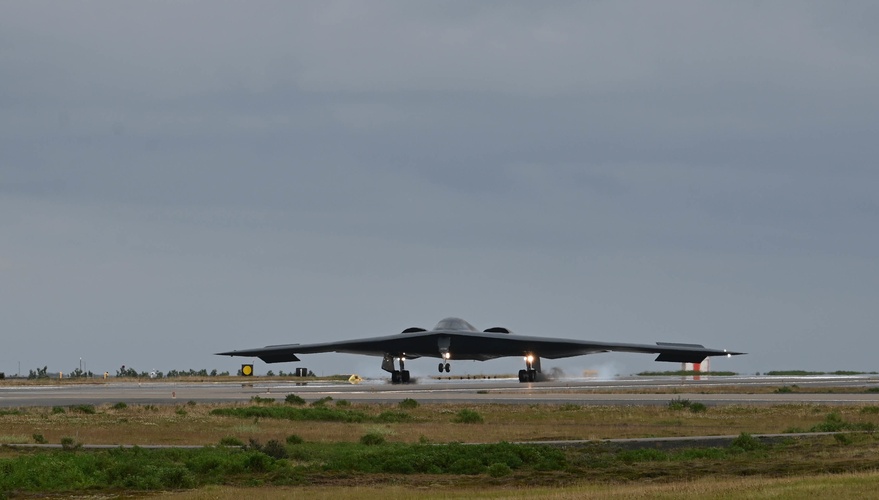
The incident took an even more serious turn when the United States acknowledged the B-1 bombers were relocated from the base on October 4, 2026, due to an imminent threat. US officials later confirmed that the relocation was due to a possible Iranian drone attack.
A Continuation of Iranian Plots
Over the previous fifteen years, Iran has not been deterred from attempting sabotage and assassinations in western countries. As detailed in the George Washington University Program on Extremism’s October 2024 report, Propaganda, Procurement and Lethal Operations, Iran has targeted at least six individuals for assassination or kidnapping in the United States between 2011 and 2021.
In 2011, Mansour Arbabsiar, an Iranian-American working on behalf of a senior Quds Force officer, attempted to hire a man he believed was a Mexican drug cartel member to bomb a Washington restaurant and kill the Saudi Ambassador. Arbabsiar paid $100,000 of a $1.5 million fee for the bombing, and claimed that bystanders were acceptable casualties. In 2018, Iranian operatives targeted Masih Alinejad, a prominent Iranian dissident residing in the New York area, first attempting to lure her overseas and then later planning to kidnap her from within the United States. From December 2020 to March 2021, Iranian operatives hired Canadian Hells Angels to murder two Iranian dissidents in Maryland. After the United States killed IRGC leader Qasem Soleimani, Iran began plotting against former US officials it held responsible, including John Bolton and Mike Pompeo. Among the commonalities in Iranian tradecraft was the frequent use of proxies and criminal networks hired to conduct each attack.
After the United States began military operations against Iran in February 2026, Iranian tradecraft began to evolve with their campaign of arson and assaults. On March 9, 2026, a new terrorist group named Harakat Ashab al-Yamin al-Islamia (HAYI) used the messaging platform Telegram to announce “military operations” against the United States were beginning. The same day, HAYI claimed responsibility for an attack in Liege, Belgium. In the following weeks, HAYI was credited with numerous attacks across Belgium, the Netherlands, France, and England. The attacks included bombings, arson, and assaults, primarily targeting Jewish institutions and individuals. HAYI additionally fired shots at the US consulate in Toronto on March 10, 2026. As law enforcement investigated, it was revealed that the attackers were predominantly young men, sometimes juveniles, who had been recruited over encrypted messaging applications and paid to carry out the attacks.
HAYI was suspected of operating on behalf of Iran almost immediately, largely because the symbols in its videos resembled those used by Iranian-backed militias in Iraq. These suspicions were confirmed on May 15, 2026, when the United States announced the arrest of Mohammad Baqer Saad Dawood al-Saadi and identified him the leader of HAYI. Al-Saadi, a commander in Kata’ib Hezbollah, an IRGC-backed Iraqi militia, was born in Iran in 1993 to Iraqi parents. According to the criminal complaint, he conspired to recruit and direct individuals to conduct these attacks under the HAYI name in exchange for payments. Tactically, these attacks succeeded in targeting Jewish institutions and inflicting fear within the Jewish community, although they did not serve any strategic objective nor impact US military operations.
Iran Is Attempting a More Complicated Plot
One notable shift in tradecraft is the number of people involved in the operations. Previous Iranian plots normally included only a couple of proxies, with four being the most involved in the targeting of a dissident. The RAF Fairford incident involves at least seven proxies. Every additional participant raises the risk of compromise or detection, and given Iran’s history of paying its operatives, raises the cost of the operations. The tactical reason to include this larger number of operatives has not been identified.
The incident also included viable cover for action, a traditional tool more commonly used in elaborate schemes. Witnesses reported that at least one van was detailed with a “Fuel 2You” logo and telephone number. However, subsequent reporting revealed that Fuel2You is not a registered company and the telephone number was invalid, although a company with the similar name Fuel2U does exist. The vans contained fuel and siphoning equipment, raising the possibility that the men were fuel thieves. Petrol thievery is a common criminal activity in England and is a typical cover activity standard to any covert operation.
The immediate deployment of explosive disposal teams and the cordoning off 85 residences, without an on-scene identification of explosives, suggests British authorities were acting on prior intelligence concerning the suspects’ intentions. This conclusion is contradicted by British authorities claiming the response was not intelligence-led, despite statements by President Trump implying the opposite. No incriminating substances were found beyond what would be expected, and their cover story only raises questions about both the predictive intelligence and their purpose.
Two reported details raise further questions that remain unresolved. The first is how these men managed to drive their vans to the perimeter of the air base if, as President Trump and Secretary Rubio stated, intelligence services were already aware of this threat. The second is that one of the men contacted police himself roughly an hour before the farmer did. Authorities have not disclosed what the man reported or what may have motivated the call. However, why would the plotter alert law enforcement if, as the investigation later determined, there were no explosives present, nor any obvious plan to attack the airfield?
One possible conclusion is that the Sunday morning van trip was either a rehearsal to measure local law enforcement’s response or an attempt to evaluate their cover story. It is also possible the incident was meant as a distraction, with expendable men drawing attention away from the real, future threat. The suspect’s call to police may have been part of the charade, ensuring that law enforcement responded so the plotters could observe and evaluate their procedures and response time. Regardless of the actual purpose, the incident involves many interlocking layers, demonstrating Iran’s sophisticated employment planning beyond their HAYI terrorist attacks.
Adoption of Drone Warfare
The prospect of Iran employing drones is both concerning and highly plausible, because a drone attack represents a more plausible threat to damage US bombers on a guarded base than an improvised explosive device, or even a vehicle-borne explosive. The tactical ability to infiltrate a base perimeter, evade security, and approach guarded aircraft is a complex endeavor with a low likelihood of success. Using remotely operated explosive-laden drones is a more viable method of attack. It is also not unique to Iranian plotting. Drones have gained the attention of many domestic extremists for this reason. States such as Ukraine, Israel and Russia have all attempted similar attacks in the previous fifteen months with differing results.
In June 2025, Ukraine conducted the unprecedented drone attack from within the borders of its adversary. Named Operation Spiderweb, Ukrainian security service covertly launched over 100 small drones from specially designed trucks staged near five Russian airbases. The drones had been smuggled in parts, assembled inside Russia, and hidden under removable roofs of wooden cabins on flatbed trucks. Russian drivers were hired to haul the cabins and, according to reports, did not know what they carried. The strike destroyed numerous Russian strategic bombers that had been used to attack Ukraine.
In the same month, Israel conducted virtually the same attack, named Operation Rising Lion, from inside Iran in support of the June campaign targeting Iranian nuclear facilities. Israel used pickup trucks with modified beds designed to carry small, preprogrammed drones within range of planned targets.
Russia attempted a similar attack in August 2026 using explosive-laden drones to target a Ukrainian cargo aircraft at Leipzig/Halle airport in Germany. Unlike the previous Ukrainian and Israeli attacks, the Russian attempt failed to detonate near the plane. German officials named a dual Russian-Latvian citizen as the suspected organizer and a Belarusian as the individual who conducted the attacks. The German investigation concluded it was conducted on behalf of Russia.
An Iranian Escalation
Perhaps the most significant evolution in their tradecraft is strategic relevance. The RAF Fairford incident may represent efforts by Iran to use terrorism to directly impact US military readiness. Disrupting the security of bombers staged for future military operations would serve Iran’s interests by pushing the safe operating boundaries for US forces as far from Iranian territory as possible. Iran has previously gained an advantage by constraining the United States’ ability to operate fully from its bases in the Persian Gulf region. Continuing to push US forces further from their Iranian targets complicates mission planning and raises operational costs.
The timing also warrants further review. When the incident occurred, the United States and Iran were not engaged in military strikes. However, President Trump has indicated that he is considering a military escalation following the coming elections. Iran certainly is anticipating this possibility, and taking measures to mitigate the US ability to project power through asymmetric means would be prudent.
The Overall Impact
The broader implications of this incident are only beginning to emerge. If proven the incident was orchestrated by Iran, it would represent their first attempt at leveraging terrorist tradecraft to expand their field of operations to impact US force readiness. Previous attempts were directed at dissidents or individual targets for revenge in the United States, and toward Jewish institutions in Europe and England. While significant, none of these previous attacks were militarily consequential. The possibility of Iran using the small-drone playbook proven by Ukraine, Israel, and Russia to impact US readiness is a notable escalation with strategic implications. This should not be a surprise, following the example of Russia and Ukraine in expanding the traditional boundaries of their military conflict into Europe and to include critical infrastructure necessary for combat operations.
It is possible that not all individuals detained outside RAF Fairford were aware of Iran’s involvement or the operation’s true objectives. The men initially released on bail may also cast doubt on the severity of the incident or the existence of a foreign nexus. However, the recent re-arrest of two individuals, and their subsequent arrest on suspicion of National Security Act offenses, strongly points to foreign state direction, even if not everyone involved was fully witting. It is also possible that the incident was never meant to be more than a demonstration, intended to project a visible threat to the base on the IRGC’s behalf. The police have not disclosed the seizure of any explosives or drones, which raises questions about the seriousness of the threat. That absence does not rule out that the materials were stored for a later attack or relocated after the highly public law enforcement response.
Iran has signaled its intent to draw on its record of lethal operations in the West to constrain US power projection. As a result, intelligence and law enforcement agencies face significant challenges in detecting and defeating the next attempt. Iran’s success with HAYI, rapidly recruiting and tasking dozens of operatives within weeks, demonstrates they can expeditiously attempt a similar attack on the next strategic target. If there is one valuable lesson to be learned from the recent history of Iranian operations, it is that Iran will continue to evolve their tradecraft and not be easily deterred from attempting further terrorist attacks.


Commenting is available to active SWJ members and staff.