





Andor and Teaching Counterinsurgency

Abstract
Andor offers professional military and civilian instructors the best “concrete experience” case study for teaching the evolution of an insurgency and the difficulties of counterinsurgency. It depicts intelligence failures, threat finance, provocation, detention and radicalization, and how government actions can inadvertently trigger and strengthen an insurgency. Used alongside doctrine and historical examples, Andor can help students examine the human and political dimensions of irregular warfare.
Introduction
“I’d like to know if anyone here believes the Rebellion plans its actions around the artificially constructed boundaries of our sectors.”
“Major Partagaz created those sectors.”
“As organizing principles, not personal playthings. Do you really think the Rebels care about the lines we draw on maps?”
-Lieutenant Meero and Captain Lagret, Andor S1E7
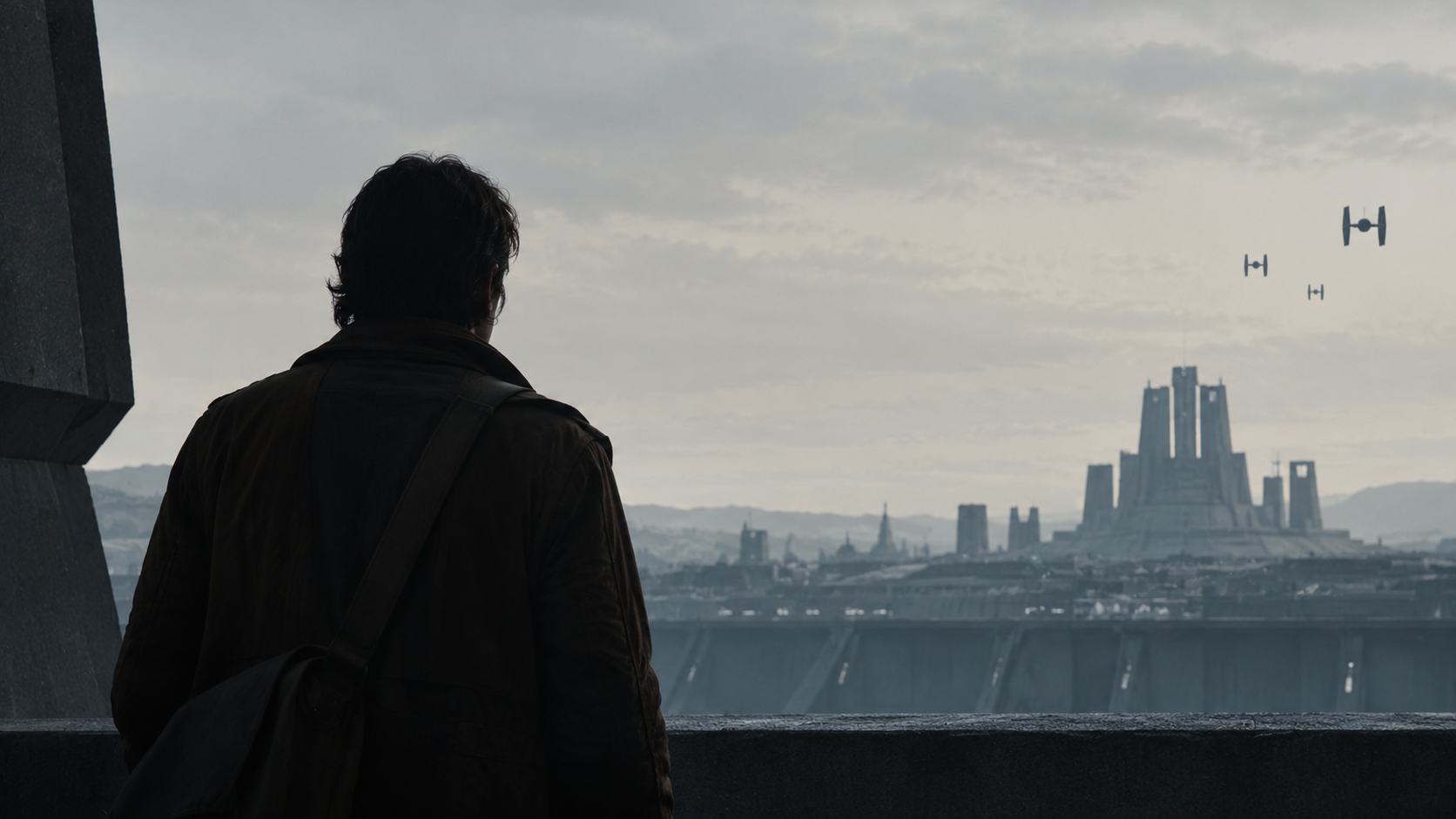
The Disney+ show Andor follows Cassian Andor, a cynical thief living under an authoritarian regime who is slowly drawn into a growing insurgency. Without most fantasy elements, the gritty depiction by Andor and Rogue One of military and intelligence operations of the Global War on Terror (GWOT) can potentially see themselves in the officers of the Imperial Security Bureau (ISB) and Army while recognizing former opponents in the Rebels. Within the Army’s model, Andor is thus an accessible, highly effective tool for introducing and teaching the complexities of asymmetric warfare. As the US military focuses on conventional threats, Andor provides an excellent cinematic case study for educating a new generation of policymakers and warfighters at military academies, professional military schools, and universities on the enduring lessons of insurgency and counterinsurgency.
The Rebellion as Insurgency
US military doctrine describes that insurgencies develop in three phases: latent and incipient, guerrilla warfare, and war of movement. The Rebellion in the original trilogy and Rogue One is at the apex of insurgency, conducting its war of movement. The Rebels field conventional fleets, fighter wings, and uniformed ground forces to engage the Empire in tactical actions with strategic effects at Scarif, Yavin, Hoth, and Endor. Andor, however, shows that the Alliance did not spring from the ashes of the Galactic Republic fully-formed. Over two seasons, we watch the Rebellion move from latent and incipient into guerrilla warfare, and finally to the tipping point into the war of movement.
The Illusion of Criminality and Intelligence Failures
The growth of the Rebellion in Andor provides a slow-burn example for students to watch a government struggle to identify and deal with something they do not understand. Early episodes depict the Rebellion in the latter part of phase one. FM 3-24 describes the key actions during this phase as “the emergence of insurgent leadership, creation of initial organizational infrastructure, training, acquisition of resources, and political actions.” Insurgent leadership has emerged by the time viewers first see them onscreen, including spymaster and organizer Luthen Rael, activist and financier Mon Mothma, and violent commander Saw Gerrera.
Acquisition of resources is depicted through two primary plot points. First is Andor’s theft of an intact NS-9 Starpath Unit, a Blue Force Tracker for the Imperial Navy filled with COMSEC. Insurgents in all phases, but particularly in phase one, will make learning and tracking counterinsurgent force movements a priority to ensure their own freedom of action.
The second point depicting the acquisition of resources is Mon Mothma’s covert fundraising of Rael’s operations. Mothma, an Imperial Senator representing wealthy Chandrilla, was a lynchpin in what doctrine calls threat finance. Her wealth and position were important obfuscators for her efforts to funnel money to the Rebellion. Mothma’s actions are a textbook illustration of the fact that insurgencies are heavily resource-dependent, and identifying the correct source of their funding is critical for counterinsurgents.
Mothma also illustrates the insurgency’s political actions during the first phase. Her campaigning against the Ghorman blockade represented a parallel effort within the existing governmental structure against heavy-handed Imperial tactics. It is easy for counterinsurgents to dismiss insurgents as a disaffected radical minority, yet insurgencies are born out of real grievances and a perception that governmental injustice is to blame. While opposition political parties may not necessarily be linked to the insurgents, counterinsurgents must not dismiss their actions and stances as these often reflect the grievances the insurgents seek to address. Insurgencies are fundamentally human problems that rarely can be solved through force.
Unwillingness to accept that there was a growing threat, despite an increasing rate of incidents, hampered Imperial efforts to identify and counter the growing insurgency. JP 3-24 states “initial attacks provide analysts the first alert to the potential for an insurgency. The government under attack, however, may frequently dismiss insurgent actions as the work of bandits, criminals, or terrorists, which increases the risk the government will employ counterproductive measures.” The Empire largely downplayed or ignored a series of incidents which only LT Meero correctly linked to an organized insurgency: The Empire logged the loss of the Starpath Unit as standard inventory loss, Andor’s murder of corporate security officers as a bar fight gone wrong, a firefight between Andor and Rael against security forces on Ferrix as a botched law enforcement action, and theft of sensitive equipment from shipyards as black market activity. The ISB’s system of sectors, and the unwillingness for the officials in charge of those sectors to either share intelligence or appear to have a problem, exacerbated these issues.
American intelligence has not been immune to the type of turf-guarding and careerism plaguing the Empire. The 9/11 Commission Report notes that measurable crime-related statistics drove promotion within the Federal Bureau of Investigation, while counterterrorism work was not seen as career-enhancing. Regional offices also guarded control of investigations, reducing cooperation from offices that would receive no credit for supporting them. This resembles the ISB, whose sector Supervisors guarded their fiefdoms jealously and often refused to cooperate. Stability operations require authorities to investigate potential insurgencies rather than dismiss them as a law-and-order problem, and reward unity of effort rather than individual ownership and prowess.
Action and Overreaction
The Aldhani Heist in episode six is a clear indicator of the Rebellion moving from the latent and incipient phase to guerrilla warfare, and provides excellent examples of how a government should and should not react. The guerrilla warfare phase is characterized by small insurgent units directly attacking government forces and seeking to undermine or weaken the government’s legitimacy. Doctrine notes that one method to accomplish this is to “employ a strategy of provocation anticipating security forces will overreact and thereby alienate the government from the population.” The Aldhani Heist is a paradigmatic guerrilla raid which provides an instructional vignette on insurgent acts accomplishing multiple objectives.
The guerrilla unit’s immediate objective was the theft of the sector’s quarterly payroll. This provided a massive cash influx to the Rebellion, but there were larger strategic effects which Rael planned. The heist falls perfectly in line with the insurgent concept of “propaganda of the deed,” which values actions that resonate at the level of strategic narrative far beyond any tactical value. The brazenness and success of the raid immediately undermined the Empire’s aura of invincibility and security galaxywide. It simultaneously triggered the Empire to overreact and come down hard in reprisal with the Public Order Resentencing Directive (PORD).
PORD was a draconian measure which raised all crimes against Imperial personnel or property to the equivalent of Class A felonies, doubled sentences for those crimes, and levied unpayable fines against recalcitrant worlds. While the Empire’s goal was to deter similar future Aldhani-like attacks, it instead provoked outrage in the Senate and across the galaxy. This delighted Rael, and he admitted to Senator Mothma that triggering an overreactive reprisal was his true goal in ordering the raid. Counterinsurgents are vulnerable to overreacting when attacked, responding with overwhelming force or harsh measures designed to punish or deter the population from supporting the insurgents; however, as FM 3-24 notes, “the more force that is used, the less effective it can be” as the reaction creates more insurgents than it kills or deters, and validates the insurgent narrative.
The Aldhani Heist also forced a structural reckoning. Imperial Intelligence, built to fight a conventional peer adversary during the Clone Wars, was fundamentally ill-postured for insurgency. Their failures elevated the ISB to lead anti-Rebel efforts. This mirrored US intelligence on the eve of 9/11; with 80% of its budget residing in the Defense Department, the US intelligence enterprise remained oriented on Cold War-era threats, blinding it to the threat of terrorism. With the pivot back to large-scale combat operations (LSCO) in the past ten years, the United States risks losing the hard-earned skillsets required to identify and counter nascent insurgencies in future post-conflict operational environments and must take steps to institutionalize lessons.
The Empire’s reliance on punitive control inadvertently fueled the insurgency’s expansion. PORD placed over-sentenced prisoners in brutal conditions in close proximity to “true believers,” fueling radicalization and recruitment. Andor was arrested and sentenced to six years in prison for “anti-Imperial activity” after doing nothing more than looking suspicious at a beach resort after another man had been detained nearby. He was thrown into the austerity and casual brutality of the Narkina Five prison system. Previously motivated by profit, here Andor was exposed to militant radicals, and this combined with his unfair treatment at the hands of the Empire pushed him right up to the edge of being a believer himself.
Narkina Five and Andor’s slow radicalization echo the infamous Camp Bucca in Iraq, where the United States incarcerated thousands during the Iraq War. The large population, all suspected of terrorist or insurgent activity, created what one former commander called “a pressure cooker for extremism.” While some of the prisoners at Camp Bucca were captured in battles with coalition forces or caught with weapons or explosives, many were detained for no more than what Andor had been: “simply being a ‘suspicious looking’ military-aged male in the vicinity of an attack.” Prisoners relied on each other for physical, moral, and religious support, and as these bonds grew, so too did opportunities for the true insurgents to radicalize the others.
The Breaking Point and Losing the Population
The culmination of the Empire’s flawed approach to counterinsurgency is seen during the Season One finale. This, and the spiraling of the conflict in Season Two, is an illustration of the all-too-common failure of many counterinsurgency efforts. US counterinsurgency doctrine emphasizes the importance of the population in defeating an insurgency; at its core, it is a “violent struggle among state and non-state actors for legitimacy and influence over the relevant population” which begins when “a population grows dissatisfied with the status quo…[and is] willing to fight to change the conditions to their favor.” Rather than focusing on the population, however, the Empire focused on setting a trap for Andor at his mother’s funeral. Missing the ceremony’s sensitive cultural nature, Imperial commanders interrupted the pageantry and flooded the streets with troops. When the unarmed mourners grew agitated, Imperial troops employed lethal force, sparking an uprising. The Ferrix riot is an example of the natural tipping point where the counterinsurgents’ actions sparked the very behavior they were attempting to suppress. This highlights the critical importance of cultural intelligence. Operating effectively among a population requires understanding local customs, grievances, and traditions, lest the counterinsurgents inadvertently turn tactical actions into strategic mistakes.
Season Two continues the progression of the insurgency through its guerrilla warfare stage, as well as providing a microcosmic insurgency with the Ghorman Front. Seeking to strip-mine Ghorman, the Empire utilized an infiltrator and aggressive information operations to push the Front into violent overreach, manufacturing a pretext for genocide. Recognizing the potential trap, Rael ruthlessly assessed that the Ghorman Front’s destruction would serve the Rebellion. He traded the loss of the Ghor for a massive propaganda victory which shocked a complacent galaxy into action and drove Mon Mothma to give her infamous “death of truth” speech about Emperor Palpatine on the floor of the Imperial Senate.
This friction and tradeoff highlights that insurgencies face a constant operational dilemma between security and unity of effort. Cellular structures such as the one Rael employed in building the Rebellion aid in survivability during Phase One. However, they hamper the unified action required for the later phases, especially as they are often ideologically separate. As Saw Gerrera lamented when Rael petitioned him to work closer with other cells, “Kreegyr’s a Separatist. Maya Pei’s a neo-Republican. The Ghorman Front, the Partisan alliance, Sectorists, Human cultists, Galaxy Partitionists. They’re lost, all of them, lost.” During Phase Two, the Empire ended up solving the Rebellion’s problem through its own actions: Kreegyr, Pei, Rael, and Gerrera were all killed, the Ghorman Front destroyed, and the revelation of the
The Ghorman genocide prompted the insurgency’s evolution into its final phase: abandonment of governmental participation and transition into a war of movement. Mothma’s public denunciation of Palpatine was followed by her extraction to Yavin followed by other Senators. The Alliance to Restore the Republic coalesced as a parallel government under the leadership of Mothma and the others. Peaceful political actions were no longer meaningfully contributing to the desired end state, and were putting leadership at risk. Insurgencies must eventually provide governance, whether through gaining enough support in existing structures or moving to open warfare to topple them.
Strengths and Limitations
Although some may consider using a Star Wars show inappropriate for professional military or strategic education, its popularity makes Andor an accessible bridge to serious discussion of insurgency for many. However, for all of its value, Andor is not and should not be treated as historical evidence, or a model that can map perfectly onto an actual campaign the military may fight. Its value is as a case study which can generate questions and discussions. Because instructors and students can observe the same decisions, consequences, and subsequent decisions, the series provides a concrete common experience through which they can learn doctrine, test theory, identify assumptions, and debate alternative course of actions and their outcomes. While extremely valuable as a foundation, using the series as instructional material must be bolstered by study of doctrine and historical examples such as those mentioned throughout.
Conclusion
Andor provides a masterclass instructional example on the evolution of an irregular war. By eschewing the fantastical elements of Star Wars such as the Force and lightsabers, the series illuminates the cold realities of insurgency and counterinsurgency. As western states focus on conventional peer competition and large-scale combat operations, the show serves as a poignant instructional aid for those wishing to introduce professional military, government, and civilian students to the complexities of counterinsurgency. It reminds everyone of the hard-learned lessons of the past two decades: technological superiority and overwhelming firepower cannot solve fundamentally human and political problems, and attempting to do so will only spread the flames faster. The Empire failed to master the human domain, hampered by bureaucratic arrogance, intelligence stovepiping, and punitive control. The Global War on Terror is not the last counterinsurgency the United States will conduct. By integrating media like Andor into professional military and civilian education to teach and visualize this complex problem set, the national security enterprise may be better equipped for the next one.


