AI Over-Trust and Diminishing the Joint Targeting Cycle: Why Doctrinal Discipline Matters More Than Artificial Intelligence


The future is now. Artificial Intelligence (AI) is a current capability. It is already helping military staffs identify, prioritize, and engage targets across the modern battlefield. Systems derived from Project Maven and similar AI-enabled decision-support systems (AI-DSS) now process intelligence at speeds no human staff can match. While this offers tremendous potential, it also creates a temptation to sacrifice sound human judgment for sake of faster engagements.
The recent conflict with Iran demonstrates both the promise and the risk of AI-enabled targeting. Public reporting states that AI assists in processing intelligence and accelerating targeting decisions while commanders retain legal authority over the use of force. Whether ongoing reviews of the use of these systems in the current conflict ultimately validate or challenge those decisions is almost beside the point. The important lesson is that AI is no longer an experiment confined to laboratories or exercises. It is now influencing operational and strategic-level targeting. The Joint Force must understand where that influence starts, stops, and most importantly, how it works.
The Joint Targeting Cycle (JTC) is a six-phase methodology designed to translate the commander’s objectives into military action through deliberate analysis and judgment. It begins by establishing objectives, guidance, and priorities before developing and validating targets against them. Targeting Staffs then analyze available capabilities, weigh desired effects, and develop recommendations for the commander’s decision and force assignment. These decisions inform mission planning and execution, where targets must remain valid as operational conditions change. Combat assessment then determines whether the action achieved the intended effects and informs subsequent targeting decisions. Each phase depends upon judgments made during the phase before it, making human discernment an inherent part of the methodology rather than an action reserved for the final decision to employ force.
I have become increasingly concerned that much of today’s discussion about these tools overly focuses on the point of engagement while overlooking everything that happens beforehand within our doctrinal targeting methodologies. We debate whether a human remains “in the loop” when a weapon is released, yet we spend far less time examining how AI shapes the JTC during target development, prioritization, capabilities analysis, and force assignment. Supporting my concerns is contemporary research in the field of AI-Human dynamics showing that current AI-DSS algorithmically mediates recommendations before they reach human operators and decision makers.
Practically speaking, I do not think AI is the greatest threat to the JTC. Rather, I think the greater risk is our willingness to compress, bypass, or reinterpret a proven doctrinal process that has served the Army and Joint Force well for decades.
The Illusion of Meaningful Human Control
If AI influences targeting before recommendations ever reach the commander, then we must reconsider where meaningful human control actually resides within the JTC. Current discussions often equate human control with the authority to approve or deny a target engagement. While that authority remains legally and operationally essential, it represents the end of a much longer analytical chain rather than its beginning. By the time a target reaches Phase 5, Mission Planning and Force Execution, of the JTC, it has already been nominated, functionally characterized, validated, prioritized, and paired with available capabilities. Each of those activities shapes the commander’s available options long before approval authority is exercised.
As mentioned, current research describes one part of this problem as algorithmic mediation. Dr. Tarleton Gillespie, a Principal Researcher at Microsoft, defines algorithmic mediation as the process by which algorithms shape what users encounter, influencing what information they receive, how it is prioritized, and ultimately how decisions are framed. AI-DSS do not simply process information faster, they determine which information appears relevant enough for human consideration in the first place. That distinction is subtle, yet operationally significant. As we know, a targeting recommendation presented to a commander is never simply raw intelligence. It is the sum of numerous analytical decisions. These decisions are increasingly influenced by machine-generated prioritization before a human ever evaluates the recommendation.
Algorithmic mediation alone, however, does not fully explain what happens inside the AI-influenced JTC. Automation bias in modern research explains why humans often accept machine recommendations with limited scrutiny. Algorithmic mediation explains how those recommendations are constructed and presented. Neither explains how uncertainty introduced during one phase of the targeting methodology becomes embedded within every phase that follows. I describe this phenomenon as “Compounded Cognitive Uncertainty.”
Compounded Cognitive Uncertainty occurs when uncertain human assumptions and AI-mediated analytical outputs accumulate throughout the JTC until they become increasingly difficult to distinguish from validated knowledge.
AI-influenced JTC, rather than reducing uncertainty, compounds it. Each successive phase inherits assumptions accepted during the previous phase, reinforces them through additional opaque machine processes, then presents them with increasing confidence to the human decision-maker. The resulting recommendation appears more complete, internally consistent, and operationally sound despite the possibility that its original analytical foundation remains flawed. The compounding effect can be visualized in orders of magnitude in Figure 1.0.
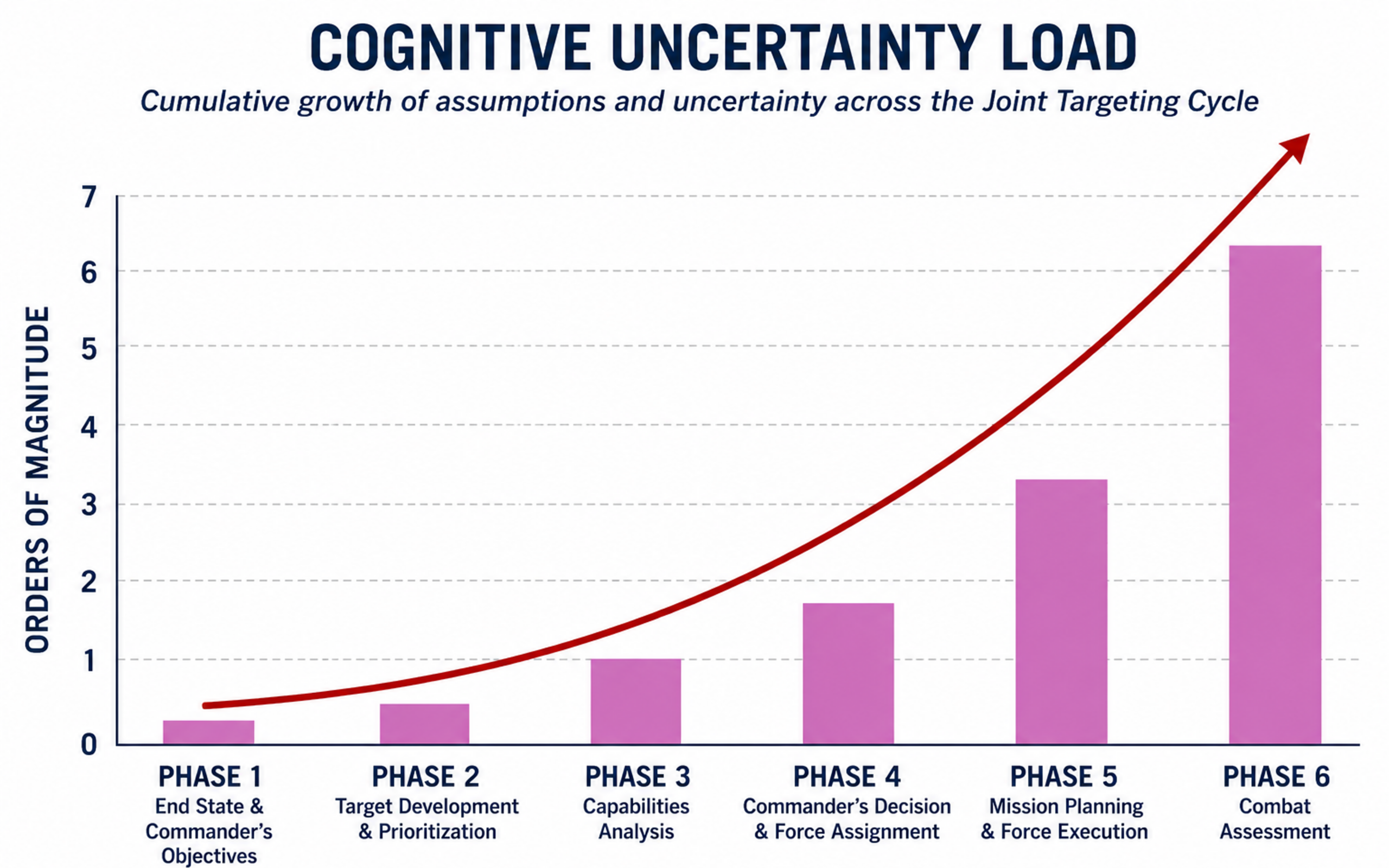
Figure 1: Compounded Cognitive Uncertainty Across the Joint Targeting Cycle (Author’s original concept and illustration)
This is where much of today’s discussion misses the mark. The debate surrounding meaningful human control frequently concentrates on whether a human remains “in the loop.” I think the more important question is whether meaningful human control was exercised throughout the methodology that produced the targeting recommendation in the first place. DoD Directive, 3000.09, Autonomy in Weapon Systems, requires “appropriate human judgment,” be exercised over AI-enabled targeting systems. The question, then, is where that judgment must occur within the JTC because the commander’s Target Engagement Authority (TEA) alone is insufficient to meet the legal threshold.
Meaningful human control, therefore, begins long before a weapon is released. It begins when commanders and staff frame the operational problem, establish priorities, and deliberately exercise human discernment by questioning the assumptions guiding subsequent conclusions. JP 3-60 places these responsibilities throughout the JTC rather than solely at the point of engagement. Discernment, therefore, is the mechanism that transforms information into professional military judgment and is the deliberate evaluation of assumptions before they become conclusions. Without it, human participation becomes procedural rather than substantive.
If AI increasingly influences these activities without deliberate human intervention, commanders may retain legal authority over the use of force while surrendering independent judgment over how targeting decisions are constructed. That distinction represents the difference between maintaining meaningful human control and merely preserving the illusion of it.
The Illusions We Rarely Question
If Compounded Cognitive Uncertainty develops because assumptions become progressively embedded throughout the JTC, then the next question is obvious. Why are those assumptions so rarely challenged? The answer lies in a series of widely accepted beliefs about AI-enabled targeting that appear reasonable. They appear so reasonable in fact, that they shape discussions among senior military leaders, engineers, policymakers, and legal scholars. Yet these beliefs diminish human discernment throughout the targeting methodology. None of them eliminate human authority for targeting. Instead, they create an illusion that meaningful human control has been preserved when, in truth, human judgment is eroded. The following explains how those beliefs have become embedded within generalized and reductionist thinking on AI-enabled targeting.
Illusion #1: Human Oversight Will Catch AI Errors
Human oversight remains an indispensable requirement for lawful targeting, but oversight is not synonymous with independent decision-making. AI-enabled systems present recommendations that have already been nominated, prioritized, and organized into coherent courses of action before a targeting staff evaluates them. Operational experimentation with CAMOGPT during Corps-level targeting demonstrated how rapidly AI could produce viable Courses of Action (COAs), allowing staff to devote more time to synchronization and coordination. What the experiment did not examine was whether the underlying analytical assumptions deserved the confidence they received. The AI recommendations themselves became the starting point for human intervention rather than the assumptions the machine used to construct them. Essentially, human discernment had already shifted downstream.
Illusion #2: Speed Improves Decision Quality
Faster planning unquestionably provides operational advantages, particularly against modern adversaries. Speed, though, does not improve reasoning. It reduces the time available to challenge assumptions, evaluate alternatives, and reconsider priorities established earlier in the targeting process. As planning timelines compress, recommendations that appear complete and internally consistent become unquestioned. The result is not better decisions. It is over-trust in machine decisions produced under uncertainty.
Illusion #3: More Data Produces Understanding
AI-DSS excel at collecting, correlating, and presenting enormous quantities of information. Information, though, does not equal situational awareness or understanding of the operational environment. Data, the building block of information, describes what can be observed, but what matters can only be realized through human discernment. Every AI system weighs, suppresses, emphasizes, and prioritizes information according to rules largely invisible to the user, the so-called “black box” problem. These rules then frame the operational picture before a human reviews them. More data, therefore, does not eliminate uncertainty. It simply conceals it beneath sophisticated algorithms unknown to the human user.
Illusion #4: Commander Authority Preserves Accountability
Commanders retain both legal authority and responsibility for employing force, but those should never be confused with independent control. By the time a machine-influenced target reaches Phase 4, Commander’s Decision and Force Assignment, it already reflects opaque assumptions regarding target relevance, priority, timing, and acceptable risk to mission. A commander ultimately chooses among the sum of decisions that have already been shaped by both humans and the machine. Approval, therefore, simply validates a recommendation presented by the methodology itself because it cannot reconstruct every analytical decision that produced it.
Taken individually, each of these assumptions appears reasonable. Collectively, they reinforce one another, creating an interwoven, complex, and untraceable series of decisions resulting in human oversight that is more procedural rather than meaningful. Speed discourages reconsideration. Data substitutes for understanding. Approval creates misplaced confidence. Together they accelerate the accumulation of Compounded Cognitive Uncertainty. The result is not the loss of the commander’s authority. It is more subtle and more dangerous: the gradual acceptance of AI-mediated conclusions without question.
What the Joint Force Must Do
Acknowledging these illusions is the first step. AI-enabled targeting systems are not going away, nor should they. Properly employed, they improve targeting efficiency, reduce staff workload, and accelerate the processing of information at a scale no human staff could achieve. The challenge for the Joint Force at the operational and strategic level of warfare is employing these tools correctly and with full visibility on their limitations. Deliberately preserving human discernment at intervention points within the JTC is one such recommendation.
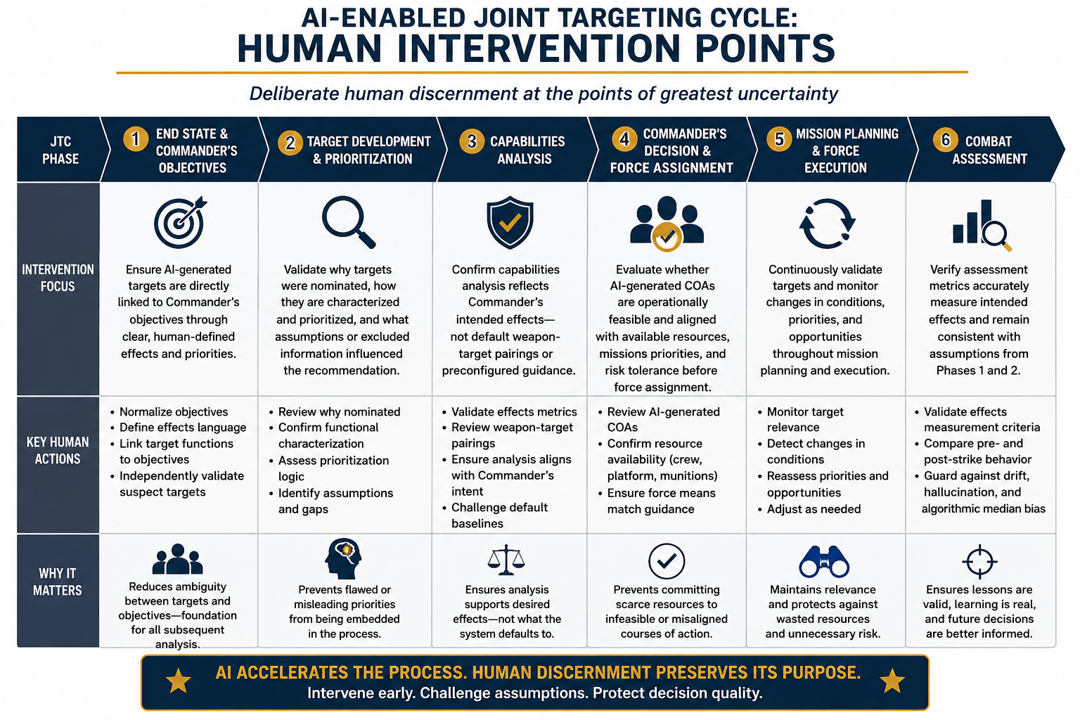
Figure 2: Deliberate Human Intervention Points Within the Joint Targeting Cycle (Author’s original concept and illustration)
The intervention points illustrated above are not intended to slow targeting or duplicate work already performed by these systems. Human intervention is most valuable when the uncertainty is highest, early in the process. The first intervention begins during Phase 1 by ensuring AI-generated target nominations remain directly linked to the commander’s objectives through transparent, human-defined commander’s guidance and operational priorities. During Phase 2, humans must validate why targets were nominated, how they were functionally characterized and prioritized, and what assumptions or omitted information influenced those recommendations. Phase 3 requires equal scrutiny by confirming that capabilities analysis reflects the commander’s desired effects rather than deferring to default machine-generated weapon-target pairings or preconfigured guidance. During Phase 4, commanders should evaluate whether AI-generated COAs remain operationally feasible by confirming that recommended capabilities, available resources, and mission priorities remain aligned before force assignment decisions are made. During Mission Planning and Force Execution in Phase 5, deliberate human monitoring must continue because targets, operational conditions, and mission priorities can change rapidly, requiring continuous target validation throughout execution. Finally, Phase 6 demands human verification that combat assessment metrics accurately measure the intended operational effects and remain consistent with the assumptions established during target development and prioritization. Without clearly defined human-generated assessment criteria, AI systems risk reinforcing inaccurate conclusions through statistical averaging, algorithmic drift, or hallucinated outputs. Collectively, these intervention points preserve the advantages of AI-enabled targeting while deliberately restoring human discernment where Compounded Cognitive Uncertainty is most likely to accumulate. Remember, the objective is not to replace AI-enabled targeting systems but to ensure they remain a decision-support capability rather than the primary source of operational judgment.
The JTC was never designed simply to produce targets. It isn’t a process without substance because it was designed to reduce uncertainty through disciplined analysis, professional judgment, and informed decision-making. AI can strengthen that methodology by accelerating analysis and reducing routine staff workload, but it cannot replace the human responsibility to question assumptions, interpret operational context, and determine military relevance. These responsibilities remain uniquely human.
Conclusion
AI-enabled targeting systems will undoubtedly become a permanent feature of future military targeting processes. The question is no longer whether AI should participate in the JTC, but whether the Joint Force understands how that participation influences the methodology itself. As these systems continue to mature, the temptation will remain to equate greater speed, more data, and increasingly sophisticated recommendations with correct targeting decisions. I conclude the opposite is equally possible. Without deliberate human intervention, those same advantages can gradually erode the independent human discernment upon which sound targeting has always depended.
The greatest risk posed by AI-enabled targeting, therefore, is not that machines will replace commanders. It is that commanders, targeting staffs, and system designers may unknowingly allow independent human decision-makers to become subordinate to increasingly persuasive machine-generated recommendations. Preserving meaningful human control requires more than maintaining legal authority over the use of force. It requires preserving the disciplined methodology that makes that authority meaningful in the first place.