





The New Era of Global Espionage: Anthony Vinci | NatSec Matters

NatSec Matters – The New Era of Global Espionage: Anthony Vinci
Anthony Vinci, former Chief Technology Officer of the National Geospatial-Intelligence Agency and Adjunct Senior Fellow at the Center for New American Security, joined Michael Allen, Managing Director of Beacon Global Strategies and host of the podcast NatSec Matters, to discuss Vinci’s new book, The Fourth Intelligence Revolution: The Future of Espionage and the Battle to Save America.
Why does this matter?
During this discussion, Vinci argues that the growing utilization of Artificial Intelligence (AI) by intelligence agencies, alongside its potential to transform the collection, analysis, and dissemination processes, constitutes a revolutionary development for intelligence that will reshape how geopolitical competition is carried out moving forward.
Takeaways
Vinci identifies three key insights that characterize this revolution:
1.) Intelligence has expanded beyond the military and political domains to include all aspects of society: economics, agriculture, science & technology, genetic information, etc.
2.) The intelligence community is incorporating AI into every aspect of the intelligence cycle (e.g., collection, processing, analysis, dissemination), which Vinci argues will eventually result in an environment where the US and its adversaries will utilize AI spies.
3.) Intelligence no longer just targets individuals who occupy specific positions or have special access; instead, every member of society is now a target. To illustrate this, Vinci highlights Salt Typhoon, a PRC-aligned group of actors who infiltrated US telecommunications companies and collected data from the cell phones of nearly every American.
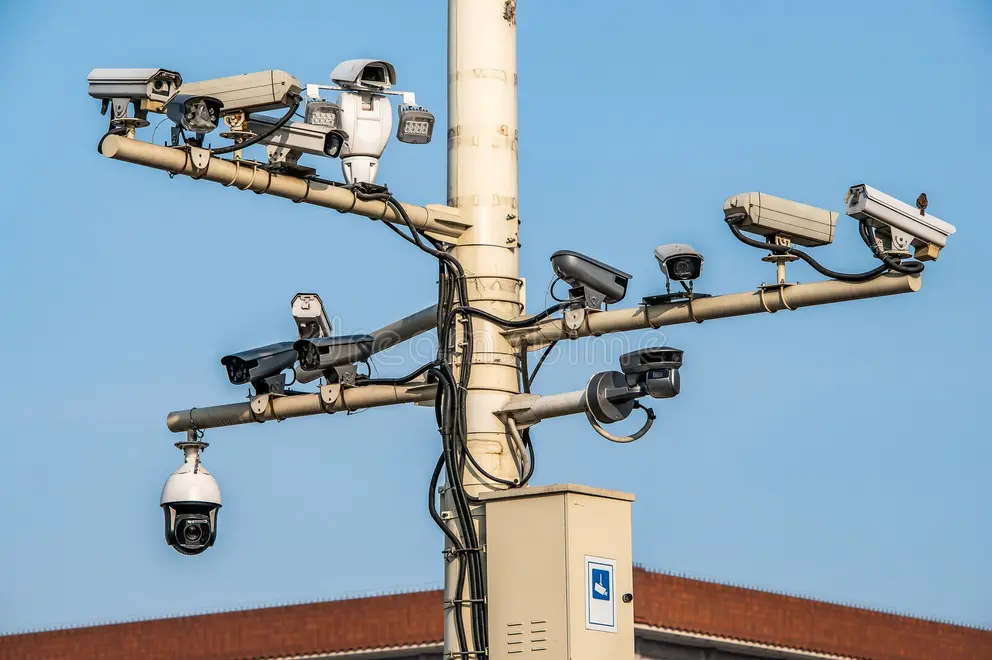
Vinci also points out that incorporating AI into intelligence will provide massive benefits to China’s surveillance-based intelligence strategy, which relies on the mass collection of all available information from the environment—including that of its own citizens—and then sifting it for valuable intelligence. This is to say that, unlike the US reconnaissance-based intelligence strategy—reconnaissance meaning focused on meeting specific collection requirements—which is averse to violating the privacy of its citizens, China’s intelligence enterprise is poised to benefit significantly from this AI intelligence revolution.
To defend itself, Vinci proposes that US intelligence agencies must involve civil society as a whole in intelligence, arguing that a whole-of-society threat—Chinese surveillance—must be met with a whole-of-society response. Interestingly, Vinci also advocates that US Intelligence needs “to go all in” on AI. What Vinci means by this is that AI should not be used merely as an augmentation for human analysts and collectors; it should be a full-fledged partner—responsible for the collection, processing, analysis, and dissemination of intelligence. Humans would remain involved in the intelligence process mainly through quality control, where senior analysts would check the AI products, similar to how senior analysts review the products of junior analysts today.
Imagining the future Vinci describes, where US Intelligence is primarily carried out by AI with limited human involvement, raises serious questions: Will we see massive downsizing within US intelligence agencies, and what unintended effects might result? What moral and ethical problems may result from potentially critical national security decisions being made based on intelligence products made by AI?
Connection
The threat of Chinese surveillance in the US becomes much more alarming when examined in the context of other articles that discuss deficiencies in US policymaking and the need for whole-of-society approaches.
Check out the following articles:
Russel D. Howard’s “China Laughs at the US Approach to Irregular Warfare!.”
Isaiah Wilson III’s “The First Great Compound War: Why America Is Fighting Iran With an Obsolete Theory of Victory.”
Vinci, Howard, and Wilson all home in on a complacency that has developed within US policymaking due to a long period of US military and technological superiority over our adversaries. However, they provide different angles on how this complacency is impacting our ability to perform in contemporary strategic competition.

