An Approach to the Next US Africa Command Theater Strategy
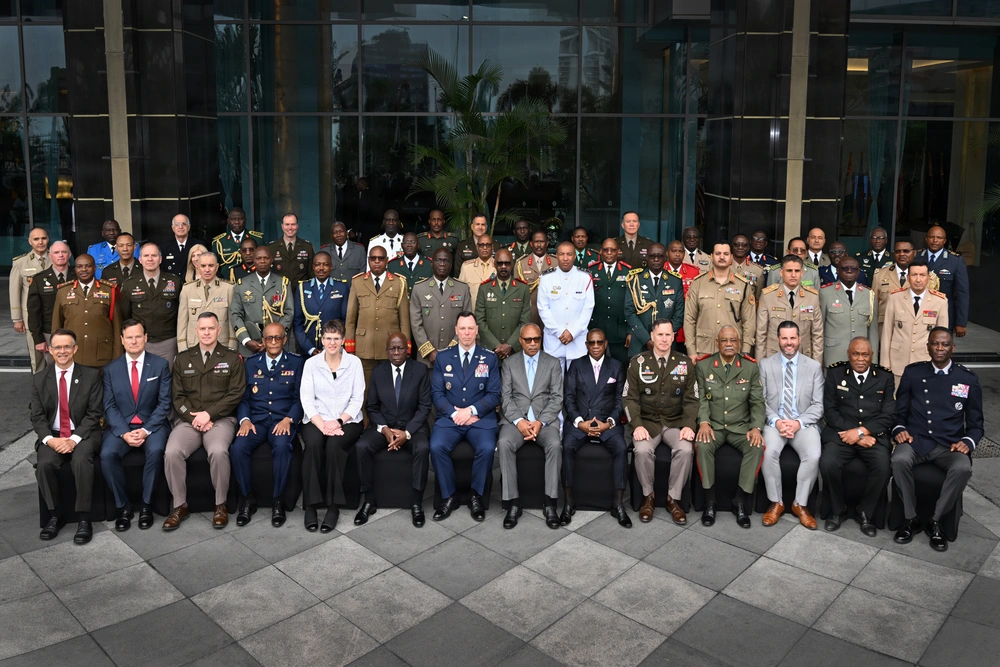

“America is committed to the success of Africa because we recognize a moral duty to bring hope where there is despair, and relief where there’s suffering. America is committed to the success of Africa because we understand failed states spread instability and terror that threatens us all. America is committed to the success of Africa because the peoples of Africa have every right to live in freedom and dignity, and to share in the progress of our times.” – President Bush, remarks to the Corporate Council on Africa’s US-Africa Business Summit, 2003, Washington, D.C.
Even before 2003, the United States knew the importance of making a commitment to address instability in Africa. Four years later, the Bush administration established the United States Africa Command (USAFRICOM). By 2009, the newest US combatant command published its first theater strategy, focused on US strategic interests at the time—namely security and stability. This first theater strategy had a ten-year outlook, planned to run through 2019. In 2011, USAFRICOM published an updated theater strategy with a shortened outlook, running through 2016. USAFRICOM subsequently updated its theater strategy four more times, in 2015, 2018, 2022, and 2024, in response to changes in military leadership, presidential administrations, and the global geopolitical context.
Strategies like these serve as the de facto US military strategy for a global geographic region. They exist for other geographic regions in the Pacific, Europe, and North America. They explain how the US military in a particular region will achieve national and defense policy goals. Typically, such strategies also include consideration of shared interagency interests and means, across the Departments of Defense, State, Commerce, the former US Agency for International Development, law enforcement agencies, and the intelligence community.
The time is right for an updated US military theater strategy in Africa. This article focuses on an alternative way to view the United States’ interests in Africa today, followed by a proposed approach to an updated theater strategy through the lens of an ends/ways/means construct. Understandably, a theater strategy exists at the convergence of tensions among policy, strategy, and operations, and is driven by the vision and strategic understanding of the combatant commander. Creating a theater strategy is a matter of strategic art—but it is the commander’s strategy and subject to their understanding of tensions and their views on strategic direction. This article presents only the writer’s views, both in consideration of US interests as they appear in Africa today and in consideration of the realities of instability in Africa.
Convergence of Challenges
The success of Africa remains invaluable to the world’s shared, globalized future. Yet, the interests of the United States, its allies, and its partners converge across a host of challenges in Africa. A shared challenge for all, terrorist organizations continue to thrive in Africa. As noted by the Commander of USAFRICOM, General Dagvin Anderson, in his 2025 confirmation responses, the global center of terrorism has shifted to Africa. From Islamic State affiliates to al-Qaeda affiliates in West and East Africa, terrorist organizations continue to expand their reach and threaten regional security and stability. For America’s part, this expansion matters because it could generate conditions where terrorist organizations find a safe haven to organize and act, holding at risk the safety of the US homeland and US interests abroad.
Concurrently, Africa remains open to US strategic competitors, bringing together the security concerns of other combatant commands as well as US national and defense policymakers. China continues to expand its investments, trade, and military engagements across Africa, undertaking ventures in critical minerals access and extraction, exporting global security ventures, port development, and more. China is making every effort to cement further inroads in Africa. China also recently brought together multiple nations—including Russia and Iran—for a major military exercise off the coast of South Africa. Such a convention of military power by US strategic competitors can challenge US access, presence, and influence in Africa.
Meanwhile, it is likely that Russia will continue to undermine Africa’s stability and Western interests. Russia will likely continue its misinformation campaigns, support to regional conflicts, and peripheral supply of war materials. Iran may also continue its proxy strategy in Africa, but that remains to be seen. More concerning is how many African nations over time may feel the impacts of the ongoing Iran conflict as they deal with increased economic instability and shifting sentiment toward the United States.
There also remains the central risk of instability arising from opportunistic action in the wake of political turmoil, weak state institutions, and other unforeseen challenges to stable governance. Instability can breed violent extremist organization (VEO) growth and increase the potency of regional security threats. Indeed, one of the continent’s increasing demographics is its bourgeoning youth population, which poses its own challenges to stability. According to the World Economic Forum in 2024, one of Africa’s highest risks is youth unemployment in unstable regions, which provides increased recruitment opportunities for terrorist organizations.
Interests in Africa
At the time of the publication of the last USAFRICOM theater strategy, the command operated under the Biden administration’s National Security Strategy (NSS). While not perfect, this NSS proved substantive for anchoring the US approach in Africa, mostly because it recognized shared global security challenges that impact the more unstable parts of the world and asserted that the US has a role in pursuit of stability. While waiting for the next Trump NSS, this writer made the argument that the United States’ broad interest in Africa, peripherally, was the security and growth of current and future US investments. The thought behind this interest is that the United States would pursue a more transactional approach in Africa compared to the previous administration. Today, the Trump 2.0 NSS means less for Africa than other, quieter parts of the world with greater prioritization. Given what we know of the 2025 NSS, and the 2026 National Defense Strategy, US interests in Africa under the current administration focus—still peripherally—on homeland defense, terrorist organization growth, trade and investment, conflict resolution, and increased burden-sharing.
These interests are whittled down from the previous Trump administration strategy, which gave more substance and thought in 2017 to national security as relates to the continent of Africa. Yet, while the nation’s leadership and policies may change across administrations, the facts of the world do not change. Today, there are still nations at risk in the world and in need of stabilization assistance. This is the case for many nations in Africa, as recognized by the Fragile States Index. According to 2024 data, six of the first ten nations on the Index are in Africa—thirty-one of the next fifty nations on the list are also in Africa.
Moreover, international invested nations (such as the United States) stand to gain nothing when investment opportunities suffer enduring instability. Thus, a secure and stable African continent should be the core interest of international defense and economic investors.
Many African nations are acutely destabilized by opportunism, enduring civil-military division and conflict, the absence of civil infrastructure and governance, and endless VEO attacks and expansion. Recent public research indeed attributes instability in Africa to larger political, economic, social, and external issues. In West Africa, Nigeria is Africa’s most populous nation and third largest economy yet faces increased security instability. Changes to Nigeria and its stability could affect West Africa more broadly. In North Africa, Libya’s reunification moves carefully forward and requires continued, focused attention. It is yet another case where the turmoil of one nation could impact neighbors across the Maghreb and across the Mediterranean Sea. Meanwhile, the future of Somalia’s security, alongside the growing potential for conflict between Ethiopia and Eritrea risks impacting East African regional security.
Addressing the drivers of instability and pursuing stability remains vitally important in Africa. In the shared interest of living safe, prosperous, and free, this is a statement of fact. Moreover, international invested nations (such as the United States) stand to gain nothing when investment opportunities suffer enduring instability. Thus, a secure and stable African continent should be the core interest of international defense and economic investors.
Ends
Given the challenges that converge across Africa and the proposed core interest, the ends of a military theater strategy for Africa should focus on work in several critical areas. First, this includes ensuring lasting relationships and access in critical regions of Africa. This end emphasizes enduring, mutually beneficial relationships with African partners. Second, collaboratively we must secure the homeland for each invested nation—for America, for the nation’s allies, and for Africans. This end emphasizes safety and security at home for all nations. Finally, and also collaboratively, nations must ensure African defense institutions have improved and increased the capability and capacity to lead in providing for African national and regional security. This end emphasizes working to ensure resilient African defense institutions.
Theory of Change
For the US military’s part in Africa, the theory of change is no different today than seventeen years ago. That is, if internationally invested nations work together to combat malevolent opportunism in Africa and prioritize support to stabilization through engagement, prevention, and empowerment, African nations can better chart their own course for a more secure and stable future.
Conceptually, strategies are theories of change that shift undesirable conditions to favorable conditions in pursuit of policy goals. For the US military’s part in Africa, the theory of change is no different today than seventeen years ago. That is, if internationally invested nations work together to combat malevolent opportunism in Africa and prioritize support to stabilization through engagement, prevention, and empowerment, African nations can better chart their own course for a more secure and stable future. This is a better way to view an underlying theory of success for a military strategy in Africa.
Engagement, prevention, and empowerment underpin the proposed strategic ways of an updated theater strategy and help set the path to achieve proposed ends. The United States, with allies and partners, must engage in diplomatic and defense spaces with long-running international defense and economic relationships to maintain and secure access to critical regions where security and stability are of the greatest need. We must prevent safe havens in Africa that allow terrorist organizations to organize, act, and threaten any homeland while also challenging the actions of malign state actors that drive instability. Finally, we must empower African partners’ regional self-defense commitments while working with partner nations to defuse and prevent conflict.
Ways
A military strategic approach in Africa should be guided by three strategic ways to achieve the proposed ends, underpinned by the theory of change. These ways include shaping the environment, deterring threats, and supporting stabilization.
A military strategic approach in Africa should be guided by three strategic ways to achieve the proposed ends, underpinned by the theory of change. These ways include shaping the environment, deterring threats, and supporting stabilization. In shaping the environment, focused activities include, but are not limited to, securing and reinforcing access, building and securing relationships, building partner capacity, and setting the theater. The actors in focus for this strategic way are allies and partners, for which the US government’s efforts center on engagement and influence. In line with recent thinking on the idea of shaping, this strategic way emphasizes the combination of soft power and hard power capabilities. It is about building and managing relationships. Shaping the environment also reinforces the ability of the military to set the theater for contingency operations. Additionally, the US must be ready to both prevent and respond to crisis and conflict through presence and engagement across critical regions of Africa.
In deterring threats, focused activities include, but are not limited to, preventing threat actors from seizing opportunities to further destabilize nations and regions at risk. Threat actors are those malign state and non-state actors who seize opportunities in less than stable states or regions for their own advantage, thereby threatening the security and prosperity of Africans. On the one hand, the scale of this effort is geo-strategic because it considers the credible actions of the United States and its allies to counter strategic competitors like China and Russia. On the other hand, the scale of this effort is localized, albeit in massive geographic areas. This latter point considers immediate direct action as well as empowering African partners to increase their capability, capacity, and commitments to disrupt, and where possible defeat, expanding violent extremist threats.
In supporting stabilization, the United States, with allies and partners, is securing and supporting the activities of international interagency organizations that can help Africans experience basic freedoms through a return to or establishment of capable civil governance. Supporting stabilization also incorporates defense support to secure gains made from shaping the environment, deterring or defeating threats to security, and securing opportunities to invest in African economic and defense growth. Joint doctrine provides a useful guide to pursue basic stabilization activities, including, but not limited to, the pursuit of safe and secure environments, sustainable economies, stable governance, social well-being, and the rule of law. These factors reflect the Joint Framework for Stabilization. At the core of these factors are seven “cross-cutting principles:” host nation ownership, political primacy, legitimacy, unity of effort, security, conflict transformation, and regional engagement. Many of these principles underpin previous USAFRICOM theater strategies.
Means
In this space, the United States can leverage its unique and powerful convening authority to bring together people and teams to achieve the aims of many shared interests.
The means by which to execute the proposed ways are both tangible and intangible and amplify a theory of success focused on engagement, prevention, and empowerment. The United States’—including the interagency—as well as allies’ and African partners’ intangible means may seem less substantive than tangible means, yet they could carry greater weight and influence. These intangible means are comprised of inter- and intra-governmental processes, relationships within and across boundaries, US cultural appeal among nations and their militaries, and good will and trust among governments. In this space, the United States can leverage its unique and powerful convening authority to bring together people and teams to achieve the aims of many shared interests. Intangible means are invaluable across all the proposed strategic ways but are most useful in shaping the environment. Indeed, this is the space where defense diplomacy efforts remain priceless and where engagement and empowerment are key.
Meanwhile, militarily, the United States’ forces, equipment, authorities, funding, programs, lines of communication, and physical footprints across Africa comprise its tangible means, and better support prevention. These means include, but are not limited to, US military service component and headquarters formations; Title 10 and Title 22 security cooperation, security assistance, and special operations authorities, funding, and programs; National Guard state partnerships; access into, out of, and around Africa; and limited basing across the African continent. The United States must also take into consideration the tangible commitments of its allies and African partners across the continent, including their forces, authorities, funding, programs, and footprint.
Conclusion
The United States Africa Command has all it needs now to produce an updated and viable theater strategy. Indeed, the proposed updated strategy would reinforce current command operational approaches, including the existing command campaign plan efforts to regain access, sustain pressure, and increase burden sharing. Like the original theater strategy, this update should focus on security and stability in Africa. The proposed ends of an updated strategy should emphasize the pursuit of enduring, mutually beneficial relationships with African partners; safety and security at home for African partners, allies, and the United States; and resilient and leading African defense institutions.
The ways that reinforce the strategic approach of this strategy should focus on shaping the environment, deterring threats, and supporting stabilization in Africa. These ways consider actively establishing mutually beneficial relationships, setting the conditions now for crisis and contingency success, actively challenging threat actor planning and assumptions, emphasizing stabilization activities through normal day-to-day campaigning, and pursuing legitimate opportunities for African civilian oversight and leadership. The theory of success underpinning these ways recognizes that the United States, with allies and partners, must engage, prevent, and empower to consolidate gains and ensure security and stability in Africa.