





Where Does Light Infantry Fit in the Indo-Pacific?

Read the full article here: No Substitute for Boots on the Ground: An Infantry Battalion’s Value Proposition for U.S. Indo-Pacific Command
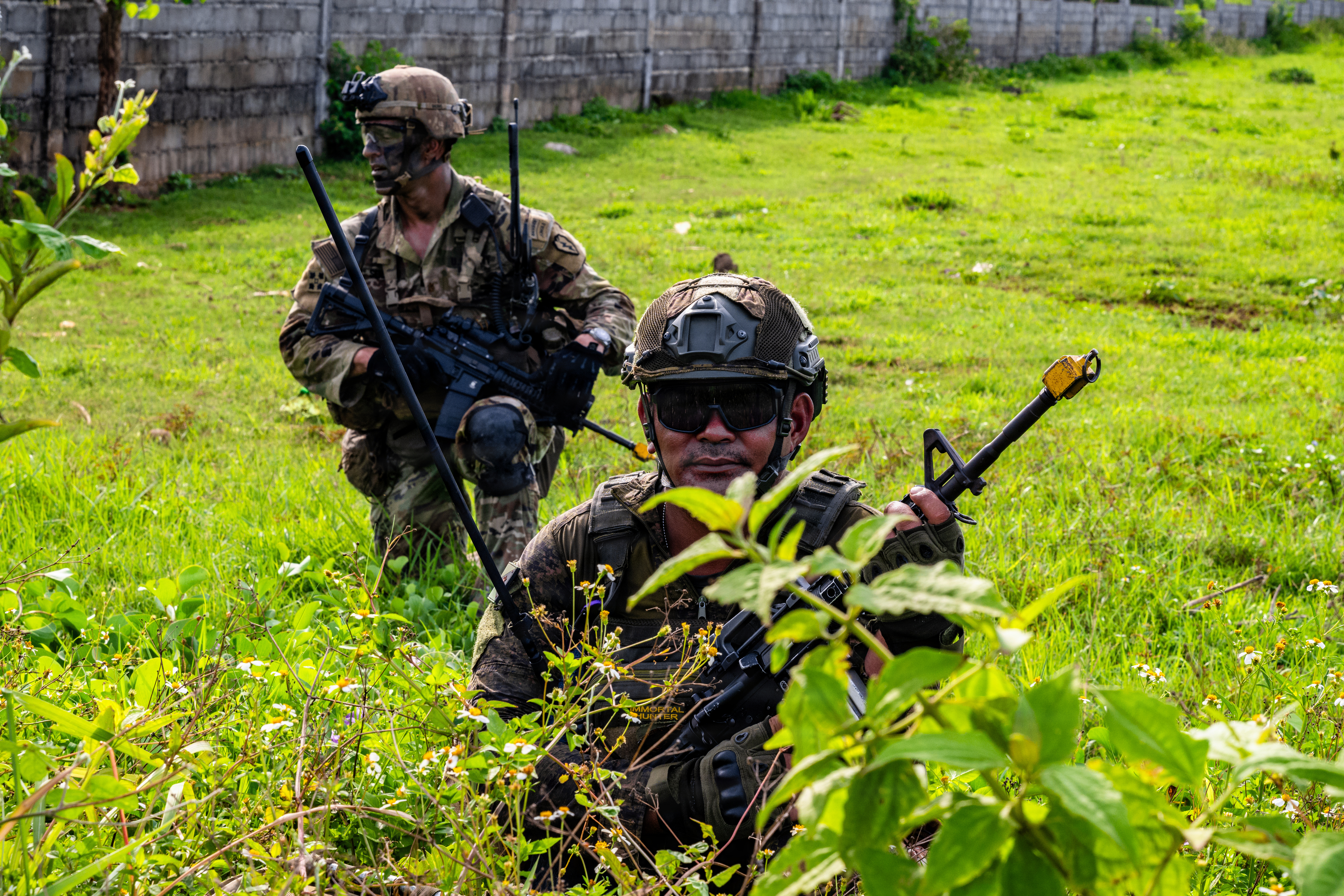
In a recent article published in the U.S. Army branch journal Infantry, Major Zackery Spear makes the case for the light infantry battalion’s relevance in the Indo-Pacific theater. Drawing upon historical case studies like Guadalcanal, the Inchon landing, and the Falklands islands campaign, Major Spear asserts that the light infantry battalion possesses numerous capabilities essential to success in combat operations in the Indo-Pacific. He highlights the light infantry battalion’s ability to hold ground and critical infrastructure, interface directly with local populations and partner militaries, employ reconnaissance-strike capabilities like one-way attack munitions, and sustain itself with comparatively minimal resources. While broad policy often focuses on the more immediate concerns of air and naval capabilities, light infantry formations remain the lynchpin for success in the restrictive terrain characteristic of many pacific islands.
While broad policy often focuses on the more immediate concerns of air and naval capabilities, light infantry formations remain the lynchpin for success in the restrictive terrain characteristic of many pacific islands.
Major Spear’s work expands upon numerous Small Wars Journal publications concerning light infantry forces and the Indo-Pacific. Major Paul Rogers highlights the possibilities for irregular warfare in the mountainous terrain of eastern Taiwan in the event of a Chinese invasion. Though his focus is on special operations forces, light infantry forces are the Army’s best tool for seizing and holding ground in the same kind of terrain. Discussing US force posture in the Indo-Pacific, Col. (R.) David Maxwell argues that “…whether U.S. forces are organized, trained, equipped, and postured in a way that deters adversaries, reassures allies, and ensures mutual defense across the entire region…” matters far more than raw troop numbers. To this effect, forward positioning of light infantry forces sends a signal of intent more serious than most naval or air assets. Christopher Lee and Ben Blane highlight US Forces Korea as a valuable source of forward-deployed ground forces capable of effecting the entire theater beyond the Korean peninsula, particularly as a field army headquarters for ground forces. John Nagl emphasizes the ongoing role of US Army Pacific in maintaining the US Army’s ability to fight in the Indo-Pacific as a theater headquarters for ground forces.
The difficulty in advocating for the US Army more broadly and the light infantry more specifically in the Indo-Pacific has to do with US political options and objectives in the region.
Major Spears is right to assert that light infantry forces remain the best type of force structure to seize and hold ground in the Indo-Pacific. The more common focus on air and naval assets is well founded; light infantry forces cannot do much of anything if they cannot get to the land in the first place. Indeed, China’s emphasis on Anti-Access and Area Denial focuses on denying US air and naval assets for this very reason. The difficulty in advocating for the US Army more broadly and the light infantry more specifically in the Indo-Pacific has to do with US political options and objectives in the region. The US focus on strategic ambiguity with respect to Taiwan precludes forward-positioning infantry forces in Taiwan or a significant buildup of infantry forces in the first island chain (i.e. Japan or the Philippines). Such a force posture would signal a needlessly escalatory degree of seriousness compared to a carrier strike group or fighter wing, however militarily prudent.
In the event of a Taiwan invasion, Major Rogers’ proposition for irregular warfare in mountainous terrain is one of the more relevant use cases for light infantry forces in the Indo-Pacific. Should the US commit ground forces to the defense of Taiwan, it seems that one of the better approaches – short of stopping the invasion force short of Taiwan – would be to deny China control of the entire island by bogging their forces down in the mountainous terrain in the east of the island. In this approach, the advantages of light infantry forces highlighted by Major Spear would be of critical importance. Regardless, the ongoing US-Iran conflict betrays a reluctance to commit US ground forces even in the absence of conclusive victory. Without an unequivocal commitment to the defense of Taiwan, it is unlikely that the US will posture large light infantry formations in Taiwan or the first island chain.

