





Venezuela: A Study in Coercion
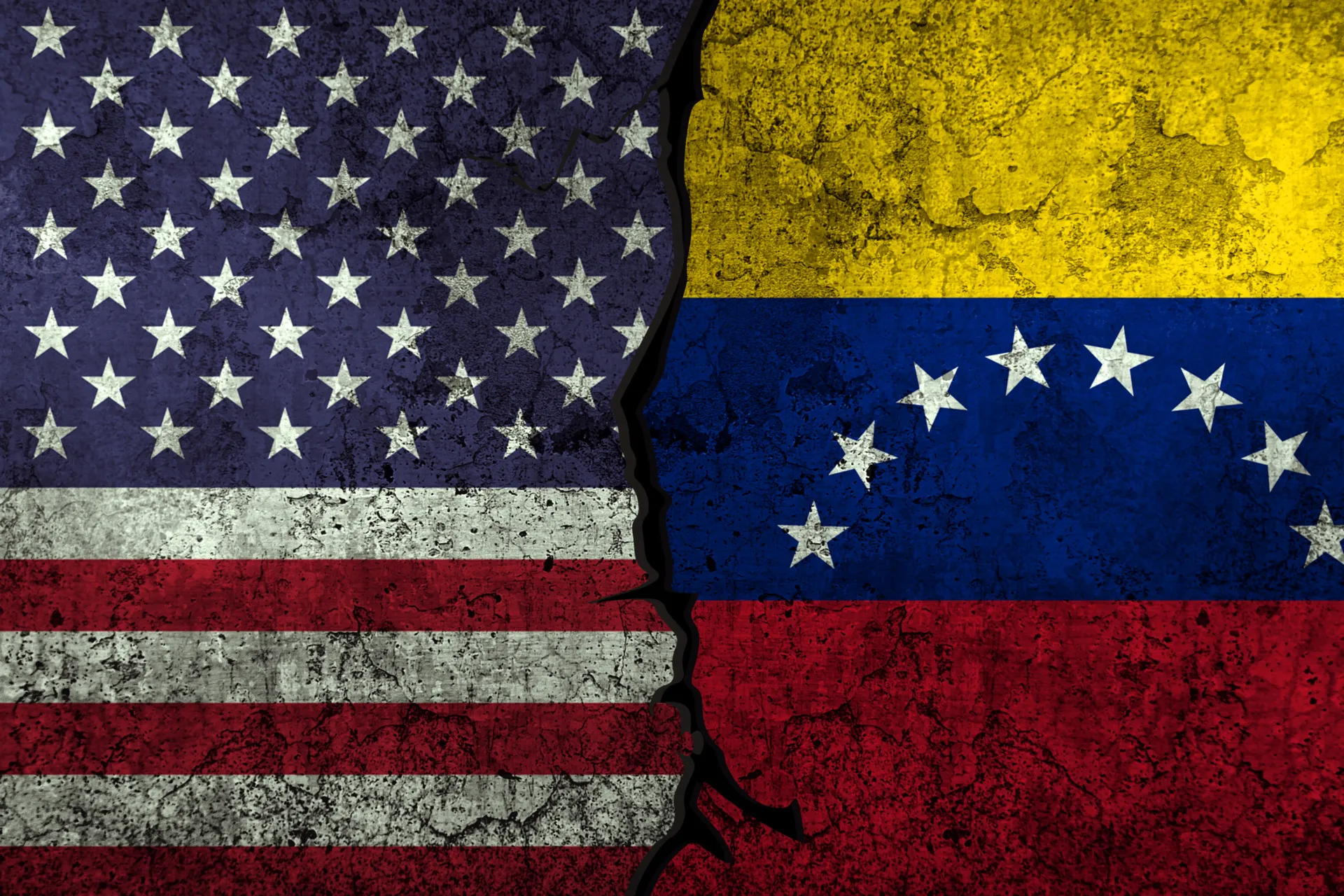

Tensions between the United States and Venezuela reached a boiling point in 2025. The tensions culminated on January 3, 2026 when U.S. Special Forces arrested Nicolas Maduro and his wife Cilia Flores. U.S.-Venezuela relations had been fraught ever since Maduro’s predecessor, leftist Hugo Chavez, became Venezuela’s President in 1999. But how did this forceful capture escalate between September 2025, when the US first targeted drug boats in the Caribbean, and October 15, when President Donald Trump publicly stated that he authorized the CIA to conduct covert action in Venezuela?
To answer this, it is important to ask: What is covert action? The Congressional Research Service states, “covert action… is defined under Title 50 as an activity or activities of the U.S. government to influence political, economic, or military conditions abroad, where it is intended that the role of the United States will not be apparent or acknowledged publicly.” Therefore, by definition, covert action is not talked about. It is secret, with no apparent ties to the U.S., and never publicly acknowledged.
What is Covert Action If It Isn’t Covert?
So why did President Trump tell the media that he had authorized the CIA to conduct covert action in Venezuela? Some may disagree, but the answer was intentional – it was an act of strategic messaging. This approach is a strategy worth reviewing because, regardless of what one’s thoughts are on it, President Trump has made these types of bold statements a hallmark of his administration’s diplomatic and military toolkit. Statements, in this case, designed to apply psychological pressure by playing on Maduro’s paranoia of CIA actions.
What Is President Trump’s Strategy?
In more general terms, President Trump was using a common tool of statecraft known as coercion to increase pressure on Venezuelan President Nicolas Maduro. Coercion is defined as “the use of threatened force, and at times the limited use of actual force, to back up the threat, to induce an adversary to change its behavior…” Coercion theory is like a coin with two sides; to do or not to do.
Political leaders often use coercion to deter a group or country from taking undesired actions by threatening punishment or denying it benefits if it does not comply. For example, the U.S. imposed sanctions on Iran to dissuade Tehran from developing nuclear weapons. Similarly, China boycotted Japanese products and conducted military exercises in close proximity to the island nation to dissuade Tokyo from building up its military and supporting Taiwan.
Alternatively, leaders also use coercion to compel a group or country to do something it would otherwise not do. For example, President Trump pressed NATO allies to increase their defense spending from 2 percent of GDP to 5 percent, threatening the U.S.’s withdrawal from NATO if they do not invest more in their own defense. While the threat may not have been the sole reason for European compliance, all 32 members of NATO were soon thereafter projected to exceed 2 percent of GDP spending on defense, with most agreeing to the new goal of 5 percent.
Coercion in the Venezuela Context
The United States has several economic and security concerns emanating from Venezuela, including drug trafficking, migration, economic instability, and regional hegemony against influence from adversaries such as Russia, China, and Iran.
We can judge the character and intensity of an administration’s concerns by observing the tools it uses to address them. A common way of conceptualizing these tools of statecraft is captured in the acronym DIME, which refers to the influence of diplomatic, information, military, and economic powers. However, DIME is an oversimplification, especially in the case of Venezuela, where the White House appears to be using elements of military, intelligence, diplomacy, law enforcement, information, finance, and economic power to effectuate change.
The U.S. military is particularly important in this administration’s foreign policy toolkit. The U.S. military is not the only source of coercive power, but it is the most forceful one. As Carl von Clausewitz stated, military action is a continuation of politics by other means. In September 2025, the U.S. military started conducting strikes against drug-boats leaving Venezuela. According to U.S. Southern Command, as of December 2025, the U.S. military had 11 warships and about 15,000 personnel in the Caribbean. This show of force communicated U.S. capability to cause change in Venezuela, probably increasing psychological pressure on Maduro. U.S. Cyber Command and Space Command also provided impressive support during the operation in January, cutting power in Caracas.
The CIA complements the military through covert action and calls itself the nation’s first line of defense. This is in part because strategic intelligence provides warnings and indicators of threats on the horizon, providing leaders with a view of what is happening in the world, the underlying causes of those events, and what it could mean for the United States. President Trump and other senior leaders receive this strategic intelligence in the President’s Daily Brief (PDB). PDBs on Venezuela would answer questions such as, “Why should the U.S. care about what happens in Venezuela?” “What are the U.S.’s options for influencing positive change in Venezuela?” and “If President Maduro were removed, who is best positioned to hold the country together and steer it in a direction more consistent with U.S. national interests?”
Tactical intelligence is also essential for successful military action. Intelligence professionals develop pattern-of-life intelligence on a target by monitoring routines, travel patterns, contacts, security measures, and several other details that could affect an operation. For example, in the Abbottabad raid on Osama bin Laden, Special Forces used tactical intelligence to construct a model of the site to practice the operation, which was critical to enabling a successful operation.
Other members of the U.S. intelligence community also supported the operation in January. The National Security Agency (NSA) surely intercepted regime communications that provided key pattern-of-life details. Meanwhile, the National Geospatial-Intelligence Agency (NGA) almost certainly supplied imagery intelligence, providing operators with key features of buildings, anti-air defense systems, and terrain, which would be key to planning the routes into and out of the compound.
The U.S. Department of State is also a critical instrument of national diplomatic power. The State Department manages the U.S.’s relationships with other countries, keeping the channels of communication open and building consensus and momentum on issues of mutual interest. The Department of State designated hundreds of corrupt and antidemocratic Venezuelan officials and their family members for undermining democracy, supporting repression, human rights abuses, terrorism, and drug trafficking, preventing them from obtaining U.S. visas and traveling to the U.S. State also used its diplomatic channels to work with other countries to pressure Venezuela to hold free and fair elections, which Maduro promised but did not do. The U.S. called on Venezuela to stop drug trafficking organizations from shipping drugs to the US, which they did not stop. President Trump and the State Department also negotiated the release of U.S. citizens unjustly incarcerated in Venezuela and other political prisoners. Reports also suggest the use of diplomatic back-channel communications to amplify U.S. coercion by encouraging Maduro to step down and choose exile over removal. Evidently, each step was resisted until the U.S. captured Maduro in January 2026.
The US also utilized domestic and international law enforcement to exert pressure on the Venezuelan Government. In fact, it was a 2002 criminal investigation into Maduro’s narco-terrorism links that was used to justify his capture and transport to the United States. Federal Bureau of Investigation (FBI) agents later moved Maduro from Guantanamo Bay to New York City, where Drug Enforcement Administration (DEA) agents took custody of him and his wife.
The U.S. has also used information as an instrument of power, releasing messages before and after the incursion, pressing Venezuela to change course. President Trump said that the U.S. would run the country and send American oil companies into the country, adding, “We’re not afraid of boots on the ground.” Messages like these are intended to coerce interim President Delcy Rodriguez to comply with U.S. regional policies. On 4 January, President Trump said, “If she doesn’t do what’s right, she is going to pay a very big price, probably bigger than Maduro.”
This coercion seems to be working. Delcy Rodriguez, who was at first defiant, softened her rhetoric against the U.S. in recent weeks. Hours after Trump’s threat, Rodríguez privately told U.S. Secretary of State Marco Rubio, “We’ll do whatever you need.” Rodriguez then publicly said she “invited the US government to work together on an agenda of cooperation”. On 15 January, Rodriguez similarly told officials and diplomats to work with the U.S. and allow foreign investment in Venezuela’s oil sector.
Last but not least, the U.S. has used financial and economic pressure throughout the period of its tense relationship with Venezuela. From 2002-03, the U.S. imposed economic sanctions on the Venezuelan Government and individual officials involved in illicit activities. More recently, U.S. Southern Command seized six Venezuelan oil tankers to press Venezuelan leaders to change their ways. Now that Maduro is out of power, the U.S. is also offering the economic carrot, promising investment to revitalize Venezuela’s oil sector. CIA Director John Radcliffe reiterated President Trump’s message in an in-person meeting with Rodriguez, stating that the U.S. looks forward to improved economic and political relations with Venezuela, but it can no longer be a safe-haven for narco-traffickers and U.S. adversaries.
The Coercion Endgame
Effective coercion requires three things: capability, credibility, and communication. Did Maduro doubt U.S. capability to remove him? President Trump and the U.S. have historically removed numerous world leaders. During his first term, President Trump ordered successful attacks on the Iranian Quds Force leader Qasem Soleimani and ISIS leader Abu Bakr al-Baghdadi. Therefore, the weak link was most likely credibility. Maduro was playing a game of brinksmanship, believing the U.S. would back down. In addition to his own hubris, Maduro was likely influenced by Cuba, where Fidel Castro defied the U.S. for decades. Maduro relied on Cuban advisors, bodyguards, and intelligence, who convinced him that the U.S. was all bark and no bite, according to a former Venezuelan army official.
Will Delcy Rodriguez make the same mistake by underestimating U.S. resolve? The events in January 2026 may not convert her to more liberal, democratic ideals, but she is unlikely to doubt the credibility of U.S. resolve in the Western Hemisphere. The goal is that she believes and complies, because “coercive strategies are most successful when threats need not even be carried out.”


