Strength Without Partners Is Not a Strategy: Why Washington Cannot Afford to Go It Alone

Introduction
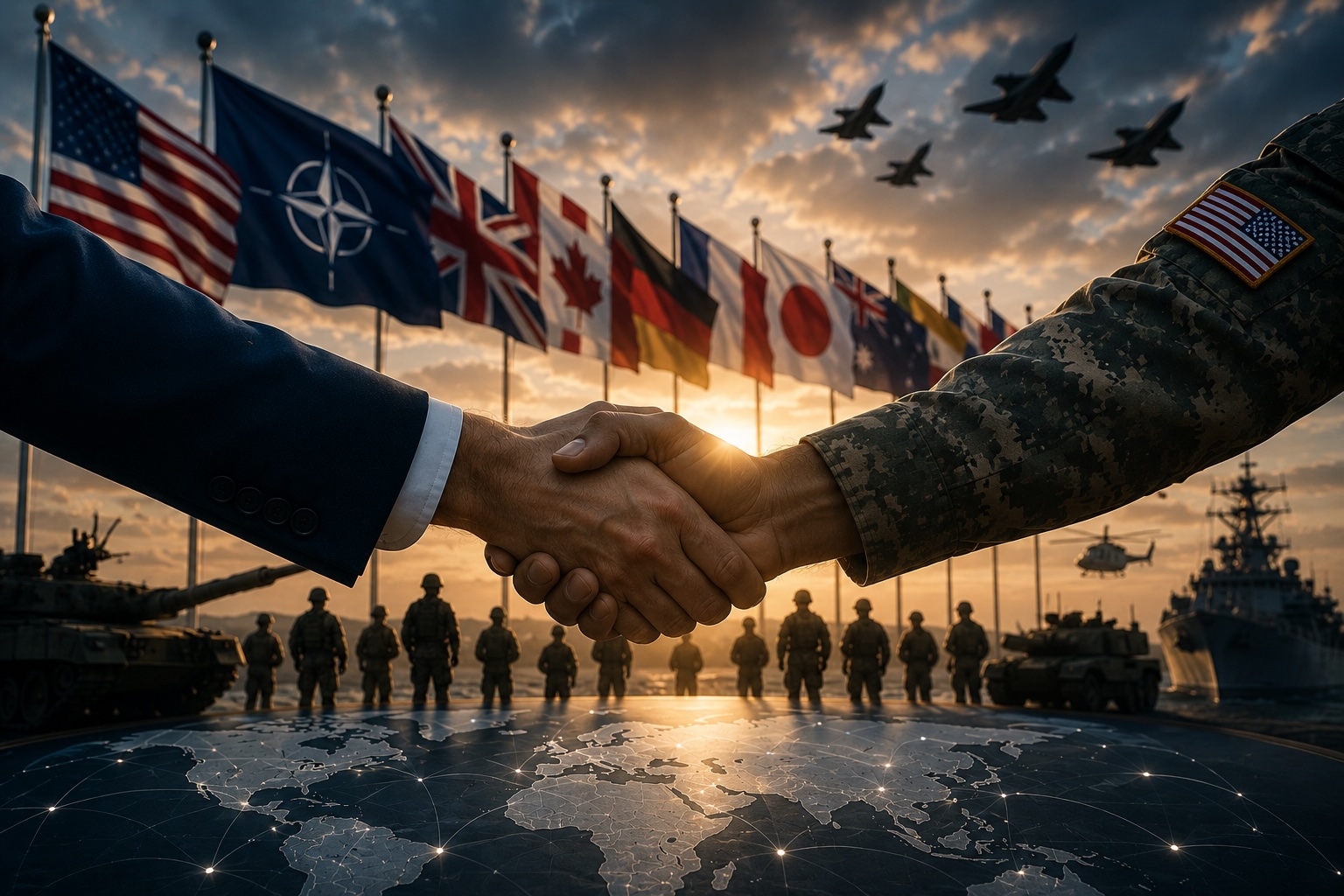
The United States has spent the better part of eighty years building a security architecture designed to prevent exactly the kind of fragmentation now beginning to emerge across the Western alliance system. Yet recent American rhetoric surrounding burden-sharing, allied hesitation, and strategic autonomy risks accelerating that fragmentation at the precise moment when Washington requires coalition cohesion most.
Following Operation Epic Fury and the subsequent strikes against Iran’s security apparatus, the United States encountered something increasingly unfamiliar in the post-Cold War era: allies who watched rather than participated. Several partners hesitated to provide basing access, overflight permissions, or meaningful operational support. The response from Washington was immediate. Senior American officials publicly criticized allied reluctance and framed the moment as proof that the alliance system had failed American interests.
Burden-sharing frustrations are real and, in many respects, overdue. European states have long relied heavily on American military capacity while underinvesting in their own readiness. Yet the current approach confuses the mechanism with the objective. The purpose of alliances is not to eliminate strategic friction. It is to create a system capable of multiplying American power despite that friction.
The danger is not simply diplomatic irritation. The danger is that American pressure campaigns aimed at forcing allied contributions may instead produce allied autonomy outside the American security framework itself. In other words, Washington may succeed in pushing allies to rearm while simultaneously weakening the integration that makes those capabilities strategically useful to the United States. What we know is that American Power has never been fully realized when exercised alone.
The Strategic Logic Behind the Alliance System
Since 1945, American alliances have functioned as more than political symbolism or ideological solidarity. They created a durable operational framework that extended American reach, increased deterrence credibility, and distributed the burden of long-term competition.
NATO, bilateral Pacific alliances, and broader institutional partnerships allowed the United States to sustain a forward presence at a scale impossible through unilateral action alone. They provided access, legitimacy, interoperability, intelligence sharing, and operational endurance. More importantly, they transformed American strength into a collective strategic advantage.
The architects of the postwar order understood that geography alone could no longer guarantee American security. Protecting the homeland required shaping the international environment beyond America’s shores. Institutions and alliances became the mechanism through which Washington extended its defensive perimeter outward, and the challenges of today’s security environment reinforce that logic rather than invalidating it.
China represents the most significant long-term strategic competitor due to its economic scale, military modernization, and growing influence across Latin America, Africa, and the Indo-Pacific. Russia continues to threaten European stability through both conventional and nuclear capabilities while leveraging political and economic pressure to fracture alliance cohesion. Iran and North Korea remain persistent regional destabilizers capable of creating disproportionate strategic disruption.
None of these challenges is optimally addressed by an isolated United States.
The irony is that Washington still possesses advantages its competitors cannot fully replicate. America retains an alliance network encompassing Europe and the Indo-Pacific. Beijing and Moscow may possess partners of convenience, but they lack an integrated coalition architecture comparable to the American-led system that has survived the past 80 years.
The Problem With Treating Alliances as Transactions
The current debate surrounding alliances often frames them as simple transactional arrangements: allies either contribute enough or they do not. This perspective appeals politically and echoes the common sense vernacular touted by the administration because it appears rooted in fairness and efficiency. Coalitions are not efficient by nature due to their relationship with compromise, coordination delays, political constraints, and uneven capabilities. Yet those imperfections are frequently outweighed by the strategic advantages alliances generate over time.
American policymakers increasingly risk interpreting allied hesitation as disloyalty rather than what it often is: a reflection of uncertainty regarding American consistency, credibility, and long-term intentions. In the present moment, we are watching the consequences of uncertainty.
Across Europe, discussions surrounding strategic autonomy are no longer fringe concepts. European leaders increasingly view American political volatility as a structural risk requiring independent capability development. Germany’s Zeitwende illustrates this dynamic clearly. Berlin is expanding defense spending and military modernization, but the long-term question remains whether these efforts will deepen NATO integration or gradually reduce reliance on Washington. When measured against the recent US decision to cancel a deployment of troops to Poland and the removal of troops from Germany, it is harder than ever to argue that the resulting strategic autonomy in Europe will be a matter of pure choice rather than a necessity imposed by Washington itself. The distinction is critical.
An alliance system designed around integration strengthens American power. A collection of increasingly autonomous regional powers weakens Washington’s ability to coordinate strategy across multiple theaters. This is where current American rhetoric becomes strategically counterproductive. Publicly framing alliances primarily as economic burdens or one-sided obligations may generate short-term political benefits domestically, but it simultaneously encourages allies to hedge against future American unreliability. Once allies begin building systems designed to operate independently of the United States, rebuilding trust becomes significantly harder than rebuilding military capability.
Power Requires More Than Military Superiority
The United States still possesses unmatched military capabilities across conventional, nuclear, and technological domains. Yet material superiority alone has rarely guaranteed lasting strategic success.
American power operates across three interconnected dimensions: material, institutional, and informational.
Material power includes conventional military forces, economic capacity, industrial capability, and technological integration. These advantages allow the United States to project force globally and sustain operations across extended supply lines.
Institutional power emerges through alliances, partnerships, and international frameworks. This dimension amplifies American reach while distributing operational burdens across a broader coalition.
Informational power shapes perception, decision-making, and strategic influence. In modern competition, the ability to generate a decision advantage through intelligence, communication, and information control increasingly determines strategic outcomes before combat operations even begin.
The intersection of these dimensions is where American strategy becomes most effective.
Special Operations Forces (SOF) provide one of the clearest examples of this integration. Through Security Force Assistance (SFA), Foreign Internal Defense (FID), and partner-force advising missions, SOF extend American influence while strengthening allied capacity. These efforts build interoperability, institutional familiarity, and long-term relationships that conventional force posture alone cannot replicate.
More importantly, they transform allies from passive beneficiaries into active participants in the strategic environment. As Michael B. Kelley and Greg Metzgar argue here at Small Wars Journal, SOF professionals operate less as conventional warfighters and more as practitioners of unconventional statecraft, engaging populations, shaping perceptions, and simultaneously building partner legitimacy across political, economic, and informational environments. That skill set is precisely what alliance deepening requires and what spending targets alone cannot produce.
This matters because future conflict will likely depend less on unilateral American dominance and more on America’s ability to organize, integrate, and sustain coalition networks capable of operating across multiple theaters simultaneously.
Peace Through Strength Requires Partners
The current administration’s emphasis on “peace through strength” is not inherently flawed. Deterrence still requires credible military capability. Strength matters, but strength alone is not a strategy.
American history demonstrates repeatedly that military superiority without strategic integration produces diminishing returns. The United States achieved its greatest geopolitical successes when its power operated through alliances rather than in isolation.
The challenge today is not whether allies should contribute more. They should. Rather, the challenge is determining how to achieve greater burden-sharing without undermining the alliance system itself.
Washington effectively faces three broad paths forward.
The first is to continue the current trajectory: using coercive pressure and public demands to compel greater allied contributions. This may generate short-term gains in defense spending but risks long-term deterioration in trust and cohesion.
The second is reverting entirely to the older status quo, prioritizing alliance stability while avoiding difficult conversations regarding imbalance. That approach is politically unsustainable and unlikely to survive future domestic pressure inside the United States.
The third and most viable option is a hybrid approach. Under this model, the United States would continue pushing for greater allied capability development while restructuring burden-sharing through integration rather than coercion. The objective would not simply be increased spending but increased interoperability, shared operational planning, and deeper institutional alignment.
This approach accepts an uncomfortable reality: alliances inevitably create friction. Yet manageable friction inside a functioning coalition is strategically preferable to the operational burden of acting alone.
That means expanding programs that deepen integration rather than merely demanding numerical spending targets. It means strengthening military-to-military relationships through SOF advisory missions, joint planning structures, intelligence cooperation, and combined exercises.
Most importantly, it requires consistent signaling across multiple administrations.
Alliances function on credibility accumulated over decades. They cannot be rebuilt through a single summit, speech, or reassurance campaign.
The Cost of Letting the System Fracture
If current trends continue, the likely outcome is not American independence but strategic isolation. A fragmented alliance system would reduce forward access, weaken deterrence credibility, increase operational strain on American forces, and create opportunities for adversaries to exploit political divisions across the West. Those divisions would enable China and Russia not to need to defeat NATO militarily but rather to continue to undermine its cohesion politically.
The United States still has time to prevent that outcome. Doing so requires recognizing that alliances are not obstacles to American power. They are one of its primary instruments. The postwar alliance structure was built because American leaders understood a basic strategic truth: preserving favorable international conditions costs less than rebuilding them after collapse.
Peace through strength without partners is not a strategy. It is isolation backed by resources.
If the United States intends to compete successfully in this emerging era of conflict, it must continue leading through alliances rather than against them. The challenge is not whether Washington can pressure allies into spending more. The challenge is whether it can preserve the integrated coalition structure that has underwritten American strategic advantage for nearly eight decades. Once that system begins to fracture, rebuilding trust may prove far harder than rebuilding armies.
Conclusion
The United States does not face a choice between carrying the alliance system alone or abandoning it altogether. The real challenge is preserving the coalition architecture that has historically multiplied American power while restructuring how responsibilities are distributed inside that system.
The burden-sharing concerns outlined by the National Defense Strategy (NDS) and National Security Strategy (NSS) are legitimate. European states and other allies must continue increasing their military capability and readiness. But the strategic objective should not simply be higher spending totals or temporary political victories. The objective should be to continue to push the alliance system towards a more integrated and resilient alliance structure capable of sustaining long-term competition against revisionist powers.
That requires consistency.
Alliances are built through credibility accumulated over decades, not election cycles. Public pressure campaigns and rhetoric that frame allies primarily as liabilities may generate domestic political benefits, but they also encourage strategic hedging among partners who increasingly question American reliability.
The United States still possesses advantages that adversaries cannot easily replicate: global access, institutional partnerships, interoperability, and a coalition network spanning Europe and the Indo-Pacific. Those advantages remain central to American deterrence and strategic endurance.
If Washington weakens the very framework that enables those advantages to function, it risks transforming temporary alliance friction into long-term strategic fragmentation.
Peace through strength remains a viable concept. But strength without partners is not a strategy. It is simply power operating without the system that historically made it sustainable.