The Strategic Importance of Supercritical CO2 and Next-Generation Power
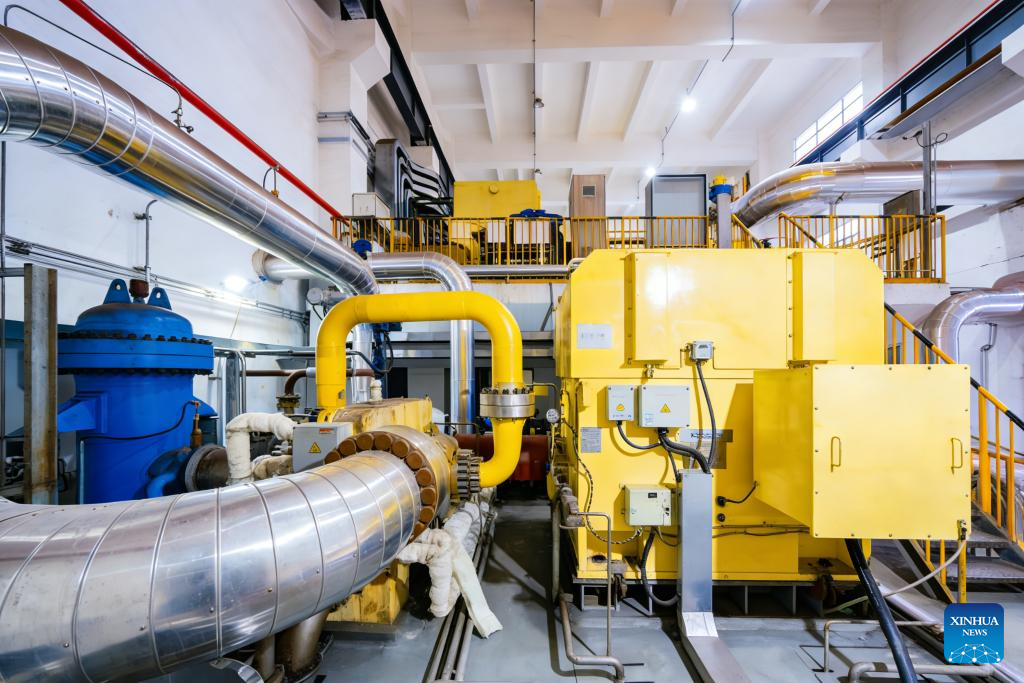

On December 20, 2025, the China National Nuclear Corporation (CNNC) announced that Chaotan One, the world’s first commercial supercritical carbon dioxide power generator, began commercial operations. Chaotan One is a joint effort developed by the CNNC and the Nuclear Power Institute of China (NPIC) and is the world’s first commercial 2×15 megawatt (MW) supercritical CO₂ waste-heat power generation demonstration project.
While platforms like autonomous drones and artificial intelligence (AI)-enabled weapon systems dominate discussions on irregular warfare and strategic competition, the energy systems required to power these technologies receive little attention by comparison.
In this context, the race to commercialize and industrialize supercritical CO2 (sCO2) systems is a critical national security imperative that will dictate which military forces can sustain high-power operations in contested, austere environments.
What is Supercritical CO2?
Carbon dioxide (CO2) is most commonly known as the invisible gas that is naturally produced when people breathe out and when fossil fields are burned. CO2 is critical for plant growth and helps to regulate the temperature of the Earth.
Supercritical CO2 is created when CO2 gas is containerized and put under conditions where pressure and temperature are increased. This transforms regular CO2 into supercritical CO2 (sCO2), meaning that sCO2 possesses the density of a liquid but still maintains the expansive properties of a gas.
Therefore, supercritical CO2 has superior thermal efficiency compared to traditional steam. In civilian context, sCO2 is used to decaffeinate coffee, clean electronics, or sterilize medical equipment. From the perspective of energy generation context, sCO2 power cycles generate electricity by using this form of intensively pressured and high-temperature carbon dioxide to spin a turbine. In a closed-loop sCO2 Brayton cycle, compressed sCO2 is heated, expanded through a turbine for energy generation purposes, and then recompressed.
This means that sCO2 turbines can be a fraction of the size compared to traditional steam systems. This directly translates into power generation capabilities, with nuclear and fossil fuel plants being able to be run more efficiently at a lower cost and leveraging a smaller footprint.
Operationalizing sCO2
In the context of strategic competition, sCO2 offers significant advantages over traditional steam-based systems. For example, in austere environments, diesel fuel and water supplies are highly vulnerable to interdiction on a cross-domain basis. In contrast, sCO2 systems reduce fuel demand and require significantly less cooling water than traditional steam cycles, mitigating two of the military’s most easily targeted dependencies.
Furthermore, as the U.S. military increasingly deploys energy-intensive assets, represented most recently through the May 2026 deployment of directed-energy weapons in a federal pilot and the deployment of AI for target recognition announced during the same time period, compact and high-yield power generation will become increasingly critical to sustain such operations. In this context, a modular sCO2 turbine could provide the surge capacity needed for these systems without the need for an expanded physical or thermal footprint.
Beyond tactical applications, sCO2 systems also have significant economic implications, with this being a potent tool for gray zone economic statecraft. Smaller machinery and higher energy efficiency could improve energy output for countries hungry for industrial and technological growth. From this perspective, the first country to successfully commercialize sCO2 at-scale could ensure its place as the primary provider in next-generation power infrastructure.
In this context, the compact nature of sCO2 systems makes them ideal for powering dual-use infrastructure. A highly efficient and low-footprint power system could enable anything from commercial deep-water ports or regional logistics hubs. This excess energy capacity could also be seamlessly pivoted to support visiting naval fleets, AI-enabled targeting centers, or dual-use radar facilities, further obscuring military expansion behind the veil of economic development. Therefore, ensuring that emerging technologies like sCO2 are commercialized accordingly must be a key national priority for nation-states involved in strategic competition.
Civil-Military Fusion and China’s sCO2 Ambitions
China has long valued sCO2 as a critical national priority, particularly given its long-standing national strategy of civil-military fusion and state-directed industrial policy. A report prepared for the U.S. China Economic and Security Review Commission released in early 2011 recognizing this fact, highlighting sCO2 as a technology that China sought to scale and commercialize. This has been a key focus area for China owing to the country’s long-standing dependency on coal, with supercritical CO2 advancements helping to wean the country off of coal and into more sustainable energy sources like nuclear energy.
Chinese university experts have been publishing their research on supercritical CO2 in the past decade, with some examples being China Petroleum and Chemical Corporation (Sinopec)-affiliated research being published in 2018, China University of Petroleum – Beijing publishing research in 2017, among others.
This research has moved into the implementation and test phase. In the Fourth National Communication on Climate Change in late 2023, sCO2 was highlighted as one of several critical “technology items” to support energy development, to include uranium mining, ostensibly for nuclear energy use. Several years earlier, in early 2019, Chinese concentrated solar power (CSP) manufacturer Shouhang partnered with French utility EDF to retrofit a 10 MW solar plant with an sCO2 power cycle, with this being the first time that sCO2 technology would be tested in an operating CSP facility, with the goal to prove sCO2’s commercial viability.
All in all, these developments highlight how China has successfully commercialized sCO2 on a large scale. The announcement of Chaotan One highlights how China has moved from the experimentation scale to the commercialization process for sCO2. While a 2×15 MW capacity is not necessarily global dominance, it does position China as the leader of industrial sCO2 deployment.
If Chaotan One proves successful in the long-term, this first-move advantage will allow Beijing to dominate the supply chain for next-generation power components, to include compact machinery, advanced reactor components, and much more. In the context of strategic competition, this creates strategic leverage, particularly given China’s existing participation in building critical energy infrastructure for emerging economies as part of the Belt and Road Initiative.
American Efforts to Produce Supercritical Co2
The announcement of Chaotan One comes amidst a flurry of announcements to bolster America’s R&D efforts in the energy space, with a focus on nuclear applications. Just several months prior to CNNC’s announcement, the U.S. Department of Energy (DoE) announced the kickoff of President Trump’s Nuclear Pilot Program, with a focus on starting operations for at least three test reactors by mid-2026.
Most recently, a February 15, 2026 announcement highlighted a collaboration between the Department of Defense and Department of Energy to transport a nuclear reactor via C-17. This news followed a December announcement of the advanced deployment of advanced light-water small modular reactors to the tune of up to $800m, with previous focused efforts to develop advanced nuclear fuel lines in September, and the creation of a Defense Product Act Consortium focused on domestic nuclear fuel cycle supply chains in August 2025.
More specifically, the U.S. has also been aggressively pursuing its own supercritical CO2 advancements. One of the most forefront examples of America’s leadership in sCO2 can be seen in the Supercritical Transformational Electric Power (STEP) Demo facility in San Antonio, Texas. The STEP Demo facility is a 10 MW pilot plant which first generated electricity using sCO2 power cycles in mid-2024, with the plant achieving full operational speed of its turbine in late 2024, concluding its Phase 1 testing.
While the STEP Demo is promising from a technical perspective, significant work remains in scaling its operations. While the U.S retains its strengths in energy from the perspective of advanced materials and nuclear R&D, the commercialization timelines associated with the STEP Demo will determine whether or not these advantages translate into global leadership.
Conclusion
Supercritical CO2 is an underlying technology that is foundational for a tech-enabled battlespace. While current discussions around emerging technologies prioritize AI, cyberwarfare, and autonomous systems, none of these capabilities would function without resilient and efficient power generation, thereby highlighting the importance of emerging technologies like supercritical CO2 in the context of strategic competition.
China’s aggressive state-backed push to be the first commercial-level supercritical CO2 power generator poses a direct challenge to the historical American dominance in energy innovation. While efforts like the STEP Demo facility and the increasing focus by the DoE and DoD to prioritize advanced mobile nuclear capabilities show some promise, the U.S. must increasingly focus on compact energy systems as strategic weapons. In an era of contested logistics, energy efficiency is synonymous with lethality and operational reach.