





Bolivia’s Security Challenges and the Paz Government’s Response

Introduction:
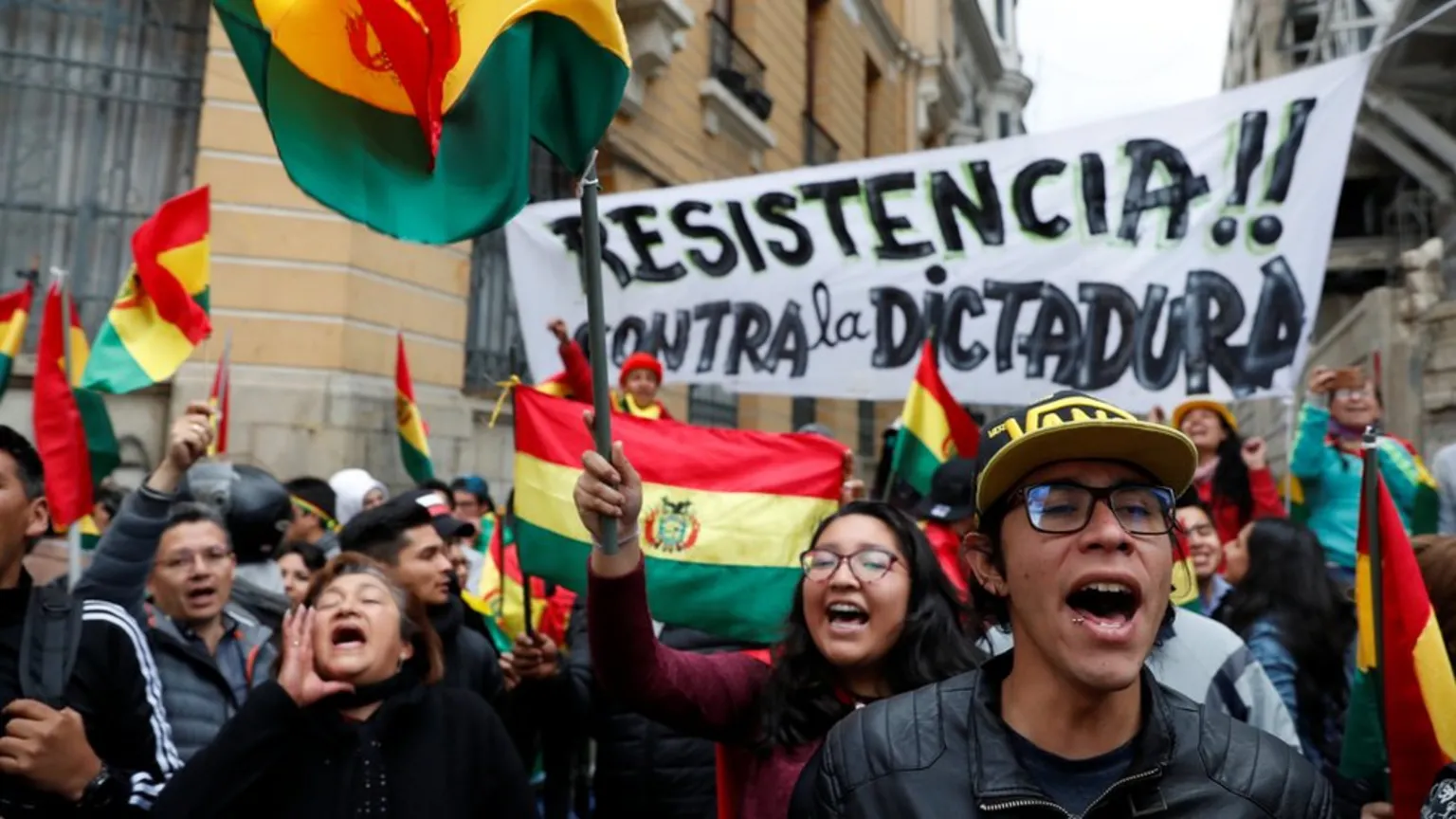
As the United States advances its hemispheric posture, Bolivia, a small country in South America, emerges as a country at a crossroads, where escalating protests, driven by economic survival issues, are threatening to destabilize an infant Paz government.
Expediente Abierto just published a report by Dr. Evan Ellis, titled “Bolivia’s Security Challenges and the Paz Government’s Response.” Dr. Ellis explains that acute challenges stemming from the permissiveness of the past government under the control of ousted President Evo Morales are limiting the government’s response to the current crisis.
Security Challenges:
Narcotrafficking: Two regions, Chapare and Yungas, in Bolivia are known for producing coca, the precursor for cocaine. Under the leftist government of ousted President Evo Morales, whose party, the Movement for Socialism (MAS), helped sustain and deepen Bolivia’s role in international drug trafficking and cultivation of coca.
Illegal mining: Bolivia’s illegal mining is part of Bolivia’s 80% informal economy. Many times, illegal mining is the mechanism that narco-traffickers use to launder funds. The activities of illegal mining are supported through international gangs, such as Chinese organized crime.
How Security Challenges Affect Bolivian Response:
Police: Against the expulsion of the DEA, weakening of institutional strength programs, termination of US training, combined with widespread corruption and a lack of basic support equipment, is severely constraining the police from having a meaningful effect to restore order from the protests.
Military: Additionally, under Evo Morales, the military underwent restructuring; first, the Bolivian government brought in Cubans to help fill gaps in its military intelligence service, even to help launch their anti-imperialist school, which was subsequently dismantled by interim President Jeanine Anez. Second, officer incentive programs welcomed personnel who lacked education and even went so far as to forgo basic literacy.
Dr. Ellis points to how many of the high-ranking members in leadership positions draw their roots from the cocalero region and Evo Morales’s bastion, the Chapara region, and the Equality of Opportunities Program (PIO). As a result, President Paz’s government is reluctant to deploy the military to contain protestors, for fear of mixed loyalties that could lead to refusal to fight or defection.
From a perspective on irregular warfare, President Paz is severely constraining himself through a mix of legacy, acute challenges, and mischaracterization of the situation. Bolivia’s past of welcoming members of the Revolutionary Armed Forces of Colombia (FARC), the Colombian National Liberation Army (ELN), the Shining Path of Peru, Cubans, and others has provided military-grade training. Protesters demonstrated these capabilities by blocking strategic and critical routes, using dynamite proficiently, and employing military tactics to surprise police forces.
The Take Away:
Acute issues and a limited government are constraining Bolivia’s ability to re-engage with the United States. This is where Dr. Ellis’s article shifts again. A subtle yet important argument by Dr. Ellis is that “what happens in Bolivia matters for the United States.” Bolivia has become an arena for great power competition. Washington’s rivals actively cultivating influence in its political, economic, and security institutions. A collapse of the Rodrigo Paz government and the return of Evo Morales to power again challenge Washington’s broader hemispheric goals and current momentum in the region, enabling other great powers to maintain a strategic foothold within the Western Hemisphere.
While you’re here…
For a greater understanding of the United States posture to the Western Hemisphere, check out “Operationalizing Hemispheric Defense: What the 2026 National Defense Strategy Means for Latin America”
For more on how transnational crime, regional diplomacy, and strategic competition are shaping the United States’ interests in the Americas, check out “Welcome to the Western Hemisphere”
Interested in all things Latin America? Visit El Centro’s homepage.
For other another Discourse piece that features Dr. Evan Ellis, check out…“The 2025 U.S. National Security Strategy and the Western Hemisphere: Implications and Challenges”

