Trump deal gives Iran 100s of billions more than Obama’s nuclear pact he slammed, in return for far less

WASHINGTON – President Donald Trump has offered Iran hundreds of billions of dollars more than it received under President Barack Obama’s nuclear agreement – the one Trump condemned as “the worst deal in history.”
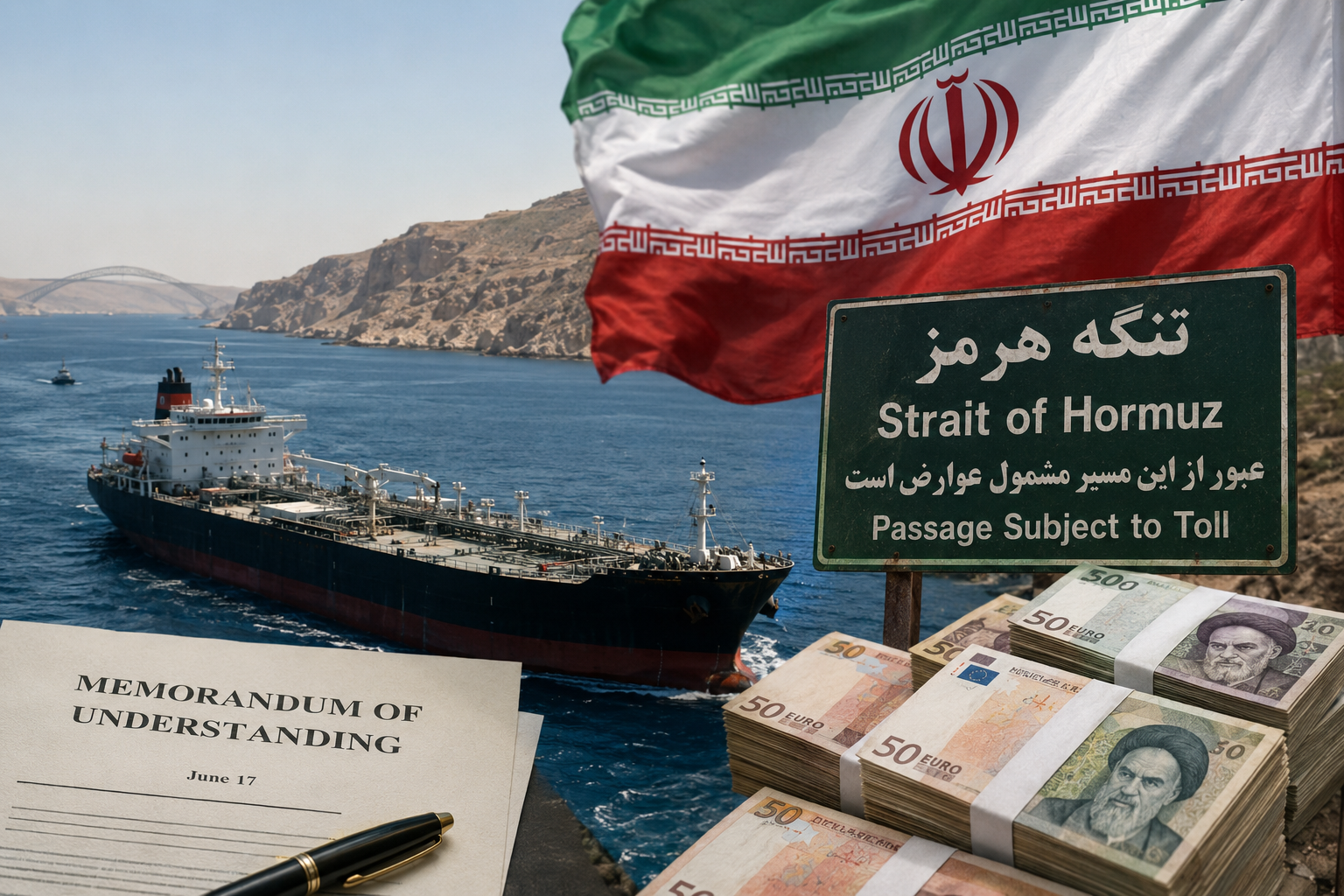
The memorandum of understanding released June 17 provides $300 billion for Iran’s economic development and recovery, eases sanctions and unfreezes up to $24 billion in Iranian funds.
The deal also implies that Iran will soon be able to charge ships for passing through the Strait of Hormuz, effectively recognizing control of the strategic chokepoint that didn’t exist before the war.
By comparison, Obama’s Joint Comprehensive Plan of Action released about $50 billion in frozen Iranian assets, according to the Center for Arms Control and Non-Proliferation.
Under a separate deal that coincided with the JCPOA, the U.S. delivered pallets stacked with $400 million in Swiss francs and other currency, a source of particular Republican outrage; the sum was transferred in cash due to sanctions that precluded a wire transfer.
Trump’s $300 billion package for Iran makes the JCPOA “look like a pittance,” said Sen. Roger Wicker, the Mississippi Republican who chairs the Senate Armed Services Committee.
Trump withdrew the U.S. from the JCPOA in 2018, calling it “one of the worst and most one-sided transactions the United States has ever entered into.”
The MOU he signed June 17 in France establishes a framework to end the war he initiated four months earlier and to guide negotiations over Iran’s nuclear program.
Unlike the JCPOA, the MOU doesn’t tie the funds to an agreement on nuclear enrichment or weapons development. Without such assurances, analysts and former officials said it’s hard to see much in the deal other than unprecedented concessions by the U.S. – certainly not the “unconditional surrender” Trump promised to squeeze from Iran.
The JCPOA that Trump scrapped included concrete agreements on nuclear material and weapons, rules for monitoring and penalties for non-compliance.
“A lot has been sacrificed up front just to get the Strait of Hormuz open again,” said Daniel Schneiderman, who served in the State and Defense departments. He now directs global policy programs at the University of Pennsylvania Washington.
Wicker emphasized that he supported Trump’s decision to attack Iran. But he condemned lifting sanctions and unfreezing assets, warning that Iran will use such funds to pursue its anti-American goals.
“I am concerned that the memorandum of understanding negotiates away the victories of Operation Epic Fury in ways that are completely out of step with the President’s goals,” he said in a June 18 statement.
Tolls in the Strait of Hormuz
Roughly 7.9% of global maritime trade flows through the Strait of Hormuz, including 20% of the world’s supply of oil and natural gas.
In March, Iran declared the waterway closed, began attacking ships attempting to pass through it and laid mines. The moves made insurance for vessels transiting the strait prohibitively expensive.
Iran spent decades incorporating a strait blockage into its war planning. Western powers were also well aware of the likelihood. When Trump attacked, Iran tested the strategy for the first time.
Closing the strait sent global energy markets into a tailspin. By late March, the average price per gallon of gas in the U.S. climbed from $3 to $4.56.
Although Trump has asserted that the strait will remain toll-free, Iran has already taken steps to implement fees. One mechanism: mandatory insurance policies.
Before the ceasefire, Iran charged $2 million per tanker or $1 per barrel of oil for the few ships it allowed to pass. At pre-war shipping levels, that would top $7.7 billion a year in revenue.
Schneiderman called it “significant and extraordinary” for Trump to grant Iran the right to charge tolls.
The legality, however, is dubious. The strait is just 20 miles wide at its narrowest point but international law requires free passage in international waters.
Sanctions relief and economic development
One big target of criticism in the MOU is the $300 billion economic development plan.
Trump and aides say the U.S. will not contribute funding, but will organize it with regional partners that will contribute or catalyze private investment.
That fund has no equivalent in the JCPOA.
The MOU adopts the JCPOA strategy of economic benefits in exchange for cooperation on elimination of nuclear weapons. But key provisions go far beyond the Obama deal’s rewards.
Under the JCPOA, the U.S. rolled back most sanctions against Iran, including on its economy and oil exports. Sanctions related to terrorism, human rights abuses and arms remained in place.
In exchange, Iran agreed to restrict nuclear enrichment to levels sufficient only for civilian uses and to submit to international inspections.
Trump’s MOU, by contrast, calls for the U.S. to “terminate all types of sanctions” against Iran on a schedule to be negotiated later.
The U.S. agreed to immediately issue waivers to allow Iran to export oil at market rate for 60 days – a boon worth up to $3 billion by some estimates.
Frozen assets
Tehran says the West is holding $24 billion of its assets.
The Wall Street Journal reported June 19 that the U.S. and Qatar were working to unfreeze $6 billion of that initially – to be used only for food, medicine and other humanitarian supplies.
The Trump administration has highlighted that Iran can only unlock the full benefits offered under the MOU if it meets certain conditions. Officials have described the approach as pay for performance.
“Fundamentally, that money is not going to be unfrozen unless we continue to see progress, and that will obviously be a big part of the negotiation in the days to come,” Vice President JD Vance told reporters Monday in Switzerland after talks with Iranian negotiators.
The JCPOA also unfroze funds incrementally as Iran met certain targets. The deal was fully implemented in 2016 after the International Atomic Energy Agency reported that Iran had made the promised changes to its nuclear program.
Trump killed that deal, and Iran resumed its nuclear program. In 2019, Iran accelerated uranium enrichment. Two years later, it suspended implementation of its monitoring agreement with the IAEA. By 2025, it was rapidly increasing its supply of nuclear material.
The MOU provides economic incentives upfront, with no agreement on limits to Iran’s nuclear program.
“This was a pretty lopsided deal,” said Bob Einhorn, a senior fellow at the Brookings Institution and a former State Department official who helped lead early JCPOA negotiations until 2013. “The benefits to Iran were spelled out pretty clearly – some immediate benefits and some eventual benefits – but the benefits to the United States were amorphous, put off until future negotiations.”
Bankrolling aid or terrorism?
At a campaign rally in September 2015 in Washington, Trump condemned the JCPOA and called its negotiators “very, very stupid people.” He cited an inflated figure of $150 billion that Iran stood to receive and argued that the unfrozen assets would be used to menace Israel and to pursue other anti-American aims.
“They rip us off, they take our money, they make us look like fools, and now they’re back to being who they really are,” he said.
Secretary of State Marco Rubio, then a Florida senator, warned at the time that the JCPOA would let Iran buy missiles and boost its terror affiliates.
“Flush with cash and arms, Iran will have even more opportunity to expand its influence across the Middle East and threaten its neighbors,” he wrote in September 2015.
Rubio and Vance, then an Ohio senator, co-sponsored a bill in 2023 that stated “funds released to Iran for so-called humanitarian purposes cannot be reliably prevented from funding future terrorist attacks.”
Trump, Vance and Rubio are now doing precisely what they argued against, critics say.
Vance said that unfrozen funds could only purchase American soy, corn and wheat for Iranian civilians. He called it “a classic Trump deal.”
Iranian officials disputed that, saying they have agreed to no such limitations.
Skeptics of the MOU point out that if Iran has more funds to buy food, it also has more funds to rebuild its military and, potentially, to finance global terror – the exact critique Trump leveled against the JCPOA.
“The MOU says, basically, these unfrozen funds can be used just as Iran pleases with no restriction,” Einhorn said. “They have a green light if they wanted to use some of those funds for supporting their Axis of Resistance, their proxies or for their military programs.”
“One can hope that the U.S. team will do a better job negotiating the final deal than it did negotiating the MOU,” he added. “I’m not confident that’s going to be the case.”