What Teaching Cognitive Warfare Taught Me About Cognitive Warfare
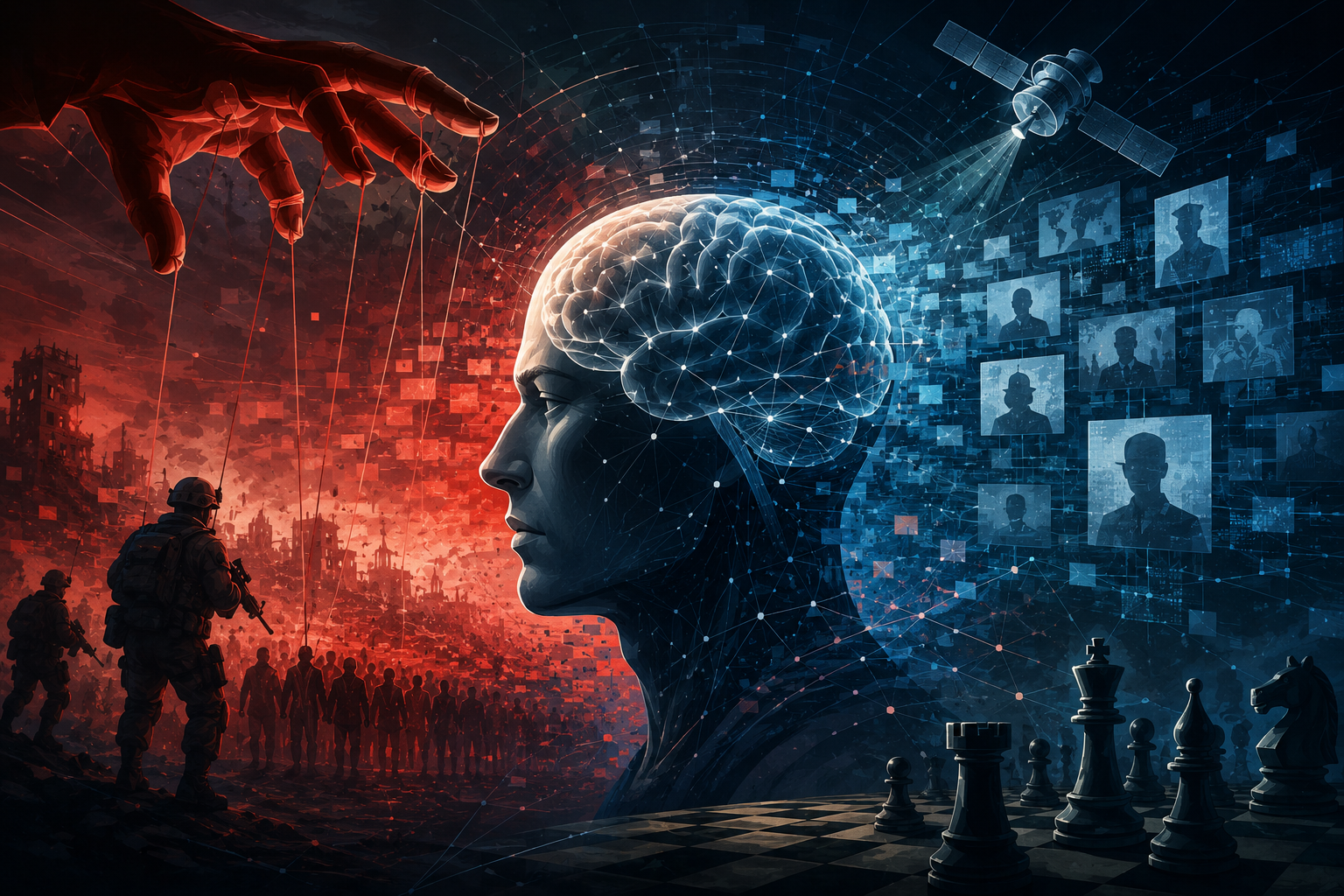

When I wrote “Cognitive Warfare to Dominate and Redefine Adversary Realities: Implications for U.S. Special Operations Forces” for Joint Special Operations University Press in late 2025, I believed the core argument for this unique form of warfare was sound and the concept novel enough to justify military investment as the human mind is a distinct domain of conflict and Artificial Intelligence (AI) is a force multiplier for influence at scale. Pieces of that argument are still fundamentally sound. However, follow-up Q&A with Special Operations Forces (SOF) operators, Combatant Command staff, and senior officials who have seen rebranding of information operations before have forced me to be more honest about what is known, what is speculation, and what is emphasized more than it should be.
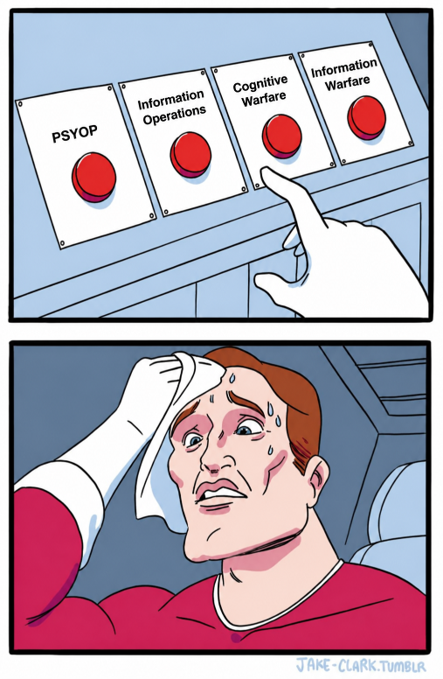
Cognitive warfare (CW) has many definitions. As a generic term, it has been around for centuries; the idea of cognition – best understood as the mental process of acquiring knowledge and understanding through thought, experience, and the senses – is not new to anyone, civilian or military. Waging war against that process by manipulating how an adversary acquires knowledge and forms beliefs is not new either. In that sense, the critics who call cognitive warfare “old wine in a new bottle” are correct. They are also missing the point. In today’s military and security context, the generic definition does not suffice. This definition captures everything from a Roman general spreading false rumors before battle to a Cold War disinformation campaign. That spread makes the term unhelpful for modern security applications. If CW is to mean something distinct from Psychological Operations (PSYOPs), Information Operations, or Information Warfare, it requires a definition precise enough to draw lines between the old and the new.
An AI system can generate thousands of individually tailored influence products simultaneously, each calibrated to a specific person’s psychographic profile or segmentation (beyond demographics) from their digital behavior. No PSYOP unit can currently do that with as much precision at scale.
Renowned national security scholar Dr. Frank Hoffman defines Cognitive Warfare as “the application of information and cognitive sciences to enhance or degrade the decision-making process and resulting behavior of political and military leaders, and civilian society, in order to obtain a positional advantage in the information environment and designated political objectives.” The word “process” in Hoffman’s definition is important. Unlike others, this form of warfare is meant to affect how adversaries form beliefs and make decisions, rather than the broader and more familiar mission of influencing what they believe.
Regardless, I still believe in CW. I do not think the “old-wine” argument withstands scrutiny for the aforementioned reasons. That is the easy part, however. When I presented suggestions for offensive CW – such as employing psychographic profiling of adversary commanders to inflict AI-generated narrative superposition or using synthetic media to target individual decision-makers – experienced PSYOP professionals pointed out that they had been doing versions of this for decades, minus the AI. Their targeting was less precise, the scale was smaller, and humans made the content rather than computer models, but the logic was the same: identify the target’s profile, craft content that exploits it, and deliver it through channels that the target trusts.
Neuroplastic change of this kind is not a single synaptic event but the cumulative strengthening or weakening of entire neural networks through repeated activation, altering not what a person concludes but how the brain processes the information that leads to conclusions.
My counterargument, then and now, rests on two claims. The first is scale. An AI system can generate thousands of individually tailored influence products simultaneously, each calibrated to a specific person’s psychographic profile or segmentation (beyond demographics) from their digital behavior. No PSYOP unit can currently do that with as much precision at scale. The second is the mechanism. Traditional influence operations try to change what a person thinks. The CW argument – grounded in neuroscience on neuroplasticity and epistemic closure – is that sustained AI-enabled targeting can change how a person thinks. It posits that prolonged exposure to algorithmically curated information environments does not merely persuade but rewires the cognitive processes by which a person evaluates truth. Neuroplastic change of this kind is not a single synaptic event but the cumulative strengthening or weakening of entire neural networks through repeated activation, altering not what a person concludes but how the brain processes the information that leads to conclusions. This is a categorical difference. Both claims are theoretically grounded but lack operational field-testing. This would require building and navigating authorities and approvals that do not currently exist. This is a problem worth acknowledging even if it falls outside the scope of this discussion.
The neuroplasticity argument draws from legitimate clinical research: repeated stimulation of neural pathways produces structural changes in how the brain processes information. Prolonged exposure to emotionally manipulative content does correlate with what researchers describe as epistemic closure, a state where the brain rejects information that contradicts an established narrative. These are not invented mechanisms, but the clinical and behavioral research from which they derive was not conducted in adversarial military contexts. Extrapolating from “social media use changes adolescent brain development” to “we can deliberately induce epistemic failure in an adversary’s theater commander” requires empirically unsustainable assumptions. The mechanism may be real but without further development, the application is speculative.
A compromised decision-making process does not necessarily fail in a predictable manner. A commander in cognitive overload might freeze or delegate to a subordinate with different vulnerabilities, heuristics, or responses to pressure. As his capacity to evaluate risk degrades, he may choose to escalate. CW can introduce chaos into cognition, but chaos – even coordinated chaos – is not a viable course of action.
More troubling is a problem that a senior SOF operator raised in one Q&A session: even if the mechanism successfully overloads an adversary’s cognitive processes and induces the kind of epistemic failure described by the theory, the outcome remains uncontrolled. A compromised decision-making process does not necessarily fail in a predictable manner. A commander in cognitive overload might freeze or delegate to a subordinate with different vulnerabilities, heuristics, or responses to pressure. As his capacity to evaluate risk degrades, he may choose to escalate. CW can introduce chaos into cognition, but chaos – even coordinated chaos – is not a viable course of action. As acknowledged in the JSOU paper, cause and effect operates inside a black box within the human mind.
Cole Livieratos, writing in the Irregular Warfare Initiative, identifies four institutional problems that doom cognitive warfare as a military concept: measurement, norms, politics, and organizational dysfunction. Of these, the argument for measurement is the strongest. The variables involved in attributing adversary decision outcomes to specific cognitive operations are, in his words, “so numerous and so tangled” that it is effective impossible to establish causality. Without measurable outcomes, senior leaders cannot defend CW programs in congressional testimony, practitioners cannot improve through after-action review, and commanders cannot compete for resources against kinetic capabilities with concrete kill counts. Livieratos also notes that PSYOP and IO lost 74 percent of their budget between 2009 and 2015. This is not because these operations failed, it is that no one could prove they succeeded. CW is on the same trajectory unless there are structural changes in how the military validates and institutionalizes the concept.
The most consistent agreement across every audience – SOF operators and COCOM staffers alike – is that cognitive threats are real and current military institutions are poorly organized to recognize (let alone resist) them.
The case for defensive CW remains sound despite the criticisms of offensive CW, however. The most consistent agreement across every audience – SOF operators and COCOM staffers alike – is that cognitive threats are real and current military institutions are poorly organized to recognize (let alone resist) them. Chinese cognitive warfare campaigns in Africa have outpaced US efforts, as General Michael Langley testified before the Senate Armed Services Committee in April 2025. Iranian botnet amplification of anti-US narratives has complicated SOF coordination with Gulf partners. Russia’s sustained information campaigns in Ukraine have forced allied nations to divert resources to counternarrative operations that could have otherwise supported kinetic ones.
The argument for investment in cognitive resilience, “prebunking” programs, bias recognition training, and organizational processes that build cognitive hygiene into unit culture is not contingent on the neuroplasticity argument. It does not require proving that AI-enabled CW can produce structural changes in adversarial cognition. It requires only acknowledging that our own forces operate in information environments that adversaries deliberately shape and that we are not fully equipped to detect or resist those operations.
Cognitive Warfare is a real concept with theoretical grounding. Its mechanisms -neuroplasticity and epistemic failure through information overload – are not invented. The scale advantage that AI confers over traditional influence operations is real. However, the offensive application of these mechanisms in military contexts remains largely theoretical, the causal chain from cognitive disruption to controlled behavioral change is unproven, and the institutional problems that have historically hollowed out information operations budgets and authorities apply equally to CW. The defensive case for CW is urgent and actionable; the offensive case is promising but unproven.