





The Little (Ukrainian) Robot that Could
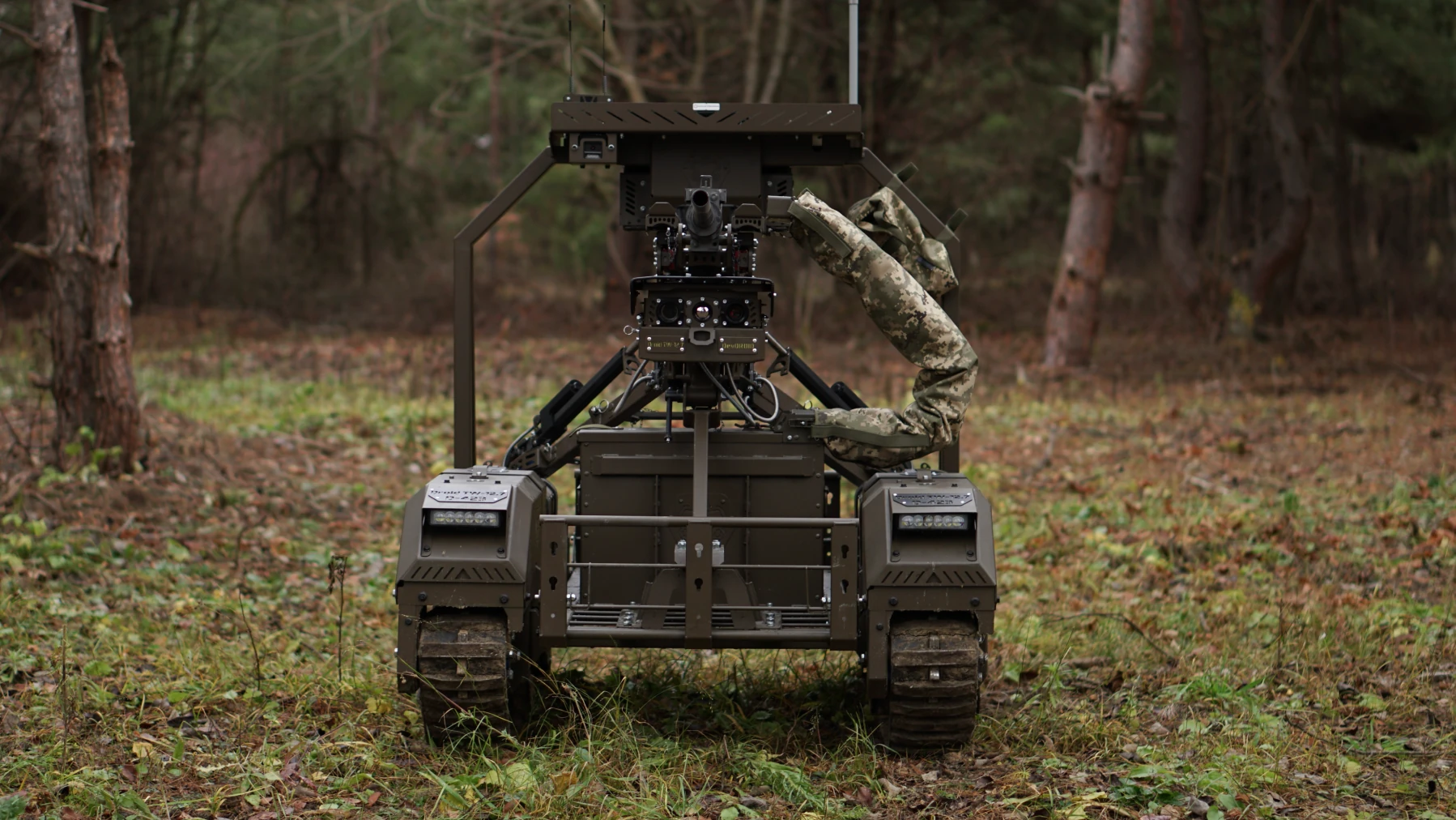

For 45 days last summer, a single Ukrainian ground robot defended a contested intersection against repeated Russian assault, reports Defense One’s Patrick Tucker in “A Ukrainian ground robot defended a position from Russian assault for six weeks.”
A Droid TW 12.7 armed with a 12.7mm machine gun operated with continuous drone surveillance overhead, which detected enemy movement and relayed targeting data to the remote operator in real time. Ukraine’s 3rd Army Corps called it “Ukraine’s first fully robotic defensive operation of a position.”
Implications
A single unmanned ground vehicle, costing between $10,000 and $30,000, held terrain that would otherwise have required infantry.
Ukrainian ground robots now handle roughly 80 percent of front-line logistics. This includes carrying explosives forward and evacuating wounded rearward. The Ministry of Defense wants 100 percent.
The first direct engagement between Ukrainian and Russian ground drones must indeed be approaching.
Reality Check
Battery life and ammunition capacity limit practicality. “There is never enough” of either, per a Ukrainian army spokesperson. Operator training is also harder than it looks. Unlike UAV operation, ground robot control requires deep understanding of the terrain and a different kind of navigational judgment.
Autonomy
Here, Ukraine has drawn a deliberate line. Since civilian populations remain present in contested areas, humans must stay in the decision loop. One official said:
“Ukrainian forces are still operating in the territories that are populated by civilians. There are children. They are elderly. So just giving ground robots that ability to make decisions, to engage, to strike and kill, that would be a very dangerous development, and Ukrainians are against that.”
Lessons for the U.S.
The U.S. Army’s Tactical JEPA framework aims to give ground drones predictive intelligence. Ukraine is showing elements of what that future will hold.

