





The AI Battlespace: Artificial Intelligence, Civil Stability, and the Weaponization of Trust

Abstract
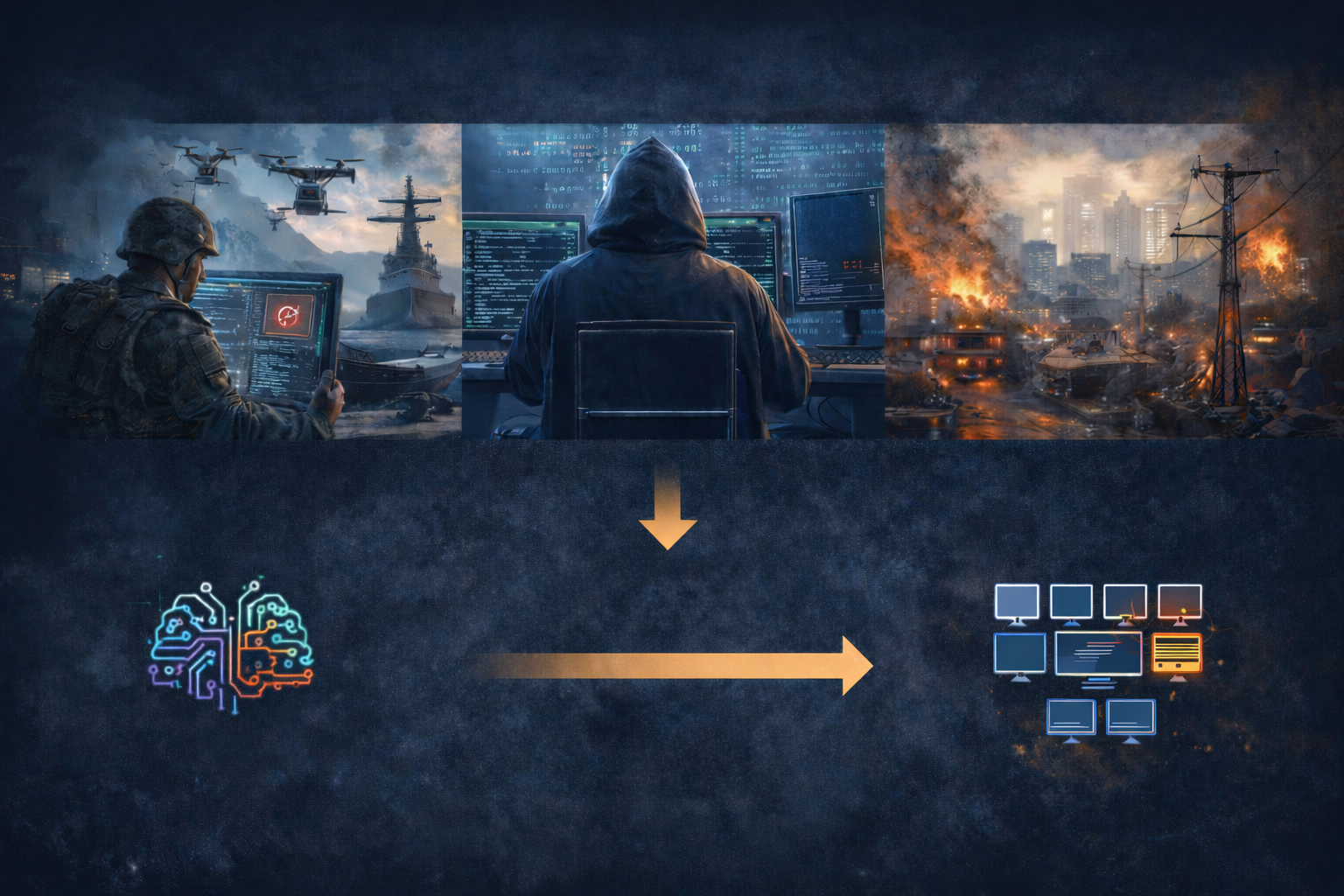
Artificial intelligence is rapidly transforming the operational environment across military, cyber, and civil domains. While AI technologies provide significant advantages in data analysis, automation, and decision support, they also introduce new vulnerabilities that adversaries can exploit. This article examines how artificial intelligence may be weaponized to manipulate trusted information systems, accelerate cyber operations, and destabilize civilian infrastructure. Drawing on recent cyber incidents—including attacks on critical infrastructure, supply chains, and national energy systems—the article highlights how AI-enabled threats could affect governance, public trust, and stability operations. Particular attention is given to the implications for Civil Affairs forces, which operate at the intersection of governance, infrastructure, and civilian populations. The article also explores how disaster response and humanitarian environments may be exploited through AI-driven disinformation and cyber disruption. As artificial intelligence becomes increasingly embedded in operational systems, preparing a workforce capable of critically evaluating and securely employing AI technologies will become an essential component of national security.
Introduction: The Algorithmic Battlespace
Imagine a communications failure during a military crisis. Under pressure, a cyber specialist consults an artificial intelligence system for troubleshooting guidance. The response appears detailed, confident, and technically sound. The recommendation is implemented immediately. Hours later, the system collapses.
The operator does not realize that the recommendation contained a subtle flaw introduced through manipulated data sources or malicious prompts embedded within external information systems. The artificial intelligence response appeared authoritative, but it quietly introduced a vulnerability that triggered failure at a critical moment.
No missile was launched. No obvious network breach occurred. Yet the operational outcome was the same: a mission-critical system failed when it was needed most.
This scenario reflects a broader shift. Artificial intelligence is rapidly becoming embedded in decision-making across military operations, cybersecurity defenses, infrastructure management, and intelligence analysis systems. These technologies promise significant advantages in speed and analytical capability. However, they also introduce new vulnerabilities, particularly when systems rely on external data sources or opaque model behavior. Adversaries may not need to penetrate networks directly if they can manipulate the information systems trusted by those who operate them.
As a result, the weaponization of artificial intelligence may not occur primarily through autonomous weapons or robotic systems. Instead, the most consequential threats may emerge through manipulated information, cyber disruption, criminal networks, and destabilization of civilian systems. For Civil Affairs forces tasked with restoring governance and supporting stability operations, these developments introduce new challenges across the operational environment.
Weaponizing Trust in Artificial Intelligence
Large language models and other artificial intelligence systems produce responses that appear structured, logical, and authoritative. When users encounter explanations supported by technical terminology and step-by-step reasoning, they often assume the information is reliable. This assumption, however, creates a critical vulnerability.
Adversaries can exploit this tendency.
If attackers influence the data sources used by artificial intelligence systems through poisoned datasets, malicious prompts, or compromised information retrieval systems, the model may generate responses that appear credible while containing subtle but dangerous errors.
The threat lies not simply in misinformation, but in misinformation that appears credible and that is trusted.
In practical terms, this vulnerability becomes particularly significant in technical environments where artificial intelligence tools are increasingly used for coding assistance, engineering troubleshooting, cybersecurity analysis, and decision support.
More broadly, modern warfare increasingly includes the cognitive domain. Artificial intelligence dramatically expands the scale at which information can be generated and distributed (World Economic Forum, 2023).
Taken together, the weaponization of artificial intelligence is fundamentally about manipulating trust.
Artificial Intelligence and the Evolution of Cyber Warfare
Building on this manipulation of trust, artificial intelligence is also accelerating the evolution of cyber warfare. Machine learning tools can analyze software code, identify vulnerabilities, generate malicious scripts, and automate reconnaissance across digital infrastructure.
Several major cyber incidents illustrate the strategic consequences of these operations.
The SolarWinds supply chain compromise demonstrated how attackers infiltrated numerous government and private-sector networks by inserting malicious code into trusted software updates. The Stuxnet cyberattack demonstrated how malware can disrupt industrial infrastructure without conventional military force. Cyber operations have also targeted civilian infrastructure, such as the 2015 attack on Ukraine’s electrical grid, which caused widespread power outages.
The 2017 NotPetya malware attack disrupted global logistics and financial systems, causing billions of dollars in economic damage and was formally attributed to a nation-state actor.
Looking ahead, artificial intelligence has the potential to significantly expand the scope and scale of these operations. One of the most concerning developments is the ability for AI-enabled attacks to propagate across interconnected systems. When an AI system is compromised—whether through poisoned training data, manipulated outputs, or adversarial inputs—it can generate faulty code, flawed configurations, or malicious logic that is then implemented across multiple environments.
As a result, in modern enterprise and military ecosystems, where automation and integration are standard, this creates a cascading effect. A single compromised AI-generated recommendation can be deployed across networks, embedded into software updates, or integrated into infrastructure management systems. As those systems interact with others, the malicious logic can spread, extending the impact far beyond the initial point of compromise.
Consequently, in military environments where communications networks, logistics systems, and command-and-control platforms depend on digital infrastructure, even temporary disruptions can significantly degrade operational effectiveness.
Criminal Networks and Hybrid Threats
While state actors often dominate discussions of cyber warfare, cyber threats do not originate solely from foreign governments. Many attacks are conducted by criminal organizations operating within or across national borders.
Over the past two decades, gangs and organized criminal groups have increasingly turned to cybercrime as a primary revenue source. Artificial intelligence is accelerating this trend.
Artificial intelligence tools can automate phishing campaigns, generate malicious scripts, identify vulnerabilities, and conduct large-scale social engineering attacks. Voice synthesis technologies can replicate human speech patterns with remarkable accuracy, enabling criminals to impersonate executives or government officials in financial fraud schemes.
The Colonial Pipeline ransomware attack demonstrated how criminal cyber activity can escalate into a national security issue by disrupting fuel distribution across multiple states.
In this context, artificial intelligence lowers the technical barrier required to conduct these operations, enabling smaller groups to generate disproportionate strategic effects.
Artificial Intelligence and the Civil Dimension of Warfare
Field Manual 3-07 emphasizes restoring essential services and governance institutions following conflict. Joint doctrine contained in Joint Publication 3-57 further highlights the importance of engagement with civilian populations and coordination with civil authorities during stability operations.
Civil Affairs forces increasingly operate at the intersection of governance, infrastructure, and technology—areas where emerging threats such as artificial intelligence-enabled cyber operations can directly affect stability operations.
Following the 2003 invasion of Iraq, the collapse of electricity, water distribution, food supply networks, and basic government services contributed significantly to instability.
Artificial intelligence-enabled cyber operations could target electrical grids, transportation networks, water systems, or financial infrastructure. In this environment, adversaries may not need to defeat military forces directly. They may only need to prevent the restoration of stable governance.
Disaster Response and the Humanitarian Battlespace
The risks become even more pronounced in disaster and humanitarian contexts. Disaster environments present additional vulnerabilities that adversaries may seek to exploit.
Natural disasters frequently damage infrastructure, disrupt communications, and create urgent humanitarian needs requiring coordination between governments, military forces, and relief organizations. Civil Affairs forces frequently assist in coordinating these operations.
Artificial intelligence-generated messages could spread false information during crises, a risk already recognized in emergency management environments. Cyber attacks targeting humanitarian logistics systems could further disrupt the delivery of food, water, and medical supplies.
Ultimately, in humanitarian crises, the manipulation of information may be as destabilizing as the destruction of infrastructure itself.
Artificial Intelligence and Multi-Domain Operations
Taken together, these dynamics align closely with the Army’s concept of Multi-Domain Operations. Future conflicts will occur simultaneously across land, air, maritime, space, cyber, and the information environment.
Artificial intelligence has the potential to influence multiple domains at once. AI-enabled cyber operations may disrupt infrastructure supporting military logistics. Disinformation campaigns can shape public perception and undermine governance. Criminal networks leveraging artificial intelligence tools may exploit digital systems to generate instability or economic disruption.
For Civil Affairs forces, these interconnected threats highlight the need to view artificial intelligence not simply as a technological innovation but as a strategic factor shaping the modern battlespace.
Preparing the Workforce for the AI Battlespace
Given these challenges, preparing a workforce capable of responsibly harnessing artificial intelligence is essential.
In professional environments, artificial intelligence functions as a force multiplier for human expertise. Engineers use artificial intelligence to analyze complex systems. Cybersecurity professionals rely on machine learning to detect anomalies in network traffic. Intelligence analysts use artificial intelligence to identify patterns within large datasets.
However, preparing professionals who can critically evaluate artificial intelligence outputs—and recognize the risks of misinformation embedded within those outputs—is therefore a national security imperative.
Conclusion
Artificial intelligence is reshaping the global security environment.
It will enhance intelligence analysis, strengthen cyber defenses, and improve decision-making across military and civilian institutions. At the same time, the same technology can also be weaponized.
Artificial intelligence can manipulate trusted information systems, accelerate cyber warfare, empower criminal networks, and destabilize civilian populations in fragile environments.
Ultimately, in many cases, the most dangerous artificial intelligence weapon will not be autonomous machines or advanced robotics.
It will be the ability to quietly influence the decisions of those who trust the systems designed to assist them.


