





The Structural Biases That Undermine US Irregular Warfare | Modern War Institute
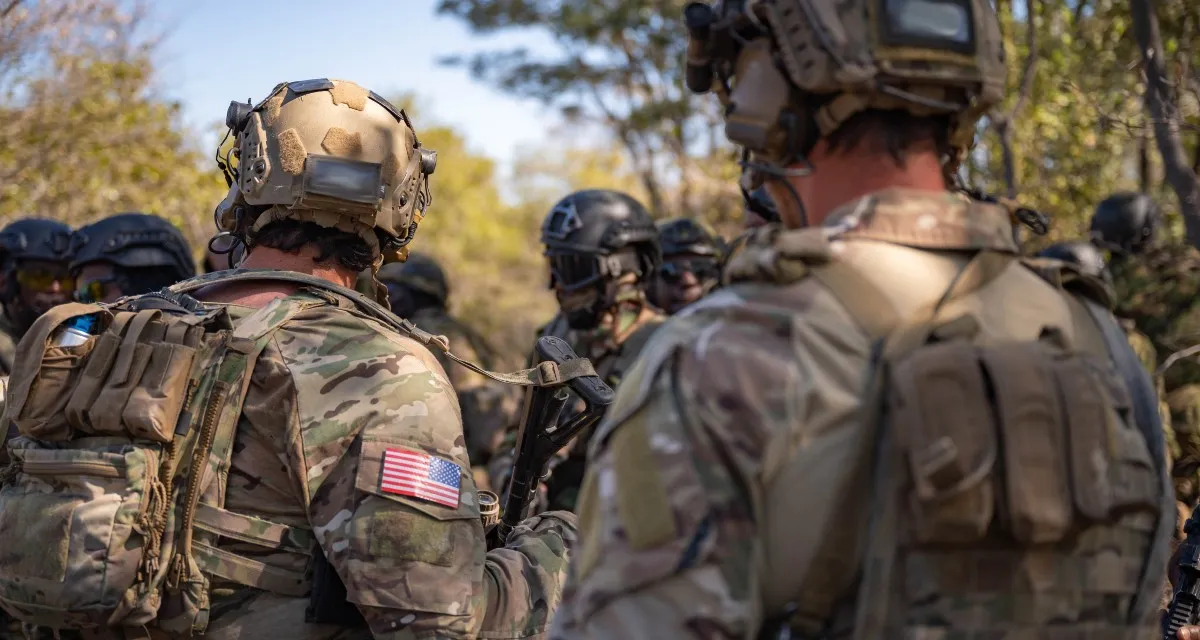

Andrew Rolander writes in “Designed to Lose: The Institutional Features that Undermine US Irregular Warfare” that the US defense establishment fails at irregular warfare because of three structural biases embedded in institutional culture rather than in doctrine or resources. He emphasizes that this bias in the strategic discourse has “created a dangerous false choice: Irregular warfare is either a supporting capability for strategic competition, useful insofar as it can be employed against Chinese or Russian interests, or it is a legacy of the counterterrorism era that should be reduced as the joint force orients toward peer competitors… Both framings are strategically incoherent.”
The Three Structural Biases
Rolander identifies a measurability bias that leads the Pentagon to optimize for countable outputs such as kill chains and sortie rates while overlooking population-centric variables that determine actual strategic outcomes. A temporal mismatch locks military strategy into short electoral and assignment cycles, while adversaries operate on generational timelines and exploit that vulnerability. Lastly, a conventional primacy reflex organizes promotion pathways, professional identity, and resource allocation around high-intensity conflict, pushing irregular warfare to the institutional margins. Previous reform efforts failed because they targeted visible symptoms, such as doctrine and organizational structure, without altering the underlying incentive structures.
“The American defense establishment is organized, resourced, and assessed around what it can count… Irregular warfare’s decisive variables are not measurable in this register. The quality of a movement’s relationship with a population, the depth of legitimacy accumulated over a decade of dispute resolution and economic provision, the population’s willingness to work with and absorb costs on behalf of an actor—none of these appear in a dashboard, a readiness report, or a congressional testimony… The measurability bias does not cause failure directly. It causes the US defense enterprise to optimize for the wrong variables while remaining blind to the ones that matter.”
“The American political system operates on a four-year electoral cycle. The Pentagon’s planning, programming, budgeting, and execution process operates on a two-year appropriations cycle. Individual military careers turn on three-year assignment rotations… Irregular warfare, when practiced by actors who understand it, operates on a generational timeline. This is not an inconvenience. It is a structural vulnerability that sophisticated adversaries deliberately exploit… The institution learns tactically in rotation cycles. It does not learn strategically, across the timescales that matter.”
“American military culture, professional identity, promotion pathways, and resource allocation are organized around the preparation for and execution of conventional high-intensity conflict… Career incentive structures reward command of conventional formations and proficiency in conventional warfighting skills. Promotion boards, shaped by the preferences of senior leaders whose own careers were built in the conventional track, systematically undervalue irregular warfare expertise. Budgetary processes are designed for platforms and systems, not for the patient investment in partner relationships and governance capacity that irregular warfare requires. War colleges teach strategy through the lens of state-on-state competition, employ Clausewitzian curricula, and place irregular warfare as a footnote rather than a discipline.”
The Three Recommended Changes
Rolander then prescribes three changes: redesigning assessment frameworks and career pathways to reward expertise in irregular warfare, reframing the civil-military conversation around honest time commitments, and treating irregular warfare as a permanent strategic requirement rather than a subordinate capability. The defense establishment must challenge its own institutional architecture rather than simply advocate for resources within it.
“The most durable institutional change available to senior military leaders is the redesign of assessment frameworks for irregular warfare operations and the career pathways of practitioners… the joint force must develop and mandate the use of assessment frameworks that capture the variables that determine irregular warfare outcomes: structural position mapping, governance performance metrics, and population alignment indicators measured behaviorally rather than attitudinally… Making them mandatory and holding commanders accountable for their results over timescales that transcend individual assignment cycles is the foundational reform from which everything else follows.”
“The most important conversation the American defense establishment is not having is the one about time… It requires telling civilian principals that the choice to engage in irregular competition carries a genuine temporal commitment, measured not in deployment cycles but in years of sustained investment, and that the absence of that commitment produces the predictable failure pattern the joint force has experienced repeatedly. It requires telling congressional overseers that appropriations cycles that reset strategic priorities every two years are structurally incompatible with irregular warfare campaigns if they are to be leveraged as a primary competitive instrument…”
“The current strategic discourse has created a dangerous false choice: Irregular warfare is either a supporting capability for strategic competition, useful insofar as it can be employed against Chinese or Russian interests, or it is a legacy of the counterterrorism era that should be reduced as the joint force orients toward peer competitors. Both framings are strategically incoherent. Irregular warfare is not a specialized capability or a phase of competition. It is a permanent mode of strategic interaction that operates continuously, in every theater, across the full spectrum of conflict… Strategic competition and irregular warfare are not alternative framings of the strategic environment; they are simultaneous and interdependent features of it, and a defense establishment that can only think about one at a time is not thinking strategically.”
“Why the Strong Lose and the Weak Become Strong” by Scott Atran (SWJ, April 2026) argues that conventional military strategy fundamentally misreads what sustains an adversary’s will to fight, because it measures and targets material capacity while ignoring the sacred values and identity fusion that motivate resistance among what Atran calls “devoted actors.” Atran demonstrates through battlefield studies and historical cases that strategies built around overwhelming force and cost imposition tend to harden rather than fracture resistance, because violence filtered through moral culture and collective identity makes sacrifice intelligible regardless of material loss.
The most intractable wars are fought not only over power, but over incompatible visions of how life ought to be lived. Overwhelming power may win battles; ancient and contemporary history shows it does not determine how wars unfold or end.
The piece reinforces Rolander’s central thesis that the US defense establishment’s measurability bias and conventional primacy reflex cause it to optimize for the wrong variables, producing tactical success alongside strategic failure against adversaries who understand that the decisive contest is over population relationships and commitment, not firepower.

