





South Africa’s Crime War and the Global Challenge of Criminal Insurgency


This Africa Defense Forum article, “South Africa Turns to the Military to Fight Crime,” explains how the South African government has deployed the military domestically to support police in combating escalating organized crime and violence. It describes Operation Prosper as a response to an acute crisis, with officials noting that “we are losing between 26,000 and 30,000 people to murder every year,” which frames the deployment as an urgent stabilization effort rather than a policy experiment. The government presents the military as a force multiplier, emphasizing coordination between institutions and arguing that “The SANDF deployment is necessary to complement the efforts of the SAPS in tackling these crimes and bringing stability to our communities.”
South African policymakers contend that success depends on intelligence-led targeting of criminal leadership, not broad sweeps of low-level offenders. Military leadership underscores this approach directly: “we are not looking for a man on the ground… we’re looking for the kingpins,” and asserting that “there is no other way that you will win this war… without intelligence-led operations.” This framing positions the campaign as a quasi-counterinsurgency effort against organized criminal networks, where precision and intelligence integration matter more than force presence alone. Moreover, the deployment functions as a temporary measure to “provide people with a little breathing space,” buying time for police reform and institutional recovery.
South Africa Murders (2025) | Institute for Security Studies CrimeHub Interactive Charts
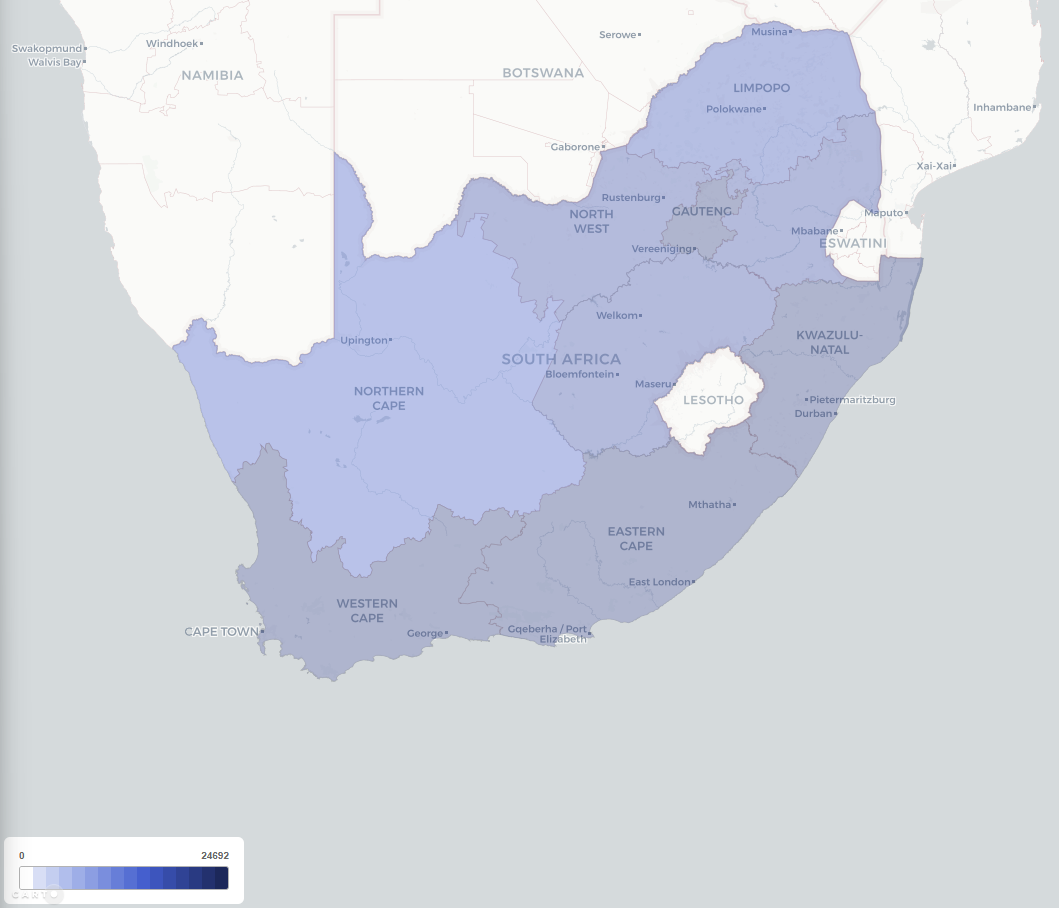
However, experts warn that soldiers “are trained for combat and not designed to engage in policing,” raising concerns about escalation and excessive force. Prior incidents during COVID-19 enforcement reinforce these fears and illustrate how quickly legitimacy can erode when military forces operate in civilian contexts. While military deployment can stabilize conditions in the short term, lasting success requires governance reform and addressing the root causes of crime, or else violence will return once troops withdraw.
The internal security issues that South African policymakers are currently grappling with share a strong parallel with Dr. John Sullivan’s writings on criminal insurgency and cartel governance. A Senior El Centro Fellow, Dr. Sullivan’s recurring argument is that modern criminal organizations function as hybrid political-military actors embedded in communities. He emphasizes that degrading these groups require intelligence-driven targeting of leadership and networks, not broad force application. This aligns closely with the Africa Defense Forum article’s focus on “kingpins” and intelligence-led operations as the decisive factor in success. Both perspectives treat organized crime as a system rather than a collection of individuals, which demands precision and institutional coordination.
This argument also converges with the SWJ El Centro article “Using Special Operations Forces to Counter Mexican Cartels: An Irregular Analysis.” Author Brandon Schingh writes that military involvement can degrade high-value targets and disrupt networks but warns that without clear objectives, legitimacy, and integration with civilian institutions, such deployments risk escalation and long-term instability. Together, Sullivan’s writings and Schingh’s article reinforce the same core insight seen in the South Africa case, which is that military force can create temporary control and disruption, but enduring success depends on intelligence dominance, surgical targeting of key leadership, institutional reform, and the ability to transition back to effective civilian policing.

