The Limits of Pakistan’s New Counterterrorism Doctrine Against the TTP


Abstract
Following the Afghan Taliban’s 2021 takeover and the consequent revival of the Pakistani Taliban, Pakistan’s counterterrorism doctrine has undergone a notable shift. Previously, large-scale military operations defined Pakistan’s kinetic response, but the post-resurgence doctrine has increasingly relied on cross-border airstrikes and small-scale intelligence-based operations; while the former have drawn significant attention, the latter have flown under the radar. This essay critically analyzes the logic underpinning IBOs, examines recent examples, and argues that despite their tactical utility, they are unsustainable, particularly given the intergovernmental feuds, thus exposing the limits of Pakistan’s current counterterrorism approach. .
Introduction
That cross-border air strikes have become an integral part of Pakistan’s counter-insurgency playbook is clear from the number of such attacks that have taken place in recent years. The most recent was in late February 2026, in which multiple Afghan cities, including Kabul and Kandahar, were attacked, resulting in intense border skirmishes between the Taliban and Pakistani forces that continued into the month of March. As both sides battled each other, the Pakistani Defense Minister Khawaja Asif declared an “open war” on Afghanistan.
Yet the Pakistan Army’s approach to countering the group within its own territory has garnered comparatively less attention. This is equally important, if not as sensational, due to the lack of an overt regional aspect. Alongside air strikes designed to penalize the Afghan Taliban for their continued support of the Pakistani Taliban, Pakistan has concurrently pursued security operations at home to contain the group’s activities. This piece clinically examines these small-scale operations and argues that they have laid bare Pakistan’s interprovincial tensions – which will encumber concrete action against the TTP – and that they are, by themselves, insufficient to counter militancy.
The Pivot from Large to Small
Even prior to the emergence of the Tehreek-e-Taliban Pakistan (TTP) in 2007, the Pakistani Army had undertaken military operations to root out both Taliban-inspired local and foreign militants in the tribal areas adjoining Afghanistan. While all of them were kinetic in nature, Operation Zarb-e-Azb, launched in 2014, was the first large-scale military operation against the TTP. It was followed by a cross-country operation named Radd-ul-Fassad, which was launched in 2017 to consolidate on the gains of previous military operations. These were successful in degrading the TTP’s operations to a large extent by eliminating their key leaders and denying them territory from where attacks could be launched. But, as before, the Pakistani government failed to usher in the structural reforms necessary to encourage the society at large to disavow extremism and militancy. Inaction provided the opening for the TTP’s revival, with the Afghan Taliban’s 2021 takeover acting as the stimulus. Except for this time, the group found sanctuary in Afghanistan, a factor that has facilitated more organized and lethal attacks.
The TTP’s cross-border sanctuary – which houses over 6,000 fighters according to UN reports – renders large-scale kinetic operations tactically complex. Militants can simply retreat across the Durand Line to evade an imminent military operation. Additionally, deep-rooted local resistance to major military offensives has led the Pakistani establishment to pivot to small-scale, localized Intelligence Based Operations (IBOs). IBOs are either in response to specific attacks or based on intelligence about militant presence in specific regions. Still, in June 2024, the Pakistani government launched Operation Azm-e-Istehkam (Resolve for Stability) “to combat the menaces of extremism and terrorism in a comprehensive manner”.
Though it was highlighted that the operation had the consensus of all stakeholders, then-chief minister of Khyber Pakhtunkhwa (KP), Ali Amin Gandapur, lamented that he was not consulted. While leaders from other political parties also expressed reservations about the operation’s effectiveness, the resistance coming from KP is particularly noteworthy. This is because KP, bordering Afghanistan, remains the frontline province, where the TTP was founded and where it remains most active today. The predominant concern among politicians and civilians alike was that the operation would lead to collateral damage and large-scale civilian displacement like previous military operations. This torrent of criticism led the government to clarify that it was being misunderstood as a kinetic operation, when, in actuality, it entailed a reinvigoration of the ongoing Revised National Action Plan (R-NAP) and an intensification of IBOs.
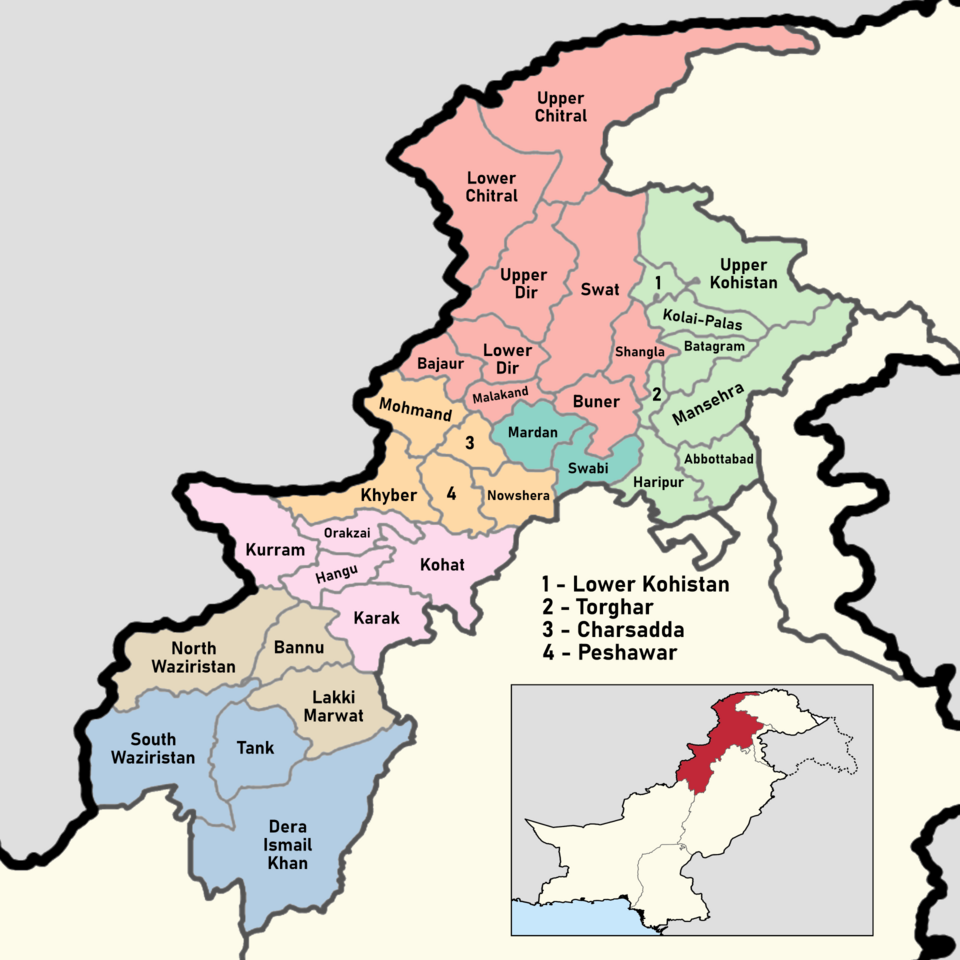
Despite attempts to downplay the kinetic aspect of the operation, the government struggled to secure consensus from across the political spectrum and from the population of Khyber Pakhtunkhwa. This was glaringly exposed by a series of protest rallies and jirgas held across the KP following its launch. Although there is hardly any public assessment of Azm-e-Istehkam in particular, some of its enumerated components, such as continuation of IBOs, appear to be ongoing. In areas where militants remain concentrated, the government has reportedly launched small-scale operations under different codenames, making it unclear whether these are stand-alone initiatives or subsets under the broader ‘Azm-e-Istehkam’ framework. At least two such operations can be identified in the province of KP: one in Bajaur, and the second, whose nature remains contested, in Tirah Valley.
The Battle for Bajaur
Bajaur is notoriously famous for having been a stomping ground for foreign militants, so much so that it was once regarded as the nerve center of the Taliban and al-Qaeda network. At one time, many believed that a successful operation in Bajaur could eliminate 65 percent of the militancy, creating a “surrender-or-die situation for the militants and a now-or-never moment for the country’s security forces”. This had compelled the Pakistan government to launch a military operation in Bajaur as early as 2008. Labelled Operation Sherdil, this campaign had resulted in the death of more than a thousand militants, most prominently Abu Saeed al-Masri, an Egyptian-born, senior al-Qaeda commander. Before going ahead with the operation, the Pakistani military had endeavored to evacuate civilians, but huge swathes of Bajaur were still reduced to ruins due to the nature of the operation, involving excavation of underground tunnels and bunkers, where militants had sought shelter. The heavy-handed approach espoused by the army had precipitated an exodus of locals to other parts of Pakistan and Afghanistan.
Over a decade and a half later, in late July 2025, the Pakistani government launched Operation Sarbakaf in Bajaur, particularly in the Lowi Mamund tehsil. It was quickly met with resistance from locals, who protested the imposition of curfews and feared a repetition of the tribulations experienced during past military operations. This resulted in the postponement of the offensive, with authorities giving peace talks a chance. The talks were led by a jirga, composed of local elders and political representatives. The objective was to mediate between the TTP and the state, so as to avert a military operation and the civilian displacement that would soon follow. Local tribes had little choice but to mediate. They were presented with two not-so-attractive options: expel the militants or evacuate. However, despite their efforts, the talks collapsed due to a key sticking point: the relocation of militants to Afghanistan. With militants unwilling to leave, security forces then recommenced the operation.
Much like the operations in Bajaur in the late 2000s, Operation Sarbakaf reportedly displaced 55,000 people, with nearly 400,000 residents subject to the curfew imposed. Residents of both Lowi Mamund and War Mamund tehsils who were directed to move into relief camps were offered a compensation package of PKR 75,000, but allegations have since surfaced that the full amount has not yet been disbursed. Even though the Bajaur operation was not a full-scale offensive, Gandapur, the KP chief minister at the time, remarked that the operation was “not my government’s policy”, which evinced yet again the disjuncture between the central and provincial governments’ counterterrorism policies.
Most telling was the chronology of these events. The central government, which has now ruled out any negotiations with the TTP at a formal level, engages the TTP indirectly through jirgas, knowing they will eventually come to naught. This is a calculated strategy: when talks collapse, the powers that be can point to their failure to justify and secure public support for kinetic action. The Malakand Accord of February 2009 illustrates this pattern. It was signed between Tehreek-e-Nifaz-e-Shariat-Mohammadi (TNSM) and the Pakistani state. The accord and the resultant Nizam-e-Adl Regulation (NAR) meant the state capitulated to demands for sharia rule in Swat. But when the Swati Taliban’s attacks continued unabated, public sentiment shifted in favor of military operations over negotiations. This culminated with the launch of Operation Rah-e-Rast in May 2009 – one of the most consequential operations in Pakistan’s battle against the TTP.
Tirah Valley
In January 2026, rumors swirled of an imminent military operation in Tirah valley, a picturesque, rugged terrain known to be abutting the Tora Bora mountains in Afghanistan. Nearly half of Tirah’s population, 70,000 out of 150,000, was said to have been displaced in the dead of winter to make way for the campaign. The objective was to replicate the Bajaur operation. Tirah residents were offered a similar set of options. As per Pakistan’s leading English daily Dawn, a military intervention in Tirah had been fleshed out in the summer of 2025, with the then-chief minister having given the green light. Such a rare display of unity had come on the heels of a worrisome development. The valley was increasingly becoming a staging ground for a motley of militant groups, including the TTP and its faction Jamaat-ul-Ahrar, Hafiz Gul Bahadur group, Lashkar-e-Islam, and the Islamic State Khorasan Province (ISKP).
As media coverage of mass displacement began capturing headlines, the Information Ministry issued a statement that neither the federal government nor the armed forces had ordered the “depopulation” of Tirah. The Pakistani Defence Minister Khawaja Asif’s remarks are equally noteworthy. He stated that it was a case of “routine” migration on account of harsh winter conditions and that “the army has abandoned operations in favor of IBOs for a long time”. The implicit message was that full-scale operations were being avoided to stave off collateral damage and civilian casualties. Accepting at face value the central government’s denial of any planned military intervention in Tirah, the question then arises: Why were residents of Bajaur displaced if the operation there was a small-scale, targeted campaign?
More importantly, why did the incumbent chief minister of KP, Sohail Afridi, oppose the purported operation in a manner akin to his predecessor? While Afridi decried the hardships befalling the people of Tirah due to decisions made “behind closed doors”, federal ministers recriminated that since Tirah remained within the provincial government’s bailiwick, the latter should be held accountable for the valley’s governance.
Ultimately, although an operation in Tirah was never launched, if reports of a planned military operation are true, with public opinion pointing in the same direction, this episode once again highlighted that no meaningful progress can be made on Pakistan’s security issues due to central-provincial feuds. Perhaps having failed to contain intergovernmental fractures, the central government has turned its attention towards externalizing its militancy problem, which has manifested in the form of cross-border air strikes and other coercive measures against the Afghan Taliban regime. This is not to say there is no extraneous factor linked to the TTP’s resurgence, or that no action should be taken to that effect. Yet for Pakistan, it appears that taking external measures has become far more doable and actionable than putting its own house in order.
Prognosis
Security analysts have already observed the ramifications of continued friction between federal and provincial authorities, forewarning that this divide could be exploited by militants. However, the plight of locals who reside in militancy-prone regions and are caught between intergovernmental feuds and escalating militancy is not sufficiently acknowledged. If counterterrorism policies are worked out in silos, sans cooperation, feelings of alienation and anxiety are heightened among the citizenry. Citizens may then feel unable to rely on the government to protect them from militants. In turn, militant narratives of the government’s inability to provide good governance may find greater resonance among civil society. This may boost recruitment efforts and encourage parallel systems of governance based on austere interpretations of Islamic law.
Beyond security implications, this phenomenon lays bare a deeper malaise at the political level. The ruling party in Khyber Pakhtunkhwa remains the Pakistan Tehreek-e-Insaaf (PTI), founded by former prime minister Imran Khan, who is currently incarcerated under a slew of charges that his supporters characterize as politically motivated. The establishment’s unwillingness to reconcile with Khan, and by extension, the PTI, provides more ground for his party members to engage in agitational politics. This prevents them from seeing eye-to-eye with the federal government and thus causes them to oppose the former’s policies. Such political polarization will obfuscate even small-scale security operations. A large-scale offensive on the magnitude of Zarb-e-Azb will be even harder to justify; it was sustained due to rare national consensus across the board following the 2014 massacre at Army Public School, Peshawar.
In any case, Pakistan does not have the economic wherewithal to sustain a widespread military operation, nor does it maintain the kind of security relationship with the United States today, as it once did, that enabled aid, assistance in intelligence sharing, and drone strikes that decapitated the leadership of the TTP. With these limitations, cross-border airstrikes along with small-scale IBOs have come to constitute an emerging counterterrorism doctrine. But each has a flip side.
Airstrikes, while avoiding displacement within Pakistan, have caused internal displacement and civilian casualties inside Afghanistan, exacerbating the humanitarian crisis Afghanistan is already reeling from. Pakistani officials have obstinately maintained that their strikes only target militant hideouts and cause no harm to civilians, but the Taliban have consistently reported civilian fatalities and injuries; the UN Assistance Mission in Afghanistan has confirmed these claims. This has stoked anti-Pakistani sentiment among Afghans, which the TTP may capitalize on to broaden its recruitment base.
Moreover, if the Pakistani government resorts to escalatory airstrikes in the future that result in civilian deaths, it may face international scrutiny for violating Afghanistan’s sovereignty, and as a corollary, international law. This is especially given that UN experts have said, “Pakistan has not published credible evidence that TTP attacks within its territory were directed or controlled by the de facto Afghan authorities”.
IBOs, on the other hand, do not engender displacement on the same scale as large-scale offensives. However, they generated temporary and localized displacement of Pakistani civilians. Taken together, both these mechanisms risk creating conditions that not only mimic old counterterror policies but also sustain the very militant ecosystem Pakistan is striving to dismantle.
Going forward, any tactical wins achieved through so-called small-scale military interventions, undertaken with or without the support of the KP provincial government, will not endure unless internal drivers of extremism are addressed, and trust between state and society is restored. The same can be said for cross-border strikes that only temporarily affect, if at all, the Pakistani Taliban’s organizational and operational resilience, not the ideology that underpins the group.