





From Science Fiction to Force Structure: Directed Energy Is Here
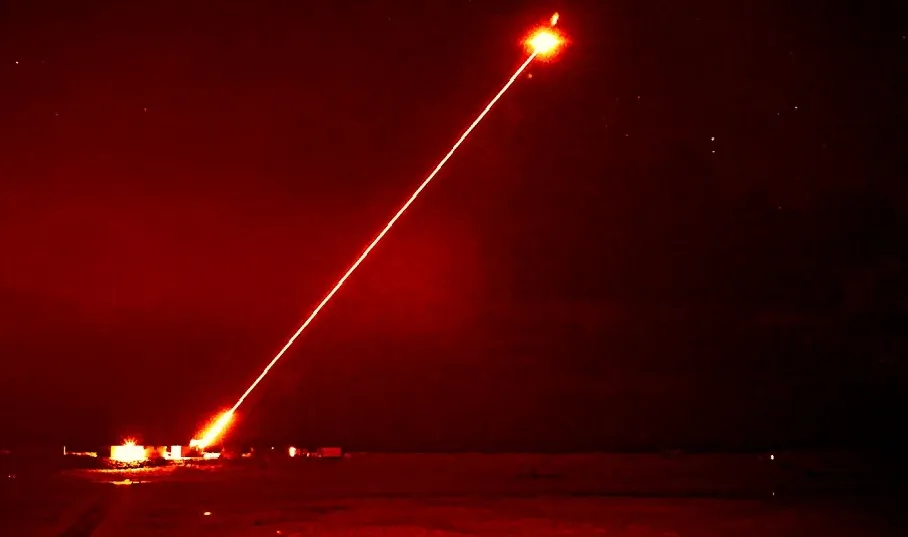

Directed-energy weapons have crossed from speculative concept into operational relevance, driven by the economics of modern conflict. As Malcolm Davis of the Australian Strategic Policy Institute makes clear in “War at the speed of light: the emerging role of directed-energy weapons,” high-energy lasers and high-power microwave systems compress the cost curve of air defense while accelerating engagement timelines to near-instantaneous effects.
The driver is the drone swarm
Systems such as Iran’s Shahed series impose asymmetric costs on defenders reliant on interceptors. Directed energy inverts this dynamic. With low cost per shot and effectively inexhaustible magazines, it offers a sustainable counter to mass.
Constraints remain decisive
Atmospheric interference, thermal blooming, and power generation requirements limit reliability and scalability. These are line-of-sight systems with short engagement envelopes, which confines their role to point defense. They complement rather than displace legacy architectures such as the Patriot missile system and THAAD.
The strategic horizon extends into space
Concepts tied to the Golden Dome missile defense system suggest a domain where atmospheric constraints vanish and solar energy enables persistent operations. Concurrently, China’s investment in high-power microwave systems signals a counterspace dimension, with implications for constellations such as Starlink.
What does this mean for Australia?
Davis argues that directed energy should anchor a layered defense construct focused on fixed infrastructure and naval platforms. A coherent strategy, aligned with AUKUS Pillar Two, can position the ADF to exploit sovereign innovation while integrating with allied architectures. The technology will shape defense at the tactical edge, he writes, even as its limitations preserve the relevance of traditional fires.

