Magazine depth: Rapid depletion of missile stockpiles in Iran raises concerns about US readiness
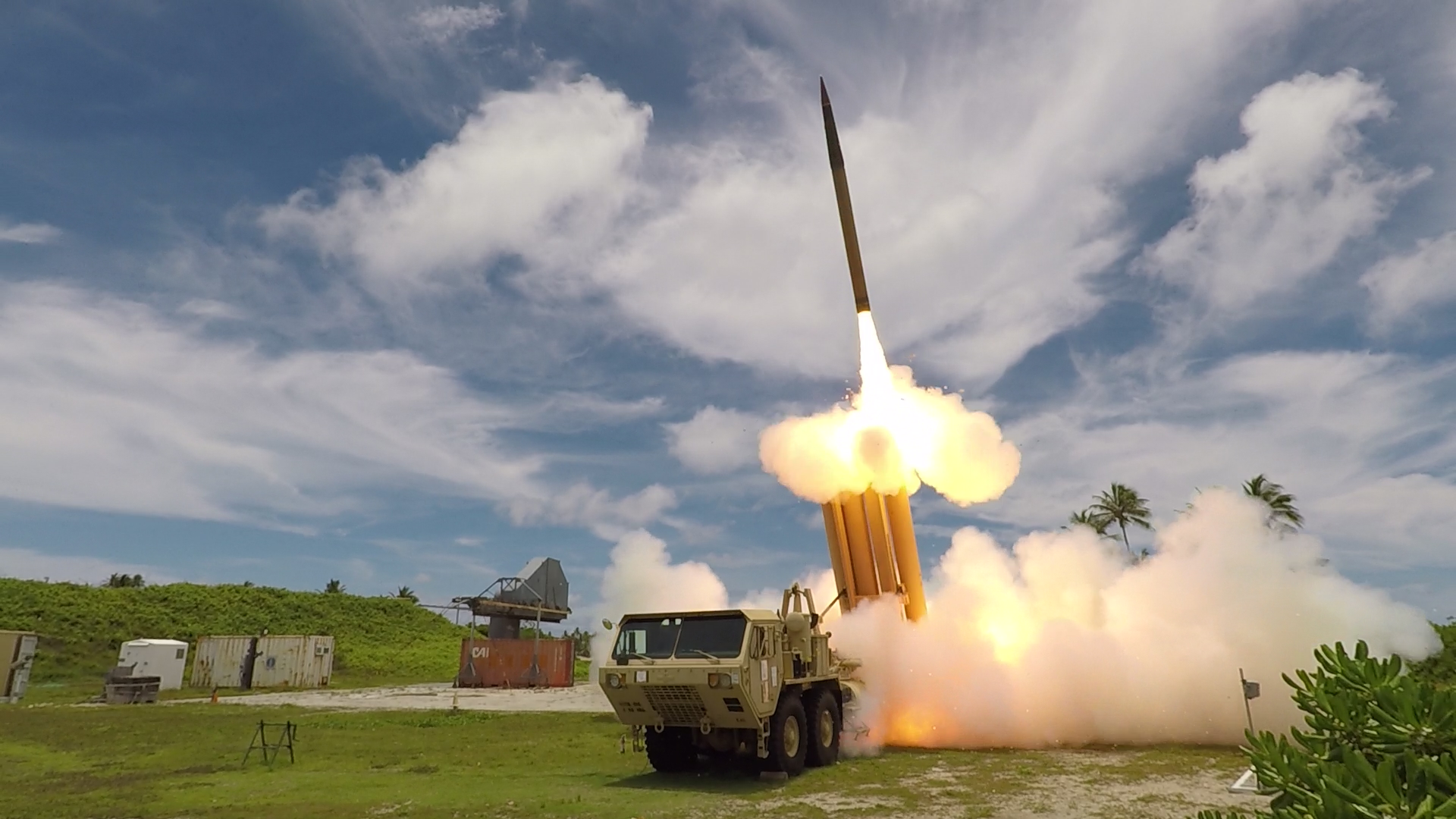

WASHINGTON – The Iran war has burned a sizable hole in the U.S. armaments stockpile.
In the first 16 days, the U.S. used over 6,000 defensive and offensive munitions, according to estimates from the Payne Institute for Public Policy.
That includes nearly 46% of ATACMS and Precision Strike Missiles and nearly 40% of U.S.-operated THAAD interceptors. The Payne Institute also estimates the U.S. would deplete its stockpiles of those three munitions within a month at that rate.
President Donald Trump offered assurance two days into the conflict that the U.S. has “a virtually unlimited supply” of most munitions needed, but acknowledged that supplies of “high end” munitions – such as PrSMs – “are not where we want to be.”
It will take years to restore inventories to pre-war levels at current production rates, which could leave the U.S. and partners that rely on it, like Taiwan, more vulnerable.
“The major risk is not that we’re going to run out for this war, but that the inventories are inadequate for a possible conflict with China,” said Mark Cancian, a retired Marine colonel who is now a senior advisor of the Defense and Security Department at the Center for Strategic and International Studies.
THAAD
Terminal High Altitude Area Defense missile interceptors can defend against threats up to an altitude of 200 km.
At the unit price in the most recent contract, that’s $3 billion worth.
Lockheed Martin can produce roughly 96 THAAD interceptors per year, though it plans to increase capacity to 400 under a framework agreement with DOD announced Jan. 29.
“THAAD is probably the worst” in terms of depletion, Cancian said. “We didn’t have a large inventory to begin with, and between what we shot last year and what we’ve shot so far this year, we may have shot half the inventory.”
A CSIS analysis by Wes Rumbaugh, a fellow at the center’s Missile Defense Project, suggests that no THAADs have been delivered to the U.S. inventory since July 2023, due to budgetary and production constraints. The next shipment is expected around April 2027.
“A South China Sea crisis is exactly the kind of scenario where long-range strike and high-end air/missile defense become decisive quickly,” Lt. Col. Jahara “Franky” Matisek, a senior fellow at the Payne Institute and an Air Force senior pilot at U.S. Northern Command, said by email. He emphasized that his views are separate from the U.S. government’s. “It’s not looking good.”
Each THAAD interceptor costs $15.5 million, up from $9.5 million in 2021.
Patriots
By comparison, each Patriot PAC-3 interceptor costs roughly $3.9 million. Lockheed Martin produces about 600 a year, although its new framework plans to increase capacity to 2,000 in seven years.
U.S. forces fired 402 Patriots in Operation Epic Fury’s first 16 days, according to estimates from the Payne Institute.
Under existing contracts, it would take more than two years to receive that many Patriots, according to projections in Army budget documents.
The Pentagon has asked Congress for permission to shift roughly $1.5 billion from other programs to speed purchase of Patriots, along with similar budgetary moves for other systems, according to a March 13 memo obtained by Bloomberg.
“Our defense industrial base has struggled to keep pace,” Senate Armed Services Committee chair Sen. Roger Wicker, R-Miss., said at a hearing March 24. He noted that the U.S. is using $4 million Patriot interceptors to shoot down Iranian drones that cost a fraction of that.
Matisek said interceptor depletions can increase the likelihood of missiles and drones getting past defenses.
“When those tighten, the failure mode isn’t sudden collapse – it’s just the beginning of declining efficiency,” he said.
Tomahawks
Apart from defensive weapons, the U.S. fired 535 Tomahawk missiles during the first 16 days in Iran, according to estimates from the Payne Institute – nearly 17% of the estimated supply.
At current unit costs – nearly $3.5 million, according to CSIS estimates – that barrage amounted to $1.9 billion worth of missiles.
A Tomahawk was reportedly used in the Feb. 28 strike in southern Iran that hit an elementary school, killing about 110 children and scores of other civilians.
A subsonic missile carried by both submarines and surface ships, Tomahawks have a range anywhere between 1,250 to 2,500 km – or up to around 1,500 miles. Raytheon makes them in Tucson.
The missile has evolved over decades into specialized models for both land and sea strikes. Recent models are able to switch targets midflight and strike moving targets at sea.
For Tomahawks, the time from purchase to delivery can take two to four years, according to Navy budget documents. The company entered an agreement with the DOD in February to increase Tomahawk production to more than 1,000 a year, although current production sits at around 90, according to the National Interest.
The Payne Institute report estimated it will take at least five years to replenish the Tomahawks fired in the first 16 days.
PrSM and ATACMS
Other offensive missiles have been used to target the Iranian navy.
The U.S. fired 320 Precision Strike Missiles and its predecessor, the Army Tactical Missile System (ATACMS), during the first 16 days, according to Payne estimates – nearly half the combined inventory.
ATACMS have been used to sink a docked submarine and multiple other Iranian vessels, despite its primary use as a surface-to-surface missile.
“It’s been used a lot,” Cancian said. “It’s been around for a lot.”
Ukraine has used U.S.-supplied ATACMS to break through Russian air defenses.
The Army is phasing out ATACMS in favor of the PrSM, which made its debut in Iran. The older system has a range up to 186 miles and fires only one round. PrSM has a range up to more than 310 miles and can fire two rounds per launch pod.
The Pentagon is no longer purchasing new ATACMS. On March 25, Lockheed Martin announced a framework agreement with the DOD to “quadruple” PrSM production capacity. Army budget documents indicate the company can produce up to 390 of the missiles this year.
Existing contracts show a two- to three-year lag between contract award and delivery. Contracts dating to 2023 call for 335 PrSMs by 2029 – 54 in 2026, 208 in 2028 and 73 in 2029.
‘Quadruple production’
To address looming shortages, the U.S. government has entered several agreements with defense companies to accelerate production.
After the start of Operation Epic Fury, Trump said he had asked defense companies in recent weeks to “quadruple production” of weaponry he referred to as “exquisite class” – which could include Patriots, THAADS and Tomahawks.
“The ramp-up will help rebuild inventories and then expand them, not only for us but also for our allies,” Cancian said. “That said, it will be three or four years before the additional production arrives, given the long wait times for these particular systems.”
Matisek cited constraints that include testing capacity, long qualification cycles and scarcity of critical minerals such as gallium and germanium that China largely controls.
“Quadrupling is a political phrase; production is an industrial process,” Matisek said. “For some volume items, you can surge meaningfully with money and contracting stability. … That means ramping is possible, but it’s not immediate and it’s not purely a funding problem.”