Holding the Line: Denial Defense Along the First Island Chain | CSIS Podcast
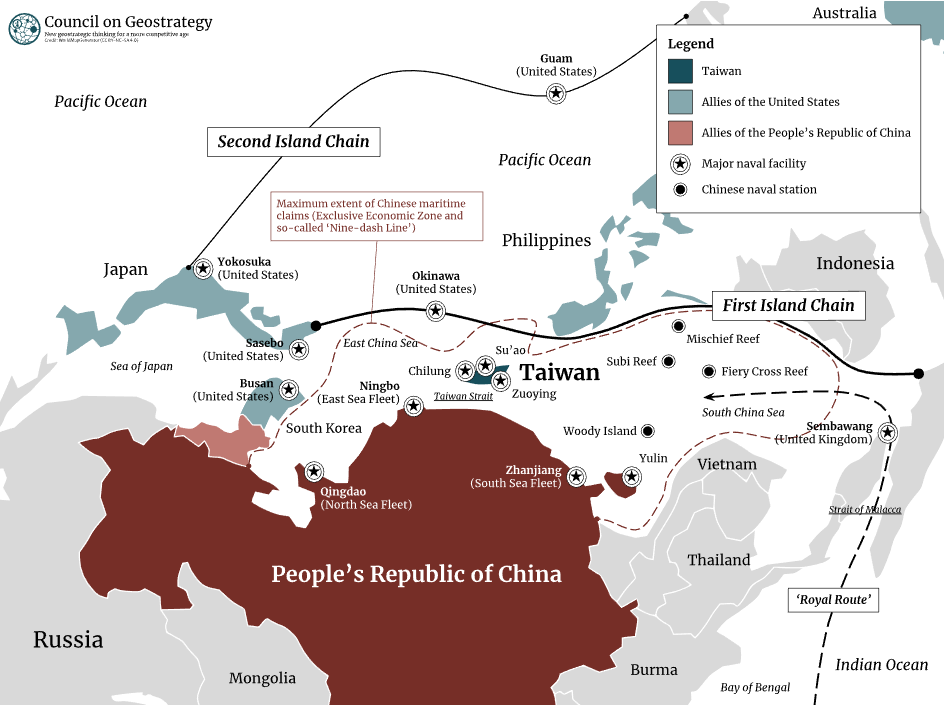

This podcast episode from CSIS examines how U.S. strategy since World War II has focused on maintaining a favorable balance of power in Asia by preventing any regional hegemon from dominating key terrain. Dr. Yoshihara describes the first island chain as a network of allies, bases, and economic centers that anchors deterrence against China.
A denial defense is basically a concept that’s designed to prevent the adversary from achieving its operational objectives. One of the key illustrative cases is to prevent a Chinese fait accompli over Taiwan. A fait accompli basically means that China’s goals would be to seize Taiwan as quickly as possible with an amphibious assault, ideally before the United States has the time to mobilize fully and to respond. Chinese forces would then dig in and make the conquest of Taiwan as irreversible as possible and thereby present the world with a done deal. And so a denial defense really is designed to prevent the Chinese seizure of the island in the first place, to prevent the fait accompli. (19:47–20:33)
China’s growing military capabilities, including its reconnaissance-strike complex and expanding naval operations, challenge U.S. advantages and threaten this defensive line. The episode outlines a denial defense strategy aimed at preventing a rapid Chinese seizure of Taiwan by targeting invasion forces and strengthening U.S. resilience. The speakers emphasize the need for stronger alliances, dispersed basing, and increased military capacity to counter China’s advances. They also highlight rising cooperation among regional partners as a key factor shaping future deterrence.
Mike joins Toshi Yoshihara, Senior Fellow at the Center for Strategic and Budgetary Assessments in Washington, D.C., to explore the significance of the First Island Chain in U.S. strategic thinking on Asia. They trace its historical role in achieving a favourable regional balance of power, unpack its enduring relevance under the Trump administration, and assess how China is contesting its limits, before turning to what the United States and its maritime Indo-Pacific allies must do to reinforce credible deterrence across an increasingly contested region.