





Fact-Checking the Commander-in-Chief on NATO in Afghanistan: The Choice Between History and Opportunity

A Strategic Arson
During a January 22 interview, President Donald Trump said of NATO:
“I’ve always said, ‘Will they be there, if we ever needed them?’ And that’s really the ultimate test. And I’m not sure of that. I know that we would have been there, or we would be there, but will they be there? We’ve never needed them. We have never really asked anything of them. You know, they’ll say they sent some troops to Afghanistan, or this or that. And they did – they stayed a little back, a little off the front lines.”
Trump’s statement is factually wrong, but his bombast reintroduces an uncomfortable truth: NATO contributed directly to the Afghan War’s failure. This is as good an occasion as any to unpack this controversy.
“We Have Never Really Asked Anything of Them”
Much is made of the fact that America remains the only party ever to formally invoke Article 5, NATO’s mutual defense clause. However, American forces have traditionally responded to European members’ calls without such invocations. For example, from 1969 to 1993, America responded to anxiety about Vietnam by implementing Exercise REFORGER (“REturn of FORces to GERmany”), later succeeded by Exercise Steadfast Defender.
Additionally, absent any direct threat to the United States or the European members, American troops spearheaded two Balkan wars, with continuing Balkan deployments. Later, NATO deterred Somali piracy, and in 2011, President Barack Obama infamously “led from behind” when key alliance members initiated the Libyan intervention – an ironic repeat of strategic mistakes for which NATO members had criticized America’s Iraq intervention.
So yes, “We have never really asked anything of them” is factually incorrect, but historically irrelevant.
“They Sent Some Troops to Afghanistan”
America’s British allies took umbrage at Trump’s insinuation that they had “stayed a little back.” Trump subsequently praised British troops, but the damage was already done. British troops fought courageously; Trump should have contrasted their bravery with that of most of NATO in his initial remarks. However, British leaders have also admitted that British bravery – particularly their 2007 Helmand deployment – ultimately failed to achieve its mission. In late 2008, Michael Yon noted:
“The Brits field excellent soldiers but are short of enabling equipment, such as helicopters, armor, and UAVs, which could greatly enhance their combat effectiveness.”
Following the 2007 death of Trooper Jack Sadler, an inquest cited reconnaissance patrols utilizing unarmored vehicles and a helicopter shortage as contributing factors. These resourcing shortfalls contributed to Britain’s death toll, and that of other under-resourced coalition members.
Helmand ultimately defined Britain’s Afghan experience. While Britain sent 16 Air Assault Brigade to Helmand, 3rd Battalion, the Parachute Regiment constituted its sole infantry contingent. The Brits initially believed that their mission was to safeguard development operations, but Helmand’s governor demanded that they confront heavy Taliban resistance. In 2012, former International Security Assistance Force (ISAF) Deputy Commander Jonathon Riley opined:
“Personal view, I think it was a bad decision to do what [the brigade commander] did. I recognize why he did it, coming as he did from a special forces background; but we knew… what happens when you put small groups of forces in isolated positions: you spend all of your time trying to sustain them, and then rescue them, to the exclusion of all else. They just become a magnet for trouble. This was really a decision which was above the brigade commander’s pay grade, and the correct course of action would have been to say, ‘Well, it’s a policy objective that we support Daoud [the Afghan provincial governor], Daoud interprets that to mean that we move into the north. You have resourced me to hold the center. If you wish me to support the governor and follow your policy, it requires more resources. What more resources are you going to supply?”
British troops encountered vigorous resistance, especially in Musa Qala, the administrative seat of Helmand’s most restive district. Commanders eventually made a face-saving deal in which they withdrew in unarmored vehicles, while local leaders promised to exclude the Taliban; the Taliban returned several months later.
United States Marines eventually relieved British forces. British combat deployments concluded in 2014; British forces contributed to NATO’s mission until, in a fitting reprise, 2nd Battalion The Parachute Regiment provided security support to Britain’s evacuation effort.
“A Little Off the Front Lines”
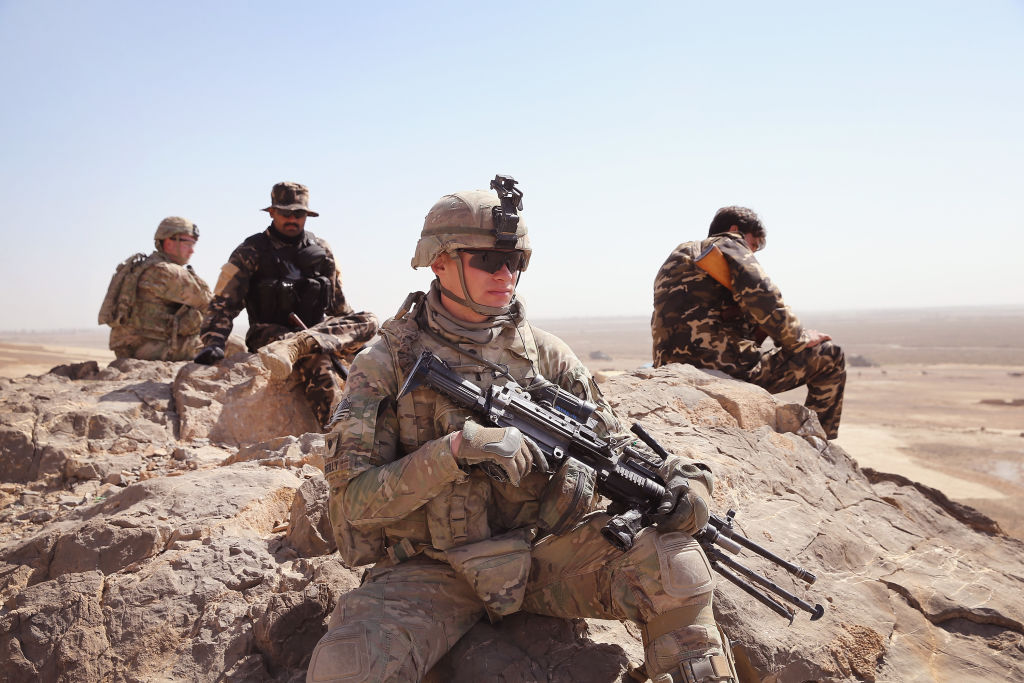
Other NATO members sacrificed troops – for example, Canada (159), France (90), Poland (44), Denmark (43), and the Netherlands (25). In 2009, Michael Yon expanded upon his prior observations:
“Most of our allies are not very helpful. With the exception of the British, Canadians, Dutch, and a few others, such as the Aussies, we are not fighting this with an ‘A-team’ of international allies. With a few exceptions, our allies on the ground are comprised of several dozen countries that mostly refuse to fight… They piled in when the war looked easy and largely humanitarian. But now that it’s getting harder and more dangerous, they would like to pile out. Success or failure in Afghanistan depends on the handful of countries that step up – and a multi-pronged, combat/political/nation-building strategy… To ensure that we have influence on the outcome, we need more soldiers in Afghanistan, and fast. They need to be U.S. forces, British, Canadian, Aussie; we cannot depend on NATO in general, and they don’t know how to fight anyway.”
Without downplaying a single soldier’s value, the coalition death toll – including NATO, but also other countries such as Australia, Jordan, New Zealand, and South Korea – was less than half that of the 2461 American fatalities. And the claim that “they stayed a little back, a little off the front lines”? Most member states imposed “national caveats,” such as provisions against operating at night, that effectively precluded them from engaging in combat.
For example, Germany circulated more than 150,000 troops through Afghanistan, making it the second largest personnel contributor – a calculated political risk, and a significant shift in German foreign policy. On paper, Germany lost 62 personnel. However, excluding incidental hostile actions like IED attacks, only seven Germans perished in combat; in all such cases, combat found the Germans, not vice versa. Germany lost as many troops to a single accidental helicopter crash as they did to combat, and nearly as many to suicides, some of them post-deployment.
German troops occasionally garnered undesired attention – for example, by consuming significant amounts of alcohol that were explicitly verboten for Americans, or gaining statistically significant weight from inactivity. German commandos even deployed for years without carrying out any missions. Bundeswehr deployments proved disproportionate to their modest contribution, ultimately accomplishing rather little. As Philipp Münch noted:
“The fact that the nation’s contribution to ISAF occurred in a multinational context, however, did not help the strategy become more focused. First, like Germany, most non-US contributors to ISAF hoped to improve their global reputation rather than achieve anything specific.”
So, while President Trump omits critical context, his claims about disproportionate burdens ring true.
“Will They Be There, If We Ever Needed Them?”
A greater, lesser-discussed aspect of this discussion was NATO’s formulation of the intervention’s structure. General Riley described the situation:
“Well, in a way, it was a reversion to what had happened before the unification of the ISAF and the US missions, that you had CTC-Alpha, the American combined command in Afghanistan, that really ran what became East and South, and was running the hot war. And ISAF did the rest. And, you know, throughout the time I was there [in Afghanistan], this ‘two ISAFs’ was always a live issue. There were those who’d signed up at the Bonn Conference for a nation-building, basically non-military strategy in which the military was the supporting actor. And then there were those who’d signed up for the crunchy counterinsurgency fighting campaign. And the two sets of people had very different ideas about what they were about.”
Riley refers to the conference at which international representatives developed a political framework, chose interim Afghan leaders, and developed the alliance’s intervention framework. Riley continued:
“At [ISAF commander] Dan McNeill’s request, I did a fairly weighty [Provincial Reconstruction Team] study, which managed to upset just about everybody, and consequently got buried. But one of the conclusions that I came to was that if we ever did this again, we should never do that: we should never allow nations individually to focus on little bits of territory and develop their own campaigns-within-the-campaign.”
Thus, one could make the case that as early as 2002, NATO sowed the seeds of the Taliban’s triumphant return.
“We’ve Never Needed Them”
Bitter divisions over Iraq further complicated matters.
While NATO established disparate Afghan fiefdoms, America looked further afield. Saddam Hussein’s regime constituted an enduring strategic conundrum, and the ensuing Western military presence, particularly in Saudi Arabia, motivated al Qaeda attacks against Western interests. Simultaneously, the international risk calculus shifted in the wake of 9/11. When American officials decided to intervene in Iraq, NATO support was assumed.
Instead, NATO balked. About half of the member states – notably new and aspiring members from the former Warsaw Pact – supported the intervention. Conversely, founding members like France and Germany were conspicuously absent from the “Coalition of the Willing,” and their leaders were particularly vehement in their opposition. This rift was assuaged by a sort of consolation arrangement: The United States would shift its primary focus to Iraq, while NATO would lead the Afghan mission.
By late 2007, the Taliban had taken advantage of NATO’s ensuing low-pressure approach. General McNeill, ISAF’s first American commander, emphasized fighting in lieu of regional peace deals, under which the Taliban had regrouped. Democrats argued that the Bush Administration had foolishly shifted its attention from Afghanistan to Iraq; in 2008, this argument helped then-Senator Obama to shift the balance of power in Washington. Nonetheless, the campaign continued until 2021, finally ending in disgrace. Analysts cite ISAF’s failure and the disastrous evacuation as contributors to Russia’s decision to invade Ukraine, and Iran and Hamas’ decision to attack Israel.
“We Would Be There, but Will They Be There?”
Indeed, one could argue either that NATO failed the United States or that the important point is that NATO still showed up. Both arguments can be true simultaneously. Thus, the situation warrants grace from President Trump, but also sober self-reflection from NATO. NATO was an asset, but has also been a liability, both within and beyond Afghanistan.
Once again, Germany proves illustrative. During the Afghan War, what was Germany doing in regard to NATO? In 2006, members committed to spending two percent of GDP on defense and later formalized this principle. However, Germany continually leads the alliance in failing to meet this target. In July of 2018, IFRI fellow Barbara Kunz wrote that German politicians worried that if Germany met the NATO spending target – already agreed to by a progressive coalition government – this “could reawaken fears of a militarist and imperialist Germany.” By implication, allowing American taxpayers to defend Germany in its entirety is preferable. President Obama, still revered in Europe, called this “free riding.” As American historian Victor Davis Hanson noted in 2018:
“If you look at the recent Pew poll of all countries in Europe… between forty-eight and fifty-two percent of Germans have an unfavorable opinion [of America]… Another thing about Germany that didn’t quite make sense in this euphoric period was that, of all the NATO countries, it was almost last at spending about [1.3%] GDP; but more importantly, countries, when they looked at Germany not meeting their two percent GDP obligations, then they said, ‘Well, if Germany has the largest account surplus in the world, and it’s running a sixty-five billion dollar surplus in trade with the United States, and it’s engaging in lucrative gas and oil contracts with the former Soviet Union, and it’s not making its NATO obligations, then why should we do it?”
Notably, in 2018, Germany ran a record budget surplus, but a defense review determined that, among other problems, none of Germany’s submarines or cargo aircraft were operational.
In recent years, little has changed. While some European leaders claim Europe must distance itself from America, most continue to waffle by failing to establish minimal military readiness. Apoplexy resulted from Vice President J.D. Vance’s 2025 speech to the Munich Security Conference, which lamented the erosion of European democratic norms. Few European analysts acknowledge that American voters’ fatigue with underwriting security for openly hostile Europeans contributes to Trump’s popularity.
“That’s Really the Ultimate Test”
NATO’s alleged inaugural purpose was to “keep America in, Russia out, and Germany down.” Russia remains a strategic dilemma, though in a different form than in 1949. Today, rather than keeping Germany down, NATO needs to identify opportunities for every member state to add its unique individual value within the bounds of its national strategic sensibilities.
So, what could this look like?
First: the spending target is so reasonable that the entire alliance has committed to it. Repeatedly. The time to honor those commitments – not projected over the next few years, but by the close of 2026 – has come. This could start with an alliance-wide review to identify readiness gaps and objectives, and a fresh review to codify each nation’s individual strategic goals. This gesture alone would silence many of those commentators whose frustration informs President Trump’s commentary.
Second: NATO should hold a conference to evaluate the alliance’s shared objectives and posture. Prior efforts have clearly failed to define NATO’s enduring mission or establish effective frameworks for realizing shared objectives. The current controversy over Greenland serves as a prime example of persistent gaps in the alliance’s posture and should be part of a comprehensive discussion and subsequent framework.
Third and finally: the sentiment seems to be that in the event of another out-of-area campaign, NATO members should simply avoid any military commitment. This was, and remains, a mistake. Afghanistan offered a laboratory for discovering shortfalls in NATO’s capacity to operate together. At the direction of the current Secretary General, with the backing of every member state that participated in the conflict (including Finland and Sweden), a comprehensive review of where NATO failed in Afghanistan, and how to remedy those failures, should inform a new NATO Operating Concept for Strategic Interventions.
While NATO’s status quo is increasingly tenuous, recent polls indicate that NATO constituents still support their nations’ alliance membership. Current events aside, Europe shall remain the region that most closely aligns with American interests. As NATO’s Secretary General said in the wake of Trump’s comments: “If anyone thinks that Europe can defend itself without the US, keep on dreaming. You can’t. We can’t. We need each other.”
NATO’s members would find themselves at a disadvantage if the alliance were to split or dissolve. While the Trump White House represents the most Euroskeptic administration in decades, NATO still provides immense value for all its members. An alliance-wide reckoning – about Afghanistan, “free riding,” and other shortcomings – is long overdue.


