





Book Review | Those Who Face Death: The Untold Story of Special Forces and the Iraqi Kurdish Resistance
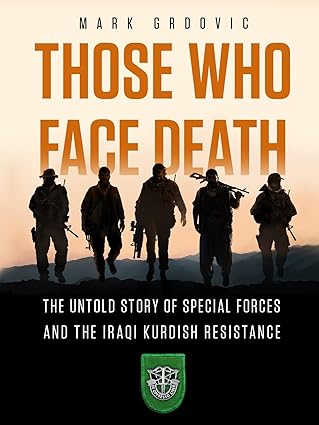

Those Who Face Death: The Untold Story of Special Forces and the Iraqi Kurdish Resistance. Mark Grdovic. Copper Mountain Books. 2025. ISBN 978-1963781076. Pp. 254. $29.99.
“There I was” war stories are typically tedious and boring affairs. I read a lot of them, and I hate myself for it. Yet I trudge on because if one reads enough, the great ones leap out, set your senses on fire, and shock you into seeing a familiar story with new eyes. Praise the heavens, Those Who Face Death: The Untold Story of Special Forces and the Iraqi Kurdish Resistance is one such book. If you know nothing about unconventional warfare, know a little, or are the authorized biographer of Yevgeny Prigozhin, then this book is for you.
Those Who Face Death is an insider’s tale of the United States’ (U.S.) 2003 unconventional warfare campaign in northern Iraq. This is a warts-and-all story from Mark Grdovic, told with wry humor and details that delight and shock. A former U.S. Army special forces lieutenant colonel, Grdovic was not just a participant and a witness, he was one of the campaign’s architects. Aside from his “there I was” credentials, Grdovic is deeply knowledgeable on this kind of irregular warfare. The benefit for readers is that Those Who Face Death tucks practical wisdoms inside of a rollicking war story.
The book chronicles the special forces and intelligence operatives that waged an unconventional warfare campaign against 13 Iraqi Divisions in northern Iraq from February to April 2003. The main fighting force of the campaign were the Iraqi Kurds, a resistance force chosen by U.S. policy as the partner most willing to fight against Saddam Hussein’s regime. However, “chosen” might be the wrong term; “settled upon” is more apt. This unconventional warfare option only became the main effort in the northern theater when the Turkish government disallowed a Desert Storm-like buildup of combat power on their soil (sorry, U.S. Army 4th Infantry Division). While this proved a wise policy choice, Grdovic makes clear that it was the only one. After successful maneuver campaigns smashed the Iraqi military in both the northern and southern theaters, Grdovic witnessed the flawed logic of the early occupation and the policy decisions that turned a decisive military victory into a grinding occupation.
The action centers on how distributed teams of Central Intelligence Agency and 10th Special Forces Group operatives paired with the Kurdish Peshmerga (“guerrillas”) and galloped from south of the Turkish border to central Iraq in an improvised maneuver campaign. Unconventional warfare can be surprising, even to its creators. Grdovic lets the reader participate in the managed chaos of making up a war as you go.
Grdovic describes the dangers and audacious acts of a small cadre of green berets operating with broad commander’s guidance and a boxer’s instincts for exploiting weakness. The U.S. and the Kurds fought fierce battles in the Halabja salient, a little-known pocket of land in northeast Iraq that juts into Iran. Grdovic features another set of quiet heroes: the U.S. Air Force. This starts with the 570-mile low level air infiltration code-named “Ugly Baby,” a touch and go mission that Grdovic calls the “the longest in U.S. history since World War II” (p. 81). The air power story shifts to the evisceration of entrenched Iraqi Army Divisions along the “Green Line” that separated Saddam’s Iraq from the Kurds. The combat operation vignettes, both air and ground, are breathtaking.
“Those Who Face Death” is a moniker for the Kurdish fighters, not the U.S. sponsors. Grdovic rightfully centers the resistance movement – competing factions of Kurds – as the central protagonists. Though this book narrates the American involvement in initiating and waging the campaign, the Kurdish politics and prerogatives will interest any reader seeking insights into the Middle East, the Levant, and Iran. Grdovic’s account shows the Kurdish military’s formidable fighting capability alongside its self-sabotaging internal politics.
The chapter on the fall of Kirkuk (the largest city in northern Iraq) is a case study on how wars take on their own logic and unforeseeable momentum. It was here that the Kurdish networks sensed a weakening Iraqi control of the city that meant it could be captured in hours, and not weeks or months as military plans suggested. Grdovic recounts the wild details of fighting alongside the Kurds, the culture clashes between special forces and late-arriving conventional forces, individual heroics, and petty rivalries. It’s not all amusing. Many Kurds and Iraqis were killed in the campaign while, remarkably, no U.S. lives were lost.
My only gripe is that Grdovic did not write this book sooner. As Russia, Iran, and China rewrite the playbooks on unconventional warfare, this book reminds us that the U.S. employ similar tools with strategic impacts. The excitement of the narrative gives way to the ominous sequel that everyone knows: a soul-sucking counterinsurgency campaign that cost the U.S. untold blood and treasure, elevated Iran’s position in the region, and destabilized the Middle East. If anyone desires to write a sequel called “Those Who Face Rotations,” please refer to the first sentence of this review.


