Munich 2026: The Turning that Didn’t Start this Year
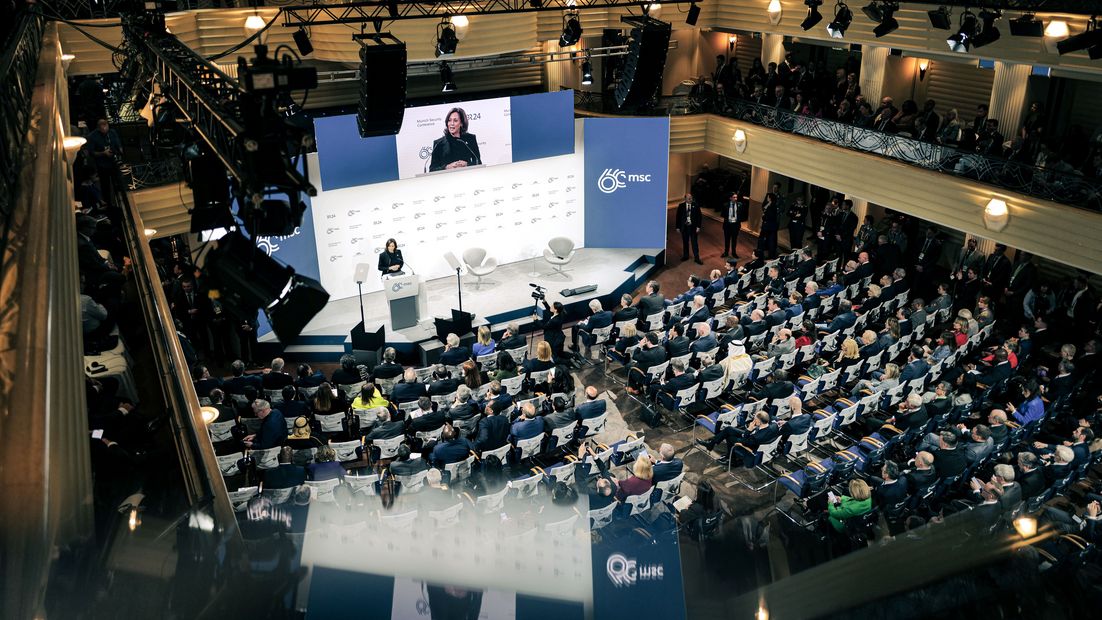

A Compound-Security Net Assessment of the Munich Security Conference—and Why “Trump 2.0” Was Accelerant, Not Origin Story
Opening: A Diagnostic Moment in International Politics
The Munich Security Conference has long functioned less as a diplomatic summit than as a diagnostic instrument—an annual moment in which the transatlantic community pauses to take stock of its assumptions about the international system and its own role within it. Unlike treaty negotiations or crisis summits, Munich rarely produces binding commitments or dramatic policy announcements. Its significance lies elsewhere. The conference serves as a strategic barometer, revealing how political leaders, defense officials, and policy elites interpret the changing balance of power and the evolving architecture of global security.
In that sense, Munich often functions as an early warning system for deeper transformations in the international order. Because the gathering brings together actors from across the transatlantic alliance system and beyond—Europe, North America, the Indo-Pacific, and the Middle East—it exposes underlying tensions that may not yet be visible in formal diplomatic exchanges. Strategic anxieties that remain implicit in official policy documents often surface in Munich’s panel discussions, private meetings, and informal conversations.
The February 2026 conference produced precisely such a moment of revelation. The atmosphere surrounding the gathering suggested not the sudden collapse of the Western order but something arguably more unsettling: the moment when its fragility became impossible to ignore. Participants across the conference increasingly spoke as if the international system had entered a period of structural transition, even if few appeared confident about how that transition would unfold.
The sense of unease did not stem from any single geopolitical shock. Rather, it reflected the accumulation of multiple pressures that had been building within the international system for years. The erosion of arms control regimes, the weaponization of economic interdependence, the reemergence of great-power competition, and the growing polarization within democratic societies had together begun to reshape the strategic landscape. By 2026, these pressures had reached a point where their interaction could no longer be treated as background noise in global politics.
Many observers initially interpreted the turbulence visible in Munich through the lens of the Trump administration’s return to power. The political shock of that development was real, and it undeniably shaped the tone of the conference. Yet attributing the tensions of Munich primarily to a single election cycle risks misdiagnosing the deeper transformation underway. The structural forces destabilizing the international system did not originate in 2024 or 2025. They have been accumulating for more than a decade.
Understanding Munich therefore requires more than conventional political commentary. It requires examining the strategic environment through a broader analytical lens capable of capturing how contemporary crises actually develop. Traditional security analysis tends to isolate threats into discrete domains—military conflict, economic rivalry, political instability, or technological competition. In practice, however, modern crises rarely remain confined within such boundaries.
Instead, pressures originating in one domain increasingly propagate across others. Military conflicts disrupt global markets. Economic shocks undermine domestic political legitimacy. Legitimacy crises weaken alliance cohesion. Alliance friction invites adversarial probing. What begins as a localized disturbance can quickly cascade through interconnected systems.
This dynamic lies at the heart of a compound-security perspective. From this standpoint, modern insecurity emerges less from isolated threats than from the interaction of multiple pressures operating simultaneously across military, economic, technological, informational, and civic domains. The strategic environment is therefore best understood not as a set of independent crises but as a complex system in which shocks amplify one another.
Seen through this lens, the significance of Munich 2026 becomes clearer. The conference did not mark the beginning of a new geopolitical era. Instead, it revealed the surface manifestation of systemic dynamics that had been building beneath the international order for years. Munich served as a mirror reflecting those dynamics back to the political leaders responsible for managing them.
The Diagnostic in Bavaria
The Munich Security Report for 2026 framed the moment in stark language. Titled “Under Destruction,” the report warned that the international order built after the Second World War was facing unprecedented strain. According to its authors, the U.S.-led system of alliances, institutions, and economic integration was being battered by what they described as “wrecking-ball politics”—a pattern of geopolitical behavior that combined great-power rivalry with domestic political fragmentation.
Although the rhetoric was dramatic, it captured a sentiment widely evident throughout the conference. Conversations across formal panels and private meetings revealed a similar concern: the institutional architecture of the international order remained largely intact, but confidence in its durability had begun to erode.
This distinction mattered. The institutions underpinning the Western alliance system—NATO, the European Union, the Bretton Woods financial framework, and a network of bilateral defense agreements—had not collapsed. But the political assumptions that sustained those institutions were becoming increasingly contested.
European officials expressed growing unease about the reliability of American leadership. For decades, the United States had functioned as the central stabilizing force within the transatlantic alliance system. Its military capabilities, economic power, and diplomatic influence formed the backbone of NATO’s deterrence posture and the broader Western security architecture.
By 2026, however, fluctuations in U.S. domestic politics had introduced new uncertainty into that arrangement. Allies increasingly questioned whether Washington’s commitment to maintaining the global order would remain consistent across successive administrations. The issue was not American capability. It was predictability.
Indo-Pacific partners attending the conference watched these developments closely. For them, the central strategic question was whether the United States would continue to view the preservation of the rules-based international system as a core national priority. Signals suggesting strategic retrenchment—or even strategic unpredictability—carried profound implications for regional security calculations.
One of the most revealing moments of the conference came during remarks delivered by German Chancellor Friedrich Merz. Addressing the audience, Merz argued that the rules-based international order could no longer be assumed to function as it had in previous decades. Europe, he warned, needed to prepare for a future in which it would bear greater responsibility for its own defense.
Merz did not call for a rupture with the United States. Rather, his speech reflected a broader shift in European strategic thinking. The transatlantic alliance would remain essential, but its internal distribution of responsibilities was changing.
U.S. Secretary of State Marco Rubio offered a complementary but equally revealing perspective. Rubio emphasized that the United States remained committed to NATO while stressing that European allies must expand their military capabilities and assume greater responsibility for conventional deterrence in Europe.
Taken together, the two speeches revealed an alliance system engaged in a subtle renegotiation of roles. European leaders emphasized resilience and strategic autonomy, while American officials emphasized burden sharing and operational readiness. Neither side questioned the alliance’s fundamental importance, but both acknowledged that its operating assumptions were evolving.
The NATO Adaptation Debate
Two competing interpretations of NATO’s future circulated around the conference.
The first emerged from a joint statement led by former U.S. ambassador to NATO Ivo Daalder and signed by several former senior NATO officials. The statement rejected the notion that the alliance represented American charity. Instead, it argued that NATO functioned as a strategic multiplier for U.S. power by providing forward basing, intelligence integration, political legitimacy for coalition operations, and institutional coordination among democracies.
The second interpretation came from U.S. defense officials advocating what some described as a “NATO 3.0” model. Under this approach, European allies would assume primary responsibility for conventional defense in Europe, while the United States maintained its nuclear umbrella and strategic leadership but shifted resources toward the Indo-Pacific.
Although often framed as competing visions, the two perspectives were not mutually exclusive. Both acknowledged that the alliance bargain required adaptation. The key question was not whether NATO could adjust military burdens. It was whether that adjustment could occur without destabilizing the political cohesion that made the alliance credible in the first place.
This distinction mattered because military capability alone did not guarantee deterrence. Credibility depended on the perception that alliance members shared political purpose and would sustain commitments under pressure. In a compound-security environment, those perceptions were increasingly shaped by factors beyond the battlefield.
The Geopolitical Field: War in a Coupled System
Russia’s invasion of Ukraine demonstrated how modern conflicts propagated across interconnected systems. The war reintroduced high-intensity combat to Europe, but its effects extended far beyond the battlefield. Energy markets destabilized as Europe reduced reliance on Russian gas. Global food prices rose as Ukrainian grain exports declined. NATO accelerated defense spending while simultaneously confronting domestic economic strain. Information campaigns amplified political divisions within democratic societies. These cascading effects illustrated a central compound-security dynamic: military events rarely remain confined to the military domain.
The war also altered perceptions of deterrence. European analysts increasingly asked not simply whether NATO possessed sufficient forces but whether the alliance could maintain political cohesion under prolonged pressure. Deterrence depended not only on military capacity but on the perceived willingness of democratic societies to bear economic costs and strategic risk.
This challenge became more acute as geopolitical theaters grew increasingly interconnected. Security planners once treated Europe, the Middle East, and the Indo-Pacific as distinct regions. In practice, they functioned as interdependent nodes within a global system. Decisions affecting one theater reverberated across others. A crisis in Taiwan would shape Russian calculations in Europe. Energy disruptions in the Gulf could influence political stability in NATO states. Supply chain vulnerabilities linked industrial capacity across continents. Theaters had become coupled systems.
Weaponized Interdependence
For much of the late twentieth century, policymakers across the Western world viewed economic interdependence primarily as a stabilizing force in international politics. The underlying logic was simple. States that depended heavily on one another for trade, investment, and technological exchange would face strong incentives to avoid conflict that might disrupt those relationships.
Globalization, in this view, functioned as a structural constraint on geopolitical rivalry.
Yet the evolution of the international economy gradually revealed a more complicated reality. As global supply chains deepened and financial networks expanded, states discovered that the same systems facilitating cooperation could also be used to exert pressure. Control over strategic nodes within global networks—financial clearing systems, technological supply chains, rare earth mineral production, or logistics infrastructure—provided governments with new instruments of geopolitical leverage.
By the early 2020s, the concept of “weaponized interdependence” had moved from academic theory into practical policy. Governments increasingly used sanctions regimes, export controls, and technology restrictions to influence the behavior of rival states. These developments carried important implications for alliance politics. Economic globalization had once been widely viewed as a shared project among democratic states. But domestic reactions to globalization increasingly reshaped that consensus.
Populist movements across multiple democracies fused economic grievances with skepticism toward international institutions and trade agreements. Defense spending, migration policy, and alliance commitments became entangled with broader debates about national identity and economic fairness.
Adversarial states exploited these tensions with increasing sophistication. Through cyber operations, disinformation campaigns, and targeted economic pressure, they sought to amplify domestic political divisions within democratic societies. The objective was rarely to defeat adversaries militarily. Instead, it was to weaken the internal cohesion necessary for sustained strategic competition.
From a compound-security perspective, this development was particularly significant. Military power alone could no longer guarantee deterrence if the domestic political foundations supporting that power eroded. Economic inclusion, political legitimacy, and strategic resilience had become inseparable components of national security.
The Middle East and Compound Contagion
The escalating confrontation involving the United States, Israel, and Iran in early 2026 offered a vivid illustration of compound-security dynamics in practice. Unlike traditional regional conflicts, which tend to remain geographically contained, the crisis demonstrated how rapidly instability can propagate through interconnected systems.
Israel’s sustained campaign against Iranian-backed militant networks had already expanded the geographic scope of confrontation across Gaza, Lebanon, Syria, and the Red Sea. Iranian retaliation through proxy networks added further layers of complexity, transforming what might once have been a bilateral confrontation into a multi-theater regional contest.
Maritime disruptions in the Red Sea and Persian Gulf added a global dimension to the crisis. Attacks on commercial shipping threatened vital trade routes linking Europe and Asia, forcing shipping companies to reroute vessels and raising insurance costs across global supply chains. Energy markets responded quickly. Even modest disruptions in shipping through the Bab el-Mandeb and Strait of Hormuz generated price volatility affecting economies far beyond the region.
When U.S. forces became more directly involved in regional deterrence operations, the confrontation acquired a broader geopolitical significance. The crisis now intersected with the wider strategic rivalry involving Russia, China, and the Western alliance system.
Three compound dynamics became particularly visible.
First, regional conflict interacted directly with global economic systems. Military actions in one theater produced cascading effects across energy markets, shipping routes, and financial networks.
Second, the crisis exposed the difficulty of defining strategic objectives in complex geopolitical environments. Calls for regime change in Tehran surfaced in public debate, yet historical experience suggested that removing a hostile government rarely resolves the deeper structural pressures underlying regional instability.
Third, the confrontation highlighted the limits of military instruments in managing compound-security dilemmas. Tactical success on the battlefield could produce unintended consequences across alliance politics, domestic legitimacy, and economic stability.
The United States therefore confronted an increasingly familiar paradox: it possessed overwhelming military capabilities, yet the effectiveness of those capabilities depended heavily on political conditions beyond the reach of military power alone.
Identity and Alliance Cohesion
Perhaps the most sensitive dimension of the Munich debates involved questions of political identity within Western societies. Vice President JD Vance’s address to the conference the previous year had already exposed these tensions. In that speech, Vance argued that Western societies risked losing the cultural confidence necessary to defend themselves. He criticized what he characterized as excessive reliance on supranational institutions and warned that societies unwilling to defend their civilizational identity would struggle to maintain political solidarity. For some European officials, the speech sounded like a necessary critique of elite complacency. For others, it signaled a shift in American discourse toward a more civilizational framing of Western identity.
The deeper issue extended beyond the speech itself. Western societies increasingly debated two competing visions of political community. One emphasized civic principles—constitutional governance, pluralism, and rule of law. The other emphasized cultural continuity, historical identity, and civilizational cohesion.
For much of the post-1945 era, the civic vision dominated official alliance rhetoric. The transatlantic project defined itself primarily through shared political institutions rather than ethnic or cultural identity. By 2026, those frameworks increasingly competed within Western democracies themselves.
From a compound-security perspective, this shift mattered because alliance cohesion depended not only on shared interests but on shared narratives. If members of the alliance interpreted its purpose through fundamentally different lenses, sustaining long-term strategic commitments would become more difficult. Identity fragmentation therefore represented not merely a cultural debate but a strategic variable.
Net Assessment: Four Strategic Judgments
Viewed through a compound-security lens, Munich 2026 suggested four core judgments about the emerging strategic environment.
First, the post-1945 order had not collapsed. It was being repriced. The institutional architecture of alliances, markets, and governance structures remained largely intact. What had changed was the political and economic cost required to sustain them.
Second, legitimacy had become the center of gravity for democratic security systems. Military power remained essential, but the willingness of societies to mobilize resources and sustain commitments depended on domestic political consent.
Third, strategic theaters were no longer independent. Economic networks, technological systems, and information ecosystems coupled regions together in ways that compressed decision timelines and magnified crisis interaction.
Fourth, internal fragmentation within democratic societies represented the West’s most significant long-term vulnerability. External threats mattered, but the ability to respond effectively depended on maintaining political cohesion at home.
Taken together, these dynamics suggested a world under strain but not collapse. Western societies retained enormous economic, technological, and military advantages. Their challenge lay in maintaining strategic coherence under conditions of increasing systemic complexity.
Conclusion: Munich as Warning
Munich has long held symbolic weight in the history of international relations. The conference of 1938 became synonymous with the dangers of misreading structural change in the international system.
The lesson of that moment was not simply that appeasement invites aggression. Rather, it demonstrated how failure to recognize shifts in the strategic environment can produce miscalculations whose consequences unfold over decades.
Munich 2026 did not herald a return to the 1930s. But it did reveal an alliance system confronting a comparable challenge: adapting to structural transformation while preserving the political cohesion necessary to sustain collective security. The international order is unlikely to collapse suddenly. More often, systems erode gradually when the institutions responsible for sustaining them fail to adapt to changing realities.
The warning embedded in Munich was therefore subtle but profound. Western societies still possess enormous economic, technological, and military advantages. Their challenge lies not in material capability but in strategic coherence.
In a world increasingly shaped by compound crises, the durability of the international order will depend on the ability of democratic societies to maintain legitimacy, resilience, and cooperation under conditions of systemic stress. Munich served less as a turning point than as a mirror reflecting those realities. The question facing the transatlantic community is not whether the next crisis will emerge. It is whether democratic societies can adapt quickly enough to prevent those crises from reinforcing one another in ways that overwhelm the system itself.