Will Al-Qaeda Actually Fight for Iran?
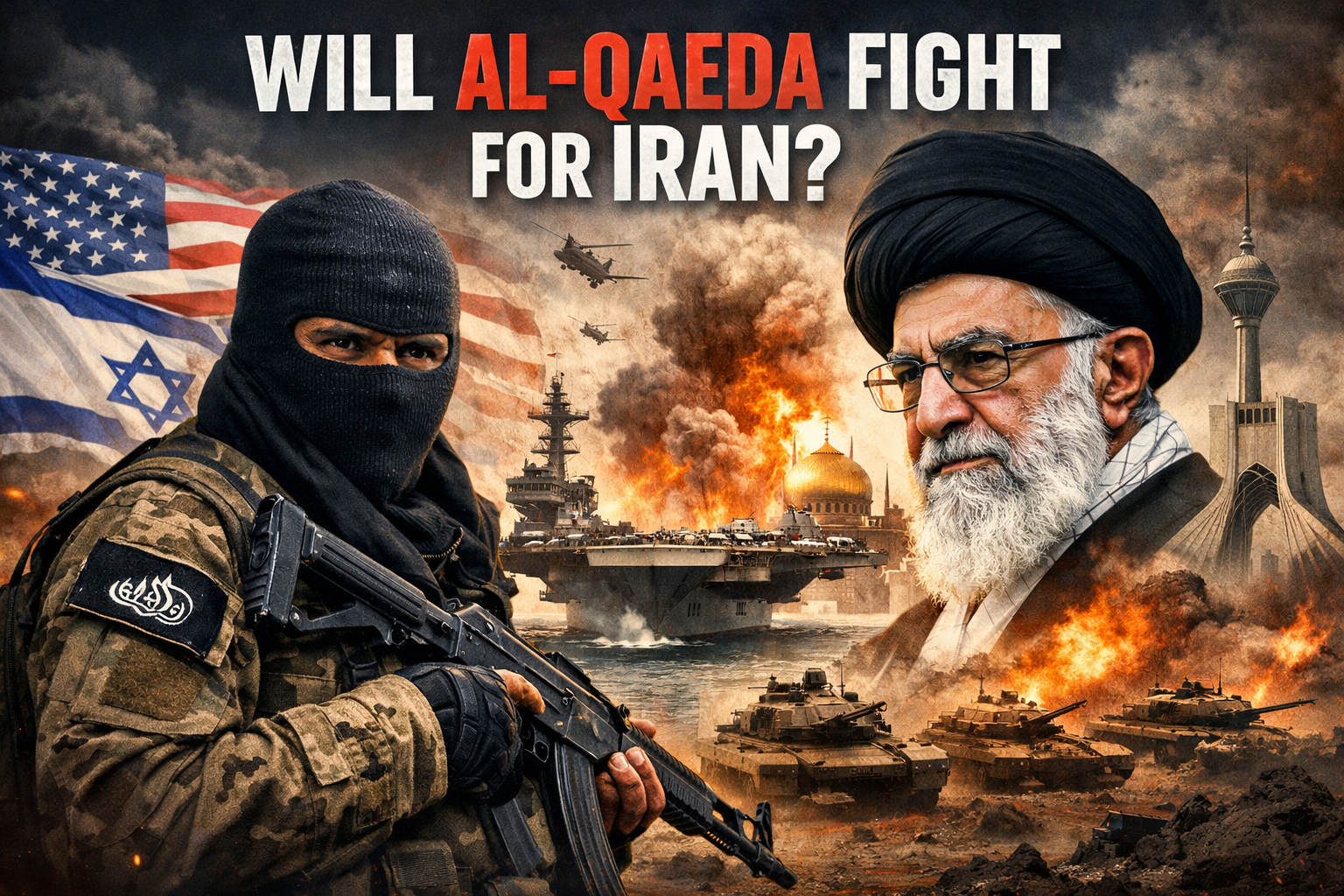

Assessing the Tactical Value of Tehran’s Long-Term Investment
Common enmity toward the United States and Israel has turned Iran and Al-Qaeda into unlikely allies. Despite deep ideological rifts, Al-Qaeda’s central leadership has quietly used Iranian soil as a sanctuary and operational hub for years. Now, the group has issued an official statement declaring jihad against U.S. and Israeli military preparations and the buildup of forces in the Middle East.
Recently, the Supreme Leader of the Islamic Republic of Iran warned that in the event of a military strike against Iran, the conflict would not remain confined within its borders but would escalate into a regional war.
While this warning is generally interpreted as a signal to the Shia militias comprising the Islamic Resistance Front, Al-Qaeda’s latest statement suggests another possibility: that the time has come for Iran to cash in on its long-term investment in Al-Qaeda, bringing the group into the broader regional conflict.
As the U.S. increases its military presence to pressure Iran over its nuclear program, ballistic missiles, and human rights record, Al-Qaeda’s General Command released a statement framing this buildup as another chapter in the “Zionist-Crusader’s” effort to occupy Muslim lands. Although the statement avoids explicitly naming the defense of Iran, it does call for attacks on U.S. aircraft carriers and assets in the region.
Current Power of Al-Qaeda
Despite fading from the immediate headlines, Al-Qaeda is far from a spent force. Current estimates suggest the group and its global affiliates command nearly 25,000 fighters—a staggering figure that is fifty times larger than its size during the attacks on 9/11.
Al-Qaeda is increasingly positioned to function as a state-sponsored terrorism project. Through its sprawling network of affiliates across Asia and Africa, the group offers potential sponsors expansive reach and deniability. Furthermore, the organization is pivoting its narrative, using the conflict against Israel as a rare bridge to find common ground with Shia militant groups. Beyond the battlefield, Al-Qaeda is modernizing, demonstrating growing sophistication in propaganda, Artificial Intelligence (AI), and cybersecurity. Experts warn that the group is once again exploiting regional instabilities to fortify its position and incite fresh attacks against the West.
Al-Qaeda Media Operations
Media operations have long been the backbone of Al-Qaeda’s resilience. By framing the Gaza war as a broader struggle between Muslims and the “Zionist-Crusader” alliance, the group was effectively masking its long-standing ideological friction with Hamas. The most recent al-Qaeda leadership announcement serves the same purpose: it unites disparate elements of the Sunni and Shia worlds under a single banner of resistance while momentarily burying deep-seated sectarian divides. This is sufficient to signal support for Iran and prove they remain a force on the ground, committed to defending Islamic territory against occupation.
In exploiting the Gaza Conflict, Al-Qaeda is perpetually hunting for opportunities to reassert its leadership over the Islamic world. The war in Gaza has provided exactly that opening, allowing the group to rebrand itself as the “true defender” of Al-Aqsa. Since the conflict began, Saif al-Adel has released a series of strategic messages regarding Gaza, while the group’s media wing, Al-Sahab, has seen a significant resurgence in activity following a period of dormancy after the death of Ayman al-Zawahiri.
Al-Qaeda and Iran
Since the 2022 killing of Ayman al-Zawahiri in Kabul, it is widely believed that Saif al-Adel has served as the de facto leader, managing the organization from within Iran.
This sanctuary dates back to the fall of the Taliban in 2001. A rare photo surfaced in 2022, dating back to 2015, showing Saif al-Adel alongside Abu Mohammed al-Masri (then Al-Qaeda’s number two) and Abu Khayr al-Masri in Tehran. The latter two were killed in Tehran in August 2020 by unidentified agents.
Though ideologically worlds apart, Iran and Al-Qaeda are united by a “common enemy.” Saif al-Adel has long proven to be a pragmatist. In the 1990s, he received military training from Hezbollah in Lebanon’s Bekaa Valley, applying those tactics in the 1998 U.S. embassy bombings in East Africa. This pragmatic cooperation continues today, evidenced by Al-Qaeda in the Arabian Peninsula’s (AQAP) expanding cooperation with the Houthi movement in Yemen.
By hosting Al-Qaeda, Iran shields itself from Sunni extremist attacks while gaining leverage over a group that threatens the U.S., Israel, and rival Arab states. This relationship has cost Al-Qaeda credibility among other jihadists, as ISIS famously mocked Al-Qaeda for sparing Iran to protect its leaders.
For Washington, Iran has become a “new Afghanistan“—a safe haven where Al-Qaeda leaders manage logistics, funding, and communications. However, recent events—widespread protests, the assassinations of high-profile figures (including Hamas and Al-Qaeda leaders) on Iranian soil, and the “12-Day War”—have shown that Iran may no longer be the safe harbor it once was.
According to Afghanistan International, in mid-January 2026, Saif al-Adel reportedly reached out to the Taliban leadership, stating that Iran is no longer suitable due to U.S. and Israeli pressure, and requesting temporary refuge in the Islamic Emirate of Afghanistan.
Yet, a total Al-Qaeda withdrawal from Iran seems unlikely. While leaders are undoubtedly concerned for their safety, Al-Qaeda rarely moves without a guaranteed alternative. Furthermore, leaving would jeopardize a 25-year relationship for which Iran has endured significant international and internal Shia criticism.
Therefore, Al-Qaeda’s declaration of jihad against U.S. military may be an attempt to prove its loyalty to Tehran—a signal that, despite sectarian differences, they stand united against a common foe.
The critical question remains: after years of Iranian investment, will Al-Qaeda provide tangible battlefield value and join the regional war promised by Iran’s Supreme Leader? While the expansion of the conflict is a grave risk, Al-Qaeda may ultimately remain too pragmatic to fully martyr itself for the Iranian state.