When Crisis Becomes Culture: Boromir, Wicked Problems, and the Reward of Force
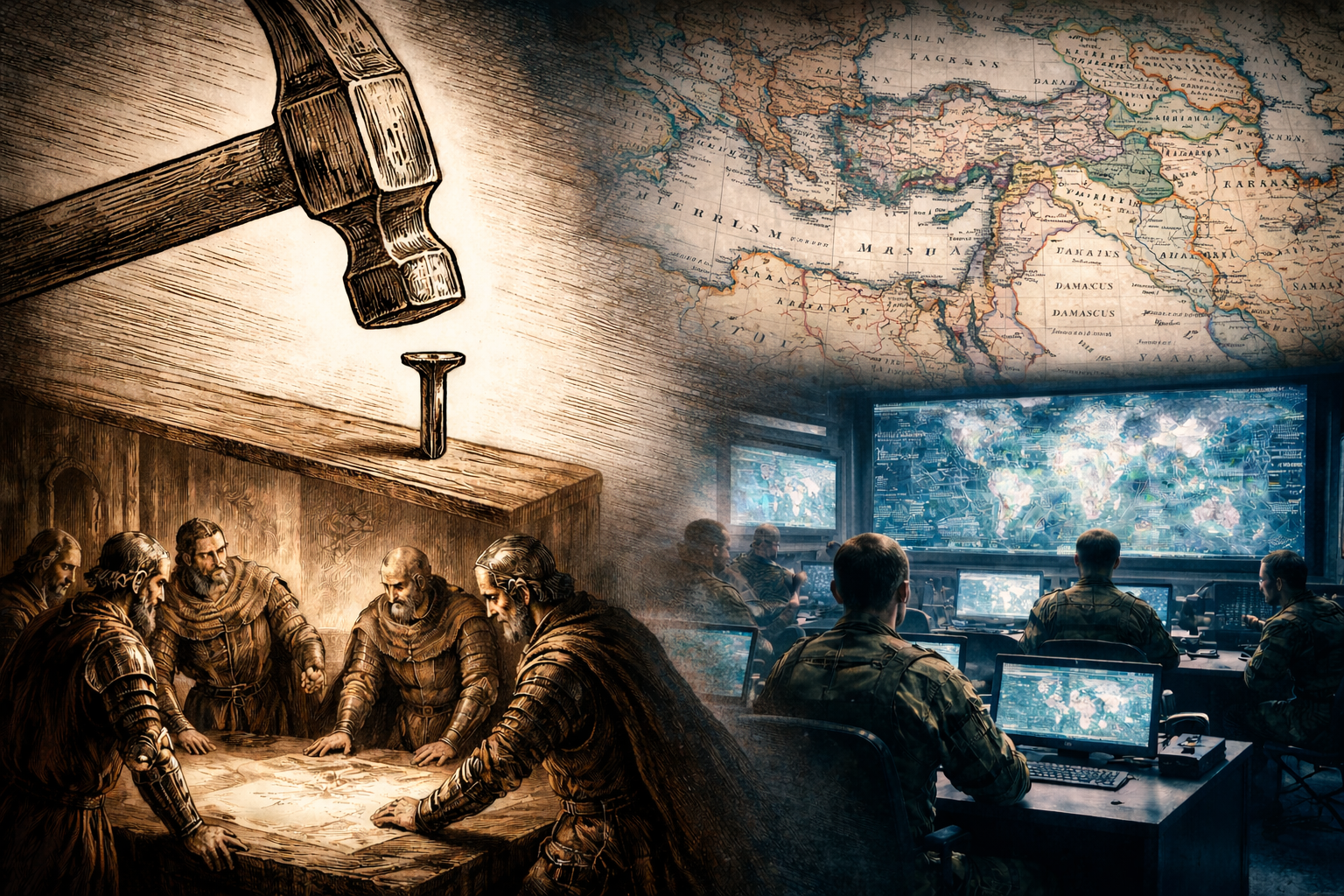

“When all you have is a hammer, everything begins to look like a nail” is a well-known cognitive bias known as the Law of the Instrument or Maslow’s Hammer. Psychologist Abraham Maslow observed that “it is tempting, if the only tool you have is a hammer, to treat everything as if it were a nail,” illustrating how reliance on familiar tools or perspectives can narrow problem framing and blind decision-makers to alternative approaches.
Immediately following the U.S. Operation Absolute Resolve to capture Venezuelan leader Nicolás Maduro on January 6, 2026, the language used to describe events narrowed and hardened. What had been repeatedly discussed as a crisis and a risk was reframed as a technical problem of management. Consequences that had been debated were redescribed as unavoidable. Strikes were presented as limited and calibrated. Officials spoke in the vocabulary of control. By the time public justification arrived, the moral question was no longer open. What remained was execution.
But not all problems are the same, and treating them as if they are one of the most reliable paths to failure. As others and I have argued, not all challenges warrant the same institutional response. In policy studies and leadership research, a foundational distinction exists between different kinds of problems. A traditional policy and military distinction between command (appropriate for immediate crises), management (appropriate for routine governance), and leadership(necessary for open-ended or “wicked” problems), which map directly onto how problems are framed institutionally, and whether responses are rewarded or punished.
This framing originates in Horst Rittel and Melvin Webber’s classic article on planning and policy failure. Using a softer typology today, we can have three basic categories of problem-styles: tame, crisis, and wicked problems. Tame problems are complicated but solvable through expertise and management. Crisis problems demand command: time is short, information is incomplete, and authority centralizes to prevent immediate harm. But a third category—wicked problems—resists both management and command. Wicked problems have no definitive formulation, no stopping rule, and no solution that does not reshape the problem itself.
Leadership scholars have mapped this distinction onto practice: command is appropriate for acute crises; management for routine governance; and leadership—understood as a relational process between leaders and followers—is necessary for wicked problems. Keith Grint, for example, articulates this mapping explicitly in his work on leadership and problem types.
Subsequent scholarship shows that wicked problems are embedded in social and political complexity and cannot be resolved through technical fixes or coercive decisiveness. They require adaptive leadership, learning, and the sustained participation of followers rather than compliance alone. See, for example, Brian Head’s review of wicked problems in public policy.
In the high fantasy three-volume saga of The Lord of the Rings, the character of Boromir is one of J.R.R. Tolkien’s tragic figures: a great leader of men, Boromir follows a prophetic vision to Rivendell to join the Fellowship in their quest to destroy the evil magic Ring. Convinced that the Ring is a weapon that could be used to save the home and the people that he loves, Boromir attempts to convince Frodo to let him have the Ring (temporarily, of course). But when that plan of persuasion fails, he takes the ring from the hobbit by force.
The failure Tolkien dramatizes through Boromir is not a failure to be virtuous. It is a failure to recognize what kind of problem is being faced. Note that throughout the saga, Boromir’s home of Gondor lives under conditions of near-permanent threat. Over generations, this can produce a dangerous misclassification. What may once have been a crisis becomes treated as eternal. Emergency hardens into identity. When every challenge is framed as existential, command becomes the default mode of governance, and force becomes the most legible form of competence. Boromir is decisive, even when he is decisively wrong, because he is exceptionally well-adapted to a system that rewards decisive action under threat. He is shaped by his institutional culture long before he reaches for the Ring.
A real-world analogue helps clarify the dynamic. The late U.S. Naval War College professor Michael I. Handel offered an excellent example of how a culture can develop around a state’s strategic context in his assessment of Israel’s plight. Since its founding in 1948, Israel has more than once achieved remarkable operational and tactical victories against invading Arab armies. Paradoxically, however, as Handel points out, these victories may also have risked obscuring Israel’s deeper strategic vulnerabilities. His observation echoes that of political theorist Hannah Arendt, who warned in 1948 that a state forged under siege might come to organize its political life almost entirely around physical survival, crowding out broader social and political imagination.
Read through a wicked-problems lens, this is not an argument about belligerence or ethics, but about misclassification. When historically rooted, relational conflicts are governed as permanent crises, command logic can harden into identity. Over time, force becomes not just a tool but the most legitimate form of responsibility. Alternatives recede from view not because they are absent, but because institutional reward structures no longer recognize them as serious.
Tolkien’s Boromir, too, is shaped entirely within this cauldron of logic. He isn’t reckless. He’s especially well-adapted to a system that incentivizes certitude and direct action as duty. In a crisis frame, Boromir is exactly the kind of leader institutions select: decorated, confident, forceful, intolerant of delay, and morally certain.
Note that when Boromir first arrives at the Council of Elrond, he is confronted by a fundamentally different framing. The Ring is presented not as a crisis problem to be neutralized through command, but rather as a kind of wicked problem. Any attempt to dominate it reproduces the very conditions it is meant to end. He is warned that any sense of control over the Ring is an illusion. He is told that escalation and violence feed the enemy’s logic. These are not abstract or magical cautionary tales but systems-level analyses. But, instead of accepting this new classification, Boromir argues that Gondor deserves the use of the Ring. This isn’t arrogance, but a sense of entitlement. He insists that Gondor has suffered the most, holding the line. Therefore, Gondor deserves it. Accordingly, Boromir rejects the Council’s warnings not because he is a fool, but because accepting the new framing would invalidate the only form of responsibility his political culture recognizes. He rejects them because accepting them would require abandoning the crisis frame that gives his role meaning. Problem framing, as policy scholars note, shapes which responses are even visible to decision-makers. Consequently, Boromir’s forced taking of the Ring is less a betrayal than it is institutional compliance. Faced with a problem that cannot be solved by mere force, Boromir uses force anyway, because force is the only solution his system recognizes.
This is where critical followership matters. In a healthy response to wicked problems, followers do more than execute orders. They question framing, surface long-term consequences, and, through a practice of cognitive delay, resist false urgency. Tolkien encodes this contrast in Faramir, Boromir’s younger brother, who listens, reflects, and refuses what he cannot control. Faramir practices leadership without command. Above them sits Denethor, their father and the Steward of Gondor, who mistakenly believes he can control a palantír (one of several crystal balls in the stories), secretly using it to search out Sauron’s strength. His governance is defined by secrecy and overconfidence, mistaking the hoarding and control of information for wisdom. Denethor favors Boromir but resents Faramir, for in systems like this, the reward structure favors escalation, prizes decisiveness and force, but makes restraint and reflection invisible.
In wicked problems, these moments of recognition or misclassification are pivotal. When beset with wicked problems, institutions must either recognize the problem as such and shift from command to leadership or else they end up doubling down on coercion.
Gondor doubles down. In the Ring, Boromir sees an opportunity to convert a wicked problem back into a crisis—something that can be ended decisively, quickly, and through overwhelming power. The move for the Ring comes not from temptation for personal power and mere domination but from a desire for resolution, certainty, and closure. The long ambiguity of survival gives way to the fantasy of the final victory.
Boromir’s remorse arrives only when consequences become immediate and personal. But wicked problems rarely provide such clarity in time. Research on wicked problems underscores that coercive solutions tend to exacerbate rather than resolve challenges. By the time damage is undeniable, it is usually irreversible and unforgettable to those who are harmed.
The parallels to the real world are not merely allegorical. They are procedural, institutional, and ideological. They follow in line, from the narrative that action was urgent to the framing of escalation as reluctant but unavoidable stewardship. The certainty of technocratic management to contain the chaos of a wicked problem after the application of force and direct action.
Research shows that governments use framing in perceived crisis situations not just to explain events but also to control perceptions and cultivate legitimacy. Framing affects how publics perceive decisions as necessary or inevitable, shaping political support or resistance. When situations are framed as permanent crises rather than wicked problems—complex, historical, and entangled with regional and global systems—command logic dominates. Those who advocate force appear responsible. Those who urge restraint, engagement, or long-term transformation are dismissed and brushed aside as naïve, feckless, or worse, or disloyal. Scholarship on crisis framing shows how political actors construct crises to legitimate otherwise controversial actions.
This is Tolkien’s insight and warning: that once force is normalized, it becomes self-justifying. Each unintended consequence demands more decisiveness. Each failure reinforces the claim that delay was the original sin. Emergency becomes permanent. Force becomes a reflex.
Boromir’s catastrophe, then, is not a warning about mere temptation. His failure is a warning about profound misclassification—about what happens when wicked problems are governed as crises and when institutions reward command while starving leadership, when restraint is seen as weakness and decisive force is mistaken for thoughtful analysis. In such systems, force and violence do not merely become options. They become the only solutions anyone is allowed to see.