





The Regional Reverberations of the U.S. and Israeli Strikes on Iran | CSIS
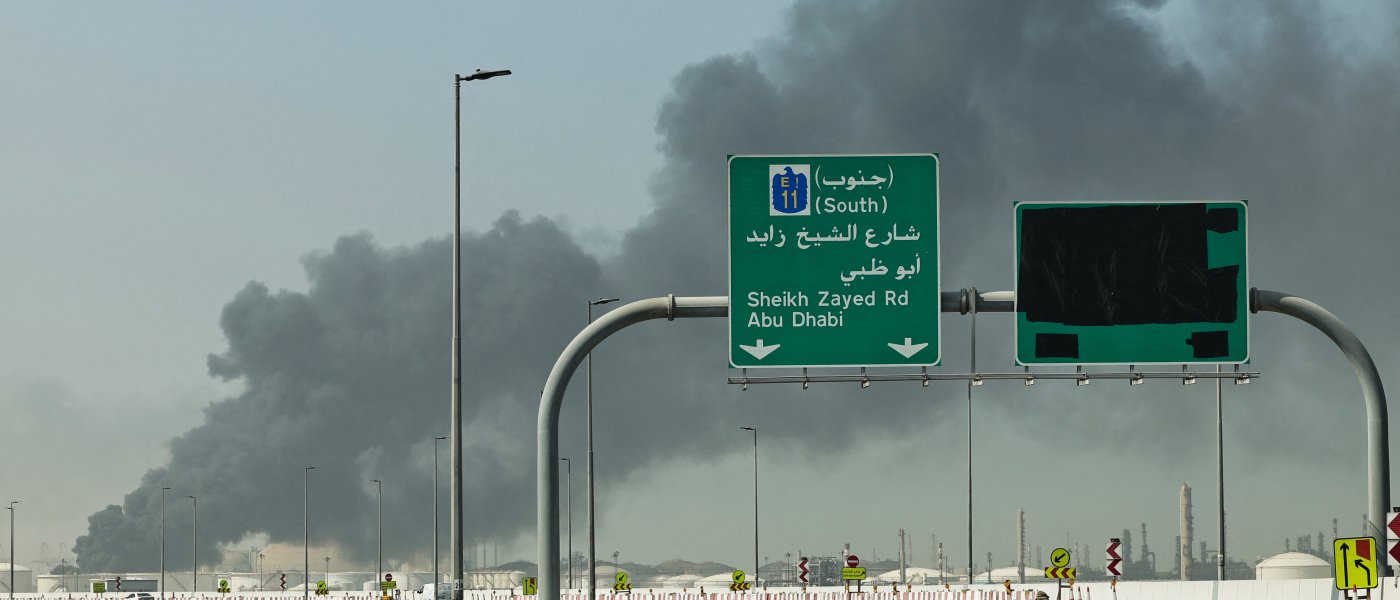

In “The Regional Reverberations of the U.S. and Israeli Strikes on Iran” (CSIS, March 2026), the Director and Senior Advisor of CSIS’s Middle East Program, Mona Yacoubian, examines the immediate and long-term consequences of joint U.S. and Israeli strikes on Iran. The critical questions posed by Yacoubian explore the “prospects for a wider regional conflict with global reverberations.”
Q1: What are the regional repercussions of the strikes on Iran?
Soon after the joint strikes, Iran launched a series of retaliatory missile and drone strikes across the region… Iran also opted to go after U.S. military and Gulf civilian targets across several countries including Bahrain, Kuwait, Saudi Arabia, the United Arab Emirates (UAE), and Qatar… Jordan and Iraq also reported intercepting Iranian missiles, and Oman’s port at Duqm was hit by an Iranian drone strike…
The Iranian strikes have already unleashed significant disruptions across the region… airports in Abu Dhabi, Bahrain, and Kuwait also sustained damage… Several countries have closed their airspace… The simultaneous closure of the Gulf’s three major air hubs—Dubai, Abu Dhabi, and Doha—is unprecedented…Iran has effectively closed the strategic Strait of Hormuz… leading to oil shipment disruptions that could provoke significant price hikes…
Tehran’s decision to retaliate immediately against civilian targets across the region—from Israel to the Gulf—highlights Iran’s strategy of seeking to exact a significant toll… Tehran may calculate that if it imposes a high enough cost on the region, Gulf countries will push for off-ramps… regime elements in Iran could decide that if the regime is on the verge of collapse, it will take the region down with it.
Q2: Will Iran’s regional proxies mobilize?
This appears to be a moment of truth for Iran’s proxies and what remains of the ‘axis of resistance.’ Iranian proxy groups have yet to mobilize despite threats to unleash attacks…
While these groups did not immediately respond… Iran’s confirmation that the Supreme Leader Ayatollah Ali Khamanei was killed could spur some to take action… the Houthis could resume attacks on Red Sea shipping…
Hezbollah—dramatically weakened from a significant Israeli offensive in 2024—had more recently signaled less willingness to retaliate on Iran’s behalf… Even Khamanei’s killing does not appear to have altered this calculation… Hezbollah’s reaction remains remarkably muted.
Q3: What are the longer-term implications?
The conflict with Iran stands as a defining moment for the Middle East with generational implications… the region is entering a period of unprecedented uncertainty, including instability in Iran…
The killing of Iran’s Supreme Leader Ayatollah Ali Khamanei underscores that Iran is entering a period of significant flux… regime collapse remains a possibility… potentially sparking internal chaos and civil war in Iran, with spillover impacts… The Gulf can be expected to deepen Gulf Cooperation Council (GCC) coordination on defense and security… move toward a more formal integrated air defense system…
The strikes on Iran… stand as yet another development in the Middle East’s ‘hinge moment.’… the region is amid a transformation from an old order… to an emerging new Middle East… Fortified by their enhanced agency, regional actors—principally Israel and the Gulf—will play a key role in shaping the contours of the Middle East’s emerging order… the final shape of the new Middle East is far from certain.
For a deeper dive into the strategic dynamics highlighted by CSIS’s critical questions, also explore these recent Small Wars Journal articles. First, Jesse Ramsdell’s “The U.S. Must Clarify Its Strategy in Iran” (Mar. 2, 2026) cautions that the strikes risk driving a conflict “with no clear off-ramp or end in sight,” underscoring the dangers of strategic ambiguity. Likewise, Joe Funderburke’s “The Gathering Storm” (Feb. 19, 2026) points to mounting military signals and internal pressures that suggest a shift from deterrence toward escalation, reinforcing the CSIS warning that the strikes could accelerate broader regional instability.

