





Operationalizing Hemispheric Defense: What the 2026 National Defense Strategy Means for Latin America
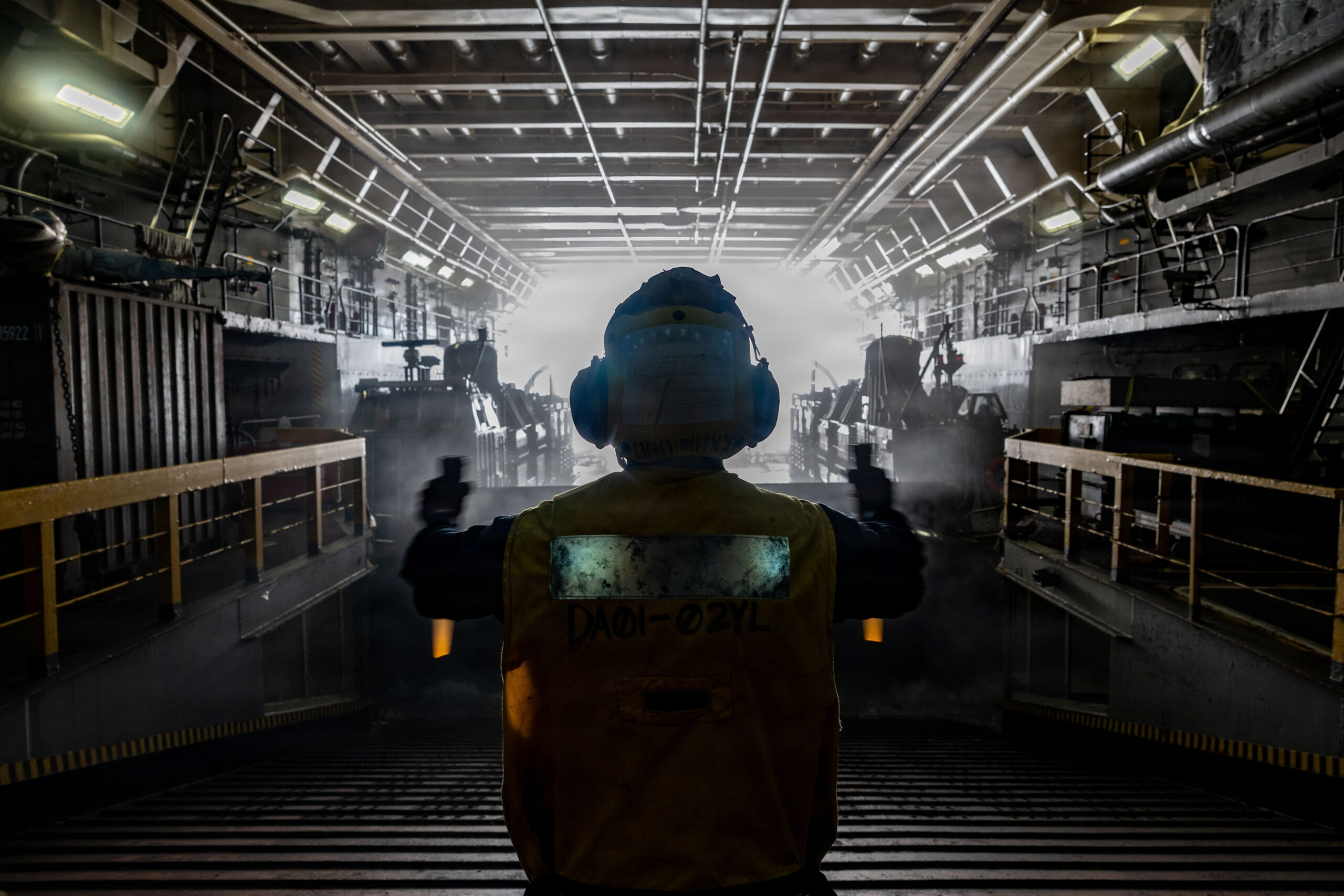

On January 23 the United States released its much-anticipated National Defense Strategy (NDS). This document echoed last year’s National Security Strategy (NSS) in professing a renewed focus on the Western Hemisphere. In particular, the NDS states that: “the U.S. military’s foremost priority is to defend the U.S. Homeland. The Department will therefore prioritize doing just that, including by defending America’s interests throughout the Western Hemisphere.” This restored hemispheric defense focus, combining a host of activities ranging from border security and counter-drone technology to expanded kinetic strikes against narco-traffickers and efforts to secure strategic lines of communication, has been grouped under the so-called “Trump Corollary” to the Monroe Doctrine.
For the past three decades, U.S. defense priorities have been turned away from home. With the exception of security assistance to countries like Colombia and Mexico, the United States was distracted by problems that lay oceans away. As a result, some analysts have argued that the Trump Corollary reflects a return to basics, rooted in the belief that all power projection abroad is rooted in stability and security at home. While it is true that U.S. neglect for the Western Hemisphere has allowed rivals such as China to gain a foothold over critical infrastructure, and contributed to the metastasizing criminal threat in that region, the United States now faces a series of hard questions over how to implement the principles espoused in both the NDS and NSS.
The United States now must focus on how to align capabilities with its stated objectives in the Americas. In particular, the Department of Defense should seriously consider merging U.S. Southern Command and U.S. Northern Command into a single combatant command that can better oversee the pivot to the Americas. Additionally, policymakers should prioritize the acquisition of cheap drones, counter-drone systems, and other intelligence, surveillance and reconnaissance platforms with an eye to their suitability for operations in Latin America. Finally, the United States must work with allies to secure expanded basing access for U.S. forces, especially south of the equator.
Pivot to the Americas? Not So Fast
Operation Absolute Resolve, which led to the capture of Venezuelan dictator Nicolás Maduro, proved that the United States’ hemispheric focus was more than empty bluster. But the operation, and prior military buildup, also entailed tradeoffs for other geographies. The concentration of naval assets in the Caribbean for instance may have constrained U.S. options when dealing with escalating protests in Iran. It took weeks for the USS Abraham Lincoln and its escorts to arrive in the Persian Gulf, stymieing calls for quicker, more decisive action.
The 2025 NSS decried previous grab-bag strategic documents as “laundry lists of wishes or desired end states” that refused to engage in the difficult work of prioritization. The reality is that prioritization is a difficult, often painful process when confronting a world rife with potential national security threats. Such is the case in the Americas, where despite receiving increased attention under the second Trump administration, decades of neglect cannot be reversed overnight.
Another challenge is that U.S. capabilities in Latin America and the Caribbean are not currently fit for purpose. The massive concentration of naval assets in the Caribbean saw, at its peak, eight destroyers, two guided missile cruisers, two nuclear-powered submarines, and the USS Gerald R. Ford aircraft carrier, alongside numerous other escorts and support vessels. While these assets possess powerful sensors, communications networks, and of course firepower, they are not fit for purpose when it comes to drug interdiction. Instead, these are high-end assets designed for operation in contested environments. They are also expensive to keep in-theater, and the continued naval presence in the Caribbean reportedly costs about $31 million per day to maintain at current levels. While such a concentration may be justified in the lead-up to a major operation like the seizure of Maduro, they are somewhat overkill for narcotics interdiction and even tanker seizures and reduce U.S. readiness in other theaters.
A larger military presence in the Americas will also confront increased logistical challenges. Decades of neglect have left the United States without the same network of overseas bases for maintenance and sustainment that it enjoys in the Middle East or Indo-Pacific. Indeed, the United States has just three overseas military bases in Latin America and the Caribbean, along with three other cooperative security locations where U.S. forces enjoy negotiated access. This includes Comalapa International Airport in El Salvador which has seen significantly increased activity by U.S. MQ-9 Reaper drones and AC-130J Ghost Rider gunships operating in the eastern Pacific. However, none of these facilities lie below the equator, and only one of them, Naval Station Guantánamo, has the capacity to host warships the size of an Arleigh Burke-class destroyer or larger.
While U.S. logistical requirements in the Caribbean are somewhat aided thanks to access to overseas territories like Puerto Rico and the U.S. Virgin Islands, basing infrastructure there has also been allowed to wither. In Puerto Rico, the former Naval Station Roosevelt Roads had to be rapidly brought back into service to support F-35s after being shuttered for two decades. Meanwhile most of the naval forces deployed during the Caribbean buildup relied on the civilian port of Ponce as their home base. Worse yet, dependency on civilian port infrastructure for naval resupply may have opened up new opportunities for China to collect intelligence on U.S. forces. In the past year, at least three U.S. warships, the destroyers Sampson and Gravely, and the cruiser Lake Erie have conducted port calls at facilities in the Western Hemisphere where Hong Kong-based company CK Hutchison has operations. Hutchison itself has been the target of much attention by the Trump administration due to its holdings on either side of the Panama Canal, and while the Panamanian Supreme Court recently ruled these concessions unconstitutional, they company continues to operate terminals in Mexico and the Bahamas. Many other civilian ports in the Americas boast cranes, scanners, and security cameras provided by China, meaning that as U.S. military activity increases, so too does the risk to operation security from relying on civilian infrastructure. If the NDS envisions a more permanent large-scale military presence in Latin America, it must solve these basing and logistics questions, and quickly.
From Rhetoric to Reality
Prioritization should translate into policy. Following the publication of the NDS, the United States should focus on the following three lines of effort; combining United States Southern Command and Northern Command, right-sizing procurement for the Latin American theater, and investing in relationships with allies to secure new basing access.
Towards a Western Hemisphere Command
Both the NDS and NSS make clear that the U.S. focus is a hemispheric one, rooted in the importance of the Americas for homeland defense, not merely restricted to Latin America and the Caribbean. The first step the Department of Defense can take towards actualizing this vision would be to combining United States Southern Command (SOUTHCOM) and United States Northern Command (NORTHCOM) into a single combatant command representing the Americas.
This idea has been gaining traction of late as focus on hemispheric security has grown. Within the Pentagon, Secretary of Defense Pete Hegseth has also expressed a desire to reduce the number of geographic combatant commands as well. In this regard, an important step forward was taken in December 2025 when U.S. Army Forces Command, U.S. Army North and U.S. Army South merged into a single operational headquarters now dubbed U.S. Army Western Hemisphere Command.
Such a move undoubtedly be administratively taxing, but it is essential to meet the moment. As it currently stands, NORTHCOM bears responsibility for Canada, the continental United States, Mexico, and the Bahamas, while also serving as headquarters for the North American Aerospace Defense Command (NORAD). This is a portfolio which sees NORTHCOM shouldering responsibility for homeland air and missile defense, as well as border security and counter-cartel assistance to Mexico. SOUTHCOM meanwhile serves as the United States’ primary security cooperation arm for the rest of Latin America and the Caribbean, assisting with counternarcotics, humanitarian assistance and disaster relief, as well as providing a bulwark against Russian and Chinese incursions. The challenges both combatant commands face, however, often bleed into one another’s areas of responsibility. The Mexico-based Jalisco New Generation Cartel and Sinaloa Cartel have both formed close ties with rival Ecuadorian gangs battling for control of that country’s cocaine trade. The Venezuelan migration crisis spread throughout South America before turning north to the United States’ southwest land border. Meanwhile extra-hemispheric adversaries like China and Russia care not for where one command ends and another begins, and indeed will actively seek to exploit these gaps, when they seek to challenge U.S. interests. A unified combatant command for the Western Hemisphere can help tackle these threats with greater clarity of purpose.
Another advantage of bringing NORTHCOM and SOUTHCOM together under one roof is giving greater negotiating leverage when it comes to funding priorities. In 2025 the two commands had a combined $95 million in unfunded priorities according to Breaking Defense. This included some $35 million for SOUTHCOM’s “Ship Special Mission” request, aimed at improving maritime counternarcotics interdiction, and $21.5 million for NORTHCOM’s request on “Accelerating Southern Border Tech Solutions.” In a hypothetical future Western Hemisphere command could better adjudicate internally between competing priorities and have more authority to press for the necessary resources, both internally and to Congress.
Getting Procurement Priorities Right
In order to make a renewed focus on Latin America sustainable, the United States should transition away from reliance on expensive, high-end systems, towards cheaper, more distributed, and more autonomous platforms. Modern transnational criminal organizations are highly decentralized and adaptable, constantly probing at the edges of state capacity in search of weak points. Already there are reports that key drug trafficking routes have shifted in response to U.S. strikes in the Caribbean and Eastern Pacific. Traffickers are moving their products by air, adulterating them into legitimate cargoes, and even experimenting with remotely piloted semisubmersibles.
Cutting off these routes requires a wide range of flexible response options, from long-endurance drones that can observe traffickers as they move along their routes, to high-flying intelligence, surveillance, and reconnaissance (ISR) aircraft, to Coast Guard Law Enforcement Detachments. Drones and autonomous systems will be especially important to provide sufficient breadth of coverage while remaining affordable. Aerial and naval ISR, platforms that can autonomously identify and monitor potential illicit activity, as well as counter-drone platforms are all in high demand to counter the types of threats organized crime poses in the Americas.
Just as Ukraine has proven a testing ground for these new systems, the Western Hemisphere can and should be the region where these systems can be integrated with U.S. forces. This is in keeping with another one of the NDS’ priorities, to scale defense manufacturing, especially of emerging technologies and uncrewed systems. There are a host of emerging defense manufacturers working on these problems, from well-entrenched firms like Lockheed Martin and Raytheon, to upstart disruptors like Anduril, Shield AI, and Albacore Inc. The newly announced Counternarcotics Joint Task Force under command of the II Marine Expeditionary Force in the Caribbean could provide a hub for engaging these companies to be a first-user of some of these new technologies. In addition, the United States could explore facilitating sales to partner countries like Colombia, which recently announced a $1.7 billion counter-drone program.
Uncrewed systems can only do so much, however, and the United States will also need to rethink the role of conventional naval surface combatants in the Americas. From this point of view, the recent decision by the Department of Defense to cancel the embattled Constellation-class frigate and adopt a new design based on the Coast Guard’s National Security Cutter may be well-suited to a hemispheric defense mission. Critics of the move have focused on the new design’s limited capacity to contribute to air and missile defenses. However, fast, lightly armed, and modular surface combatant could be exactly what the United States needs in Latin America and the Caribbean. To be sure, U.S. shipbuilding remains in a perilous state, but by returning to a proven design, the Department of Defense is giving itself a better chance of getting more hulls in the water and faster, helping to relieve some of the demand for destroyers and cruisers in the Western Hemisphere.
Of course, there is still a role for more exquisite systems, but these should act as strategic nodes and enablers. Platforms like the Iwo Jima Landing Helicopter Dock, which reportedly played an important role in Operation Absolute Resolve, can serve as home bases for drones and rotor wing assets, as well as a command-and-control hub for nearby U.S. forces.
Enlist and Expand for Basing
At present, U.S. strategy in the Americas can best be described as a Caribbean-and-up strategy. While warships prowl the Caribbean basin, south of Caracas, the vision of hemispheric defense has yet to come into focus. This is in no small part because of a lack of basing below the equator, which complicates efforts to sustain long-term deployments there. While U.S. attentions for the past six months has centered on Venezuela, there are no shortage of challenges that might require additional presence further south. Powerful criminal groups have spread throughout countries like Ecuador and Brazil, and are winding their tendrils into neighboring countries, Chinese deep sea fishing fleets plunder the seas around South America, while Antarctic gateways like Ushuaia and Punta Arenas are garnering increased attention from Washington and Beijing alike.
The United States is making important headway when it comes to basing in the Americas. On January 15, 2026, the State Department approved $1.5 billion in foreign military sales to help with Peru’s efforts to upgrade and relocate its Callao naval base. While the agreement does not grant U.S. forces access to the base, it helps reaffirm Washington and Lima’s partnership in the security and defense space at a time when the latter country is embarking on a crucial military modernization program. Furthermore, bolstering Peruvian naval capabilities aligns with the 2025 NSS’ “Enlist and Expand” agenda which calls upon the United States to bring willing partners along with the hemispheric security cooperation agenda.
In Ecuador, a November 2025 referendum saw a proposed measure that would have permitted foreign military bases in the country fail. In the months since, President Daniel Noboa has sought to nevertheless pursue basing cooperation, allowing a contingent of U.S. personnel temporary access to the Manta Naval Air Station. While U.S.-Ecuador ties remain strong, the failed referendum underscores the opposition within many Latin American electorates to foreign basing, a key consideration that U.S. defense planners must keep in mind when seeing to expand base access with the region.
Finally, the Dominican Republic recently inked a deal with the United States granting access to San Isidro Air Base and the Las Américas International Airport to be used for maintenance and resupply through April 2026. The Dominican Republic’s strategic position in the Caribbean makes it an invaluable partner in ongoing counternarcotics operations, while access to facilities there relieves some of the pressure on Puerto Rico to bear the brunt of the expanded U.S. military presence.
In all cases, basing cannot be the goal in and of itself. Rather, base access agreements provide an opening bid for closer partnerships with the United States and its allies. Cooperation on basing does, however, provide important opportunities for U.S. forces to interact with their regional counterparts, and should be leveraged to forge stronger connections.



@Geoguessr
The country’s geographic location makes it highly valuable for monitoring and disrupting illicit trafficking routes across the region. At the same time, this arrangement helps distribute the logistical burden of U.S. military operations more evenly, easing the pressure previously placed on Puerto Rico as a primary hub for expanded U.S. presence.